Why Mount Kenya National Park stands out
Mount Kenya National Park is best known for protecting one of Africa's most distinctive volcanic landscapes. The mountain's summit features glaciers and permanent snow fields, a rare sight at this equatorial latitude. The park preserves Afro-alpine moorland, subalpine forest, and unique endemic species found nowhere else on Earth. Its dramatic twin summits of Batian and Nelion, combined with the surrounding ecosystem diversity from bamboo forest to alpine zones, make it one of the continent's most significant high-altitude protected areas.
Mount Kenya National Park history and protected-area timeline
The area that became Mount Kenya National Park was initially designated as a forest reserve before being elevated to national park status in 1949, making it one of Kenya's earliest protected areas. In April 1978, recognizing the outstanding universal value of the mountain's ecosystems and the need to balance conservation with sustainable development, UNESCO designated the area as a Biosphere Reserve under its Man and the Biosphere Programme. This designation reflected the mountain's dual importance as a conservation landscape and a resource for local communities who depend on its water and forest products. The recognition of the site's global significance was further consolidated when the combined national park and forest reserve were inscribed as a UNESCO World Heritage Site in 1997, with an extension added in 2013 to strengthen protection of the area's Outstanding Universal Value. The Government of Kenya's decision to create the park was grounded in explicit policy objectives that included tourism development, scenic preservation, biodiversity conservation, and water-catchment protection, reflecting a comprehensive understanding of the mountain's multiple values.
Mount Kenya National Park landscape and geographic character
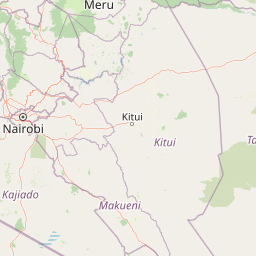
The landscape of Mount Kenya National Park is defined by the mountain's volcanic origin and the erosive forces that have carved its dramatic peaks. The park encompasses the upper reaches of the mountain above the 3,000-meter contour line, a zone characterized by steep ridges, U-shaped valleys carved by ancient glaciers, and rock outcrops that rise above the surrounding terrain. The twin summits of Batian and Nelion dominate the high country, their rocky spires and residual glaciers representing some of the last permanent ice features on East African mountains. Below the summit area, the landscape transitions through distinct ecological zones, from the alpine meadows and giant lobelia stands of the high plateau down through the bamboo zone and into the Hagenia forest that marks the transition to the surrounding forest reserve. The volcanic bedrock produces soils of high fertility where moisture is available, and the massive volume of water that flows down the mountain's slopes makes the entire region particularly favorable for agriculture in the surrounding areas.
Mount Kenya National Park ecosystems, habitats, and plant life
The ecological character of Mount Kenya National Park is defined by its position on the equator at high altitude, creating a complex mosaic of habitats that range from subalpine forest through Afro-alpine moorland to the nival zone around the summit. The park protects a critical gradient of ecosystems that would be difficult to preserve in isolation, maintaining the connectivity that allows species to migrate between different altitude zones in response to seasonal changes. The combination of altitude, isolation, and the mountain's age as a relatively stable geological feature has allowed unique species to evolve in the Afro-alpine zone, making this one of the most important high-altitude ecosystems in Africa. The park's role as a water-catchment adds ecological significance, as the rivers and streams that originate on the mountain sustain downstream ecosystems across the central highlands.
Mount Kenya National Park wildlife and species highlights
The wildlife of Mount Kenya National Park reflects the park's varied altitude range and the transition from forested lower slopes to open alpine terrain. At lower elevations within the park, black-and-white colobus monkeys and other primate species inhabit the forest zones, while Cape buffaloes graze in the more open areas. The park's location in central Kenya places it within a region where wildlife movement corridors connect with broader savanna ecosystems, and large mammals including elephants are present in the surrounding areas. Electrified fences have been installed along portions of the park boundary where it borders densely populated farmland, a management measure designed to reduce human-wildlife conflict by preventing elephants from moving into cultivated areas. The 1993 record of a 272-kilogram male lion shot near the mountain illustrates the presence of large predators within the broader Mount Kenya ecosystem.
Mount Kenya National Park conservation status and protection priorities
Mount Kenya National Park represents one of Kenya's most significant conservation achievements, protecting an ecosystem of outstanding universal value recognized by UNESCO through both World Heritage and Biosphere Reserve designations. The dual designation reflects the park's success in balancing strict nature conservation with the sustainable use of natural resources by surrounding communities, an approach that recognizes the mountain's water-catchment function as essential to regional livelihoods. The park's conservation value is amplified by its integration with the surrounding forest reserve, creating a protected landscape of 1,420 square kilometers that preserves both the high-altitude environments and the lower slopes that buffer them. Biodiversity conservation was explicitly identified as one of the founding objectives for the park's establishment, reflecting Kenya's early recognition that the mountain's endemic species and unique ecosystems required permanent protection.
Mount Kenya National Park cultural meaning and human context
Mount Kenya holds significant cultural importance for the Kikuyu people and other communities of central Kenya, who consider the mountain a sacred site and a source of cultural identity. The mountain's physical presence dominates the regional landscape, and traditional practices and beliefs associated with Mount Kenya have contributed to local attitudes that support conservation of the area. While the national park designation primarily reflects modern conservation priorities, the cultural reverence traditionally afforded to the mountain has created an environment favorable to protection efforts.
Top sights and standout views in Mount Kenya National Park
The glaciers and permanent snow fields of Mount Kenya's summit represent one of the most striking features of any East African national park, offering a rare alpine landscape at equatorial latitudes. The Afro-alpine moorland with its distinctive giant lobelia and groundsel plants creates a surreal high-altitude environment found in few other places on the continent. The park provides access to some of Africa's finest climbing and mountaineering challenges on the twin peaks of Batian and Nelion, while the network of hiking trails allows visitors to experience the progression through distinct ecological zones from forest to alpine terrain. The combination of biodiversity significance, scenic grandeur, and ecological rarity makes this one of Africa's most important mountain protected areas.
Best time to visit Mount Kenya National Park
The best time to visit Mount Kenya National Park corresponds to the dry seasons, which typically fall from December through March and June through September. These periods offer more stable weather conditions for trekking and climbing, with reduced precipitation in the high country and clearer visibility for viewing the summit and surrounding landscapes. The wet seasons bring heavy rainfall to the mountain, particularly on the slopes facing the Indian Ocean, making trail conditions more difficult and summit attempts more challenging. Visitors planning trekking or climbing activities should be aware that the mountain's high altitude presents genuine physiological challenges, and proper acclimatization is essential for safe enjoyment of the park.