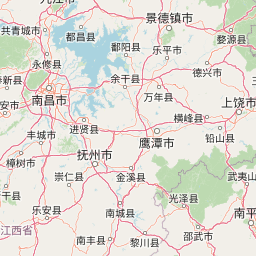
Why Wuyi Mountains stands out
The Wuyi Mountains are best known for three interconnected identities: their exceptional biodiversity as a refugium for endemic subtropical species dating to pre-Ice Age ecosystems; their world-renowned tea production, particularly Da Hong Pao (Big Red Robe) and Lapsang Souchong, grown on the characteristic cliff faces of the region; and their rich cultural heritage spanning 4,000 years of human history, including Taoist temples, Buddhist monasteries, and the birthplace of Neo-Confucianism. The dramatic landscape of the Nine-bend River winding through towering red sandstone cliffs represents one of China's most iconic natural vistas.
Wuyi Mountains history and protected-area timeline
Human activity in the Wuyi Mountains extends back four millennia, with archaeological evidence establishing the region as a significant center of ancient civilization. During the Western Han dynasty, the area served as the capital of the Minyue kingdom at the ancient city of Chengcun. In the 7th century, the Wuyi Palace was constructed as a site for imperial sacrificial activities, a location that remains accessible to visitors today. The mountains subsequently became an important religious center, first for Taoism and later for Buddhism. Between the Northern Song dynasty and the Qing dynasty, scholars established at least 35 academies throughout the region, while more than 60 Taoist temples and monasteries were constructed. The area holds particular significance as the cradle of Neo-Confucianism, a philosophical movement that became highly influential across East Asia from the 11th century onward. The mountain range was formally protected as a UNESCO World Heritage Site in 1999, with boundary modifications made in 2017. Portions of the nature reserve were later designated as Biosphere Reserves under the UNESCO World Network of Biosphere Reserves.
Wuyi Mountains landscape and geographic character
The physical geography of the Wuyi Mountains presents a dramatic combination of geological formations and terrain features shaped by volcanic activity and subsequent erosion. The region forms part of the Cathaysian fold system and has experienced significant volcanic activity that created large fault structures, later carved by water and weathered into the landscape visible today. The elevation ranges from approximately 200 meters in the valley floors to 2,158 meters at Mount Huanggang on the Fujian-Jiangxi border, making it the highest point in both provinces. The western peaks consist primarily of volcanic and plutonic rocks including tuff, rhyolite, and granite, while the eastern hills feature distinctive red sandstone with steep slopes and flat tops, characteristic of Danxia landforms. The landscape is defined by beautiful winding river valleys, particularly the Nine-bend River corridor, flanked by towering columnar cliffs. Numerous caverns penetrate the mountainsides, some of which have been developed as show caves for visitors.
Wuyi Mountains ecosystems, habitats, and plant life
The Wuyi Mountains represent the largest and most ecologically significant example of Chinese subtropical forests, preserving biological diversity from before the Ice Age approximately 3 million years ago. The vegetation displays clear altitudinal zonation, with broadleaf evergreen forests dominating lower elevations and deciduous and needleleaf species replacing them at higher altitudes. The forest types divide into eleven broad categories spanning temperate coniferous forest through various mixed forest types to bamboo forest and alpine meadow. Evergreen broad-leaved forests constitute the most common formation and represent some of the largest remaining tracts of humid subtropical forest globally. The botanical diversity includes higher plants from 284 families, 1,107 genera, and 2,888 species, alongside 840 species of lower plants and fungi. Common tree families include beech, laurel, camellia, magnolia, Elaeocarpaceae, and witch-hazel. The climate is humid with annual rainfall ranging from 2,200 millimeters in the southwest to 3,200 millimeters in the north, with humidity consistently between 80 and 85 percent.
Wuyi Mountains wildlife and species highlights
The fauna of the Wuyi Mountains demonstrates exceptional diversity with approximately 5,000 animal species recorded, including 475 vertebrates and 4,635 insects. Mammal populations include 71 species across 23 families, while bird diversity encompasses 256 species in 47 families. Reptiles are represented by 73 species, amphibians by 35, and fish by 40 species. The region supports 49 vertebrate species endemic to China, of which three are found nowhere else on Earth: David's parrotbill, Pope's spiny toad, and the bamboo snake Pseudoxenodon karlschmidti. Notable endangered species include the South China tiger, clouded leopard, hairy-fronted muntjac, mainland serow, Cabot's tragopan, Elliot's pheasant, Chinese giant salamander, and the golden Kaiser-i-Hind butterfly. The protected status of the area has allowed these species to persist in relatively healthy populations, making the range a critical conservation area for China's threatened wildlife.
Wuyi Mountains conservation status and protection priorities
The Wuyi Mountains hold critical conservation importance as a refugium preserving biodiversity from before the Ice Age, making it one of the most ecologically significant areas in China and globally. The UNESCO World Heritage designation in 1999 recognized both the cultural and natural outstanding universal values of the area. The site is divided into core protection zones totaling approximately 99,975 hectares, surrounded by a buffer zone of an additional 27,888 hectares. The Wuyishan National Nature Reserve and National Scenic Area provide ecological protection, while portions on both sides of the provincial border have been designated as Biosphere Reserves under the UNESCO World Network of Biosphere Reserves. The Chinese government established its first air quality monitoring station in the area in 2005, reflecting the relatively pollution-free status of the region. The protection framework addresses both the exceptional biodiversity, with numerous endemic and endangered species, and the cultural heritage elements including archaeological sites and religious monuments.
Wuyi Mountains cultural meaning and human context
The Wuyi Mountains possess a profound cultural heritage spanning four millennia of continuous human presence. The region was the heartland of the Minyue kingdom during the Western Han dynasty, with Chengcun serving as its capital. From the 7th century onward, the mountains became a sacred center for imperial ceremonies, with the Wuyi Palace constructed for sacrificial activities. The spiritual significance of the area is evidenced by the remains of more than 60 Taoist temples and monasteries, along with 35 academies established between the Northern Song and Qing dynasties. The mountains are recognized as the birthplace of Neo-Confucianism, the philosophical tradition that shaped East Asian intellectual life for centuries. Tea cultivation has been central to the regional economy and identity, with the area producing legendary varieties including Da Hong Pao, Tie Luo Han, Bai Jiguan, and Shui Jin Gui, collectively known as the Four Great Cultivars. The traditional Mountain Call ceremony was historically conducted by the county magistrate on Jingzhe Day, with tea planters praying for blessings on the harvest. The region also gave birth to tea-picking opera, a performing art rooted in Hakka culture.
Top sights and standout views in Wuyi Mountains
The Wuyi Mountains offer visitors multiple iconic experiences centered on the dramatic natural landscape and deep cultural heritage. The raft trip down the Nine-bend River ranks as the most popular activity, allowing visitors to float beneath towering cliffs and through the distinctive meandering gorge. The cave systems, particularly Fuxi Cave with its famous Thread of Sky passage barely wider than a person, provide spectacular underground exploration. The Tian Cheng Temple features a remarkable rock-relief statue of Guanyin, the Chinese goddess of mercy, carved directly into the mountainside in 1707. The tea culture remains vibrant, with Da Hong Pao bushes growing on cliff faces throughout the region and the annual Impression Da Hong Pao Show presenting the world's only large-scale landscape performance devoted to tea culture. The area's ecological significance can be observed through guided visits to the nature reserve sections, where controlled access protects the sensitive ecosystems while allowing environmental education.
Best time to visit Wuyi Mountains
The Wuyi Mountains can be visited throughout the year, though the optimal period for experiencing the landscape and activities spans from late spring through autumn. The summer months of July and August bring the warmest conditions and coincide with the peak visitor season, though the mountain climate remains comfortable due to the elevation and forest cover. Spring visiting, particularly around April and May, offers comfortable temperatures and the verdant scenery of new growth throughout the forests. Autumn in September and October provides pleasant weather and the opportunity to witness the tea harvest season. The area experiences significant rainfall throughout the year, with annual precipitation averaging between 2,200 and 3,200 millimeters, so visitors should be prepared for wet conditions regardless of season. The high humidity and frequent fogs contribute to the mystical atmosphere of the mountain valleys but may affect visibility from viewpoints. Winters can bring snow to the highest peaks, though the lower elevations remain accessible with cooler temperatures averaging 12 to 18 degrees Celsius depending on altitude.