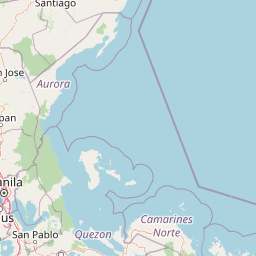
Why Aurora Memorial National Park stands out
This park is especially known for its significant bird biodiversity and its role as an Important Bird Area. The Sierra Madre forest ecosystem supports populations of several endemic and threatened avian species including the Philippine eagle, one of the largest and most iconic eagles in the world. The park's rainforest environment provides critical habitat for the Philippine hawk-eagle, spotted imperial-pigeon, flame-breasted fruit-dove, green racket-tail, and whiskered pitta. Its designation as an IBA reflects the presence of significant populations of Philippine ducks and various endemic babbler species including the golden-crowned babbler and Luzon striped babbler. The park also supports the Luzon water-redstart, a distinctive bird species associated with the region's watercourses.
Aurora Memorial National Park history and protected-area timeline
Aurora Memorial National Park was originally established in 1937 through Proclamation No. 220 issued by President Manuel L. Quezon, initially designated as Boñgabon-Baler National Park. The original park encompassed 2,356 hectares at its founding. By 1941, the protected area was expanded to its current size of 5,676 hectares, more than doubling the initial designation. In May 1949, the park was officially dedicated to Aurora Aragon Quezon, the former First Lady of the Philippines and wife of President Quezon, receiving its present name in honor of her contributions to the nation. The park's establishment predates many Philippine protected areas and reflects early twentieth-century recognition of the Sierra Madre region's ecological significance.
Aurora Memorial National Park landscape and geographic character
The park occupies the eastern slopes of the Sierra Madre mountain range, spanning approximately 50 kilometers along the scenic Bongabon-Baler road. The terrain is characterized by mountainous topography with ridges and valleys oriented along the range's north-south axis. Elevation within the park reaches a maximum of 1,000 meters, a relatively modest altitude that supports lowland dipterocarp forest as the dominant vegetation type. The landscape features forested slopes descending toward the coastal plain, with the park serving as a transitional zone between the more extensive mountain forests of the Sierra Madre and the agricultural lowlands of Aurora province. The terrain's steepness and the forest cover contribute to the area's watershed function for downstream communities.
Aurora Memorial National Park ecosystems, habitats, and plant life
The ecological character of Aurora Memorial National Park is defined by its position within the Sierra Madre, one of the Philippines' most biodiverse regions. The park's primary forest type is lowland dipterocarp forest, characterized by large emergent trees of the Dipterocarpaceae family that dominate the canopy in areas of relatively flat to rolling terrain. At higher elevations approaching the park's maximum altitude of 1,000 meters, limited areas of montane forest occur, featuring different species assemblages adapted to cooler, more humid conditions. The forest ecosystem supports a diverse array of plant species, though detailed inventories specific to the park are limited in available documentation. The protected area forms part of a larger forest continuum within the Sierra Madre mountain range, contributing to regional biodiversity conservation.
Aurora Memorial National Park wildlife and species highlights
Aurora Memorial National Park supports notable wildlife diversity, with particular significance attached to its avian fauna. The park has been designated an Important Bird Area by BirdLife International, recognizing its importance for populations of several bird species. Notable species include the Philippine duck, a endemic waterfowl species, and the spotted imperial-pigeon and flame-breasted fruit-dove, both representing endemic fruit-dove species found only in the Philippines. The park provides habitat for the Philippine eagle and Philippine hawk-eagle, two of the country's most impressive raptors. Additional notable species include the green racket-tail, a distinctive parrot-like bird, and the whiskered pitta, a colorful ground-dwelling bird. The babbler family is represented by the golden-crowned babbler and Luzon striped babbler, both endemic to Luzon. The Luzon water-redstart frequents the park's watercourses. Beyond avifauna, the park supports various amphibians and reptiles, though specific species documentation is limited in available sources.
Aurora Memorial National Park conservation status and protection priorities
The park holds IUCN Category V status as a protected landscape, reflecting its designation as an area where human interaction with the landscape has shaped the environment over time while maintaining conservation values. Its recognition as an Important Bird Area underscores the park's significance for biodiversity conservation at the regional and global levels. The Sierra Madre mountain range represents one of the Philippines' most extensive remaining forest areas, and protected areas like Aurora Memorial National Park play a critical role in maintaining ecological corridors and forest cover. The park faces ongoing conservation challenges from agricultural expansion and resource extraction, but its long-established protected status provides a framework for ongoing management and conservation action.
Aurora Memorial National Park cultural meaning and human context
The park is named in honor of Aurora Aragon Quezon, former First Lady of the Philippines, to whom the park was dedicated in 1949. This naming reflects the park's connection to Philippine national history and the recognition of individuals significant in the country's development. The surrounding region has historical connections to the Spanish colonial period and subsequent American administration, though detailed cultural heritage documentation specific to the park area is limited in available sources. Local communities in the provinces of Nueva Ecija and Aurora maintain connections to the landscape, with traditional land uses including agriculture and resource gathering that intersect with the park's conservation mandate.
Top sights and standout views in Aurora Memorial National Park
The park's designation as an Important Bird Area makes it particularly significant for birdwatching and ornithological interest, with multiple endemic species present including the Philippine eagle and various fruit-dove and babbler species. The scenic Bongabon-Baler road traverses the park, providing access to the Sierra Madre's forest environment. As one of the older protected areas in the Philippines, established in 1937, the park represents decades of conservation commitment. The lowland dipterocarp forest ecosystem, while not as dramatic as montane or cloud forest, provides important habitat for species adapted to this increasingly rare forest type.
Best time to visit Aurora Memorial National Park
The park can be visited throughout the year, though the dry season from November to May typically offers more reliable access and clearer conditions for outdoor activities. The wet season from June to October brings regular rainfall to the region, which maintains the forest's lush appearance but may affect road conditions and accessibility. Bird activity may be more observable during the dry season when water sources become more concentrated. The park's elevation of up to 1,000 meters provides a slightly cooler environment than the surrounding lowlands, offering some respite from the typical tropical heat of Central Luzon.