Why Bangan Hill National Park stands out
Bangan Hill National Park is best known for its dual significance as a cultural landmark and a hiking destination. The park is renowned for its role in the founding of Bayombong municipality and the province's first Catholic mass in 1739, making it a site of deep historical importance in the Cagayan Valley region. It is also famous for the annual Stations of the Cross performance during Holy Week, where live actors depict the crucifixion narrative in a tradition maintained by the Diocese of Bayombong. The park's observation deck offers panoramic views of the valley framed by the Caraballo and Cordillera Central mountain ranges, making it a popular year-round hiking destination.
Bangan Hill National Park history and protected-area timeline
Bangan Hill National Park's history stretches back to the early colonial period of the Philippines. In 1739, Father Pedro Freire conducted the first Catholic mass in what would become the province of Nueva Vizcaya at the site that now falls within the park's boundaries. This religious ceremony is historically significant not only for its spiritual importance but also because it coincided with the founding of the municipality of Bayombong, establishing the settlement that would become the provincial capital.
The park's designation as a national park in 1995 came through Republic Act No. 7954, which provided formal protected-area status to sites of national significance. This legislative action reflected the Philippine government's approach to preserving locations that combine natural beauty with historical importance. The park's classification as IUCN Category II indicates its primary function as a national park focused on ecosystem protection while accommodating public use and cultural activities.
The continuation of the Stations of the Cross tradition demonstrates how the park remains embedded in the living religious culture of the region. The Diocese of Bayombong organizes this annual performance, drawing participants and observers from across the province and reinforcing the site's role as a place of communal significance beyond its value as a natural area.
Bangan Hill National Park landscape and geographic character
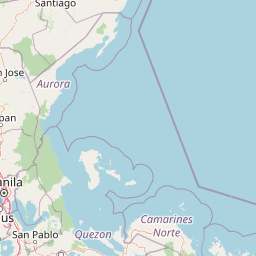
Bangan Hill rises from the Cagayan Valley floor, forming a prominent topographical feature within the municipality of Bayombong. The park's terrain consists of rolling to steep slopes covered with vegetation typical of the region's tropical environment. The summit area accommodates an observation deck that has become the focal point for visitor activity, offering unobstructed views across the valley landscape.
The surrounding valley is bounded to the east by the Caraballo Mountains and to the west by the Cordillera Central, two major mountain systems that define the geography of northern Luzon. These ranges channel weather patterns and influence the distribution of ecosystems throughout the region. The valleys between these mountain fronts contain productive agricultural land, and the visual connection between the park's heights and the distant peaks forms a key element of the landscape experience.
The combination of elevated terrain, valley views, and the surrounding mountain frameworks creates a landscape that is both visually distinctive and representative of the Cagayan Valley region's character. The park provides a natural vantage point from which to understand the broader geographical context of Nueva Vizcaya.
Bangan Hill National Park ecosystems, habitats, and plant life
The natural environment of Bangan Hill National Park reflects the ecological characteristics of the Cagayan Valley region in northern Luzon. While the park's 13.90-hectare area is relatively small, it supports vegetation communities adapted to the valley's climate and the hill's topographical variation. The park's location within a valley bounded by major mountain ranges places it within a transitional zone between different ecological systems.
The tropical climate of the region supports year-round vegetation growth, and the park's green covering provides habitat for various bird species and small mammals typical of secondary forest and woodland areas. While the park is not specifically designated for endangered species protection, it contributes to the network of green spaces that support biodiversity within the agricultural landscape of the valley. The maintenance of tree cover on the hill itself helps prevent erosion and maintains ecological function within the protected area.
Bangan Hill National Park wildlife and species highlights
The wildlife community in Bangan Hill National Park consists primarily of common bird species and small mammals found throughout the Cagayan Valley region. The park's vegetation provides nesting and foraging habitat for various passerine birds, while the mixed tree and shrub cover supports populations of small mammals including rodents and bats. The surrounding agricultural landscape influences the species composition, as many animals utilize both the protected area and the cultivated lands nearby.
While the park does not feature particularly rare or endangered species, it functions as a refuge within a largely agricultural landscape. The green coverage provided by the park's vegetation maintains connectivity for wildlife movement and provides breathing space within the human-modified environment of the valley. Visitors may observe various bird species while hiking the trails, particularly during early morning hours when bird activity is highest.
Bangan Hill National Park conservation status and protection priorities
Bangan Hill National Park represents the category of protected areas in the Philippines where cultural and historical values combine with conservation objectives. The park's designation under Republic Act No. 7954 places it within the national system of protected areas managed by the Department of Environment and Natural Resources. As an IUCN Category II protected area, the park is intended primarily for ecosystem conservation while allowing compatible recreational and cultural uses.
The park's conservation value derives partly from its role in maintaining green space within the Cagayan Valley's agricultural landscape. The vegetation cover helps regulate local microclimate conditions and provides ecosystem services including soil stabilization on the hill's slopes. While the park's small size limits its ecological significance compared to larger protected areas, it contributes to the broader network of protected areas in Nueva Vizcaya and demonstrates how sites of cultural importance can be integrated into conservation planning.
Bangan Hill National Park cultural meaning and human context
The cultural significance of Bangan Hill National Park is deeply rooted in the colonial history of the Cagayan Valley region. The 1739 mass conducted by Father Pedro Freire represents a foundational moment in the Catholic history of Nueva Vizcaya, and the site has maintained its religious importance through continuous use for worship and ceremonial purposes. The founding of Bayombong municipality at this location established the settlement that would become the political center of the province.
The annual Stations of the Cross performance during Holy Week represents a living tradition that connects the park to the contemporary religious life of the community. The Diocese of Bayombong organizes this event, which draws participants from across the province and demonstrates how the landscape serves as a venue for collective religious expression. This tradition transforms the park from a static historical site into an active space where cultural practices continue to unfold.
The intersection of natural landscape and cultural meaning makes Bangan Hill distinctive among Philippine protected areas. The observation deck provides not only scenic views but also a vantage point from which visitors can contemplate the historical narratives attached to the land.
Top sights and standout views in Bangan Hill National Park
Bangan Hill National Park offers visitors a combination of historical exploration, cultural engagement, and natural scenery within a compact protected area. The first mass site marking the 1739 founding of Bayombong provides a direct connection to the province's colonial origins. The annual Stations of the Cross during Lenten season represents one of the region's most significant religious traditions, drawing participants from throughout Nueva Vizcaya. The hike to the summit and observation deck provides panoramic views of the Cagayan Valley framed by the Caraballo and Cordillera Central mountains. The park's accessibility from Santiago City and other population centers makes it a practical destination for visitors interested in combining hiking with cultural and historical exploration.
Best time to visit Bangan Hill National Park
Bangan Hill National Park can be visited throughout the year due to its location in the tropical climate of northern Luzon. The most popular period for visitors coincides with the Lenten season, when the Stations of the Cross performance draws large crowds and the park becomes a center of religious activity. For hiking and landscape viewing, the dry season from November to April generally offers more comfortable conditions with lower humidity and clearer skies. The monsoon season from May to October brings increased rainfall, though the park remains accessible for visitors willing to hike in wet conditions. The mountain views tend to be clearest during the dry months when atmospheric moisture is reduced, providing the best visibility from the observation deck.