

Mori Atlas logo
National parkCocoparra National Park

Discover the mapped geography and distinct semi-arid terrain of this important national park.

Cocoparra National Park: A Rugged Protected Landscape in Australia's Riverina Region

Cocoparra National Park, situated in New South Wales' Riverina region, represents a significant protected natural area. This national park encompasses approximately 8,357 hectares of unique semi-arid woodland and rugged hill country, distinguished by landmarks like Bingar Mountain and Brogden Mountain. Its landscape offers a stark visual contrast to the surrounding flat agricultural plains, characterized by rocky sandstone ridges and diverse native flora. As an Important Bird Area, Cocoparra National Park plays a crucial role in conserving avian populations within its distinctive inland terrain.

National ParkNew South WalesSemi-arid LandscapeImportant Bird AreaProtected WoodlandHill Country

Cocoparra National Park

National park

Park overview

Structured park overview, official facts, and landscape profile for Cocoparra National Park

Cocoparra National Park park facts, protected area profile, and essential visitor context
Review the core facts for Cocoparra National Park, including designation, size, terrain, visitor scale, habitats, and operating context in one park-focused overview.

About Cocoparra National Park

Cocoparra National Park represents a significant protected area in the semi-arid interior of New South Wales, providing sanctuary for native wildlife and preserving a distinctive landscape character that contrasts sharply with the surrounding agricultural plains of the Riverina. The park's location, approximately 25 kilometres northeast of Griffith and 457 kilometres southwest of Sydney, places it within one of Australia's most productive farming regions, making the protected hill country and woodland of Cocoparra an important ecological refuge. The terrain is characterized by a series of low but rugged hills that break the otherwise flat landscape, with rocky sandstone ridges and steep-sided valleys supporting vegetation communities adapted to the semi-arid conditions. The park's name comes from the Aboriginal word "cocupara," referring to the kookaburra, indicating the long human association with this landscape. Adjacent to the national park to the north lies the Cocoparra Nature Reserve, which was dedicated in 1963 and together with the national park forms a contiguous protected area complex that enhances habitat connectivity and conservation effectiveness in the region.

Quick facts and research context for Cocoparra National Park

Cocoparra National Park encompasses 8,357 hectares (20,650 acres) of semi-arid terrain in inland New South Wales. The park features prominent hill formations, with Bingar Mountain reaching 455 metres and Brogden Mountain at 390 metres above sea level. The area experiences a semi-arid climate and supports vegetation communities including wattle, orchids, ironbark, and blue-tinged cypress pines. The underlying geology consists of Upper Devonian sandstones, siltstones, and conglomerates. The park contains day-use picnic areas and a campground at Woolshed Flat.

Park context

Deeper park guide and search-rich context for Cocoparra National Park

Cocoparra National Park history, landscape, wildlife, and travel context
Explore Cocoparra National Park through its history, landscape character, ecosystems, wildlife, conservation priorities, cultural context, and seasonal travel timing in a structured park guide built for atlas discovery and search intent.

Why Cocoparra National Park stands out

Cocoparra National Park is best known for its status as an Important Bird Area, recognized by BirdLife International for supporting significant populations of the near-threatened painted honeyeater, with up to 50 individuals recorded in the Binya-Cocoparra area, as well as the distinctive diamond firetail. The park is also notable for its rugged hill country rising from the flat Riverina plains, offering a distinctive semi-arid landscape character within a region that is predominantly agricultural. The combination of rocky sandstone ridges, woodland habitats, and isolated hilltop vegetation creates ecological diversity unusual for this part of inland New South Wales.
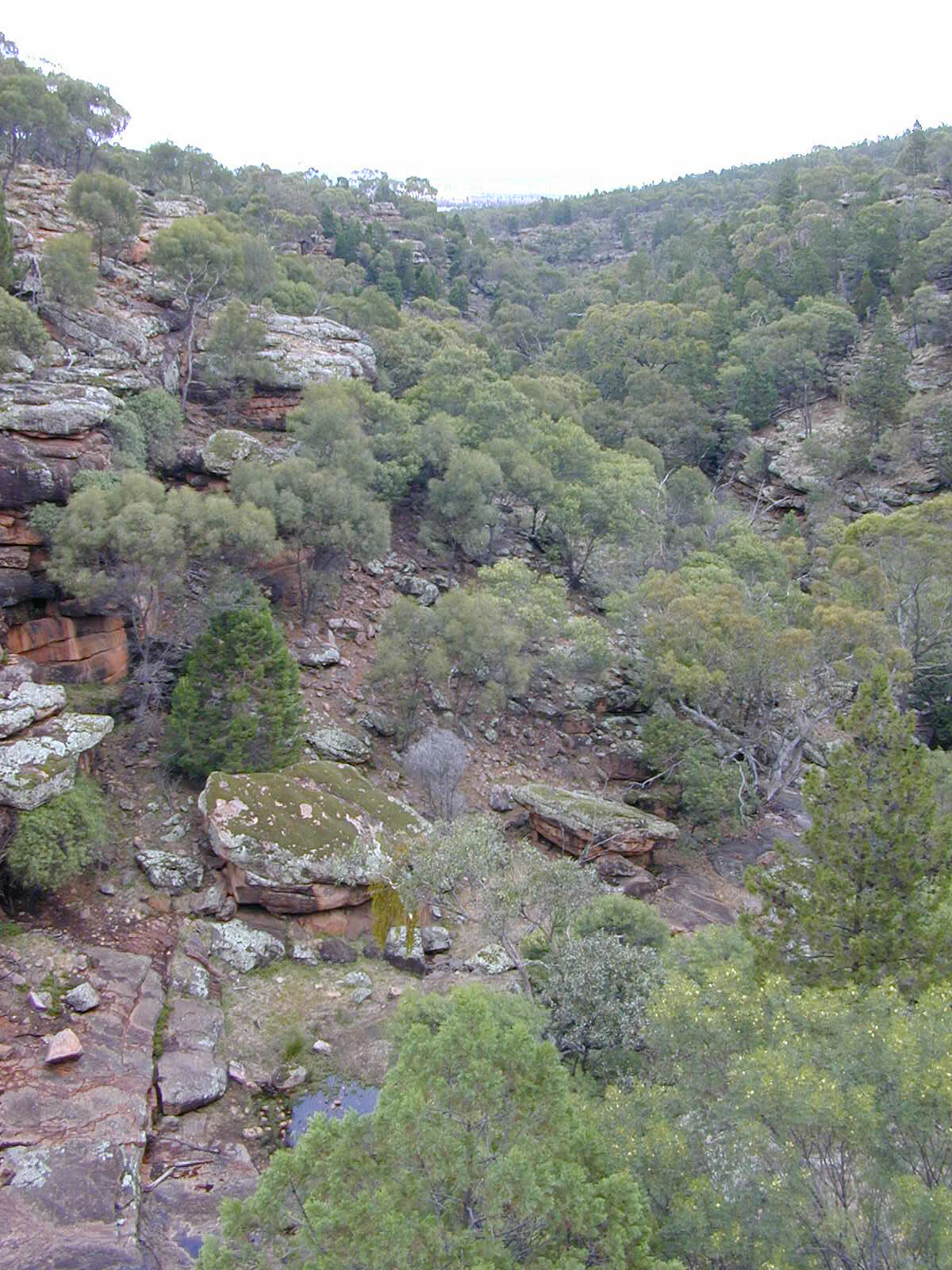
Cocoparra valley view
Store Creek in Cocoparra National Park

Cocoparra National Park history and protected-area timeline

Cocoparra National Park was officially gazetted on 3 December 1969, establishing formal protected area status for this semi-arid hill country in the Riverina region of New South Wales. The adjacent Cocoparra Nature Reserve, which shares a boundary with the national park to the north, was dedicated earlier in 1963 and covers an additional 4,647 hectares, creating a combined protected area of significant scale. The establishment of the park reflected growing recognition in the late 1960s of the need to preserve representative examples of New South Wales' diverse terrestrial environments, including the semi-arid woodland and hill country of the inland regions. The park's name derives from the Aboriginal term "cocupara," which translates to kookaburra in English, preserving the indigenous heritage and naming tradition of the region.

Cocoparra National Park landscape and geographic character

The landscape of Cocoparra National Park is defined by a prominent range of hills that rise abruptly from the surrounding flat agricultural plains of the Riverina. Bingar Mountain reaches 455 metres above sea level, while Brogden Mountain stands at 390 metres, providing the most elevation change in an otherwise uniformly flat region. The hills are characterized by rocky sandstone ridges, steep-sided valleys, and exposed rock outcrops. The underlying geology comprises Upper Devonian sandstones, siltstones, and conglomerates, representing ancient sedimentary formations dating back hundreds of millions of years. The combination of rugged hill terrain with the semi-arid surrounding plains creates a landscape of strong visual contrast, where the park's dark timbered ridges stand out against the lighter-coloured farmland that dominates the broader region.

Cocoparra National Park ecosystems, habitats, and plant life

The semi-arid climate of Cocoparra National Park shapes distinctive vegetation communities adapted to relatively low rainfall and variable temperatures. The park supports woodland formations dominated by wattle (Acacia species) and ironbark trees, with an understory that includes numerous orchid species. Blue-tinged cypress pines (Callitris) add to the characteristic vegetation profile, forming dense stands on some ridgelines and slopes. The rugged terrain creates multiple microhabitats, from rocky exposed ridges to shaded valleys, supporting plant species with varying moisture and sun exposure requirements. The semi-arid woodland environment, while less biodiverse than tropical or temperate forests, supports specialized species adapted to these conditions and provides important habitat connectivity in a landscape largely transformed by agriculture.

Cocoparra National Park wildlife and species highlights

Cococoparra National Park is recognized internationally for its birdlife significance, with the Binya-Cocoparra area designated as an Important Bird Area by BirdLife International due to the presence of species of conservation concern. The park supports a relatively large population of the near-threatened painted honeyeater, with up to 50 individuals recorded in the area, making it one of the more significant populations of this species in New South Wales. The diamond firetail, a striking small finch species, is also present in good numbers. These species are associated with the semi-arid woodland and shrubland habitats found within the park. The rocky hill country and woodland environments provide nesting sites, feeding resources, and shelter for a range of bird species, making the park an important habitat in the otherwise heavily cleared Riverina agricultural landscape.

Cocoparra National Park conservation status and protection priorities

Cocoparra National Park plays an important conservation role in the Riverina region of New South Wales, preserving semi-arid woodland and hill country habitats that have been largely cleared for agriculture across the broader landscape. The park's designation as an Important Bird Area by BirdLife International highlights its significance for conservation, particularly for the near-threatened painted honeyeater. The combined protected area complex formed by the national park and adjacent Cocoparra Nature Reserve provides substantial habitat for native species and supports ecological processes in a region where remaining natural vegetation is highly fragmented. The preservation of the park's rocky ridges, woodland, and riparian corridors contributes to biodiversity conservation in an area where the semi-arid environment and historical land clearing have significantly reduced native habitat extent.

Cocoparra National Park cultural meaning and human context

The Cocoparra area holds indigenous heritage significance, as evidenced by the park's name deriving from the Aboriginal term "cocupara," meaning kookaburra in the local indigenous language. This naming connection preserves the cultural association between the landscape and the traditional custodians of the land. The semi-arid hills and woodlands of the Riverina region have been inhabited by Aboriginal peoples for thousands of years, with the Cocoparra hills likely serving as important reference points, resource areas, and cultural sites within the broader indigenous landscape of the region. The preservation of the Aboriginal place name in the national park's title maintains this cultural connection as part of the park's identity.

Top sights and standout views in Cocoparra National Park

The distinctive hill country of Cocoparra National Park, rising from the flat Riverina plains, provides a dramatic landscape contrast that defines the park's character. Bingar Mountain and Brogden Mountain offer elevated viewpoints over the surrounding agricultural landscape. The semi-arid woodland, with its ironbark, wattle, and cypress pine communities, creates a characteristic Australian inland scenery. The Important Bird Area designation highlights the park's significance for conservation of the near-threatened painted honeyeater and diamond firetail. The adjacent Cocoparra Nature Reserve expands the protected area, creating a larger conservation complex. The park provides accessible semi-arid nature experiences with picnic areas and camping facilities at Woolshed Flat.

Best time to visit Cocoparra National Park

The best time to visit Cocoparra National Park is during the cooler months of autumn and spring, when temperatures are more comfortable for exploring the hill tracks and woodland areas. Winter months (June to August) offer mild daytime temperatures and typically clear skies, making it a pleasant season for walking and wildlife observation, though nights can be cold. Summer (December to February) in this semi-arid region can bring very hot conditions, so early morning or late afternoon visits are advisable during this period. The park's vegetation and birdlife can be observed year-round, though spring flowering of orchids and wattles adds particular seasonal interest.
Park location guide

Geography guide, regional context, and park location map for Cocoparra National Park

Cocoparra National Park park geography, regions, and map view in Australia
Understand where Cocoparra National Park sits in Australia through a broader geographic reading of the surrounding landscape, nearby location context, and its mapped position within the national park landscape.

How Cocoparra National Park fits into Australia

Australia is a constitutional monarchy and federal parliamentary democracy comprising six states and ten territories. With a population of nearly 28 million, it is one of the world's most urbanised countries, with most people concentrated on the eastern seaboard. The country has a high Human Development Index and is known for its cultural diversity, ancient Aboriginal heritage, and unique wildlife.

Wider geography shaping Cocoparra National Park in Australia

Australia occupies the entire Australian continent, the island of Tasmania, and numerous smaller islands. It is the world's flattest and driest inhabited continent, featuring vast deserts in the interior (the Outback), tropical rainforests along the eastern coast, and a coastline bordering the Indian and Pacific Oceans.

Map view of Cocoparra National Park

Use this park location map to pinpoint Cocoparra National Park in Australia, understand its exact geographic position, and read its mapped placement within the surrounding landscape more clearly.

Pigeon | © OpenStreetMap contributors

Location context for Cocoparra National Park

New South WalesRiverina

View the iconic hill country and semi-arid woodland scenery, offering insight into the park's distinct protected landscape within the Riverina region.

Cocoparra National Park Photos: Explore Rugged Hill Landscapes, Semi-arid Woodland, and Protected Habitats
Explore a visual collection showcasing the rugged hill country, sandstone ridges, and diverse semi-arid woodland habitats unique to Cocoparra National Park. These curated images offer essential insights into the protected area's distinct landscape character, illustrating its dramatic elevation, bird environments, and visual contrast with the surrounding flat Riverina plains.

Cocoparra valley view

Park atlas

Trace the regional spread of protected landscapes and compare adjacent park geography in the Riverina.

Explore Other National Parks and Protected Areas Near Cocoparra National Park
Discover national parks and protected areas similar to Cocoparra National Park, tracing the unique semi-arid woodland and hill country landscapes across New South Wales. Compare the geographic context of these conservation sites, mapping their regional spread within the Riverina and understanding their distinct ecological features.
National parkNew South Wales

Jindalee National Park: New South Wales National Park Protecting Cypress Pine Woodlands

Explore unique mapped terrain and regional conservation landscape.

Jindalee National Park represents a vital conservation effort in New South Wales, safeguarding remaining cypress pine woodlands and Critically Endangered grassy woodland ecosystems. Situated in the South West Slopes region, its undulating terrain and drainage lines form a distinctive natural landscape. The park's designation as a national park underscores its importance for preserving threatened species habitats and offers a focused point for atlas-driven discovery of its unique protected-area character and geographic context.

Area
10.76 km²
Established
2011
IUCN
II
National parkNew South Wales

Benambra National Park: New South Wales Protected Area and Great Yambla Range Map

Explore mapped terrain and woodland ecosystems.

Benambra National Park serves as a key protected area in New South Wales, preserving crucial white box and Red Box woodland communities against a backdrop of the Great Yambla Range's dramatic topography. This national park is significant for its role in conserving habitat for at least twelve threatened bird species and its unique geological features, including cliff faces and flat-topped peaks. Understanding the park's mapped boundaries and its place within the South West Slopes region offers valuable context for geographic discovery and the study of Australia's natural landscapes.

Area
13.99 km²
Established
2001
IUCN
II
National parkVictoria

Lower Goulburn National Park: Mapping Victoria's River Red Gum Woodlands and Riparian Protected Area

Discover unique riverine forest and protected landscape context in Victoria

Lower Goulburn National Park represents a crucial protected corridor in Victoria, Australia, primarily safeguarding magnificent stands of river red gum woodlands along the Goulburn River. This national park offers a unique opportunity to explore a well-preserved riparian ecosystem within a modified agricultural region. Understand its linear geographic layout, the distinct arboreal character of its landscape, and its role in maintaining natural river processes and wildlife connectivity. The park's identity is deeply tied to the visual spectacle of its iconic eucalyptus canopy framing the waterway, providing valuable context for its protected status and ecological importance.

Area
93.1 km²
Established
2010
IUCN
II
National parkNew South Wales

Brindabella National Park: A Protected Mountain Landscape in New South Wales' Australian Alps

Discover its mapped terrain and regional geographic context.

Brindabella National Park offers a unique perspective on the mountainous terrain of the Brindabella Range, forming a vital protected area within the Australian Alps. Located in New South Wales, its landscape features rugged ridgelines and diverse subalpine vegetation, recognized for its national environmental significance. This park serves as a key destination for understanding protected area geography and the mapped context of Australia's high country.

Area
184.54 km²
Established
1996
IUCN
II
National parkNew South Wales

Kosciuszko National Park: Australia's Highest Alpine Terrain and Mapped Protected Landscape

Discover unique glacial landscapes and geographic context in New South Wales.

Kosciuszko National Park represents the pinnacle of Australia's alpine geography, preserving the continent's only true alpine ecosystems. This extensive national park in New South Wales features dramatic glacial landforms, including its namesake Mount Kosciuszko, Australia's highest peak. Users can explore the park's mapped boundaries, surrounding natural terrain, and unique landscape features for a comprehensive understanding of this significant protected area.

Area
6,900 km²
Established
1944
IUCN
II
Visitors
3.3M annual
National parkVictoria

Heathcote-Graytown National Park: Victoria's Key Box-Ironbark Forest Protected Area

Explore the mapped terrain and regional geography of this national park.

Heathcote-Graytown National Park stands as a critical protected area in Victoria, Australia, focused on conserving the rare box-ironbark forests that once dominated the region. Located within the Great Dividing Range, this national park provides essential habitat for woodland birds, notably the swift parrot, and offers a glimpse into the natural landscape that predates widespread agricultural development. Its inclusion in the park atlas highlights its ecological importance and contributes to a broader understanding of protected land distribution within Victoria's unique geography.

Area
128.33 km²
Established
2002
IUCN
II
Relief
Mountain
National parkVictoria

Greater Bendigo National Park: Victoria's Box-Ironbark Forest Protected Landscape

Mapped terrain and vital woodland bird habitats.

Greater Bendigo National Park offers a prime example of Victoria's ecologically significant box-ironbark forests, recognized as a crucial refuge for biodiversity and notable bird species like the swift parrot. Situated near Bendigo, this national park's protected landscape provides essential insights into regional geography and woodland ecosystems. Its mapped boundaries encompass a vital area for understanding the distribution and character of this unique Australian forest type.

Area
170 km²
Established
2002
IUCN
II
National parkNew South Wales

Mares Forest National Park: New South Wales National Park Atlas and Protected Landscape

Explore mapped boundaries and forest terrain.

Mares Forest National Park, situated in New South Wales, offers a distinct protected landscape defined by its wet eucalyptus forest and kurrajong trees. As a national park, it provides valuable insight into the regional geography of the Southern Tablelands, showcasing its unique terrain and role as wildlife habitat. This park serves as an essential point for atlas-based exploration of Australia's conservation estate, highlighting its mapped boundaries and natural features.

Area
25.59 km²
Established
2010
IUCN
II

Common questions about visiting, size, designation, and location context for Cocoparra National Park

Cocoparra National Park FAQs for park facts, access, geography, and protected area context
Find quick answers about Cocoparra National Park, including protected-area facts, park geography, trail and visitor context, and how the park fits into its surrounding country and regional landscape.
MoriAtlas Explorer

Continue Your Protected Areas Search Across the Global Atlas

Deepen your exploration by continuing the structured search for national parks and protected areas worldwide. Utilize the comprehensive filtering capabilities to compare different conservation landscapes and refine your understanding of global park geography. Discover more about the distribution and characteristics of protected natural areas.

Global natural geography