Mori Atlas logo
National parkGreater Bendigo National Park

Explore the mapped boundaries and distinct woodland ecosystems of this significant Australian national park.

Greater Bendigo National Park: Box-Ironbark Forest Protected Landscape and Regional Geography

Greater Bendigo National Park, located in Victoria, Australia, represents a substantial protected area dedicated to preserving the unique box-ironbark forest ecosystem. This national park encompasses a significant portion of Victoria's remaining box-ironbark woodland, a critical habitat for diverse birdlife, including the endangered swift parrot. Its mapped boundaries define a vital natural landscape providing insights into regional geography and the conservation of valuable forest types.

National ParkVictoria AustraliaBox-Ironbark ForestSwift Parrot HabitatWoodland Bird AreaImportant Bird Area

Greater Bendigo National Park

National park

Park overview

Structured park overview, official facts, and landscape profile for Greater Bendigo National Park

Greater Bendigo National Park park facts, protected area profile, and essential visitor context
Review the core facts for Greater Bendigo National Park, including designation, size, terrain, visitor scale, habitats, and operating context in one park-focused overview.

About Greater Bendigo National Park

Greater Bendigo National Park represents a significant conservation achievement in Victoria, bringing together five separate protected areas and state forests into a unified national park protecting one of the state's most distinctive woodland environments. The park's box-ironbark forest character is defined by a mixture of grey box, red ironbark, and yellow gum trees that create a structurally diverse canopy supporting numerous wildlife species. The landscape features gently undulating terrain typical of central Victoria's goldfields region, with rocky ridges, grassy woodland understories, and scattered wetlands adding to the habitat diversity. The park provides essential ecosystem services for the Bendigo region, including watershed protection and soil conservation, while offering residents and visitors a genuine wilderness experience so close to a major regional city. The amalgamation that created the park in 2002 reflected growing recognition that isolated forest patches required connectivity to support viable wildlife populations and meaningful conservation outcomes.

Quick facts and research context for Greater Bendigo National Park

Greater Bendigo National Park occupies roughly 170 square kilometers of box-ironbark forest terrain in central Victoria. The park was formally established on 30 October 2002 when several separate protected areas and state forests were amalgamated into a single national park. The area falls within the broader Bendigo Box-Ironbark Region, which has been identified by BirdLife International as an Important Bird Area due to its significance for endangered species including the swift parrot. The park is managed by Parks Victoria and contains facilities including the Notley camping area for visitors wishing to experience the woodland landscape firsthand.

Park context

Deeper park guide and search-rich context for Greater Bendigo National Park

Greater Bendigo National Park history, landscape, wildlife, and travel context
Explore Greater Bendigo National Park through its history, landscape character, ecosystems, wildlife, conservation priorities, cultural context, and seasonal travel timing in a structured park guide built for atlas discovery and search intent.

Why Greater Bendigo National Park stands out

Greater Bendigo National Park is best known for its extensive box-ironbark forest, a distinctive woodland ecosystem found only in Victoria that supports remarkable bird diversity. The park is particularly significant as a protected habitat for the swift parrot, an endangered migratory bird species that depends on nectar from eucalyptus and other native trees. The woodland bird community throughout the Bendigo Box-Ironbark Region represents one of the most significant concentrations of birdlife in temperate Australia, with numerous species utilizing the park's diverse forest structure. The park also preserves remnant goldfields-era landscapes and provides a natural backdrop to the historic gold rush city of Bendigo.

Greater Bendigo National Park history and protected-area timeline

The land that now comprises Greater Bendigo National Park has a complex history shaped by gold discovery, forest exploitation, and subsequent conservation recognition. The region around Bendigo was one of Australia's most productive goldfields during the gold rushes of the 1850s and 1860s, and much of the surrounding landscape was significantly altered by mining activity and subsequent timber harvesting. The creation of the park in 2002 represented the culmination of decades of advocacy by conservation groups seeking better protection for Victoria's remaining box-ironbark forests. The former reserves and state forests that were incorporated into the new national park had varying levels of protection, and unifying them under national park status elevated their conservation significance considerably. Parks Victoria assumed management responsibility for the consolidated park, implementing enhanced conservation measures while also improving visitor facilities and recreational opportunities.

Greater Bendigo National Park landscape and geographic character

The landscape of Greater Bendigo National Park reflects the characteristic terrain of Victoria's central highlands, featuring low rolling hills and ridge systems composed of ancient sedimentary and granite formations. The underlying geology supports soils that, while relatively nutrient-poor, sustain the hardy box-ironbark woodland that defines the park's visual character. Forest composition varies across the park with grey box woodland dominating ridge tops and lower slopes, while red ironbark and yellow gum occur in more localized patches providing important floral diversity. The park contains numerous small creeks and drainage lines that flow intermittently following seasonal rainfall, contributing to the overall habitat complexity. Rocky outcrops and exposed stone erratics are scattered throughout the woodland, adding visual interest and providing shelter for reptiles and small mammals. The park's proximity to Bendigo means the urban fringe creates an abrupt boundary on the western side, while the eastern portions extend into more remote bushland.

Greater Bendigo National Park ecosystems, habitats, and plant life

Greater Bendigo National Park protects one of Victoria's most important remaining tracts of box-ironbark forest, an ecosystem type that has been significantly reduced by clearing for agriculture and urban development. The park lies at the heart of the Bendigo Box-Ironbark Region, an area recognized internationally for its biodiversity significance. The woodland structure features a relatively open canopy of eucalypts above a diverse understory of grasses, shrubs, and herbs that changes seasonally. The forest supports complex ecological relationships between flowering trees and their pollinators, with the timing of eucalypt bloom providing critical food resources for nectar-feeding birds and marsupials. The park's conservation value is enhanced by its size and the relatively intact condition of much of its woodland, providing habitat patches large enough to support viable populations of forest-dependent species.

Greater Bendigo National Park wildlife and species highlights

The wildlife of Greater Bendigo National Park is characterized by a diverse woodland bird community that represents one of the key reasons for the park's conservation significance. The swift parrot, listed as endangered in Australia, migrates to the region each autumn to feed on nectar from flowering eucalypts, with the park providing important protected feeding grounds. Other notable bird species include various honeyeaters, parrots, and cockatoos that depend on the woodland's seasonal flowering. Mammals common to the area include eastern grey kangaroos, common wallabies, and various marsupial species adapted to woodland habitats. The park also supports populations of reptiles including several snake species and skinks, while amphibian species utilize the seasonal wetlands and creek systems. The hollow-bearing trees scattered throughout the forest provide crucial shelter for nesting birds, arboreal mammals, and bats.

Greater Bendigo National Park conservation status and protection priorities

Greater Bendigo National Park plays a vital role in protecting Victoria's box-ironbark forests, an ecosystem that has been severely reduced from its pre-European extent. The park lies within the Bendigo Box-Ironbark Region Important Bird Area, formally identified by BirdLife International due to the area's significance for conservation of woodland bird species. This recognition reflects the park's importance as habitat for the endangered swift parrot and numerous other bird species that depend on the forest's seasonal resources. The conservation of this large contiguous woodland block also benefits numerous other species including mammals, reptiles, and invertebrates that require intact forest habitats. Management focuses on maintaining ecological processes, controlling invasive species, and managing fire to support the fire-adapted woodland ecosystem.

Greater Bendigo National Park cultural meaning and human context

The region surrounding Greater Bendigo National Park holds significance for the Dja Dja Wurrung people, the traditional owners of much of central Victoria whose country encompasses the park area. Gold mining history shaped the landscape significantly during the mid-nineteenth century, with the Bendigo goldfields becoming one of the most productive in Australian history. The forest surrounding Bendigo provided timber and other resources for the growing mining city, and many of the trees that survive in the park today are remnants from that era of exploitation. The park preserves a landscape that connects modern visitors to both Aboriginal heritage and the colonial history that transformed this region so dramatically. Place names throughout the area sometimes reflect the dual heritage of the landscape.

Top sights and standout views in Greater Bendigo National Park

Greater Bendigo National Park offers visitors the opportunity to experience Victoria's distinctive box-ironbark woodland landscape within easy reach of Bendigo. The Notley camping area provides a base for exploring the forest on foot, with walking tracks winding through timbered ridges and grassy woodland clearings. Birdwatching is a particularly popular activity, with the chance to observe swift parrots during autumn migration and year-round populations of honeyeaters, parrots, and cockatoos. The park's proximity to Bendigo makes it a convenient escape for residents seeking nature experiences without traveling far from the city. Autumn and winter bring optimal conditions for wildlife viewing as trees flower and animals become more active in cooler weather.

Best time to visit Greater Bendigo National Park

Autumn and winter represent the optimal seasons for visiting Greater Bendigo National Park, coinciding with the flowering of many eucalypt species that attract nectar-feeding wildlife including swift parrots. The cooler months from April through August typically offer pleasant conditions for bushwalking and camping, with mild daytime temperatures and clear skies. Spring also provides excellent wildlife viewing opportunities as wildflowers bloom throughout the understory and bird activity increases with the breeding season. Summer months can be hot in the central Victorian landscape, though early morning visits allow exploration before afternoon heat. The park can be visited year-round, though summer conditions may limit some activities and increase fire risk during dry periods.
Park location guide

Geography guide, regional context, and park location map for Greater Bendigo National Park

Greater Bendigo National Park park geography, regions, and map view in Australia
Understand where Greater Bendigo National Park sits in Australia through a broader geographic reading of the surrounding landscape, nearby location context, and its mapped position within the national park landscape.

How Greater Bendigo National Park fits into Australia

Australia is a constitutional monarchy and federal parliamentary democracy comprising six states and ten territories. With a population of nearly 28 million, it is one of the world's most urbanised countries, with most people concentrated on the eastern seaboard. The country has a high Human Development Index and is known for its cultural diversity, ancient Aboriginal heritage, and unique wildlife.

Wider geography shaping Greater Bendigo National Park in Australia

Australia occupies the entire Australian continent, the island of Tasmania, and numerous smaller islands. It is the world's flattest and driest inhabited continent, featuring vast deserts in the interior (the Outback), tropical rainforests along the eastern coast, and a coastline bordering the Indian and Pacific Oceans.

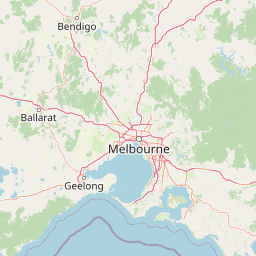
Map view of Greater Bendigo National Park

Use this park location map to pinpoint Greater Bendigo National Park in Australia, understand its exact geographic position, and read its mapped placement within the surrounding landscape more clearly.

Pigeon | © OpenStreetMap contributors
Park atlas

Compare protected landscapes and trace the geographic spread of box-ironbark forests surrounding Greater Bendigo National Park in Victoria, Australia.

Explore Nearby Protected Areas and National Parks Surrounding Greater Bendigo National Park
Continue your park discovery beyond Greater Bendigo National Park by exploring nearby protected areas and comparing their unique box-ironbark forest landscapes. This geographic context allows you to trace the spread of Victoria's crucial woodland ecosystems and understand regional conservation efforts.
Watercolor painting of green trees, rolling hills, and a pastel sky.
National park

Heathcote-Graytown National Park: Protected Box-Ironbark Forests and Swift Parrot Habitat

Mapping the landscape and geography of this Australian National Park.

Heathcote-Graytown National Park is a significant protected area safeguarding one of Victoria's remaining box-ironbark forest ecosystems. Its landscape, nestled within the Great Dividing Range, provides essential habitat for migratory swift parrots and supports diverse woodland bird species recognized by BirdLife International. Explore the park's mapped terrain and understand its role within the Central Highlands' regional geography as a vital conservation landscape.

Area
128.33 km²
Established
2002
IUCN
II
Relief
Mountain
National park

Terrick Terrick National Park: National Park Geography and Protected Land Exploration

Semi-arid woodland and grassland ecosystems in northern Victoria.

Terrick Terrick National Park represents a crucial protected area showcasing the characteristic Box-Ironbark forest and native grassland ecosystems of northern Victoria. This park is defined by its gently undulating terrain and semi-arid woodland character, offering a distinct natural landscape for geographic study and atlas exploration. Its mapped extent clearly delineates an environment vital for conservation, providing a valuable point of reference for understanding regional protected land distribution and ecological significance within Australia.

Area
38.8 km²
Established
1988
IUCN
II
Relief
Lowland
National park

Kara Kara National Park: Mapped Protected Landscape and Box-Ironbark Forest Ecology

Explore Victoria's protected natural geography and woodland habitats.

Kara Kara National Park is an essential protected area in Victoria, Australia, recognized for its significant box-ironbark forest ecosystems and the conservation of the endangered swift parrot. The park's geography is defined by the St Arnaud Range, offering a distinct topography of ridges and valleys that contrast with the surrounding plains. Understanding this park's mapped boundaries and its role within the regional landscape provides critical insight into its ecological value and its representation of historical woodland environments.

Area
139.9 km²
Established
2002
IUCN
II
Relief
Upland
National park

Lower Goulburn National Park: Australia's River Red Gum Woodland Protected Landscape

Explore mapped boundaries and riparian geography.

Lower Goulburn National Park in Victoria, Australia, safeguards a critical segment of the Goulburn River, celebrated for its magnificent river red gum woodlands. This protected area offers a linear exploration of a rare riparian ecosystem, providing essential habitat and scenic beauty. Understand its geographic layout, mapped extent, and the distinctive landscape formed by these iconic Australian trees, offering a vital natural contrast to the surrounding agricultural areas.

Area
93.1 km²
Established
2010
IUCN
II
Relief
Lowland
National park

Kinglake National Park: Protected Mountain Ash Forests and Geological Heritage

Explore the mapped landscape and regional geography of this Australian National Park.

Kinglake National Park is a significant protected natural area in Victoria, Australia, distinguished by its mountainous terrain dominated by eucalyptus forests, including towering mountain ash trees. The park's unique geology features sedimentary layers with marine fossils, offering a glimpse into its ancient submerged history. This National Park provides a rich environment for exploring diverse landscapes, understanding fire ecology, and appreciating the mapped boundaries of a resilient natural area.

Area
232.1 km²
Established
1928
IUCN
II
Relief
Upland
Watercolor illustration of a river landscape with green hills, trees, and pink reeds
National park

Barmah National Park National Park: World's Largest River Red Gum Forest Landscape

Explore Mapped Boundaries and Wetland Geography

Barmah National Park in Victoria, Australia, is renowned for protecting the largest river red gum floodplain forest on Earth, a globally significant Ramsar-listed wetland. This protected area's landscape is defined by majestic eucalypts bordering freshwater marshes along the Murray River. Dive into its distinct geography, mapped terrain, and the protected status of this remarkable ecosystem, offering unparalleled opportunities for understanding regional natural landscapes and conservation.

Area
285.21 km²
Established
2010
IUCN
II
Relief
Lowland
National park

Organ Pipes National Park: Victoria National Park Featuring Columnar Basalt and Volcanic Geology

Explore unique mapped terrain and ancient protected landscapes near Melbourne.

Organ Pipes National Park stands as a crucial protected area in Victoria, Australia, celebrated for its exceptional columnar basalt formations and deep geological heritage. This national park preserves a striking landscape where ancient Silurian marine sediments meet relatively recent Pleistocene volcanic basalt, offering a profound glimpse into regional geography and land formation. Discover the park's mapped boundaries, the dramatic geological features along Jacksons Creek, and the ecological restoration efforts that highlight its value as a natural monument.

Area
1.21 km²
Established
1972
IUCN
III
Visitors
50K annual
National park

Dandenong Ranges National Park: A Protected National Park Landscape

Explore its mapped terrain and regional geographic context.

Dandenong Ranges National Park represents a significant protected area near Melbourne, Australia, characterized by its steep, undulating ridges and deep gullies supporting tall, wet forests. As a national park, it safeguards a vital natural landscape, providing context for regional geography and offering insights into its terrain. This entry facilitates detailed exploration of the park's protected boundaries and its place within the Australian protected-area atlas.

Area
35.4 km²
Established
1987
IUCN
II
Visitors
1M annual

Common questions about visiting, size, designation, and location context for Greater Bendigo National Park

Greater Bendigo National Park FAQs for park facts, access, geography, and protected area context
Find quick answers about Greater Bendigo National Park, including protected-area facts, park geography, trail and visitor context, and how the park fits into its surrounding country and regional landscape.
MoriAtlas Explorer

Continue Your Protected Areas Search Across the Global Atlas

Deepen your exploration by continuing the structured search for national parks and protected areas worldwide. Utilize the comprehensive filtering capabilities to compare different conservation landscapes and refine your understanding of global park geography. Discover more about the distribution and characteristics of protected natural areas.

Global natural geography