

Mori Atlas logo
National parkMorwell National Park

Discover mapped boundaries and diverse forest ecosystems within this key national park.

Morwell National Park: Victoria's Protected Landscape and Regional Geography

Morwell National Park, situated within Victoria's Strzelecki Ranges, represents a vital protected area safeguarding significant remnants of wet sclerophyll and temperate rainforest ecosystems. This national park offers a unique glimpse into the region's botanical richness, showcasing remarkable plant diversity and providing critical habitat. Exploring Morwell National Park through its mapped context reveals the unique interplay of rolling terrain, deep gullies, and varied forest types that define its protected landscape identity.

wet sclerophyll foresttemperate rainforestVictoriaGippslandorchidsbirdwatching

Morwell National Park

National park

Park overview

Structured park overview, official facts, and landscape profile for Morwell National Park

Morwell National Park park facts, protected area profile, and essential visitor context
Review the core facts for Morwell National Park, including designation, size, terrain, visitor scale, habitats, and operating context in one park-focused overview.

About Morwell National Park

Morwell National Park occupies a significant ecological niche in Victoria's protected area network as a remnant of the wet sclerophyll forests that formerly dominated much of the Gippsland landscape. The park's location within the Strzelecki Ranges provides a varied topography that supports distinct habitat types, from the more open sclerophyll woodlands on the slopes to the denser rainforest communities in the sheltered gullies along watercourses. This ecological diversity within a relatively small area makes the park an important conservation resource despite its modest size. The park is accessible via the Princes Highway, with the nearest settlement being Churchill approximately 16 kilometres to the north. The surrounding landscape has experienced extensive clearing for agriculture and forestry, making the park's preservation of original vegetation types particularly valuable for maintaining regional biodiversity. The area is managed by Parks Victoria with support from the Friends of Morwell National Park, a local conservation organization that contributes to ongoing protection and restoration efforts.

Quick facts and research context for Morwell National Park

Morwell National Park lies in the Strzelecki Ranges of West Gippsland, Victoria, approximately 16 kilometres south of the town of Morwell. The park covers 565 hectares of wet sclerophyll forest and gully rainforest ecosystems. It was formally established in November 1966 and is managed by Parks Victoria. The area is notable for its extraordinary plant diversity, supporting 320 documented species including 44 orchid varieties and five rare or threatened species. The park also hosts 179 native fauna species across mammalian, avian, reptilian, and amphibian groups.

Park context

Deeper park guide and search-rich context for Morwell National Park

Morwell National Park history, landscape, wildlife, and travel context
Explore Morwell National Park through its history, landscape character, ecosystems, wildlife, conservation priorities, cultural context, and seasonal travel timing in a structured park guide built for atlas discovery and search intent.

Why Morwell National Park stands out

Morwell National Park is best known for its exceptional plant diversity within a relatively compact area, particularly its wet sclerophyll forest communities and the cool temperate rainforest pockets found in the deeper gullies. The park's botanical significance is underscored by the presence of 44 orchid species, including the butterfly orchid (Sarcochilus australis), whose discovery by local naturalists in the 1950s helped spark the movement to protect the area. The park serves as a refuge for five rare or threatened plant species and provides habitat for 127 bird species, making it particularly significant for avian biodiversity in the Gippsland region.

Morwell National Park history and protected-area timeline

The establishment of Morwell National Park represents a noteworthy example of community-driven conservation in Victoria. Members of the Latrobe Valley Field Naturalists Club first recognized the ecological significance of the area in the early 1950s, sparked by their discovery of the butterfly orchid (Sarcochilus australis) and other notable flora and fauna species. These naturalists understood that the area represented a remnant of the region's former extensive wet sclerophyll forests and understood the importance of preserving such habitats. Their advocacy led to sustained lobbying efforts that culminated in the park's formal protection through an Act of Parliament in 1967, with the park officially established on 26 November 1966. The park's creation marked a significant achievement for local conservation efforts and demonstrates how dedicated community groups can influence protected area designation.

Morwell National Park landscape and geographic character

The Strzelecki Ranges provide the geological and topographical foundation for Morwell National Park, creating a landscape of rolling hills and ridgelines with elevations varying across the park. The terrain includes several creek lines that have carved deep gullies, which create the cool, moist conditions necessary for temperate rainforest persistence. The park's wet sclerophyll forests dominate the slopes and ridges, characterized by tall eucalypts with a dense understory of shrubs and ferns. In the deeper gullies, the vegetation transitions to cool temperate rainforest communities dominated by myrtle beech and tree ferns, creating a distinctly different landscape character within the park's boundaries. The combination of these forest types across the varied topography gives the park a heterogeneous landscape character despite its relatively small total area.

Morwell National Park ecosystems, habitats, and plant life

The ecological character of Morwell National Park is defined by its wet sclerophyll forest and gully rainforest habitats, which together support extraordinary biodiversity for the park's size. The wet sclerophyll forests are dominated by tall eucalypt species that create a multi-layered canopy, supporting a diverse understory of wattles, ferns, and shrubs. The cool temperate rainforest patches found in the deeper gullies represent a relict vegetation type that survives in the most sheltered and moisture-retaining positions. These rainforest remnants contain species such as myrtle beech and Southern Sassafras, creating a distinct ecological community quite different from the surrounding sclerophyll forests. The park's 320 recorded plant species include five classified as rare or threatened, and the remarkable 44 orchid species documented represent one of the highest orchid diversities in comparable Victorian reserves.

Morwell National Park wildlife and species highlights

Morwell National Park supports a diverse vertebrate fauna community with 179 native species documented, including 27 mammals, 127 birds, 19 reptiles, and 6 amphibians. The variety of forest habitats present within the park provides shelter and foraging resources for numerous species. The bird fauna is particularly diverse, with over 120 species recorded, reflecting the availability of both sclerophyll forest and rainforest habitats. Mammals likely present include common arboreal species such as possums and gliders, along with ground-dwelling marsupials. The reptile and amphibian communities occupy the various microhabitats found within the park, from the moist rainforest floor to the more open sclerophyll woodland areas. This vertebrate diversity, combined with the exceptional invertebrate and plant diversity, makes the park significant for regional biodiversity conservation.

Morwell National Park conservation status and protection priorities

The conservation significance of Morwell National Park is amplified by its role as a remnant of a once-extensive forest type in a region that has undergone substantial land clearing. The park preserves examples of wet sclerophyll forest and gully rainforest that would have covered much of the Gippsland lowlands before European settlement. Despite its relatively small size of 565 hectares, the park supports five rare or threatened plant species, highlighting its disproportionate conservation value. However, the park faces ongoing threats from weeds and pest animals, which are particularly concerning given the small size of the reserve. The Friends of Morwell National Park work alongside Parks Victoria to address these threats through targeted management activities. The park's protection ensures the continuation of habitat for numerous species and maintains ecological processes within a fragmented landscape.

Morwell National Park cultural meaning and human context

While Morwell National Park is primarily valued for its ecological significance, the area has a human history connected to the broader Gippsland region. The park's establishment through the advocacy of the Latrobe Valley Field Naturalists Club reflects a tradition of naturalists and community groups playing important roles in Victorian conservation. The club's members in the 1950s brought scientific knowledge and passion that led to the protection of this significant area. Today, the Friends of Morwell National Park continue this tradition of community involvement in conservation. The park sits within the traditional lands of the Gunai/Kurnai people, though the specific cultural heritage of the area within the park boundaries is not extensively documented in the available source material.

Top sights and standout views in Morwell National Park

The standout features of Morwell National Park include its exceptional plant diversity within a compact area, the presence of 44 orchid species representing remarkable botanical richness, and the combination of wet sclerophyll forest with cool temperate rainforest in gullies. The park's origin as a community-initiated protected area adds to its significance. The five rare or threatened plant species and 127 documented bird species demonstrate the conservation value this small reserve provides to regional biodiversity. The park's location in the Strzelecki Ranges offers accessible nature-based recreation for visitors from Melbourne and the Latrobe Valley.

Best time to visit Morwell National Park

The park can be visited throughout the year, though spring and early summer typically offer the most rewarding botanical viewing opportunities when many orchid species are in flower. The wet sclerophyll forests are most lush during the cooler months when moisture levels are higher. Autumn and winter provide good conditions for birdwatching as birds become more active in the cooler temperatures. Visitors seeking to see the rainforest gullies at their most atmospheric should consider visiting after periods of rain when the moisture-loving vegetation is at its most vibrant. The park's proximity to Melbourne makes it suitable for both day trips and longer explorations of the Gippsland region.
Park location guide

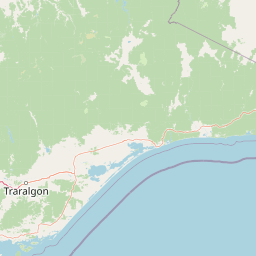
Geography guide, regional context, and park location map for Morwell National Park

Morwell National Park park geography, regions, and map view in Australia
Understand where Morwell National Park sits in Australia through a broader geographic reading of the surrounding landscape, nearby location context, and its mapped position within the national park landscape.

How Morwell National Park fits into Australia

Australia is a constitutional monarchy and federal parliamentary democracy comprising six states and ten territories. With a population of nearly 28 million, it is one of the world's most urbanised countries, with most people concentrated on the eastern seaboard. The country has a high Human Development Index and is known for its cultural diversity, ancient Aboriginal heritage, and unique wildlife.

Wider geography shaping Morwell National Park in Australia

Australia occupies the entire Australian continent, the island of Tasmania, and numerous smaller islands. It is the world's flattest and driest inhabited continent, featuring vast deserts in the interior (the Outback), tropical rainforests along the eastern coast, and a coastline bordering the Indian and Pacific Oceans.

Map view of Morwell National Park

Use this park location map to pinpoint Morwell National Park in Australia, understand its exact geographic position, and read its mapped placement within the surrounding landscape more clearly.

Pigeon | © OpenStreetMap contributors

Location context for Morwell National Park

Victoria
Park atlas

Compare the diverse protected landscapes of the Gippsland region, tracing similar forest types.

Explore Other National Parks and Protected Areas Near Morwell National Park in Victoria
After exploring Morwell National Park's unique wet sclerophyll and temperate rainforest ecosystems in the Strzelecki Ranges, expand your discovery to other protected areas across Victoria. This allows you to compare diverse conservation landscapes, trace regional ecological patterns, and map out further exploration of Australia's significant park geography.
National parkVictoria

Tarra-Bulga National Park: Victoria's Remnant Temperate Rainforest Protected Landscape

Explore its mapped terrain and unique geographic setting.

Tarra-Bulga National Park offers a glimpse into Victoria's past with its exceptionally preserved temperate rainforest and towering mountain ash forests. Situated in the Strzelecki Ranges, this protected area is critical for understanding regional biodiversity and landscape evolution. Explore the mapped terrain, deep valleys, and fern-filled gullies that define its unique geographic character and protected status.

Area
15.22 km²
Established
1986
IUCN
II
Marine protected areaVictoria

Corner Inlet Marine National Park: Victoria Marine Protected Area Exploration

Mapped marine landscape and protected wetland discovery in South Gippsland.

Corner Inlet Marine National Park offers a distinct focus on protected marine environments and coastal wetland geography. As a significant marine protected area in Victoria, it showcases the ecological dynamics of a Ramsar-listed inlet, featuring extensive seagrass beds and intertidal habitats. This park provides essential context for understanding Victoria's network of protected marine landscapes and their interconnectedness with adjacent conservation areas.

Area
15.5 km²
Established
2002
IUCN
II
National parkVictoria

Yarra Ranges National Park: A Protected Landscape of Towering Forests and Regional Geography

Explore mapped boundaries and the vital water catchment geography of this Australian national park.

Discover Yarra Ranges National Park, a prominent national park in Victoria, Australia, celebrated for its world-record mountain ash forests and its critical role in safeguarding Melbourne's water supply. This protected landscape showcases the complex topography of the Great Dividing Range, from dense temperate rainforests to subalpine environments. Understanding its geography and protected area boundaries provides essential context for appreciating its ecological significance and its place within the regional atlas.

Area
760 km²
Established
1995
IUCN
II
National parkVictoria

Alpine National Park: Victoria's Premier National Park Protected Landscape Atlas

Explore its mapped boundaries and regional geographic context.

Alpine National Park stands as a paramount example of a protected natural landscape in Victoria, Australia. As the region's largest national park, its mapped boundaries and diverse terrain offer deep insights into the broader geographic context of the Australian Alps. This dedicated entry facilitates structured discovery of its protected-area status and its importance within the mapped natural heritage of Victoria.

Area
6,474 km²
Established
1989
IUCN
II
National parkVictoria

Lake Eildon National Park: Protected Landscape and Gold Mining Heritage in Victoria

Explore ancient volcanic terrain and mapped forest environments.

Lake Eildon National Park represents a significant protected area within Victoria's Central Highlands, offering a unique blend of natural and historical discovery. The park encompasses diverse eucalypt forests and mountainous terrain, shaped by the remnants of the ancient Cerberean Caldera supervolcano. Visitors can explore mapped park boundaries and understand the area's rich gold rush heritage, alongside the central feature of Lake Eildon itself, making it a distinctive national park for geographic and landscape context.

Area
277.5 km²
Established
1997
IUCN
II
National parkVictoria

Organ Pipes National Park: Victoria's National Park for Geological Atlas Exploration

Discover unique columnar basalt formations and mapped volcanic landscapes.

Organ Pipes National Park stands as a remarkable testament to Victoria's volcanic past, preserving some of the finest examples of columnar basalt jointing in Australia. Situated within the Keilor Plains, this national park showcases dramatic geological features, including the namesake Organ Pipes, alongside ancient Silurian marine sediments, offering a layered perspective on regional geography. Its protected status ensures the conservation of this unique landscape, making it an essential destination for understanding mapped terrain and geological heritage within the Australian atlas.

Area
1.21 km²
Established
1972
IUCN
III
National parkVictoria

Point Addis Marine National Park: Victoria's Southern Ocean Coastal Protected Landscape

Mapped marine boundaries and diverse coastal geography.

Point Addis Marine National Park preserves a crucial section of Victoria's iconic Surf Coast, stretching from near Anglesea to Bells Beach. This national park encompasses vital marine environments, including rich rocky reef systems and productive kelp forests characteristic of the Southern Ocean. Its protected status safeguards a significant area of coastal waters, making it a key point of reference for understanding Australia's temperate marine geography and protected landscapes.

Area
46 km²
Established
2002
IUCN
II
National parkVictoria

Heathcote-Graytown National Park: Victoria's Key Box-Ironbark Forest Protected Area

Explore the mapped terrain and regional geography of this national park.

Heathcote-Graytown National Park stands as a critical protected area in Victoria, Australia, focused on conserving the rare box-ironbark forests that once dominated the region. Located within the Great Dividing Range, this national park provides essential habitat for woodland birds, notably the swift parrot, and offers a glimpse into the natural landscape that predates widespread agricultural development. Its inclusion in the park atlas highlights its ecological importance and contributes to a broader understanding of protected land distribution within Victoria's unique geography.

Area
128.33 km²
Established
2002
IUCN
II
Relief
Mountain

Common questions about visiting, size, designation, and location context for Morwell National Park

Morwell National Park FAQs for park facts, access, geography, and protected area context
Find quick answers about Morwell National Park, including protected-area facts, park geography, trail and visitor context, and how the park fits into its surrounding country and regional landscape.
MoriAtlas Explorer

Continue Your Protected Areas Search Across the Global Atlas

Deepen your exploration by continuing the structured search for national parks and protected areas worldwide. Utilize the comprehensive filtering capabilities to compare different conservation landscapes and refine your understanding of global park geography. Discover more about the distribution and characteristics of protected natural areas.

Global natural geography