

Mori Atlas logo
National parkTarra-Bulga National Park

Discover the mapped boundaries and unique geographic identity of this significant protected area.

Tarra-Bulga National Park: Victoria's Protected Temperate Rainforest Landscape in the Strzelecki Ranges

Tarra-Bulga National Park represents a vital protected remnant of Victoria's original temperate rainforest, nestled within the deeply incised valleys of the Strzelecki Ranges. This atlas-focused entry unveils the park's ancient mountain ash forests, lush fern gullies, and significant biogeographical importance. Understanding its mapped landscape provides crucial context for appreciating this surviving ecosystem and its unique place in regional geography.

Temperate RainforestMountain Ash ForestOld-Growth ForestVictoriaGunaikurnai CountryFern Gullies

Tarra-Bulga National Park

National park

Park overview

Structured park overview, official facts, and landscape profile for Tarra-Bulga National Park

Tarra-Bulga National Park park facts, protected area profile, and essential visitor context
Review the core facts for Tarra-Bulga National Park, including designation, size, terrain, visitor scale, habitats, and operating context in one park-focused overview.

About Tarra-Bulga National Park

Tarra-Bulga National Park sits within the Strzelecki Ranges, a mountainous region in eastern Victoria that was extensively cleared for timber and agriculture during the colonial period. The park preserves a precious pocket of forest that survived this widespread transformation, making it an ecological refuge of considerable importance. The terrain is defined by steep valleys carved by small streams, with the forest canopy dominated by mountain ash, one of the world's tallest flowering trees. Below the canopy, a rich understory of blackwood, hazel pomaderris, and tree ferns creates the classic appearance of wet sclerophyll forest. In the deeper valleys and more sheltered pockets, cool temperate rainforest occurs, characterized by myrtle beech forming a distinct ecological community. The park is accessible via the Traralgon-Balook Road, with a visitor centre providing information about the park's natural values and walking opportunities. The surrounding landscape is largely cleared farmland, making the forest remnant within the park even more significant as a biodiversity corridor and genetic reservoir.

Quick facts and research context for Tarra-Bulga National Park

Tarra-Bulga National Park covers 1,522 hectares in the eastern Strzelecki Ranges of Victoria. It was established on 17 June 1986 through the merger of two earlier protected areas: Bulga National Park (reserved in 1904) and Tarra Valley National Park (designated in 1906). The park is jointly managed by Parks Victoria and the Gunaikurnai people under a partnership that began in 2010. The name derives from Indigenous sources: 'bulga' is a Gunai word meaning mountain, while 'Tarra' honors Charley Tarra, a Burra Burra man who guided explorer Count Paweł Strzelecki through Gippsland in 1840.

Park context

Deeper park guide and search-rich context for Tarra-Bulga National Park

Tarra-Bulga National Park history, landscape, wildlife, and travel context
Explore Tarra-Bulga National Park through its history, landscape character, ecosystems, wildlife, conservation priorities, cultural context, and seasonal travel timing in a structured park guide built for atlas discovery and search intent.

Why Tarra-Bulga National Park stands out

Tarra-Bulga is best known for its spectacular old-growth mountain ash forests and pristine fern gullies, which represent one of the most intact remnants of temperate rainforest in the Strzelecki Ranges. The park is particularly famous for its giant mountain ash trees, the second-tallest flowering trees in the world, and the network of walking tracks that wind through lush vegetation to features like Cyathea Falls. The biodiversity of fungi species is another distinguishing characteristic, with the park particularly noted for fungal displays in autumn.

Tarra-Bulga National Park history and protected-area timeline

The protected area history of Tarra-Bulga began in 1903 when the Alberton Shire Council petitioned the Victorian Government to set aside forest with fern gullies near Balook as a public park. The first reservation occurred in 1904 when 20 hectares were protected and named Bulga National Park, using the Gunai word 'bulga' meaning mountain. In 1906, a separate Tarra Valley National Park was designated nearby, initially covering 303 hectares before being reduced to 40 hectares. Tarra Valley was named after Charley Tarra, a Burra Burra man who guided the Polish explorer Count Paweł Strzelecki through this part of Gippsland in 1840. The two parks were merged following recommendations by the Land Conservation Council, with the enlarged park of 1,230 hectares declared on 17 June 1986. Subsequent additions expanded the park to 1,625 hectares by 1990 and further to 2,015 hectares by 2005. A significant milestone occurred on 22 October 2010 when the park became jointly managed by Parks Victoria in partnership with the Gunaikurnai people, the traditional owners of the land.

Tarra-Bulga National Park landscape and geographic character

The landscape of Tarra-Bulga is defined by the steep, deeply incised river valleys that characterise the eastern Strzelecki Ranges. These valleys support the most vigorous forest growth, with the towering mountain ash creating a cathedral-like atmosphere beneath their canopy. The fern gullies are a particularly distinctive feature, where moisture-loving ferns carpet the forest floor and climb the valley walls. Small streams tumble over rocky beds through the valleys, with Cyathea Falls being a notable waterfall feature accessible by walking track. The ridge tops support a different character, with open forest and low open forest dominated by stringybark eucalypts contrasting with the wet valley floors. The combination of steep terrain, tall forest, and abundant moisture creates a landscape that feels ancient and primordial, quite different from the cleared agricultural land surrounding the park.

Tarra-Bulga National Park ecosystems, habitats, and plant life

The ecological character of Tarra-Bulga reflects its position in a biogeographically significant area of Victoria. The wet sclerophyll tall open forest dominated by mountain ash represents the most common forest type in the park's valleys, with an understory of blackwood, hazel pomaderris, and both black and soft tree ferns. Pockets of cool temperate rainforest occur in the more sheltered locations, where myrtle beech forms a distinctive canopy. The park is renowned for its remarkable diversity of fungi species, which are particularly prominent during autumn when the fruiting bodies of many species appear. These fungi play essential roles in nutrient cycling and symbiotic relationships with trees. The moist microclimate created by the steep valleys and dense vegetation supports a rich community of plants adapted to cool, wet conditions.

Tarra-Bulga National Park wildlife and species highlights

The forests of Tarra-Bulga support a diverse community of wildlife, both visible and secretive. Among the most commonly encountered birds are the pilotbird, yellow-tailed black cockatoo, eastern whipbird, and various currawong species. The park is particularly noted for lyrebirds, whose elaborate courtship displays occur in the more secluded areas of the forest. Mammals common to the area include possums that emerge in the evening, wombats that can be spotted along walking tracks, and swamp wallabies that browse in the understory. Gliders utilise the hollows in older trees, while platypus inhabit the streams. After dark, owls hunt and bats fly through the forest, adding to the nocturnal activity. The combination of old-growth forest, hollow-bearing trees, and intact stream systems provides habitat for many species.

Tarra-Bulga National Park conservation status and protection priorities

Tarra-Bulga National Park represents one of the last undisturbed remnants of the temperate rainforest ecosystem that once covered the Strzelecki Ranges. This makes it of considerable conservation significance as a genetic reservoir and reference site for understanding the original ecology of this region. The protection of old-growth mountain ash forest and the associated rainforest understory communities preserves ecological processes that have been lost from much of the surrounding landscape. The park also serves as a biodiversity corridor in a largely cleared agricultural landscape, allowing species to move between forest remnants. The joint management arrangement with the Gunaikurnai people, implemented in 2010, brings traditional ecological knowledge to conservation planning and recognises the long connection between Indigenous people and this landscape.

Tarra-Bulga National Park cultural meaning and human context

The cultural landscape of Tarra-Bulga has deep Indigenous connections that are reflected in the park's naming and ongoing management. The name 'bulga' comes from the Gunai language and means mountain, while 'Tarra' honours Charley Tarra, a Burra Burra man who guided the European explorer Count Paweł Strzelecki through Gippsland in 1840. The Gunaikurnai people are recognised as the traditional owners of the land, and since 2010 the park has been jointly managed in partnership with them under a framework that acknowledges their cultural connection to country. The history of European settlement in the area includes the establishment of the original protected areas in the early twentieth century, making this one of Victoria's older conservation reserves.

Top sights and standout views in Tarra-Bulga National Park

The walking opportunities in Tarra-Bulga are among the park's strongest features. The Tarra Valley Rainforest Walk provides easy access to the spectacular Cyathea Falls, while the Fern Gully Nature Walk crosses the iconic Corrigan's Suspension Bridge, which stretches through the rainforest canopy offering elevated views of the fern gully below. The Grand Strzelecki Track, a 100-kilometre trail taking three to four days to complete, connects the park with the adjacent Morwell National Park. The visitor centre, staffed by members of the Friends of Tarra-Bulga National Park, provides information and coordinates restoration activities. The park's fungi diversity, particularly visible in autumn, offers another dimension to the visitor experience.

Best time to visit Tarra-Bulga National Park

The park can be enjoyed throughout the year, though each season offers different experiences. Autumn is particularly notable for the display of fungi fruiting bodies throughout the forest, with many species producing their distinctive shapes and colours following the first rains. The wet forest environment means that conditions can be wet and muddy at any time, so appropriate footwear is advisable. Summer may offer warmer conditions for walking, while winter brings moody atmosphere to the forest but also more challenging conditions. The visitor centre operates on weekends and during school and public holidays, providing the best opportunity for detailed park information.
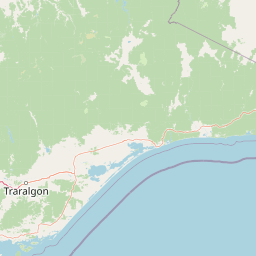
Park location guide

Geography guide, regional context, and park location map for Tarra-Bulga National Park

Tarra-Bulga National Park park geography, regions, and map view in Australia
Understand where Tarra-Bulga National Park sits in Australia through a broader geographic reading of the surrounding landscape, nearby location context, and its mapped position within the national park landscape.

How Tarra-Bulga National Park fits into Australia

Australia is a constitutional monarchy and federal parliamentary democracy comprising six states and ten territories. With a population of nearly 28 million, it is one of the world's most urbanised countries, with most people concentrated on the eastern seaboard. The country has a high Human Development Index and is known for its cultural diversity, ancient Aboriginal heritage, and unique wildlife.

Wider geography shaping Tarra-Bulga National Park in Australia

Australia occupies the entire Australian continent, the island of Tasmania, and numerous smaller islands. It is the world's flattest and driest inhabited continent, featuring vast deserts in the interior (the Outback), tropical rainforests along the eastern coast, and a coastline bordering the Indian and Pacific Oceans.

Map view of Tarra-Bulga National Park

Use this park location map to pinpoint Tarra-Bulga National Park in Australia, understand its exact geographic position, and read its mapped placement within the surrounding landscape more clearly.

Pigeon | © OpenStreetMap contributors

Location context for Tarra-Bulga National Park

Victoria
Park atlas

Trace the broader geographic spread of Victoria's protected landscapes and compare adjacent park features.

Beyond Tarra-Bulga National Park: Explore Other Protected Areas and Nearby Regional Parks in Victoria
After exploring Tarra-Bulga National Park, browse other protected areas and national parks in Victoria, comparing their unique landscapes and conservation profiles. Expanding your search reveals the regional context of protected lands, offering a deeper understanding of connected ecosystems and diverse park geography.
National parkVictoria

Morwell National Park: Victoria's Protected Wet Sclerophyll Forest and Rainforest

Mapping the diverse flora and fauna of this key national park.

Morwell National Park is a protected national park in Victoria, Australia, renowned for its significant plant diversity and the preservation of wet sclerophyll forests alongside cool temperate rainforest pockets in its gullies. Located within the Strzelecki Ranges, the park's mapped geography illustrates the varied terrain supporting these distinct forest communities. As a conservation area driven by community advocacy, it stands as a vital reserve for regional biodiversity, offering a focused study of Victoria's unique protected landscapes and their ecological significance.

Area
5.65 km²
Established
1966
IUCN
III
Marine protected areaVictoria

Corner Inlet Marine National Park: Victoria Marine Protected Area Exploration

Mapped marine landscape and protected wetland discovery in South Gippsland.

Corner Inlet Marine National Park offers a distinct focus on protected marine environments and coastal wetland geography. As a significant marine protected area in Victoria, it showcases the ecological dynamics of a Ramsar-listed inlet, featuring extensive seagrass beds and intertidal habitats. This park provides essential context for understanding Victoria's network of protected marine landscapes and their interconnectedness with adjacent conservation areas.

Area
15.5 km²
Established
2002
IUCN
II
National parkVictoria

Yarra Ranges National Park: A Protected Landscape of Towering Forests and Regional Geography

Explore mapped boundaries and the vital water catchment geography of this Australian national park.

Discover Yarra Ranges National Park, a prominent national park in Victoria, Australia, celebrated for its world-record mountain ash forests and its critical role in safeguarding Melbourne's water supply. This protected landscape showcases the complex topography of the Great Dividing Range, from dense temperate rainforests to subalpine environments. Understanding its geography and protected area boundaries provides essential context for appreciating its ecological significance and its place within the regional atlas.

Area
760 km²
Established
1995
IUCN
II
National parkVictoria

Alpine National Park: Victoria's Premier National Park Protected Landscape Atlas

Explore its mapped boundaries and regional geographic context.

Alpine National Park stands as a paramount example of a protected natural landscape in Victoria, Australia. As the region's largest national park, its mapped boundaries and diverse terrain offer deep insights into the broader geographic context of the Australian Alps. This dedicated entry facilitates structured discovery of its protected-area status and its importance within the mapped natural heritage of Victoria.

Area
6,474 km²
Established
1989
IUCN
II
National parkVictoria

Lake Eildon National Park: Protected Landscape and Gold Mining Heritage in Victoria

Explore ancient volcanic terrain and mapped forest environments.

Lake Eildon National Park represents a significant protected area within Victoria's Central Highlands, offering a unique blend of natural and historical discovery. The park encompasses diverse eucalypt forests and mountainous terrain, shaped by the remnants of the ancient Cerberean Caldera supervolcano. Visitors can explore mapped park boundaries and understand the area's rich gold rush heritage, alongside the central feature of Lake Eildon itself, making it a distinctive national park for geographic and landscape context.

Area
277.5 km²
Established
1997
IUCN
II
National parkVictoria

Organ Pipes National Park: Victoria's National Park for Geological Atlas Exploration

Discover unique columnar basalt formations and mapped volcanic landscapes.

Organ Pipes National Park stands as a remarkable testament to Victoria's volcanic past, preserving some of the finest examples of columnar basalt jointing in Australia. Situated within the Keilor Plains, this national park showcases dramatic geological features, including the namesake Organ Pipes, alongside ancient Silurian marine sediments, offering a layered perspective on regional geography. Its protected status ensures the conservation of this unique landscape, making it an essential destination for understanding mapped terrain and geological heritage within the Australian atlas.

Area
1.21 km²
Established
1972
IUCN
III
National parkVictoria

Point Addis Marine National Park: Victoria's Southern Ocean Coastal Protected Landscape

Mapped marine boundaries and diverse coastal geography.

Point Addis Marine National Park preserves a crucial section of Victoria's iconic Surf Coast, stretching from near Anglesea to Bells Beach. This national park encompasses vital marine environments, including rich rocky reef systems and productive kelp forests characteristic of the Southern Ocean. Its protected status safeguards a significant area of coastal waters, making it a key point of reference for understanding Australia's temperate marine geography and protected landscapes.

Area
46 km²
Established
2002
IUCN
II
National parkVictoria

Snowy River National Park: Victoria's Deep Gorges and Alpine Wilderness Discovery

Explore the mapped boundaries and geographic context of this protected landscape.

Snowy River National Park in Victoria offers a profound exploration of rugged alpine terrain and striking river gorges, including the remarkable Little River Gorge. As a designated national park and wilderness area, it protects diverse ecosystems and is a vital component of the Australian Alps National Parks. Discover its geographic identity, natural landscapes, and importance as a mapped protected area for understanding Victoria's conservation network.

Area
987 km²
Established
1979
IUCN
II

Common questions about visiting, size, designation, and location context for Tarra-Bulga National Park

Tarra-Bulga National Park FAQs for park facts, access, geography, and protected area context
Find quick answers about Tarra-Bulga National Park, including protected-area facts, park geography, trail and visitor context, and how the park fits into its surrounding country and regional landscape.
MoriAtlas Explorer

Continue Your Protected Areas Search Across the Global Atlas

Deepen your exploration by continuing the structured search for national parks and protected areas worldwide. Utilize the comprehensive filtering capabilities to compare different conservation landscapes and refine your understanding of global park geography. Discover more about the distribution and characteristics of protected natural areas.

Global natural geography