Why Organ Pipes National Park stands out
Organ Pipes National Park is best known for its extraordinary columnar basalt formations, the Organ Pipes, which represent the finest example of columnar jointing in Victoria. These vertical hexagonal columns, formed as cooling lava contracted and cracked, create a striking visual display resembling organ pipes stacked together. Beyond the Organ Pipes, the park protects related geological features including Tessellated Pavement where basalt has fractured into regular tile-like patterns, and Rosette Rock where columns radiate outward like wheel spokes. The park also preserves a rare glimpse into Victoria's geological history, with 400-million-year-old Silurian marine sedimentary rocks and fossils (including graptolites) exposed beneath the volcanic basalt, demonstrating that this area once lay beneath a prehistoric ocean. The contrast between these ancient marine sediments and the relatively recent volcanic overlayer makes the park a living geological classroom.
Organ Pipes National Park history and protected-area timeline
The land that now constitutes Organ Pipes National Park has a layered human history extending back thousands of years. The earliest documented inhabitants were the Australian Aboriginal Woiwurrung people of the Kulin Nation, who lived in the Yarra and Maribyrnong River valleys, with Jackson Creek forming a boundary between the Marin-Bulluk and Wurundjeri-Willam clans. These traditional owners practiced controlled burning to maintain grasslands and harvest native grasses and spear grass, coexisting with wildlife including kangaroos, dingoes, platypuses, and numerous bird species. European settlement began in the early 19th century, with settlers from Tasmania introducing exotic plants and animals and converting land for agriculture. By the mid-19th century, a small hamlet existed near the Organ Pipes, served by a suspension bridge across Jacksons Creek. The Hall family lived in the area from 1870 to the 1920s, operating plum orchards whose trees still exist today. Later residents included the Bartlett family (1934-1948) and E.A. Green, whose estate was donated to establish the national park. Environmental degradation from European land use prompted conservation action, leading to the park's declaration on March 12, 1972, as Victoria's first national park created through private land donation. The Friends of Organ Pipes (FOOOPS), established as Australia's first park friends group, has supported rehabilitation efforts since the park's creation.
Organ Pipes National Park landscape and geographic character
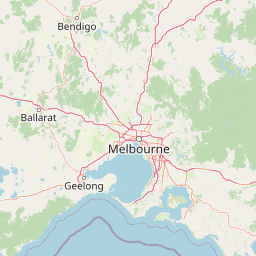
The physical landscape of Organ Pipes National Park centers on the deeply incised valley of Jacksons Creek, which has cut through the basalt plains to create a gorge exposing the park's geological treasures. The surrounding Keilor Plains consist of flat to gently undulating terrain formed from ancient lava flows, part of the Western Volcanic Plains that extend across western Victoria and into southeastern South Australia, representing the third largest lava plains system in the world. The valley walls reveal the layered geological history, with dark grey-brown basalt forming the dominant rock type and exposing the columnar Organ Pipes formation. Above the creek, the landscape supports remnant grassland communities that once covered much of the basalt plains before agricultural conversion. The park's soils reflect the underlying geology, with volcanic soils derived from basalt dominating the valleys, including red-brown earths with low permeability, grey duplex soils in flatter areas, and alluvial soils along the creek corridor capable of supporting river red gum woodland. The overall terrain is relatively constrained within the gorge, with the park's 121 hectares centered on the creek corridor and adjacent slopes.
Organ Pipes National Park ecosystems, habitats, and plant life
The ecological character of Organ Pipes National Park reflects its position on the basalt plains of central Victoria, a landscape that historically supported extensive grassy woodlands and grasslands before European agricultural expansion. Since the park's establishment, extensive rehabilitation has transformed previously degraded land dominated by weeds such as thistles and boxthorn into thriving indigenous vegetation communities. The re-vegetation program, conducted over more than three decades with support from the Friends of Organ Pipes, has established approximately 124 indigenous plant species, including more than 20 species classified as rare, threatened, or significant. Vegetation communities include basalt plain grassland with species such as kangaroo grass, windmill grass, redleg grass, and wallaby grasses, as well as riparian woodland along Jacksons Creek featuring river red gum, manna gum, and blackwood. The park also supports reed beds, sedgeland, and shrubland communities. The restoration has created diverse habitat layers, from ground-layer grasses through to canopy trees, supporting a correspondingly diverse fauna community.
Organ Pipes National Park wildlife and species highlights
Organ Pipes National Park supports a surprising diversity of wildlife given its relatively small size, with documented populations including 15 native mammal species, 88 bird species, 13 reptile species, and 6 amphibian species. Mammals include eastern grey kangaroos and swamp wallabies that are commonly observed, particularly during dawn and dusk hours when they emerge from shelter to feed in the grasslands. The park has been the focus of successful biodiversity projects, including a long-running bat roosting box program that has resulted in bats being the most diverse group of native mammals recorded. The sugar glider, which was present in the park historically but had disappeared, was reintroduced in 1989 from nearby Toolern Vale as part of conservation efforts. Reptiles found in the park include the long-necked tortoise, eastern bearded dragon, and red-bellied black snake, while amphibians include the growling grass frog. Birdlife is particularly diverse, with species including the wedge-tailed eagle soaring above the gorge, and numerous smaller birds inhabiting the woodland and grassland habitats. The creek supports fish species including the mountain galaxias, demonstrating the aquatic habitat value of Jacksons Creek.
Organ Pipes National Park conservation status and protection priorities
Organ Pipes National Park holds significant conservation value both geologically and ecologically, recognized through its IUCN Category III designation as a Natural Monument within the United Nations' system of national parks and protected areas. The primary conservation focus is preserving the outstanding geological features including the Organ Pipes, Tessellated Pavement, and Rosette Rock, which represent Victoria's best examples of columnar basalt formations and related volcanic structures. Beyond geology, the park serves as a conservation center for the endangered basalt plain grassland ecosystem, one of Victoria's most threatened vegetation types. The re-vegetation program has been particularly successful in restoring indigenous vegetation and creating habitat for native wildlife, with 124 indigenous plant species now recorded including over 20 rare or threatened species such as the button wrinklewort (Rutidosis leptorrhynchoides). The park also protects significant populations of Callitris glaucophylla (white cypress-pine), one of only two remaining stands near Melbourne. Management focuses on weed control, rabbit management, erosion control, and maintaining the ecological integrity of both the geological formations and the surrounding landscape.
Organ Pipes National Park cultural meaning and human context
The cultural context of Organ Pipes National Park encompasses both Aboriginal heritage and European settlement history. The Woiwurrung people of the Kulin Nation have traditional connections to the Maribyrnong River valley, with Jackson Creek serving as a clan boundary between Marin-Bulluk and Wurundjeri-Willam territories. Archaeological evidence including campsites and isolated artifacts within the park demonstrates the long-term Aboriginal occupation and use of the area for resources including native grasses and wildlife. European settlement beginning in the early 19th century brought dramatic landscape changes through introduction of exotic species, agricultural conversion, and vegetation clearance. The historical hamlet near the Organ Pipes, served by a suspension bridge across Jacksons Creek, reflects the European settlement pattern before the land was dedicated to conservation. The park's establishment in 1972 marked a significant conservation milestone in Victoria, being the first national park created through private land donation and the first to have an organized friends group supporting its management. The park serves educational purposes in interpreting both geological processes and human history.
Top sights and standout views in Organ Pipes National Park
Organ Pipes National Park offers visitors the opportunity to observe spectacular geological formations including the namesake Organ Pipes, vertical hexagonal basalt columns rising dramatically from the creek bed, the Tessellated Pavement with its tile-like fractured surface, and the radial Rosette Rock formation. Walking tracks descend from the visitor center through restored grassland to the creek and rock features, with early morning or dusk visits offering最佳 chances to see kangaroos and wallabies. The park provides environmental education through its visitor center, which interprets the volcanic geology, Aboriginal history, European settlement, and restoration program. The successful ecological rehabilitation demonstrates how degraded land can be restored to support indigenous biodiversity, with the park now supporting over 120 indigenous plant species and diverse wildlife. The geological significance, with rocks ranging from 400 million years old (Silurian marine sediments) to 2.8 million years old (Pleistocene volcanic basalt), makes the park a unique window into geological time.
Best time to visit Organ Pipes National Park
Organ Pipes National Park can be visited throughout the year, though spring and autumn offer the most comfortable conditions for exploring the outdoor tracks and appreciating the park's geological and ecological features. Winter and early spring (June to October) bring the majority of the annual rainfall, creating green grassland conditions but potentially making some tracks muddy and slippery. The summer months (December to February) can be warm, though the gorge provides some shade along the creek. Early morning visits are particularly rewarding for wildlife viewing, as kangaroos and wallabies are most active during dawn and dusk hours. The park remains open year-round, though visitors should be aware that aircraft noise from nearby Melbourne Airport and occasional motorsport noise from Calder Park Raceway are part of the sonic environment. The visitor center provides information about current conditions and any access restrictions.