
Why Heathcote-Graytown National Park stands out
Heathcote-Graytown National Park is best known for its protection of Victoria's diminishing box-ironbark forests, an ecosystem that once covered extensive areas of central Victoria but now persists in fragmented remnants. The park is particularly recognized for its significance as habitat for the swift parrot, a migratory parrot species that travels from Tasmania to mainland southeastern Australia during breeding season. The Rushworth Box-Ironbark Region, in which the park lies, has been identified by BirdLife International as an Important Bird Area precisely because of its concentration of woodland bird species, many of which rely on the intact forest canopy and hollow-bearing trees that the park protects. The park also preserves portions of the Great Dividing Range, providing mountainous terrain and scenic viewpoints such as Mount Ida that offer panoramic views across the surrounding pastoral and forest landscape.
Heathcote-Graytown National Park history and protected-area timeline
Heathcote-Graytown National Park was officially gazetted as a national park by the Victorian Government on 30 October 2002, representing the culmination of efforts to protect Victoria's remaining box-ironbark forests at a national park level. Prior to its proclamation, the area existed as a collection of state forests and other land tenures that provided some level of protection but lacked the formal status and coordinated management that a national park designation provides. The decision to declare the area a national park reflected growing recognition that Victoria's box-ironbark forests required dedicated conservation attention, as previous protection measures had proven insufficient to prevent ongoing decline.
The establishment of the park came during a period when Victoria was expanding its protected area network, with the government identifying specific ecosystems and regions that were under-represented in the existing reserve system. The box-ironbark forests of central and northern Victoria had been identified as a priority for conservation action, given their restricted distribution and the threats they faced from continuing habitat fragmentation. By combining existing forest reserves and adding newly protected land, the park was created with sufficient area to support viable populations of forest-dependent species.
The timing of the park's establishment also reflects broader changes in Victorian conservation policy that emphasized the importance of protecting representative examples of all of the state's major ecosystem types. The park's inclusion within a larger Important Bird Area further reinforced its conservation significance, providing international recognition of the area's biodiversity values. Since its establishment, Parks Victoria has managed the park with the dual objectives of conserving its natural values while providing opportunities for compatible recreation and education.
Heathcote-Graytown National Park landscape and geographic character
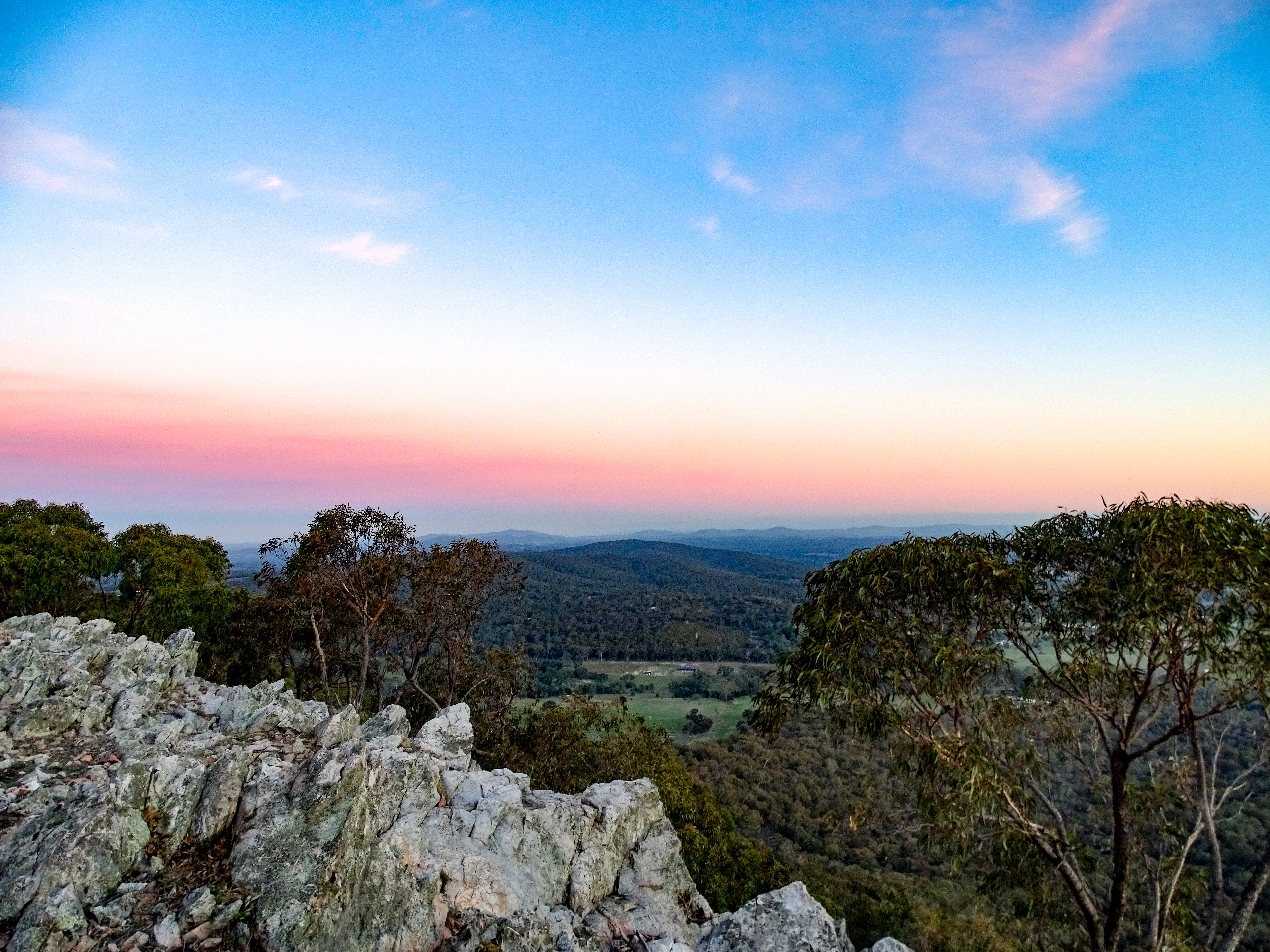
The landscape of Heathcote-Graytown National Park reflects its position within the Great Dividing Range, with varied terrain that includes ridgelines, slopes, valleys, and creek lines creating a diverse physical environment. The park's topography provides scenic views across the surrounding landscape, with elevated areas such as Mount Ida offering panoramic perspectives of the surrounding Central Highlands region. The underlying geology contributes to the park's character, with soils derived from ancient rock formations that have influenced the distribution of vegetation communities across the area.
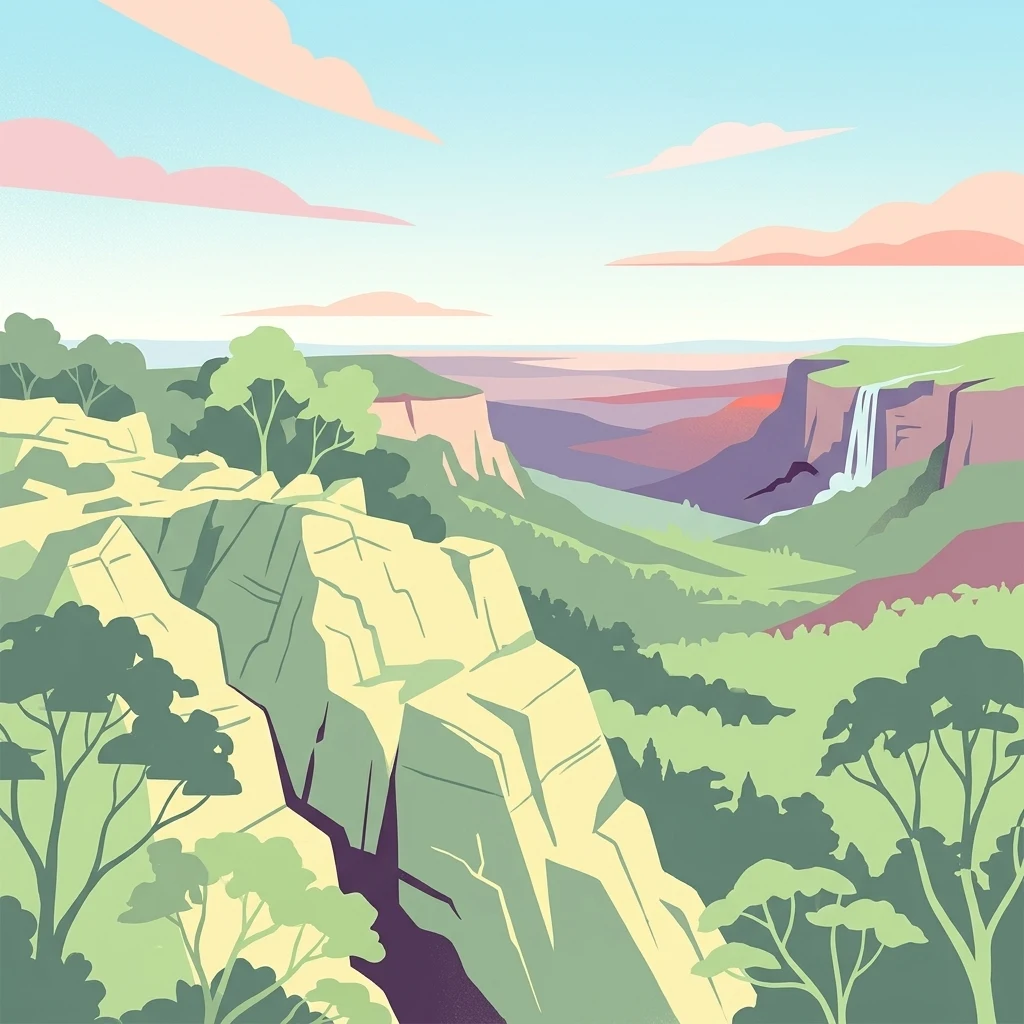
The park's landscape includes areas of exposed rock and cliff formations in some locations, adding visual interest and providing specialized habitats for plants and animals adapted to rocky environments. The drainage patterns through the park feed into local creek systems that eventually connect to larger river systems in the region, with watercourses serving as important corridors for wildlife movement and providing habitat for species that depend on riparian environments. The combination of ridgelines, slopes, and valley floors creates a mosaic of microclimates and microhabitats that contributes to the park's biological diversity.
The park's landscape has been shaped by both natural processes and historical human activity. The surrounding region has a history of gold mining and pastoral use, and evidence of this historical occupation can still be found in the broader landscape, though the park itself maintains primarily natural values. The remnant forest vegetation that dominates the park presents a character quite different from the cleared agricultural land that surrounds the protected area, creating a visible contrast that highlights the conservation significance of the park's forested landscapes.
Heathcote-Graytown National Park ecosystems, habitats, and plant life
The ecological character of Heathcote-Graytown National Park is defined by its box-ironbark forest ecosystem, a distinctive Australian vegetation type that has been significantly reduced across its former range. The forest canopy is dominated by species such as grey box, red box, and various ironbark species, creating a open woodland structure that allows light to penetrate to the understory. This dry sclerophyll forest type is characterized by a diverse shrub layer and a ground cover of grasses and herbs, with the overall structure providing habitat for a wide range of native species.
The park lies within the Rushworth Box-Ironbark Region, an area recognized for its concentrations of woodland birds and other native wildlife. The region's importance stems from the relative intactness of its forest cover compared to surrounding cleared agricultural land, along with the presence of old-growth trees that provide hollows for nesting birds and mammals. These hollow-bearing trees take decades to develop and represent a critical resource for many forest-dependent species that cannot survive in younger regrowth forests. The park's protection of mature forest stands ensures that these habitat features are maintained.
The combination of forest types, topographic variation, and the presence of watercourses within the park creates a heterogeneous environment that supports diverse plant and animal communities. While the box-ironbark forests represent the dominant vegetation type, the park also includes areas of other vegetation communities in certain locations, particularly along drainage lines and in areas with different soil types. This vegetation diversity contributes to the park's overall ecological value and supports the range of wildlife species that depend on the different habitat components.
Heathcote-Graytown National Park wildlife and species highlights
The wildlife of Heathcote-Graytown National Park is notable for its diversity of woodland birds, particularly those species associated with mature dry forests and hollow-bearing trees. The park's identification as part of the Rushworth Box-Ironbark Region Important Bird Area reflects the area's particular significance for bird conservation, with the swift parrot being among the most notable species that depends on this region. The swift parrot breeds in Tasmania and migrates to mainland southeastern Australia during the autumn and winter months, relying on the nectar and lerps of box and ironbark trees as a food source.
Beyond the swift parrot, the park supports populations of many other woodland bird species that have declined across much of their former range due to habitat loss and fragmentation. Species such as diamond firetails, superb fairy-wrens, and various honeyeaters can be found in the park's forests, with each species utilizing different aspects of the woodland environment for feeding and nesting. The presence of intact forest canopy and understory vegetation provides these birds with the resources they need to survive and reproduce.
The park's wildlife also includes various mammals, reptiles, and invertebrates that occupy different niches within the forest ecosystem. Tree-dwelling mammals such as possums and gliders utilize the hollows in mature trees, while ground-dwelling mammals occupy the forest floor and understory layers. Reptiles bask on rocks and fallen logs, while insects play critical roles in pollination and nutrient cycling throughout the ecosystem. The overall wildlife community reflects the health of the forest ecosystem and underscores the importance of protecting areas like this park for maintaining biodiversity.
Heathcote-Graytown National Park conservation status and protection priorities
Heathcote-Graytown National Park was established primarily to address the conservation crisis facing Victoria's box-ironbark forests, which represent one of the state's most threatened woodland ecosystems. The proclamation of this national park in 2002 reflected recognition that previous conservation measures, which relied largely on small reserves within state forest networks, were insufficient to protect the full range of biodiversity associated with these forests. By declaring a dedicated national park, the Victorian Government created a protected area with the management focus and security appropriate for a IUCN Category II protected area.
The park's inclusion within the Rushworth Box-Ironbark Region Important Bird Area, designated by BirdLife International, provides international recognition of the area's conservation significance and creates additional impetus for effective protection. The Important Bird Area program identifies places that are essential for the conservation of birds globally, and the designation of this region reflects its particular importance for species such as the swift parrot that have very restricted habitat requirements during their mainland presence.
The conservation value of the park extends beyond its borders through its connectivity with surrounding state forests, creating a larger conservation landscape that allows species to move between protected areas and maintain viable populations. This landscape-scale approach to conservation acknowledges that effective biodiversity protection requires more than isolated reserves and benefits from coordinated management across multiple land tenures. The park thus contributes to broader conservation outcomes for the Central Highlands region of Victoria.
Top sights and standout views in Heathcote-Graytown National Park
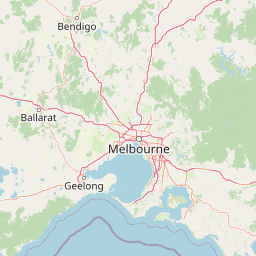
Heathcote-Graytown National Park protects one of Victoria's most significant remaining areas of box-ironbark forest, an ecosystem that has been dramatically reduced across its former range. The park's importance for migratory swift parrots during their mainland presence makes it a significant location for birdwatching and ornithological study. The scenic views from Mount Ida offer visitors panoramic perspectives of the surrounding Central Highlands landscape. The park's proximity to Heathcote provides convenient access while maintaining a natural setting. The combination of forest protection, biodiversity value, and landscape diversity makes this park an important addition to Victoria's conservation estate.
Best time to visit Heathcote-Graytown National Park
The park can be visited throughout the year, with each season offering different experiences. Autumn and winter months coincide with the arrival of swift parrots from Tasmania, making this period particularly significant for birdwatchers hoping to observe this migratory species. The cooler months also provide comfortable conditions for bushwalking and exploring the park's trail network. Spring brings wildflower displays throughout the understory, adding color to the forest environment. Summer can be warm but the forest canopy provides shade in many areas. The park's proximity to Heathcote means that visitors can combine their park exploration with the amenities and services available in the nearby town.