

Mori Atlas logo
National parkYarra Ranges National Park

Discover the protected landscape, mapped geography, and regional context of this vital Australian national park.

Yarra Ranges National Park: Victoria's Towering Mountain Ash Forests and Critical Water Catchment

Yarra Ranges National Park, situated in Victoria's Great Dividing Range, stands as a significant protected national park renowned for its globally tallest mountain ash forests and its indispensable function as a water catchment for Melbourne. This expansive natural area offers a unique glimpse into the geography of southeastern Australia, where diverse ecosystems, including temperate rainforests and subalpine terrains, converge. Its protected status ensures the preservation of critical habitats and the integrity of vital river systems, contributing a crucial element to the region's natural landscape context.

mountain ash foresttemperate rainforestwater catchmentGreat Dividing RangeVictoriakoala habitat

Yarra Ranges National Park

National park

Park overview

Structured park overview, official facts, and landscape profile for Yarra Ranges National Park

Yarra Ranges National Park park facts, protected area profile, and essential visitor context
Review the core facts for Yarra Ranges National Park, including designation, size, terrain, visitor scale, habitats, and operating context in one park-focused overview.

About Yarra Ranges National Park

Yarra Ranges National Park occupies a significant portion of Victoria's eastern highlands, forming a critical ecological corridor within the Great Dividing Range. The park's establishment in 1995 represented a major conservation milestone for Victoria, consolidating protection for an area that had previously experienced selective logging and pastoral use. The landscape is dominated by wet mountain ash forest on the more accessible slopes and cool temperate rainforest in the deeper gullies and sheltered valleys. Mount Donna Buang stands as the park's most prominent feature, rising 1,245 metres above the town of Warburton and offering panoramic views across the Yarra Valley. The park's hydrological significance cannot be overstated, as it contains the catchment areas for the Maroondah and Upper Yarra Reservoirs that together provide the majority of Melbourne's drinking water. This water supply role has resulted in extensive portions of the park being subject to restricted access under the Closed Catchment Policy, which while limiting some recreational opportunities, has ensured the preservation of relatively intact ecosystems and high water quality. The combination of tall forest, diverse wildlife, and essential ecosystem services makes Yarra Ranges one of Victoria's most important protected areas.

Quick facts and research context for Yarra Ranges National Park

Yarra Ranges National Park covers 760 square kilometres in Victoria's Great Dividing Range, with Mount Donna Buang (1,245 metres) as its highest peak. The park protects significant mountain ash forests containing specimens reaching heights of over 80 metres, with the historical Ferguson Tree recorded at over 154 metres. The park supports extraordinary biodiversity with nearly 6,000 documented species, including approximately 200 bird species and over 60 reptile and amphibian species. It holds IUCN Category II protection status and serves as the primary water source for Melbourne through a network of reservoirs managed under the Closed Catchment Policy.

Park context

Deeper park guide and search-rich context for Yarra Ranges National Park

Yarra Ranges National Park history, landscape, wildlife, and travel context
Explore Yarra Ranges National Park through its history, landscape character, ecosystems, wildlife, conservation priorities, cultural context, and seasonal travel timing in a structured park guide built for atlas discovery and search intent.

Why Yarra Ranges National Park stands out

Yarra Ranges National Park is best known for its spectacular mountain ash forests, which represent some of the tallest trees in the world and store among the highest levels of carbon per hectare of any forest type globally. The park protects Victoria's mountain ash (Eucalyptus regnans), the tallest flowering plant in Australia and among the tallest tree species worldwide. These forests are ecologically crucial as they provide habitat for threatened species including Leadbeater's possum, Victoria's faunal emblem, as well as greater gliders and mountain brushtail possums. The park also contains cool temperate rainforest communities and serves as Melbourne's most important water supply catchment, with the restricted access policy protecting the quality of water for millions of residents.

Yarra Ranges National Park history and protected-area timeline

European settlement of the Yarra Ranges region proved challenging due to the rugged terrain and dense vegetation. The area was eventually accessed in the 1860s, and settlers quickly recognised the timber potential of the mountain ash forests as well as the value of the catchments for water supply. The Maroondah and Upper Yarra dams were constructed to harness these water resources, establishing the region's importance to Melbourne's growing population. Formal protection came relatively late, with Yarra Ranges National Park officially established in December 1995, incorporating previous state forest and nature reserves into a unified national park framework. Parks Victoria assumed management responsibility, developing a comprehensive Management Plan in 2002 that continues to guide conservation and recreational use of the park. The park's relatively recent establishment means that many of the forest communities within its boundaries retain signs of historical logging, though significant old-growth patches remain and have been prioritised for protection.

Yarra Ranges National Park landscape and geographic character

The physical landscape of Yarra Ranges National Park is characterised by steep, heavily timbered ranges rising from the Yarra Valley floor to elevations exceeding 1,200 metres. The terrain is dominated by the remnants of ancient volcanic formations, with ridges and valleys carved by millennia of water flow creating a complex topography of cascading streams, fern-filled gullies, and exposed rock outcrops. The mountain ash forests form a towering canopy that ranks among the tallest forest ecosystems on Earth, with trees regularly exceeding 70 metres in height. Interspersed throughout the park are patches of cool temperate rainforest featuring myrtle beech, southern sassafras and tree ferns that create a distinctly different character in the more sheltered areas. The plateau areas in the north of the park support subalpine vegetation communities adapted to colder conditions and periodic snow cover. Waterfalls are scattered throughout the park, particularly along the tributaries that feed the major river systems, with the landscape around Marysville featuring some of the most accessible and photographed cascades.

Yarra Ranges National Park ecosystems, habitats, and plant life

The ecological character of Yarra Ranges National Park is defined by its remarkable tall forest ecosystems. The mountain ash forests represent a globally significant carbon store, with research by the Australian National University finding these forests store 1,867 tonnes of carbon per hectare, making them among the most effective carbon sinks on the planet. These massive trees can live for 400 years, and their lifecycle creates critical habitat even after death, with dead stumps and fallen logs providing shelter for at least 40 hollow-dependent species. The park also supports cool temperate rainforest communities in the gullies, featuring species like slender tree ferns that are threatened by disturbance. Over 1,000 plant species have been documented within the park, alongside more than 900 types of fungi and mushrooms. The diversity of habitats from subalpine plateaus to deep rainforests supports this extraordinary plant and fungal richness, though climate change and altered fire regimes pose significant threats to these communities.

Yarra Ranges National Park wildlife and species highlights

Yarra Ranges National Park supports extraordinary faunal diversity with nearly 6,000 documented species making their home across its varied habitats. The mammal population includes iconic Australian species such as eastern grey kangaroos, wallabies, wombats, koalas and platypuses in the waterways. Several possum and glider species are particularly well represented, including the endangered Leadbeater's possum which depends on hollows in old-growth mountain ash trees, the greater glider, and the mountain brushtail possum. The bird life is equally impressive with nearly 200 species recorded, including the pink robin, yellow-tailed black cockatoo, Australian king parrot and the powerful owl, sooty owl and barking owl which form a trio of threatened owl species. The waterways support platypus populations as well as various fish species including redfin perch and golden perch. The park's invertebrate diversity is staggering, with thousands of insects, worms and other invertebrates occupying every niche from the forest floor to the canopy. The Mount Donna Buang wingless stonefly represents a particularly rare endemic species found only in this area.

Yarra Ranges National Park conservation status and protection priorities

The conservation significance of Yarra Ranges National Park extends far beyond its borders, with the park playing a critical role in securing Melbourne's water supply while protecting globally important ecosystems. The mountain ash forests represent the highest biomass forests on Earth and serve as crucial carbon stores, yet they face existential threats from climate change, bushfires occurring outside natural frequencies, and logging pressure in adjacent areas. Invasive weeds, particularly willows, blackberry, boneseed and bridal creeper, continue to spread from private gardens into the park, while pest animals including red foxes, European rabbits and feral cats predate on native wildlife. Climate change projections indicate rising temperatures, reduced rainfall and increased wind speeds that will fundamentally alter the park's ecosystems. Conservation strategies focus on protecting old-growth forests, managing fire regimes through controlled burns, controlling invasive species, and maintaining the restricted access policy for water supply catchments. The proposed Great Forest National Park would expand protection for these mountain ash ecosystems, though implementation remains pending.

Yarra Ranges National Park cultural meaning and human context

The Yarra Ranges region holds significance for Indigenous communities, though detailed historical documentation of Traditional Owner connections to the specific park area is limited in the available source material. The European history of the area is characterised by the challenges of accessing and exploiting the steep, forested terrain, with timber extraction and water catchment development being the primary historical land uses. The establishment of the national park in 1995 represented a shift from utilitarian management toward conservation-focused stewardship, though the ongoing water supply role ensures that the park's value to Melbourne's population remains central to its management philosophy.

Top sights and standout views in Yarra Ranges National Park

The towering mountain ash forests of Yarra Ranges National Park represent one of Australia's most spectacular natural wonders, with trees among the tallest in the world creating a cathedral-like atmosphere beneath their canopy. The park's role as Melbourne's primary water supply catchment, protecting 70 percent of the city's drinking water, gives it exceptional importance beyond its biodiversity value. The diversity of environments from subalpine plateaus to cool temperate rainforests supports an extraordinary range of wildlife including the endangered Leadbeater's possum and three threatened owl species. The restricted access policy that protects water quality also inadvertently preserves relatively intact ecosystems, creating a landscape that feels genuinely wild despite its proximity to a major city. Winter snow at Lake Mountain on the northern plateau offers cross-country skiing opportunities, adding seasonal recreation value to the park's appeal.

Best time to visit Yarra Ranges National Park

Yarra Ranges National Park can be visited throughout the year, with each season offering distinct advantages. Summer months (December to February) bring warm conditions ideal for exploring the many walking tracks, though this is also the period of highest fire risk and some trails may be closed during total fire bans. Autumn (March to May) offers mild temperatures and excellent conditions for wildlife viewing as animals become more active in the cooler weather. Winter (June to August) transforms the higher elevations with snow at Lake Mountain and Mount Donna Buang, creating beautiful scenery for bushwalking in the lower sections while the higher peaks offer cross-country skiing opportunities. Spring (September to November) brings wildflower displays and active wildlife activity, though visitor numbers increase during this popular period. The water supply catchment restrictions mean some areas have limited access year-round, so visitors should check current conditions before planning their trip.
Park location guide

Geography guide, regional context, and park location map for Yarra Ranges National Park

Yarra Ranges National Park park geography, regions, and map view in Australia
Understand where Yarra Ranges National Park sits in Australia through a broader geographic reading of the surrounding landscape, nearby location context, and its mapped position within the national park landscape.

How Yarra Ranges National Park fits into Australia

Australia is a constitutional monarchy and federal parliamentary democracy comprising six states and ten territories. With a population of nearly 28 million, it is one of the world's most urbanised countries, with most people concentrated on the eastern seaboard. The country has a high Human Development Index and is known for its cultural diversity, ancient Aboriginal heritage, and unique wildlife.

Wider geography shaping Yarra Ranges National Park in Australia

Australia occupies the entire Australian continent, the island of Tasmania, and numerous smaller islands. It is the world's flattest and driest inhabited continent, featuring vast deserts in the interior (the Outback), tropical rainforests along the eastern coast, and a coastline bordering the Indian and Pacific Oceans.

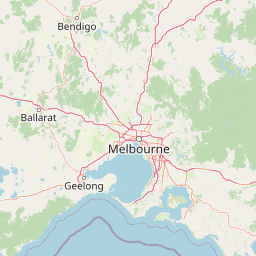
Map view of Yarra Ranges National Park

Use this park location map to pinpoint Yarra Ranges National Park in Australia, understand its exact geographic position, and read its mapped placement within the surrounding landscape more clearly.

Pigeon | © OpenStreetMap contributors

Location context for Yarra Ranges National Park

Victoria
Park atlas

Discover surrounding protected landscapes and compare nearby mountain ash forests within the Great Dividing Range geography

Explore Other National Parks and Protected Areas Near Yarra Ranges National Park, Victoria
Extend your park discovery beyond Yarra Ranges National Park to explore nearby protected areas and national parks, revealing the regional spread of Victoria's unique mountain ash forests and crucial water catchments. Compare their varied mountainous terrain, distinct ecological features, and significant conservation importance within the Great Dividing Range.
National parkVictoria

Lake Eildon National Park: Protected Landscape and Gold Mining Heritage in Victoria

Explore ancient volcanic terrain and mapped forest environments.

Lake Eildon National Park represents a significant protected area within Victoria's Central Highlands, offering a unique blend of natural and historical discovery. The park encompasses diverse eucalypt forests and mountainous terrain, shaped by the remnants of the ancient Cerberean Caldera supervolcano. Visitors can explore mapped park boundaries and understand the area's rich gold rush heritage, alongside the central feature of Lake Eildon itself, making it a distinctive national park for geographic and landscape context.

Area
277.5 km²
Established
1997
IUCN
II
National parkVictoria

Alpine National Park: Victoria's Premier National Park Protected Landscape Atlas

Explore its mapped boundaries and regional geographic context.

Alpine National Park stands as a paramount example of a protected natural landscape in Victoria, Australia. As the region's largest national park, its mapped boundaries and diverse terrain offer deep insights into the broader geographic context of the Australian Alps. This dedicated entry facilitates structured discovery of its protected-area status and its importance within the mapped natural heritage of Victoria.

Area
6,474 km²
Established
1989
IUCN
II
National parkVictoria

Morwell National Park: Victoria's Protected Wet Sclerophyll Forest and Rainforest

Mapping the diverse flora and fauna of this key national park.

Morwell National Park is a protected national park in Victoria, Australia, renowned for its significant plant diversity and the preservation of wet sclerophyll forests alongside cool temperate rainforest pockets in its gullies. Located within the Strzelecki Ranges, the park's mapped geography illustrates the varied terrain supporting these distinct forest communities. As a conservation area driven by community advocacy, it stands as a vital reserve for regional biodiversity, offering a focused study of Victoria's unique protected landscapes and their ecological significance.

Area
5.65 km²
Established
1966
IUCN
III
National parkVictoria

Tarra-Bulga National Park: Victoria's Remnant Temperate Rainforest Protected Landscape

Explore its mapped terrain and unique geographic setting.

Tarra-Bulga National Park offers a glimpse into Victoria's past with its exceptionally preserved temperate rainforest and towering mountain ash forests. Situated in the Strzelecki Ranges, this protected area is critical for understanding regional biodiversity and landscape evolution. Explore the mapped terrain, deep valleys, and fern-filled gullies that define its unique geographic character and protected status.

Area
15.22 km²
Established
1986
IUCN
II
National parkVictoria

Organ Pipes National Park: Victoria's National Park for Geological Atlas Exploration

Discover unique columnar basalt formations and mapped volcanic landscapes.

Organ Pipes National Park stands as a remarkable testament to Victoria's volcanic past, preserving some of the finest examples of columnar basalt jointing in Australia. Situated within the Keilor Plains, this national park showcases dramatic geological features, including the namesake Organ Pipes, alongside ancient Silurian marine sediments, offering a layered perspective on regional geography. Its protected status ensures the conservation of this unique landscape, making it an essential destination for understanding mapped terrain and geological heritage within the Australian atlas.

Area
1.21 km²
Established
1972
IUCN
III
Marine protected areaVictoria

Corner Inlet Marine National Park: Victoria Marine Protected Area Exploration

Mapped marine landscape and protected wetland discovery in South Gippsland.

Corner Inlet Marine National Park offers a distinct focus on protected marine environments and coastal wetland geography. As a significant marine protected area in Victoria, it showcases the ecological dynamics of a Ramsar-listed inlet, featuring extensive seagrass beds and intertidal habitats. This park provides essential context for understanding Victoria's network of protected marine landscapes and their interconnectedness with adjacent conservation areas.

Area
15.5 km²
Established
2002
IUCN
II
National parkVictoria

Heathcote-Graytown National Park: Victoria's Key Box-Ironbark Forest Protected Area

Explore the mapped terrain and regional geography of this national park.

Heathcote-Graytown National Park stands as a critical protected area in Victoria, Australia, focused on conserving the rare box-ironbark forests that once dominated the region. Located within the Great Dividing Range, this national park provides essential habitat for woodland birds, notably the swift parrot, and offers a glimpse into the natural landscape that predates widespread agricultural development. Its inclusion in the park atlas highlights its ecological importance and contributes to a broader understanding of protected land distribution within Victoria's unique geography.

Area
128.33 km²
Established
2002
IUCN
II
Relief
Mountain
National parkVictoria

Point Addis Marine National Park: Victoria's Southern Ocean Coastal Protected Landscape

Mapped marine boundaries and diverse coastal geography.

Point Addis Marine National Park preserves a crucial section of Victoria's iconic Surf Coast, stretching from near Anglesea to Bells Beach. This national park encompasses vital marine environments, including rich rocky reef systems and productive kelp forests characteristic of the Southern Ocean. Its protected status safeguards a significant area of coastal waters, making it a key point of reference for understanding Australia's temperate marine geography and protected landscapes.

Area
46 km²
Established
2002
IUCN
II

Common questions about visiting, size, designation, and location context for Yarra Ranges National Park

Yarra Ranges National Park FAQs for park facts, access, geography, and protected area context
Find quick answers about Yarra Ranges National Park, including protected-area facts, park geography, trail and visitor context, and how the park fits into its surrounding country and regional landscape.
MoriAtlas Explorer

Continue Your Protected Areas Search Across the Global Atlas

Deepen your exploration by continuing the structured search for national parks and protected areas worldwide. Utilize the comprehensive filtering capabilities to compare different conservation landscapes and refine your understanding of global park geography. Discover more about the distribution and characteristics of protected natural areas.

Global natural geography