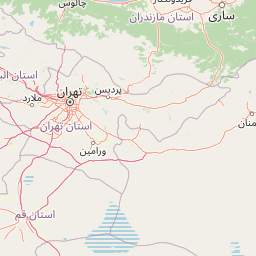
Why Kavir National Park stands out
Kavir National Park is best known for its population of critically endangered Asiatic cheetahs, one of the rarest large cats in the world. The park also provides crucial habitat for Persian leopards, Indian wolves, striped hyenas, and various ungulate species including wild goats, wild sheep, and gazelles. Its significance lies in protecting one of the last remaining expanses of intact desert-steppe ecosystem in Iran, serving as a last stronghold for species that have been lost from much of their historic range across the region.
Kavir National Park history and protected-area timeline
Kavir National Park was established in 1982 as part of Iran's expanding network of protected areas during a period of increased environmental awareness and conservation planning. The creation of the park reflected growing recognition of the Kavir Desert region's ecological significance and the need to protect its distinctive wildlife populations. Iran's national park system developed substantially during the late twentieth century, with Kavir becoming one of the flagship desert protected areas in the country. The establishment came at a time when concerns about declining populations of species like the Asiatic cheetah were intensifying, making the designation of large contiguous protected areas increasingly urgent for conservation planning.
Kavir National Park landscape and geographic character
The terrain of Kavir National Park consists primarily of desert and steppe landscapes characteristic of Iran's interior plateau. Vast open plains stretch across the protected area, punctuated by occasional rocky outcrops and subtle topographic variations that break the otherwise uniform desert floor. The landscape reflects the harsh environmental conditions of the Kavir Desert region, with its extreme temperature variations between seasons and limited precipitation. The park protects an ecosystem type that covers extensive areas of central Iran but has seen significant alteration in many locations due to human activity, making the protected status of this large contiguous area particularly valuable for maintaining ecological processes.
Kavir National Park ecosystems, habitats, and plant life
The desert and steppe ecosystem of Kavir National Park supports a surprising diversity of life adapted to arid conditions. Vegetation across the park consists of drought-resistant plant species capable of surviving on minimal moisture, including various shrubs and grasses that dot the otherwise sparse landscape. The park protects an important example of an ecosystem type that once covered much of central Asia but has been extensively modified by human activity. This semi-arid environment supports a food web that flows from primary producers through herbivores to apex predators, maintaining ecological relationships that have shaped the landscape over millennia.
Kavir National Park wildlife and species highlights
Kavir National Park harbors an impressive array of wildlife, with particular significance attached to its populations of large predators. The park supports one of the last remaining populations of the critically endangered Asiatic cheetah, a subspecies that has been driven to the brink of extinction across its historic range in southwestern Asia. Persian leopards also persist in the park, representing another vanishing large cat that depends on remote, protected landscapes for survival. The predator community includes striped hyenas and Indian wolves, while ungulate species such as wild goats, wild sheep, and gazelles provide prey base for these predators. The assembly of species found in the park represents a vestige of the once-extensive faunal communities that inhabited the desert and steppe regions of the Middle East.
Kavir National Park conservation status and protection priorities
Kavir National Park plays a critical role in protecting Iran's desert biodiversity, with particular importance attached to its function as a sanctuary for the Asiatic cheetah. This species has been reduced to tiny numbers across its remaining range, making every protected area that supports viable populations critically important for species survival. The park's large size and relative remoteness provide the space that wide-ranging species like cheetahs, leopards, and wolves require for hunting, breeding, and maintaining natural population dynamics. Conservation efforts in the park face the challenge of managing human-wildlife interactions in a region where traditional livestock husbandry occurs near the protected area boundaries.
Kavir National Park cultural meaning and human context
Kavir National Park lies in a region of Iran that has been inhabited for millennia, with evidence of human presence in the Kavir Desert area throughout historic times. The desert landscapes surrounding the protected area have supported pastoral communities who moved their herds across seasonal grazing areas, a pattern of land use that continues in some areas adjacent to the park. The relationship between human communities and this harsh landscape reflects long adaptation to environmental conditions that limit agricultural potential while still supporting livestock grazing.
Top sights and standout views in Kavir National Park
The standout feature of Kavir National Park is its role as a last refuge for the critically endangered Asiatic cheetah, making it one of the most important conservation areas in the Middle East. The park's vast desert and steppe landscapes represent one of the largest remaining intact arid ecosystems in the region. Visitors and researchers have the opportunity to encounter a remarkable assemblage of wildlife including Persian leopards, Indian wolves, striped hyenas, and various ungulates in a setting that retains its wild character across thousands of square kilometers.
Best time to visit Kavir National Park
The optimal time to explore Kavir National Park falls during the cooler months from late autumn through early spring, when temperatures are more moderate and comfortable for outdoor activity. Summer temperatures in the desert can become extremely hot, limiting the feasibility of extended field visits and wildlife observation. The winter months offer clear skies and the possibility of encountering wildlife moving across the landscape, though conditions can be harsh. Spring may provide the most pleasant conditions for visiting, with moderate temperatures and the brief period when some plant life adds touches of green to the otherwise brown desert terrain.