Why Shirvan National Park stands out
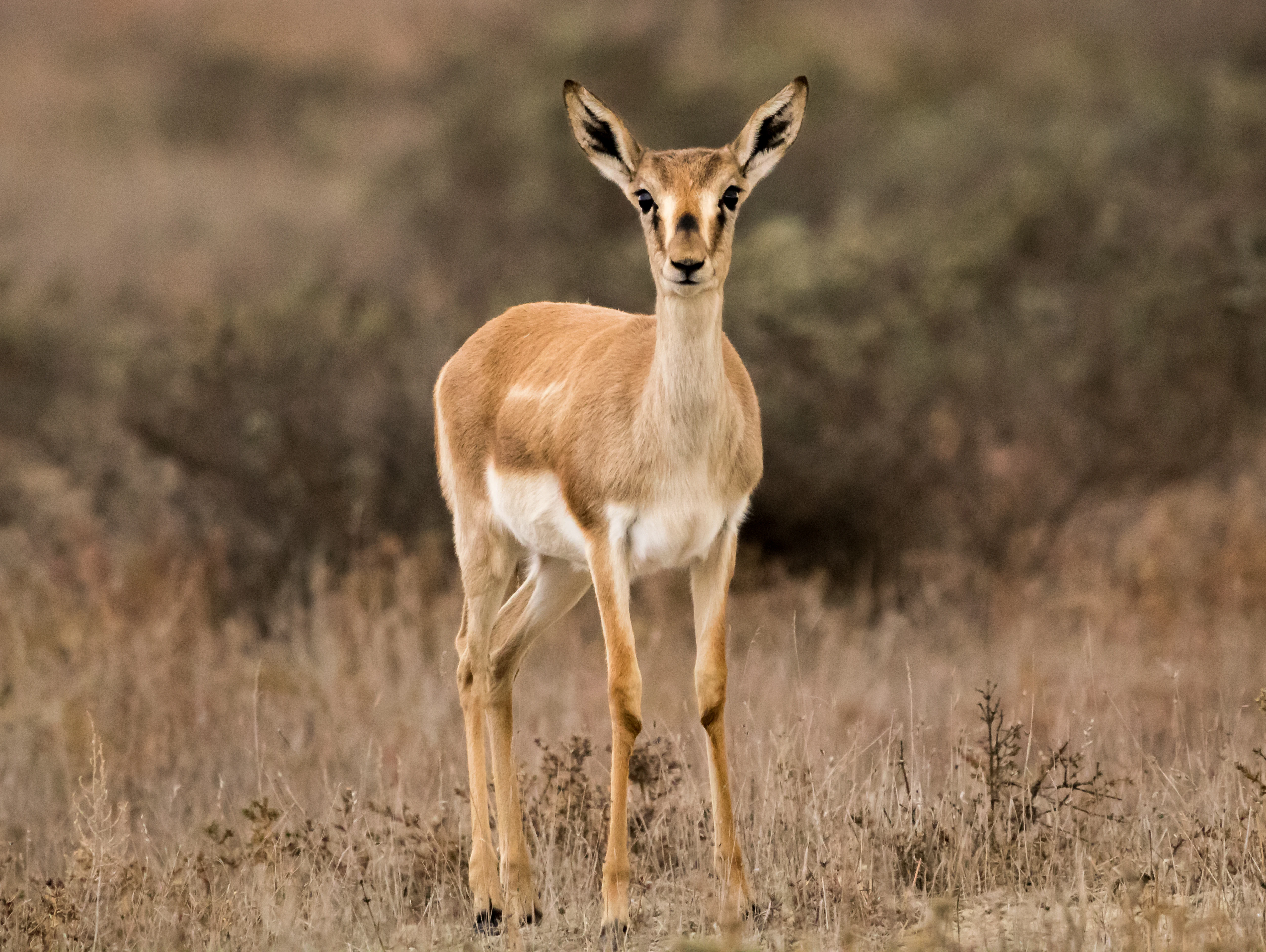
Shirvan National Park is best known for its population of Persian gazelles (goitered gazelle), which represents the world's largest concentration of this species. The park protects the natural semi-desert complexes of southeastern Shirvan, a unique landscape characterized by halophyte vegetation, ancient coastal ridges, and dune formations that provide critical habitat for gazelles. The wetland areas, particularly around Çala (Kizilqaz) Lake in the western part of the park, serve as a major staging ground for migratory birds along the Western Siberian flyway. The semi-desert landscape, with its distinctive wormwood and ephemeral grass formations covering about 40% of the territory, creates one of Azerbaijan's most ecologically specialized protected areas.
Shirvan National Park history and protected-area timeline
Shirvan National Park was established on July 5, 2003, through a decree of the President of Azerbaijan, building upon the foundation of the Shirvan State Reserve. The original reserve was created in 1969 with the specific mission of protecting goitered gazelle populations and preserving the typical plant biotypes of the Shirvan Lowland. The establishment of the national park expanded protection to encompass neighboring areas, significantly increasing the total protected territory to encompass the semi-desert landscape in its entirety. The park's creation reflected Azerbaijan's broader commitment to biodiversity conservation, particularly for species of regional and global significance. The expansion from reserve to national park status also acknowledged the area's importance as a bird migration corridor and wintering ground. Historically, this region once fell within the range of the Asiatic lion and the Caspian tiger, both of which are now extinct in the Caucasus region, giving the landscape a sense of ecological legacy despite the loss of these apex predators.
Shirvan National Park landscape and geographic character
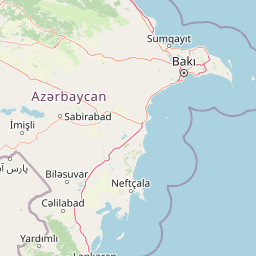
The landscape of Shirvan National Park is defined by its low-lying position as a former Caspian Sea bottom, now forming a flat accumulative plain. The terrain lies 20–25 meters below sea level, with a gentle slope rising slightly toward the west. Ancient coastal ridges and lagoon formations are visible in parts of the park, providing subtle topographical variation in an otherwise flat terrain. Wind-formed dune ridges—known locally as "düyün təpəcikləri"—create localized relief and provide essential shelter and camouflage for gazelles. The area lacks permanent rivers or streams, though it is bounded to the east by the Caspian Sea and to the north by the Bash Shirvan collector and other canal systems. Çala Lake, also known as Kizilqaz Lake, occupies a significant area within the park's western portion, creating wetland habitat amid the surrounding semi-desert. The landscape supports distinctive vegetation zones including halophyte communities on solonchak (salt-affected) soils, semi-desert wormwood formations, and meadow vegetation in humid depressions known as "chals."
Shirvan National Park ecosystems, habitats, and plant life
The nature of Shirvan National Park centers on semi-desert and arid steppe ecosystems that are unique within Azerbaijan's protected area network. The vegetation is adapted to the hot, dry summers and cool, dry winters of the Shirvan Lowland, with distinct plant communities reflecting soil salinity and moisture availability. Desert-type vegetation dominated by Halocnemum strobilaceum covers approximately 40% of the park, thriving on solonchak soils. More complex Halostachys communities grow on hilltops and slopes, while Salicornia vegetation occurs in the central wetlands where groundwater is close to the surface. Semi-desert vegetation dominated by ephemeral wormwood occupies another 40% of the park area and supports the richest species diversity, with 20-25 ephemeral species including bulbous poa and various brome grasses. Meadow-type vegetation develops in the humid depressions ("chals"), forming a two-layered herbaceous community with Alhagi in the upper layer and Aeluropus repens below. The plant communities provide essential forage for gazelles, particularly during winter when aromatic wormwood, saltwort, and other perennials form the natural diet of these animals.
Shirvan National Park wildlife and species highlights
The wildlife of Shirvan National Park is characterized by its semi-desert adaptations and the presence of significant conservation价值 species. The park holds the world's largest population of Persian gazelles (goitered gazelle, Gazella subgutturosa), the primary protected species for which the reserve was originally established. Reintroduction programs have successfully transferred gazelles from Shirvan to other protected areas in Azerbaijan and Georgia, including Vashlovani National Park, Qobustan, Ajinohur steppe, and Ag-Gel National Park. The mammal community includes red fox, wild boar, wolf, jackal, jungle cat, badger, and European hare. Among amphibians and reptiles, the park supports variable toad, tree frogs, marsh frog, European pond turtle, Caspian turtle, Greek tortoise, and various snakes including the grass snake and Levantine viper. The avifauna is particularly significant, with the park serving as a nesting area, migration route, and wintering ground for many valuable bird species. Winter brings large congregations of migratory waterfowl including greylag geese, mallards, and northern pintail to the lakes and water bodies. Notable birds include bustards, black francolins, little bustards, white-tailed eagles, steppe eagles, peregrine falcons, saker falcons, and black-bellied sandgrouse. Species listed in Azerbaijan's Red Book include the Greek tortoise, Persian gazelle, black francolin, bustard, little bustard, and several birds of prey.
Shirvan National Park conservation status and protection priorities
Shirvan National Park represents a cornerstone of Azerbaijan's conservation strategy for semi-desert ecosystems and threatened species. The park's primary conservation focus is the Persian gazelle, whose population in Shirvan represents the largest in the world, making the area globally significant for this species. The park has served as a source population for reintroduction efforts, with gazelles translocated to establish or reinforce populations in multiple protected areas across Azerbaijan and Georgia. The wetland areas, particularly around Çala Lake, are protected as important water-wading ecosystems that support nesting, migration, and wintering for numerous bird species. Many wildlife species present in the park are listed in Azerbaijan's Red Book, including the Greek tortoise, Persian gazelle, black francolin, and several birds of prey. The Caspian seal, although not a resident, occasionally visits the coastal waters adjacent to the park. The conservation framework acknowledges the historical significance of the area as former habitat for now-extinct species including the Asiatic lion and Caspian tiger, adding evolutionary context to the park's protection mandate.
Shirvan National Park cultural meaning and human context
Shirvan National Park occupies a landscape with historical ties to the broader Shirvan region of eastern Azerbaijan. The name "Shirvan" derives from the Persian word for lion, reflecting the historical presence of the Asiatic lion in the Trans-Caucasus. The park lies within the traditional territory associated with the Shirvan Lowland, an area that has been part of Azerbaijan's historical and cultural landscape. The semi-desert environment has supported pastoral and agricultural activities by local communities over generations. The nearby towns of Salyan and Neftçala serve as the closest urban centers to the park. In 2014, a documentary film titled "Shirvan National Park" was produced as part of the "Nine Wonders of Azerbaijan" project, highlighting the park's natural significance and bringing attention to its conservation values.
Top sights and standout views in Shirvan National Park
Shirvan National Park protects the world's largest population of Persian gazelles in a semi-desert landscape unique within the Caucasus region. The park's low-lying terrain, lying 20–25 meters below sea level, represents former Caspian Sea bottom now transformed into a specialized conservation landscape. The wetland areas around Çala Lake provide critical habitat for migratory birds along the Western Siberian flyway, with winter congregations of waterfowl creating a significant ornithological spectacle. Dune formations throughout the park provide essential cover for gazelle populations, while diverse vegetation communities including halophyte, wormwood, and ephemeral grass formations create ecological complexity. The park has proven successful as a source population for gazelle reintroduction programs, demonstrating its conservation value extends beyond its borders. The area represents one of Azerbaijan's most important semi-desert protected areas, safeguarding ecosystems that are rare in the regional context.
Best time to visit Shirvan National Park
The best time to visit Shirvan National Park is during the cooler months from autumn through early spring, when temperatures are more comfortable for outdoor exploration. The park experiences a continental semi-desert climate with hot, dry summers where temperatures can become extreme, making summer visits less comfortable. Winters are cool and dry, offering the opportunity to observe wintering bird populations, particularly waterfowl that congregate around Çala Lake and coastal areas. The winter months provide excellent birdwatching opportunities as migratory species including greylag geese, mallards, and northern pintail gather in significant numbers. Spring and autumn offer pleasant temperatures and the chance to observe the park's wildlife in moderate conditions, though specific seasonal characteristics such as blooming periods or wildlife behaviors are not extensively documented in available sources.