
Why Kwiambal National Park stands out
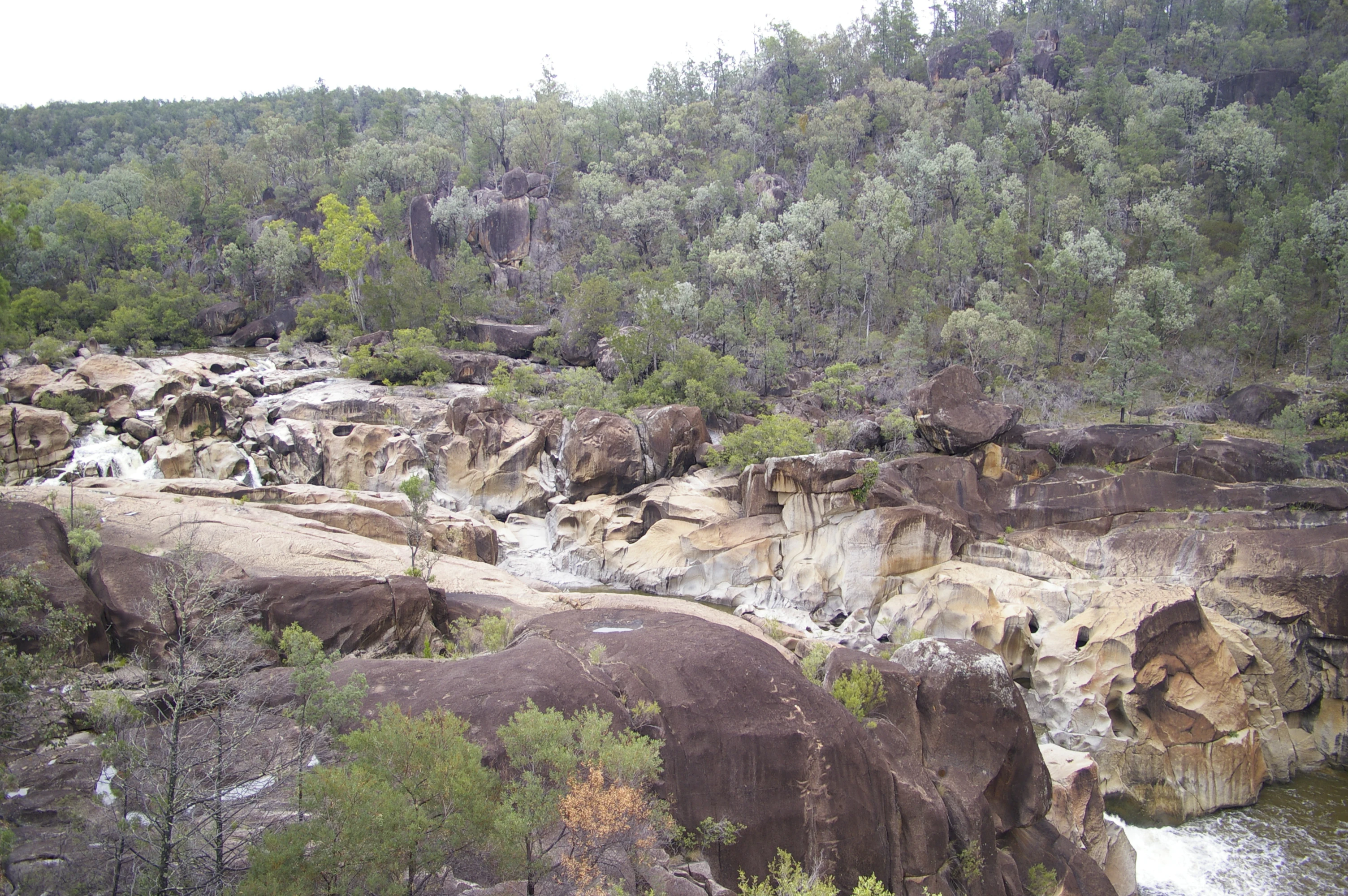
Kwiambal National Park is best known for its dramatic river scenery and the iconic MacIntyre Falls, where the Severn and Macintyre rivers converge. The park's exposed granite geology creates a distinctive visual landscape of weathered rock formations and boulder-strewn terrain. The Ashford Caves system adds speleological interest to the park's natural assets. These features combine to make the park a notable destination for nature-based recreation in the New England northwest.
Kwiambal National Park history and protected-area timeline
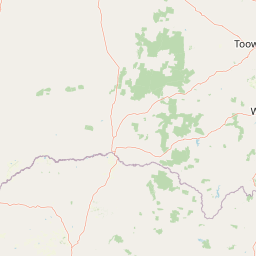
Kwiambal National Park was officially gazetted on 10 May 2000, establishing the area as a protected national park under the management of the NSW National Parks and Wildlife Service. The initial declaration described the park as encompassing County Arrawatta, Parishes Ena, Limestone and Severn, with an original area of approximately 1,301 hectares. Subsequent vegetation survey work, notably a 2008 report by Dr John T. Hunter, documented the park's extent as approximately 6,517 hectares, indicating that the protected area encompasses a larger land area than initially recorded. The establishment of the park reflected growing recognition of the conservation value of the region's river systems, granite landscapes, and the need to protect the MacIntyre Falls area and surrounding natural environments.
Kwiambal National Park landscape and geographic character
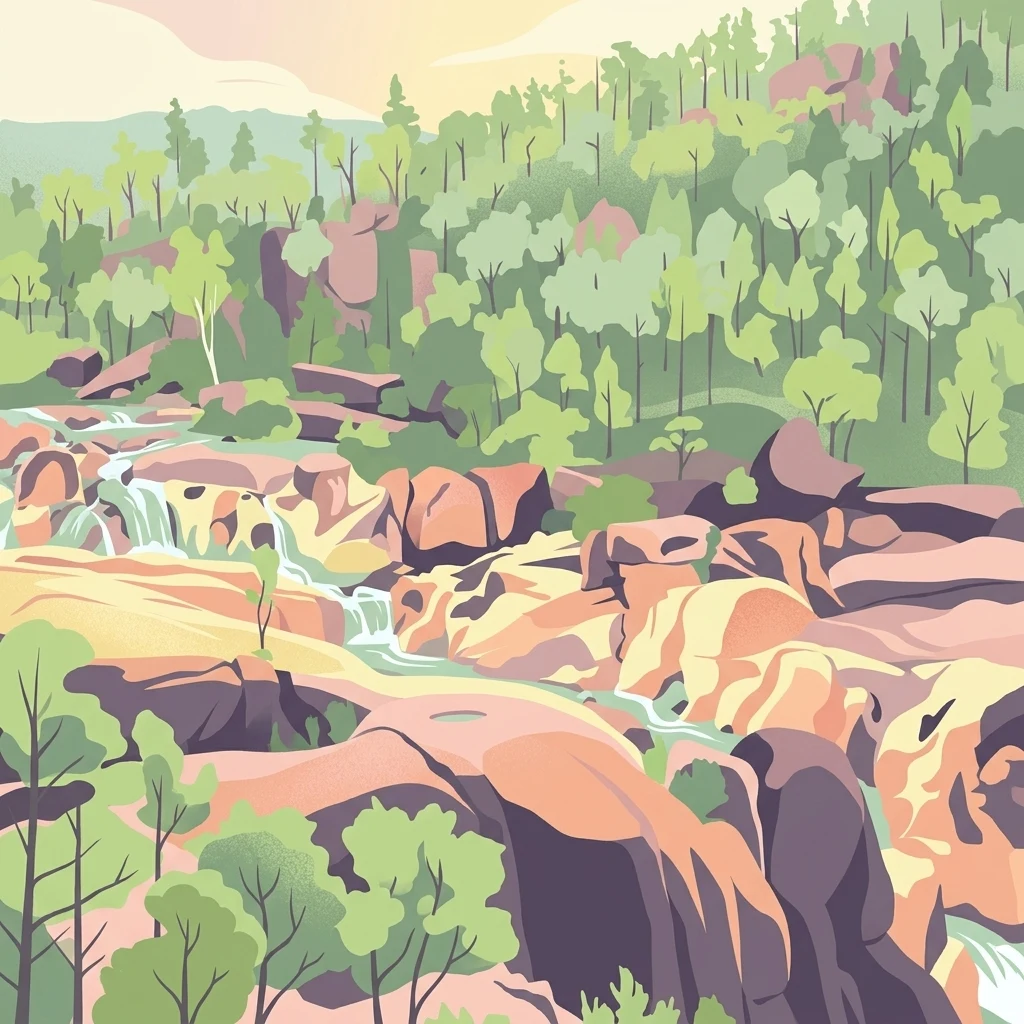
The landscape of Kwiambal National Park is defined by its granite-dominated terrain, with exposed rock formations creating a backdrop of weathered boulders and steep ridges throughout the reserve. The river valleys of the Severn and Macintyre Rivers have carved pathways through this granite landscape, with the most dramatic feature being MacIntyre Falls where these watercourses converge. The terrain surrounding the river corridors features riffles, pools, and cascades that animate the landscape with flowing water. Between the river systems, the park contains areas of more gently undulating country, though granite outcrops remain a consistent visual element across the entire reserve. The combination of flowing water, rocky outcrops, and native vegetation creates a parkland character that is distinctive within the New England region.
Kwiambal National Park ecosystems, habitats, and plant life
The natural environment of Kwiambal National Park encompasses a mix of vegetation communities adapted to the granite-based soils and the riparian zones along the park's rivers. The park sits within a broader landscape transition zone, and while specific vegetation details are limited in the source material, the park supports typical New England biodiversity including woodland and forest communities in the more sheltered areas. The river systems provide important aquatic habitats and riparian corridors that support distinct plant assemblages adapted to regular water availability. The granite outcrops host specialized plant communities capable of surviving on shallow soils and exposed rock surfaces. These diverse habitat types contribute to the overall ecological value of the reserve.
Kwiambal National Park wildlife and species highlights
Kwiambal National Park supports wildlife populations typical of the New England region of New South Wales. The park's river systems provide habitat for various aquatic species and attract birdlife along the riparian corridors. Bird watching is identified as a visitor activity within the park, indicating the presence of diverse avian fauna. The mix of woodland habitats, river environments, and rocky outcrops supports a range of terrestrial species. The protected status of the area helps preserve wildlife habitats and movement corridors within the broader agricultural landscape of the region.
Kwiambal National Park conservation status and protection priorities
Kwiambal National Park contributes to the conservation estate in northern New South Wales by protecting a landscape of rivers, waterfalls, and granite terrain that might otherwise have been degraded by pastoral or agricultural development. The park's designation as an IUCN Category II protected area reflects its national significance and the intention to preserve its natural values. Protection of the Severn River and Macintyre River catchments within the park boundary helps maintain water quality and aquatic ecosystem health. The granite landscapes and associated habitats represent conservation values that benefit from formal protection within the national park system.
Kwiambal National Park cultural meaning and human context
The source material does not provide detailed information regarding indigenous cultural heritage or historical human use of the Kwiambal National Park area. The park sits within the broader New England region, which has indigenous associations, though specific cultural context for this particular protected area is not documented in the available information.
Top sights and standout views in Kwiambal National Park
The defining highlights of Kwiambal National Park include the spectacular MacIntyre Falls at the confluence of the Severn and Macintyre rivers, the pervasive granite outcrops that shape the park's visual character, and the Ashford Caves for those interested in geological formations. The park offers diverse recreational opportunities including swimming in the river pools, mountain biking along trails, fishing in the river systems, and bird watching along the riparian corridors. The availability of accommodation within or near the park makes it a practical destination for extended visits to explore the natural features of the New England northwest.
Best time to visit Kwiambal National Park
The best time to visit Kwiambal National Park would generally be during the cooler months of autumn and winter in the southern hemisphere, from approximately March through August, when temperatures are more comfortable for outdoor exploration and the landscape retains its green character. Summer months can bring high temperatures to the New England region, potentially making outdoor activities less comfortable. The park can be visited year-round, though visitors should be aware that river conditions and accessibility may vary with seasonal rainfall patterns. The falls and river pools are likely to be most impressive following periods of rainfall, while the drier months may result in reduced water flow.