Mori Atlas logo
National parkMount Kaputar National Park

Trace the dramatic volcanic terrain and distinct ecological zones of this key New South Wales national park.

Mount Kaputar National Park: Volcanic Landscape and Protected Area in New South Wales

Mount Kaputar National Park stands as a testament to ancient volcanic activity, preserving a significant protected landscape within New South Wales. This national park, centered around the eroded remnants of the Nandewar Range, showcases a dramatic topography of volcanic plugs and lava terraces. Its protected boundaries encompass a surprisingly diverse range of habitats, from semi-arid woodlands to subalpine communities, offering a rich environment for geographic and ecological exploration.

Volcanic landscapeSubalpine environmentMountain wildernessEndemic speciesNew South Wales national parksEucalypt forest

Mount Kaputar National Park

National park

Park overview

Structured park overview, official facts, and landscape profile for Mount Kaputar National Park

Mount Kaputar National Park park facts, protected area profile, and essential visitor context
Review the core facts for Mount Kaputar National Park, including designation, size, terrain, visitor scale, habitats, and operating context in one park-focused overview.

About Mount Kaputar National Park

Mount Kaputar National Park occupies a unique position in Australia's protected area network as a mountain wilderness enclave within the semi-arid inland plains of northern New South Wales. The park's geological foundation lies in the Nandewar Range, a volcanic mountain system that formed between 17 and 21 million years ago when lava flows and volcanic eruptions built a substantial mountain mass. Over subsequent millions of years, erosional forces have carved the original volcanic structure into the dramatic landscape seen today, characterized by steep lava terraces, towering volcanic plugs, and linear dyke formations that create a visually striking terrain distinct from the surrounding pastoral lands.

The ecological significance of Mount Kaputar derives from the dramatic altitudinal gradient that exists within the park, spanning from semi-arid woodland communities at lower elevations through diverse eucalypt forests to subalpine heath communities near the summit. This range of habitats supports an unexpected diversity of wildlife in what might appear to be a marginal environment. The park provides crucial refuge for species adapted to cooler high-altitude conditions in an otherwise warm, dry region, creating what ecologists recognize as a significant island of cooler-climate habitat surrounded by warmer lowland environments.

The human history of the Mount Kaputar region extends back thousands of years, though European settlement saw the area used primarily for grazing livestock from the mid-nineteenth century until the mid-twentieth century. Remnants of those more recent pastoral endeavors, including the restored Scutt's Hut, remain as historical points of interest within the park today.

Quick facts and research context for Mount Kaputar National Park

Mount Kaputar National Park is located in northern New South Wales, Australia, approximately 50 kilometers east of Narrabri. The park covers 502.25 square kilometers and is centered on Mount Kaputar, an ancient volcanic peak rising to 1,510 meters above sea level. The Nandewar Range, of which Mount Kaputar is a prominent member, was formed through volcanic activity millions of years ago, with subsequent erosion creating the dramatic lava terraces, volcanic plugs, and dykes visible throughout the park today. The park falls under IUCN category II protection and is administered by the National Parks and Wildlife Service of New South Wales.

Park context

Deeper park guide and search-rich context for Mount Kaputar National Park

Mount Kaputar National Park history, landscape, wildlife, and travel context
Explore Mount Kaputar National Park through its history, landscape character, ecosystems, wildlife, conservation priorities, cultural context, and seasonal travel timing in a structured park guide built for atlas discovery and search intent.

Why Mount Kaputar National Park stands out

Mount Kaputar National Park is best known for its dramatic volcanic landscape and ecological diversity within an otherwise semi-arid region. The park protects the ancient volcanic remnants of the Nandewar Range, featuring distinctive lava terraces, volcanic plugs, and rock formations that starkly contrast with the surrounding plains. Perhaps most remarkably, the park is home to several endemic species of land slugs, including the distinctive red triangle slug and the rare pink slug (_Triboniophorus sp. nov. 'Kaputar'_), which appear in abundance after rainfall events. The 360-degree panoramic view from Mount Kaputar's summit, offering vistas across one-tenth of New South Wales, is considered one of the most spectacular in the state.

Mount Kaputar National Park history and protected-area timeline

The Mount Kaputar region was used for grazing purposes for many decades prior to formal protection, with sheep and cattle operations established on the mountain plateau and surrounding areas. The harsh conditions and relative isolation of the area meant that pioneering families who lived there experienced considerable solitude, with stockmen sometimes going months without seeing another person. These pastoral operations continued on the plateau until approximately the 1950s.

Formal protection began in 1925 when approximately 775 hectares around Mount Kaputar were declared a Reserve for Public Recreation. Two years later, in 1927, the Mount Kaputar Trust was established to provide guidance on managing the area. Over the following decades, the protected area expanded significantly, reaching 14,244 hectares before being formally proclaimed as a national park in 1959. In 1967, responsibility for the park was transferred from the Mount Kaputar Trust to the newly established National Parks and Wildlife Service of New South Wales, which continues to administer the park through a regional advisory board.

Mount Kaputar National Park landscape and geographic character

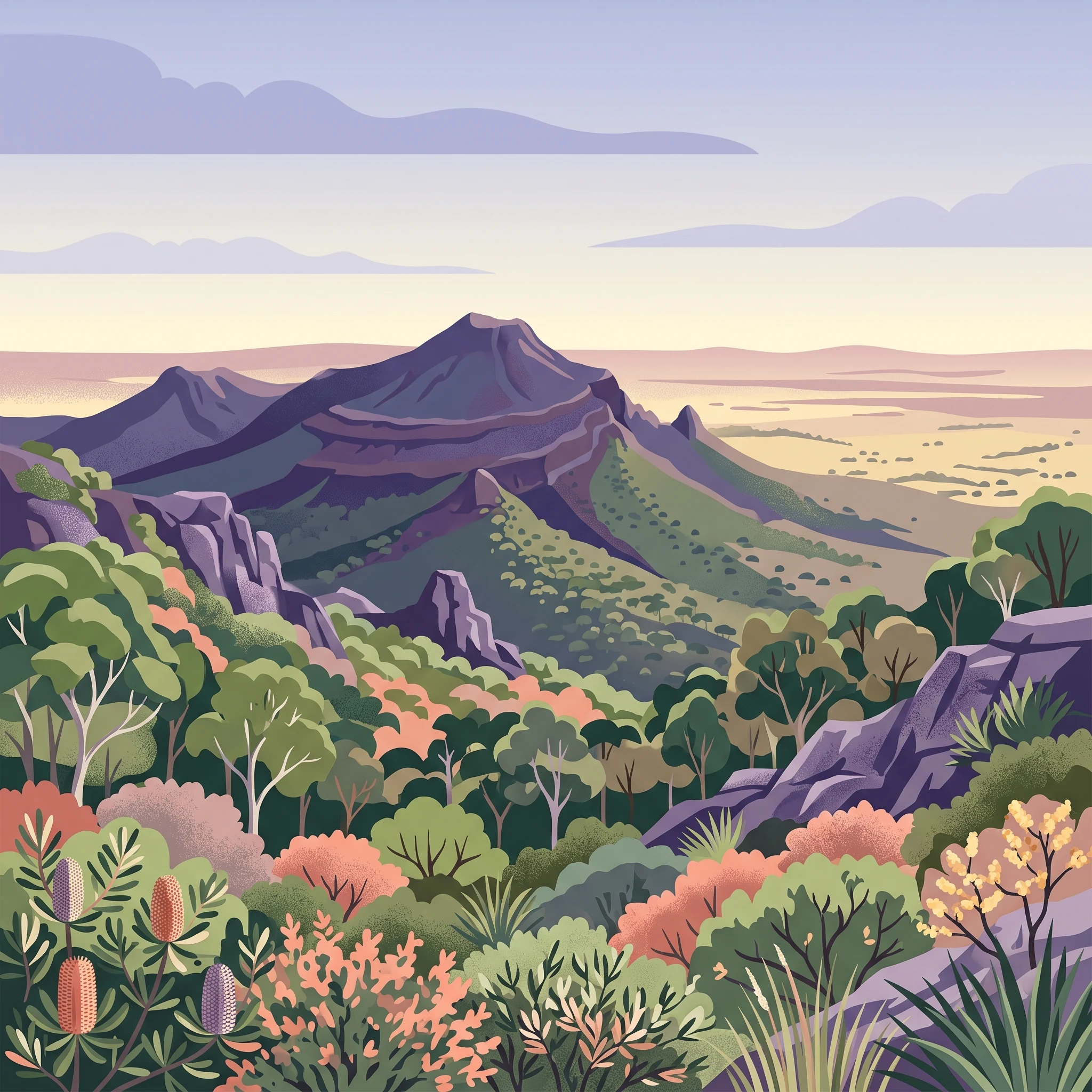
The landscape of Mount Kaputar National Park is defined by its volcanic origins and subsequent erosion. The Nandewar Range, of which Mount Kaputar is the most prominent peak, represents the weathered remains of a major volcanic complex that was active during the Miocene epoch. The characteristic features of the park include dramatic lava terraces that mark the edges of ancient lava flows, towering volcanic plugs formed from hard rock that resisted erosion more than surrounding material, and prominent dykes where magma forced its way through existing rock formations to create linear rock walls visible on the landscape.

The summit of Mount Kaputar stands at 1,510 meters above sea level, making it the highest point in the northern New South Wales region. From this vantage point, the view extends across vast distances of the state, encompassing approximately one-tenth of New South Wales' total area. The contrast between the mountainous terrain of the park and the relatively flat surrounding plains creates a striking visual boundary. The lower slopes feature undulating terrain covered in woodland and forest, while the higher elevations display the more stark and rocky character of exposed volcanic bedrock and subalpine vegetation.

Mount Kaputar National Park ecosystems, habitats, and plant life

The ecological character of Mount Kaputar National Park is remarkably diverse given its location in a semi-arid region. The park protects multiple distinct biomes that change with elevation, beginning with semi-arid woodland communities on the lower slopes and transitioning through various eucalypt forest types to reach subalpine heath communities near the summit. This vertical zonation creates a compressed representation of ecological communities that would normally span much greater latitudinal distances.

The eucalypt forests that dominate the middle elevations of the park support a variety of native species and provide important habitat for arboreal mammals and birdlife. As altitude increases, the forest gives way to more open heath communities adapted to the cooler, wind-exposed conditions of the subalpine zone. These heath communities feature diverse shrub species and groundcover plants that have adapted to the thin, rocky soils and seasonal temperature extremes experienced at higher elevations. The park represents one of the most significant areas of subalpine habitat in northern New South Wales.

Mount Kaputar National Park wildlife and species highlights

Mount Kaputar National Park supports a range of wildlife species adapted to the diverse habitats within its boundaries. The bat population includes several species that roost in the numerous caves and rock shelters found throughout the volcanic landscape. Birdlife is varied, with numerous species occupying the forest, woodland, and heath habitats across different elevations. Wallabies, particularly swamp wallabies, are present in the forested areas, while quolls, small predatory marsupials, hunt among the undergrowth and rock crevices.

Perhaps most notable is the park's population of land slugs, which represent one of the most remarkable wildlife features of the protected area. The red triangle slug (_Triboniophorus graeffei_) is a large and distinctive species that can be found throughout the park, but particularly after rainfall when conditions become favorable for these mollusks. Even more significant is the presence of the pink slug (_Triboniophorus sp. nov. 'Kaputar'_), a species that appears to be endemic to the Mount Kaputar area, representing a unique evolutionary lineage confined to this specific mountain environment.

Mount Kaputar National Park conservation status and protection priorities

Mount Kaputar National Park plays a crucial conservation role as a protected mountain wilderness in a region otherwise dominated by agricultural land use. The park preserves significant examples of volcanic landscape features and multiple habitat types that would otherwise be vulnerable to modification or loss. The presence of endemic species, particularly the pink slug that is known only from this mountain, elevates the park's conservation significance at both state and national levels.

The protection of subalpine heath communities within the park is particularly important, as these communities are poorly represented in the protected area network of northern New South Wales. Similarly, the diverse eucalypt forest communities provide connectivity for wildlife movement in a landscape where native vegetation has been extensively cleared for agriculture. The park's isolation from other protected areas creates a critical refugium for species requiring cooler-climate habitats in this part of Australia, making it an important site for biodiversity persistence in the face of climate change.

Mount Kaputar National Park cultural meaning and human context

While Mount Kaputar National Park does not have extensive documented indigenous cultural heritage content in available sources, the broader Nandewar Range and surrounding region have historical significance for Aboriginal communities. The park's landscape, with its dramatic rock formations, volcanic features, and water sources, would have provided resources for Traditional Owners over thousands of years.

The more recent European history of the area is better documented, with the park preserving remnants of pastoral occupation including the restored Scutt's Hut. This structure represents the pioneering families who lived in relative isolation on the mountain plateau, managing cattle and sheep operations in challenging conditions. The hut, located near Kurrawonga Falls and accessible via fire trail from the Bark Hut camping grounds, provides a tangible connection to this relatively recent human history within the landscape.

Top sights and standout views in Mount Kaputar National Park

Mount Kaputar National Park offers several standout features that distinguish it within Australia's protected area network. The panoramic view from the summit of Mount Kaputar, encompassing approximately one-tenth of New South Wales, is consistently rated as one of the most spectacular mountain vistas in the state. The unique volcanic landscape, with its distinctive plugs, terraces, and dykes, provides a visually striking environment unlike the typical Australian bushland found in surrounding areas. The park's remarkable biodiversity, including endemic slug species found nowhere else on Earth, represents a scientific treasure that adds biological significance to the landscape's obvious scenic qualities. The restored Scutt's Hut and the nearby Kurrawonga Falls provide historical and natural attractions that enhance the visitor experience, while the network of walking tracks and rock climbing opportunities make the park accessible to a range of recreational users.

Best time to visit Mount Kaputar National Park

The best time to visit Mount Kaputar National Park depends on the experience sought, though autumn and spring generally offer the most comfortable conditions for exploring the park. During these seasons, temperatures are moderate and the likelihood of encountering the park's distinctive slug species increases following rainfall events, when moisture brings these remarkable mollusks out onto the walking tracks and forest floor. Summer months can bring extreme heat to the lower elevations of the park, while winter may see snow on the higher peaks and cold conditions throughout.

The park is accessible year-round, though visitors should be aware that the mountain environment can produce weather conditions significantly different from those experienced on the surrounding plains. The subalpine character of the higher areas means that even during otherwise warm periods, the summit and ridgeline areas can experience strong winds and cooler temperatures. Those interested in wildlife viewing should plan visits around rainfall, as the park's unique slug species and other fauna are most active following wet weather.
Park location guide

Geography guide, regional context, and park location map for Mount Kaputar National Park

Mount Kaputar National Park park geography, regions, and map view in Australia
Understand where Mount Kaputar National Park sits in Australia through a broader geographic reading of the surrounding landscape, nearby location context, and its mapped position within the national park landscape.

How Mount Kaputar National Park fits into Australia

Australia is a constitutional monarchy and federal parliamentary democracy comprising six states and ten territories. With a population of nearly 28 million, it is one of the world's most urbanised countries, with most people concentrated on the eastern seaboard. The country has a high Human Development Index and is known for its cultural diversity, ancient Aboriginal heritage, and unique wildlife.

Wider geography shaping Mount Kaputar National Park in Australia

Australia occupies the entire Australian continent, the island of Tasmania, and numerous smaller islands. It is the world's flattest and driest inhabited continent, featuring vast deserts in the interior (the Outback), tropical rainforests along the eastern coast, and a coastline bordering the Indian and Pacific Oceans.

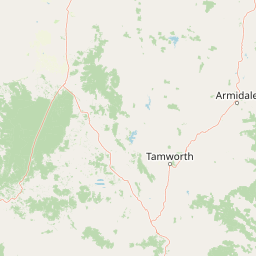
Map view of Mount Kaputar National Park

Use this park location map to pinpoint Mount Kaputar National Park in Australia, understand its exact geographic position, and read its mapped placement within the surrounding landscape more clearly.

Pigeon | © OpenStreetMap contributors

Location context for Mount Kaputar National Park

New South Wales
Park atlas

Compare surrounding protected landscapes, regional geography, and conservation zones across northern New South Wales.

Discover Other National Parks and Protected Areas Near Mount Kaputar National Park
Discover other national parks and protected areas near Mount Kaputar National Park, tracing their geographic distribution and environmental context across northern New South Wales. Explore how these conservation landscapes connect, compare their unique features, and understand their regional placement within the wider Australian protected area atlas.
National parkNew South Wales

Garrawilla National Park: New South Wales Protected Woodland Ecosystems & Regional Geography

Explore mapped boundaries and native vegetation in this inland Australian national park.

Garrawilla National Park represents a significant protected landscape in New South Wales, Australia, dedicated to conserving semi-arid woodland terrain and characteristic native grass communities. Established to safeguard these vital ecosystems, the park offers insights into the natural heritage of the Central West region's geography. Users can explore its specific geographic footprint and understand its contribution to the preservation of inland Australian vegetation, providing a clear picture of its protected area identity.

Area
9.37 km²
Established
2005
IUCN
II
National parkNew South Wales

Kwiambal National Park: New South Wales National Park with Granite Landscapes and River Confluence

Explore the dramatic scenery of MacIntyre Falls and surrounding protected terrain.

Kwiambal National Park is a significant protected area in New South Wales, Australia, celebrated for its unique granite outcrops and the spectacular confluence of the Severn and Macintyre Rivers at MacIntyre Falls. This national park provides a clear example of regional protected landscape identity, offering valuable context for atlas-driven discovery of Australia's natural geography and mapped terrain. The park's distinctive features contribute to its importance as a conservation reserve within the New England region.

Area
65.17 km²
Established
2000
IUCN
II
National parkNew South Wales

Coolah Tops National Park: Protected Landscape and Geographic Identity on the Liverpool Range

Explore New South Wales's elevated wilderness, waterfalls, and unique forests.

Coolah Tops National Park preserves a distinctive highland environment on the Liverpool Range, offering a protected wilderness experience within New South Wales. This national park is defined by its plateau landscape, featuring steep escarpments, numerous waterfalls, and dense eucalyptus forests. Its geographic position provides a striking contrast to the lower Liverpool Plains, showcasing unique flora and significant habitat for species like the greater glider, making it a vital area for regional landscape and protected-area exploration.

Established
1996
IUCN
II
National parkNew South Wales

Ben Halls Gap National Park: Ancient Eucalyptus Forest Protected Landscape in New South Wales

Explore mapped boundaries of old-growth woodland terrain.

Ben Halls Gap National Park represents an ecologically vital strict nature reserve within New South Wales, Australia. It is distinguished by its extensive ancient eucalyptus forests, which are among the most ecologically significant old-growth woodland environments in eastern Australia. Managed primarily for conservation and research, the park's rugged terrain provides a critical habitat refuge and a key reference ecosystem for understanding undisturbed woodland dynamics and biodiversity.

Area
30.18 km²
Established
1995
IUCN
Ia
Scope
Terrestrial
National parkNew South Wales

Mummel Gulf National Park: New South Wales Protected Area & Mapped Gorge Landscape

Rugged escarpment terrain with diverse forest ecosystems.

Mummel Gulf National Park is a protected area in New South Wales, Australia, renowned for its dramatic V-shaped gorge carved by the Mummel River, reaching depths over 400 metres. This rugged escarpment landscape hosts a variety of vegetation communities, including tall open eucalypt, wet sclerophyll, snow gum forests, and subtropical rainforest patches. The park's geography is central to its ecological significance, providing habitat for numerous species and showcasing a distinct natural terrain within the New England region, ideal for geographic exploration.

Area
122 km²
Established
1999
IUCN
II
National parkNew South Wales

Goulburn River National Park: New South Wales National Park with River Ecosystems and Heritage

Explore mapped protected lands and regional geography.

Goulburn River National Park offers a significant protected landscape within New South Wales, Australia, celebrated for its expansive Goulburn River frontage and diverse natural terrain. This national park is pivotal for understanding regional geography, featuring sandstone geological formations and serving as a critical habitat for endangered species, including the regent honeyeater. Its extensive river corridor also protects numerous Aboriginal heritage sites, contributing a rich layer of cultural significance to its conservation value. MoriAtlas helps users explore the mapped boundaries and environmental context of this vital protected area.

Area
722.96 km²
Established
1983
IUCN
II
National parkNew South Wales

New England National Park: Escarpment Landscape and Protected Area Discovery in New South Wales

Explore dramatic cliffs, ancient rainforests, and diverse ecosystems.

New England National Park represents a critical protected landscape on the eastern edge of New South Wales' Northern Tablelands. This area is characterized by its spectacular escarpment country, featuring impressive cliffs, rugged ridges, and deep valleys that cradle some of Australia's most botanically rich environments. As a designated national park, it preserves ancient ecosystems and offers unique opportunities for atlas-based geographic discovery of its mapped terrain and wilderness character.

Area
673 km²
Established
1937
IUCN
Ib
National parkNorthern Tablelands

Chaelundi National Park: Landmark Old-Growth Forest Protection in the Northern Tablelands

Mapped protected area landscape and regional geography.

Chaelundi National Park stands as a vital component of protected natural landscapes on Australia's Northern Tablelands. This national park is celebrated for its extensive old-growth forest, a direct result of significant environmental legal battles that highlighted its ecological importance. With declared wilderness areas covering thousands of hectares, the park offers a substantial glimpse into the region's conservation values and the complex interplay between landscape, law, and protected land status, providing rich context for geographic exploration.

Area
191.74 km²
Established
1997
IUCN
II

Common questions about visiting, size, designation, and location context for Mount Kaputar National Park

Mount Kaputar National Park FAQs for park facts, access, geography, and protected area context
Find quick answers about Mount Kaputar National Park, including protected-area facts, park geography, trail and visitor context, and how the park fits into its surrounding country and regional landscape.
MoriAtlas Explorer

Continue Your Protected Areas Search Across the Global Atlas

Deepen your exploration by continuing the structured search for national parks and protected areas worldwide. Utilize the comprehensive filtering capabilities to compare different conservation landscapes and refine your understanding of global park geography. Discover more about the distribution and characteristics of protected natural areas.

Global natural geography