Why Lamington National Park stands out
Lamington National Park is best known for its spectacular Gondwanan rainforests, ancient Antarctic beech trees with roots over 5,000 years old, and the exceptional biodiversity of its cloud forests. The park protects one of the largest upland subtropical rainforest remnants in the world and the most northern Antarctic beech cool temperate rainforests in Australia. Its more than 500 waterfalls, rugged mountain scenery, and excellent bushwalking tracks make it a premier nature destination. The park is also renowned among birdwatchers for species such as the regent bowerbird and Albert's lyrebird, and was featured in David Attenborough's Life on Earth series.
Lamington National Park history and protected-area timeline
The Lamington National Park region has been inhabited by Aboriginal people for at least 6,000 years, with the Wangerriburras and Nerangballum tribes claiming the plateau territory. Archaeological evidence at Bushranger Cave near Mount Hobwee shows Aboriginal occupation extending back 10,000 years. European exploration began with Captain Patrick Logan and botanist Allan Cunningham, followed by timber cutters including the Lahey family who operated one of Queensland's largest timber mills. A border survey in 1863 defined the Queensland-New South Wales border along the ridgelines through dense rainforest. Robert Collins campaigned heavily from the 1890s to protect the area from logging, and after entering state parliament, saw legislation passed preserving state forests and national parks, though he died before the McPherson Range received protection. Romeo Lahey later took up the cause, campaigning to establish the area as one of Queensland's first protected areas. The O'Reilly family established a guesthouse near the park in 1926, now known as O'Reilly's Rainforest Retreat. Lamington National Park was officially established in July 1915, named after Lord Lamington, Governor of Queensland from 1896 to 1902. Founding members of the National Parks Association of Queensland built Binna Burra Lodge adjacent to the park in the 1930s. In 1937, Bernard O'Reilly became a hero by rescuing survivors from an aircraft crash in the remote wilderness. The park suffered significant damage from bushfires in 2019, which created gaps in the rainforest canopy and prompted weed eradication programs.
Lamington National Park landscape and geographic character
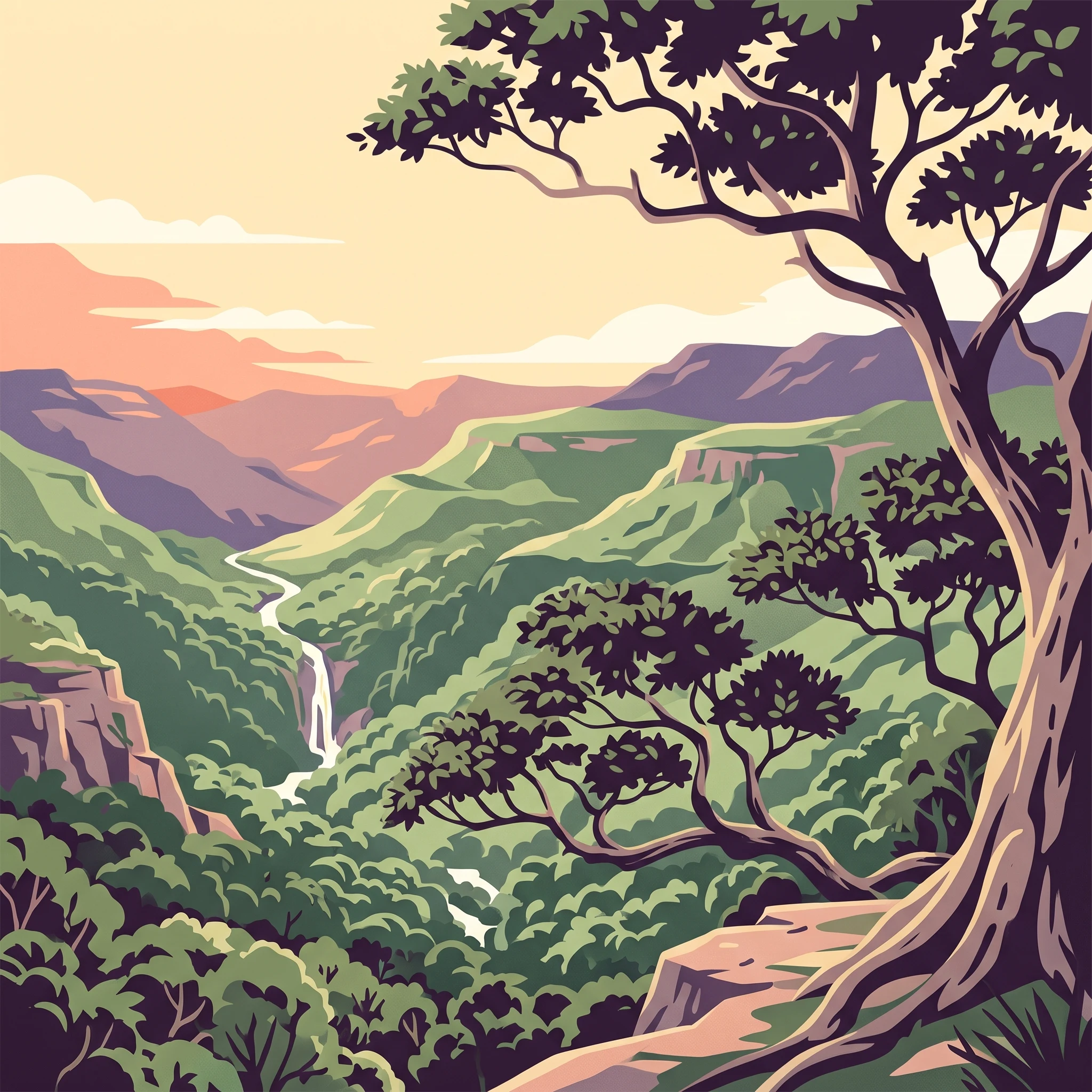
The landscape of Lamington National Park is defined by its volcanic origins and dramatic elevation changes. The park sits on the northern flank of the ancient Tweed Volcano, a massive shield volcano over 100 kilometres in diameter that was active approximately 23 million years ago. The volcanic geology has produced a landscape of spectacular cliffs, plateaus, and deep valleys. Notable mountains include Mount Hobwee, Mount Widgee, Mount Toolona, Mount Cominan, Mount Roberts, and Mount Bithongabel, many of which support rare cloud forests. The park features high cliffs in eastern sections that rise above the Numinbah Valley. Basalt and rhyolitic lava flows have been eroded by rain and running water to create the dramatic landforms observed today, with underlying tuff layers made from volcanic ash reaching up to 60 metres in thickness. Near Binna Burra, the basalt layer reaches an estimated 700 metres in thickness. The landscape is characterized by numerous waterfalls, with over 500 documented in the park, including popular attractions like Elabana Falls, Morans Falls, and Coomera Falls. The Green Mountain Valley and views from the Ships Stern Circuit showcase the park's rugged mountain scenery.
Lamington National Park ecosystems, habitats, and plant life
The nature of Lamington National Park is exceptional in its diversity and ancient character. The park protects one of the most botanically diverse areas in Australia, containing one of the largest upland subtropical rainforest remnants in the world. The most significant ecological feature is the Antarctic beech cool temperate rainforest, representing the most northern occurrence of this species in Australia, with tree roots exceeding 5,000 years in age. Below 880 metres, white booyong and black booyong dominate the canopy, while higher elevations feature yellow carabeen, red carabeen, pigeonberry ash, rosewood, and soft corkwood. The park protects one of the country's largest remaining hoop pine forests on drier slopes. Many plant species are endemic to the park, including the Mt Merino eyebright and Everlasting Daisy, which are subalpine relics from the last ice age. The Lamington underground orchid represents a newly described species that, like its relatives, completes its entire life cycle underground and depends entirely on symbiotic fungi for survival. The park is home to more than 100 fern species, though one, Antrophyum austroqueenslandicum, is now presumed extinct. Strangler figs are prominent features of the rainforest.
Lamington National Park wildlife and species highlights
Lamington National Park is one of the most important wildlife refuges in eastern Australia, home to more than 200 rare and threatened plant and animal species. The park supports significant populations of several endangered birds, including Coxen's fig parrot, eastern bristlebird, and Albert's lyrebird. The regent bowerbird, with its striking golden and black plumage, is a particular draw for birdwatchers and was featured in David Attenborough's Life on Earth series. The Richmond birdwing butterfly, a protected species, inhabits the park's rainforests. The endemic Lamington crayfish is found only on the Lamington plateau in pools and streams above 450 metres elevation and sometimes moves about the forest floor in damp conditions. Other notable species include the vulnerable large-eared pied bat, rainforest cool-skink, elf skink, and numerous frog species such as Fleay's barred frog, giant barred frog, and cascade treefrog. Red-necked pademelons can be observed near rainforest edges, while platypus inhabit deeper rock pools. The park also supports the unique beetle Lamingtonium binnaberrense, the only species in its genus.
Lamington National Park conservation status and protection priorities
Lamington National Park plays a critical role in conserving Australia's ancient Gondwanan rainforests and the species they support. The park forms the core of the Gondwana Rainforests of Australia World Heritage Site, inscribed in 1986 and added to the Australian National Heritage List in 2007, recognizing its outstanding universal value as one of the world's most important temperate rainforest ecosystems. The park is also designated as part of the Scenic Rim Important Bird Area by BirdLife International due to its significance for threatened bird species. Conservation challenges include the impacts of the 2019 bushfires, which breached the rainforest canopy and created conditions for prolific weed growth. Federal government funding has supported weed eradication programs, while the Queensland Conservation Council has advocated for increased investment to maintain the Gondwana Rainforests. The park's isolation and protected status help preserve significant populations of more than 200 rare and threatened species, making it essential for biodiversity conservation in the region.
Lamington National Park cultural meaning and human context
The Lamington National Park region holds significant cultural heritage spanning thousands of years of Aboriginal occupation. The Wangerriburras and Nerangballum tribes traditionally inhabited and visited these mountains for at least 6,000 years, with archaeological evidence at Bushranger Cave demonstrating continuous Aboriginal presence extending back 10,000 years. This 60-metre-long cave near Mount Hobwee was once an Aboriginal camp and represents one of the oldest documented occupation sites in the area. The landscape holds spiritual and practical significance for Indigenous Australians, who maintained a deep connection to the mountain environment. European settlement brought timber extraction to the region, with the Lahey family operating one of Queensland's largest timber mills. The establishment of the national park in 1915 marked an early achievement in Queensland's protected area history, with Romeo Lahey playing a pivotal role in advocating for conservation. The O'Reilly family's establishment of a guesthouse in 1926 and the subsequent development of Binna Burra Lodge created a tradition of accommodation within the park's vicinity that continues today.
Top sights and standout views in Lamington National Park
Lamington National Park offers exceptional experiences including walking through ancient Antarctic beech forests with trees over 5,000 years old, exploring more than 500 waterfalls scattered throughout the landscape, and traversing over 150 kilometres of well-maintained tracks designed during the Great Depression. The Tree Top Walk provides a unique perspective 15 metres above the ground, walking through the forest canopy via suspension bridges, while climbing a strangler fig leads to observation decks 30 metres high. The Border Track follows the Queensland-New South Wales border along the McPherson Range for 23 kilometres between Binna Burra Lodge and O'Reilly's Rainforest Retreat. The Ships Stern Circuit offers sweeping views from a 19-kilometre loop, and tracks like the Box Forest Circuit, Toolona Creek Circuit, and Albert River Circuit provide access to diverse flora, fauna, and geography. The park's inclusion in the Gondwana Rainforests of Australia World Heritage Site and its population of regent bowerbirds featured in David Attenborough's Life on Earth underscore its international significance.
Best time to visit Lamington National Park
Lamington National Park can be visited throughout the year, though each season offers distinct experiences. The warmer months from November to March bring higher rainfall, which enhances the waterfall flows and supports the park's lush rainforest appearance, though afternoon thunderstorms are common. Winter from June to August typically offers clearer skies and more stable weather, making it ideal for extended bushwalking and enjoying the mountain views without excessive heat or humidity. Spring brings wildflower displays in the heath areas and is a particularly good time for birdwatching as many species are more active. Autumn often provides comfortable temperatures and good visibility. The campgrounds at Green Mountains and Binna Burra operate between February and November, with limited bush camping available during this period. Visitors should be aware that leeches, snakes, and stinging trees are natural hazards in the park, and overnight camping requires a permit.