

Mori Atlas logo
National parkMoogerah Peaks National Park

Map the unique geology and protected natural terrain of this South East Queensland mountain enclave.

Moogerah Peaks National Park: Queensland's Distinct Volcanic Protected Landscape

Moogerah Peaks National Park in Queensland, Australia, offers a compelling glimpse into a unique volcanic landscape, characterized by four dramatic peaks rising from the Fassifern Valley. As a protected national park, it safeguards distinct geological formations, cliff faces, and endemic flora, providing crucial context for understanding regional conservation in South East Queensland. This page details the park's mapped boundaries and its significance as a protected natural area within the broader Scenic Rim geographic context.

Volcanic mountainsRock climbingSouth East QueenslandScenic RimEndemic floraImportant Bird Area

Moogerah Peaks National Park

National park

Park overview

Structured park overview, official facts, and landscape profile for Moogerah Peaks National Park

Moogerah Peaks National Park park facts, protected area profile, and essential visitor context
Review the core facts for Moogerah Peaks National Park, including designation, size, terrain, visitor scale, habitats, and operating context in one park-focused overview.

About Moogerah Peaks National Park

Moogerah Peaks National Park occupies a special place in South East Queensland's protected area network, protecting a cluster of volcanic mountains that rise abruptly from the rural landscape of the Fassifern Valley. The park's four discrete sections each enclose one of the prominent peaks, creating a protected landscape that surrounds Lake Moogerah on three sides. These volcanic origins have produced the dramatic cliff faces, rocky outcrops, and steep ridgelines that define the park's character and provide its most notable recreational opportunities. The peaks have historically remained relatively inaccessible, a factor that has contributed to the preservation of natural vegetation patterns that might otherwise have been altered by human activity. Today, the park offers visitors the opportunity to explore environments ranging from open eucalypt forest on lower slopes to montane heath communities on exposed rock faces, with cool rainforest pockets in sheltered gorges providing additional ecological diversity. The surrounding Lake Moogerah, created by damming the condamine River, adds a further dimension to the landscape and provides access points to different sections of the park.

Quick facts and research context for Moogerah Peaks National Park

Moogerah Peaks National Park covers 9.27 square kilometers in South East Queensland's Fassifern Valley, established in 1982 and managed by the Queensland Parks and Wildlife Service. The park comprises four separate sections surrounding Lake Moogerah, each protecting one of the volcanic summits: Mount French, Mount Edwards, Mount Moon, and Mount Greville. The landscape is characterized by volcanic peaks with rocky cliffs and exposed rock faces, interspersed with sheltered gorges containing rainforest pockets. The park is part of the Scenic Rim, a mountain arc that forms a dramatic backdrop to the Brisbane region.

Park context

Deeper park guide and search-rich context for Moogerah Peaks National Park

Moogerah Peaks National Park history, landscape, wildlife, and travel context
Explore Moogerah Peaks National Park through its history, landscape character, ecosystems, wildlife, conservation priorities, cultural context, and seasonal travel timing in a structured park guide built for atlas discovery and search intent.

Why Moogerah Peaks National Park stands out

Moogerah Peaks is best known for its volcanic mountain landscape and exceptional rock climbing opportunities. The cliff formations at Frog Buttress on Mount French rank among Queensland's most popular rock climbing destinations, attracting climbers from across Australia to tackle its sandstone walls. The park's four volcanic peaks represent distinctive geological formations, with Mount Greville featuring the narrow Palm Gorge that holds a nearly pure stand of Piccabeen Palms. The park also harbors endemic plant species found nowhere else on Earth, including the Moogerah Peaks Leionema and Mount Greville Reed Grass, giving the area particular botanical significance within the Scenic Rim region.

Moogerah Peaks National Park history and protected-area timeline

Moogerah Peaks National Park was established in 1982 as part of Queensland's expansion of protected areas during the late twentieth century. The creation of the park reflected growing recognition of the Scenic Rim region's ecological significance and the need to protect the distinctive volcanic mountain formations that rise above the Brisbane region. Prior to formal protection, the peaks had been subject to limited development due to their steep terrain and rocky substrates, which helped preserve natural vegetation communities. The park was incorporated into the Queensland Parks and Wildlife Service system and remains managed under that agency's oversight. The establishment of the park also corresponded with broader conservation planning efforts in South East Queensland that sought to create connected networks of protected areas across the Scenic Rim, linking Moogerah Peaks with adjacent Main Range National Park to the west and south.

Moogerah Peaks National Park landscape and geographic character

The Moogerah Peaks are a compact but visually striking cluster of volcanic mountains that rise sharply from the surrounding agricultural land of the Fassifern Valley. Each of the four peaks Mount French, Mount Edwards, Mount Moon, and Mount Greville represents a separate volcanic formation, and together they create a mountainous skyline visible from the valleys below. The peaks feature prominent cliff faces and rocky outcrops, with Frog Buttress on Mount French being particularly notable for its sheer cliff walls. Mount Greville contains Palm Gorge, a narrow canyon where towering cliff walls create a shaded microclimate supporting palm-dominated rainforest. The terrain is characterized by steep slopes, exposed rock, and limited soil development on the upper reaches, contrasting with deeper soils and more developed vegetation on lower slopes. Lake Moogerah occupies the valley floor adjacent to the park, and the relationship between the mountain peaks and the reservoir creates a distinctive visual landscape.

Moogerah Peaks National Park ecosystems, habitats, and plant life

The vegetation of Moogerah Peaks National Park reflects the park's position within the Scenic Rim, where elevation changes and varied aspect create diverse habitat conditions within a relatively small area. Open eucalypt forest dominates the lower slopes, while exposed rock faces support montane heath communities adapted to harsh conditions with thin soils and high exposure. In sheltered areas, particularly within gorges like Palm Gorge on Mount Greville, pockets of cool rainforest have developed, providing habitat for species more typical of higher-altitude environments. The flora of the peaks demonstrates significant diversity, with rainforest, sclerophyll woodlands, and montane heath all represented. Of particular note are endemic species restricted to these peaks, including the Moogerah Peaks Leionema and Mount Greville Reed Grass, which occur nowhere else on the planet. This endemism reflects the long isolation of these volcanic formations and the specialized conditions they provide.

Moogerah Peaks National Park wildlife and species highlights

Moogerah Peaks National Park is recognized as part of the Scenic Rim Important Bird Area by BirdLife International, acknowledging its significance for several threatened bird species. The combination of forest habitats, rocky cliffs, and varied elevation creates conditions suitable for diverse bird communities. While the source material does not detail specific species, the Important Bird Area designation indicates the presence of threatened bird species whose conservation depends on protection of this habitat. The park's relative inaccessibility has helped maintain natural conditions that support wildlife, and the variety of vegetation types from forest to heath to rainforest provides different ecological niches. The rocky cliff faces offer nesting habitat for bird species that utilize cliff ledges, while the forest canopy supports arboreal species.

Moogerah Peaks National Park conservation status and protection priorities

The conservation significance of Moogerah Peaks National Park derives from multiple factors that combine to make the area important within Queensland's protected area network. The park is part of the Scenic Rim Important Bird Area, an international designation that recognizes the area's importance for threatened bird species conservation. The presence of endemic plant species found nowhere else, including the Moogerah Peaks Leionema and Mount Greville Reed Grass, gives the park particular botanical significance requiring ongoing protection. The relative inaccessibility of the peaks has allowed natural vegetation communities to persist largely intact, preserving ecological processes and species assemblages that have been modified in surrounding areas. The park also connects with Main Range National Park, creating a larger protected landscape within the Scenic Rim that supports wildlife movement and ecological connectivity across the mountain chain.

Moogerah Peaks National Park cultural meaning and human context

Moogerah Peaks National Park sits within the traditional lands of the Fassifern Valley region, though the source material provides limited detail on specific indigenous connections to the peaks. The landscape has been part of the broader Scenic Rim region that supported indigenous communities prior to European settlement. European development of the area included establishment of the Fassifern Valley for agriculture, and the construction of Moogerah Dam created the reservoir that now borders the park. The park's relatively steep and rocky terrain limited agricultural conversion, helping preserve the natural landscape that now receives protection.

Top sights and standout views in Moogerah Peaks National Park

The volcanic peaks of Moogerah, with their dramatic cliff faces and endemic flora, represent a distinctive conservation priority within South East Queensland. Frog Buttress on Mount French draws rock climbers to what is considered one of Queensland's premier climbing areas. Palm Gorge on Mount Greville offers a remarkable rainforest experience, with its near-pure stand of Piccabeen Palms creating an almost tunnel-like passage beneath towering cliffs. The park's position within the Scenic Rim connects it to a broader mountain landscape that includes Main Range National Park, creating opportunities for understanding the ecological character of this geological province. The endemic plant species restricted to these peaks demonstrate the evolutionary significance of these isolated volcanic formations.

Best time to visit Moogerah Peaks National Park

The cooler months from late autumn through winter into early spring typically offer the most comfortable conditions for exploring Moogerah Peaks National Park, with mild temperatures and lower humidity making hiking and climbing more pleasant. Summer months in South East Queensland can bring both high temperatures and substantial rainfall, which may affect trail conditions and visibility. The park's vegetation is evergreen, so seasonal changes are subtle, though the drier winter period generally provides more reliable access to tracks and viewpoints. Rock climbers often favor the cooler months for vertical ascents, while visitors seeking to appreciate the park's landscape and vegetation can find rewarding experiences throughout the year.
Park location guide

Geography guide, regional context, and park location map for Moogerah Peaks National Park

Moogerah Peaks National Park park geography, regions, and map view in Australia
Understand where Moogerah Peaks National Park sits in Australia through a broader geographic reading of the surrounding landscape, nearby location context, and its mapped position within the national park landscape.

How Moogerah Peaks National Park fits into Australia

Australia is a constitutional monarchy and federal parliamentary democracy comprising six states and ten territories. With a population of nearly 28 million, it is one of the world's most urbanised countries, with most people concentrated on the eastern seaboard. The country has a high Human Development Index and is known for its cultural diversity, ancient Aboriginal heritage, and unique wildlife.

Wider geography shaping Moogerah Peaks National Park in Australia

Australia occupies the entire Australian continent, the island of Tasmania, and numerous smaller islands. It is the world's flattest and driest inhabited continent, featuring vast deserts in the interior (the Outback), tropical rainforests along the eastern coast, and a coastline bordering the Indian and Pacific Oceans.

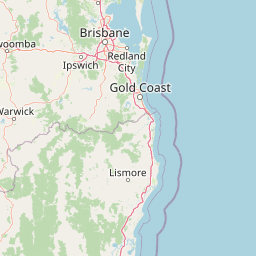
Map view of Moogerah Peaks National Park

Use this park location map to pinpoint Moogerah Peaks National Park in Australia, understand its exact geographic position, and read its mapped placement within the surrounding landscape more clearly.

Pigeon | © OpenStreetMap contributors

Location context for Moogerah Peaks National Park

Queensland
Park atlas

Trace the geographic spread of protected landscapes throughout Queensland's Scenic Rim, comparing diverse terrains surrounding Moogerah Peaks National Park.

Explore Nearby National Parks and Protected Areas Beyond Moogerah Peaks National Park
After viewing Moogerah Peaks National Park, explore additional protected areas and national parks within Queensland's Scenic Rim and broader South East Queensland geography. Compare nearby conservation landscapes, tracing their unique volcanic formations, rainforest gorges, or distinct eucalypt forests to expand regional atlas knowledge and conservation context.
National parkNew South Wales

Mount Clunie National Park: Protected Mountain Landscape and Gondwana Rainforest Geography

Explore its mapped boundaries and regional significance.

Mount Clunie National Park is a protected national park in New South Wales, Australia, characterized by its mountainous terrain and its status as part of the Gondwana Rainforests of Australia World Heritage Site. Situated in the Scenic Rim region, the park's elevated position and ancient ecosystems offer unique insights into Australia's natural heritage. Understanding its geographic context and protected landscape identity provides essential context for regional atlas exploration.

Area
14.26 km²
Established
1999
IUCN
II
National parkNew South Wales

Koreelah National Park: Protected Landscape with Dramatic Gorges and Wildlife

Explore the mapped terrain and regional geography of this New South Wales national park.

Koreelah National Park is a protected national park located in northern New South Wales, Australia, celebrated for its rugged topography and significant natural features. The park's landscape is defined by spectacular gorges, sheer cliffs, and impressive waterfall systems, creating a remote wilderness experience. It serves as a vital protected area, offering refuge to diverse wildlife, including platypus and koalas, and is recognized for its importance within the Scenic Rim Important Bird Area. Discover its mapped boundaries and unique geographic context for a deeper understanding of Australian protected lands.

Area
53 km²
Established
1999
IUCN
II
National parkQueensland

Lamington National Park: Ancient Gondwanan Rainforests and Volcanic Terrain in Queensland

Mapped protected landscape with over 500 waterfalls and unique cloud forests.

Lamington National Park stands as a key protected area within Queensland, recognized for its world-heritage status Gondwanan rainforests and striking volcanic geography. The park's landscape is characterized by its ancient Antarctic beech forests, a legacy of millions of years of volcanic activity that sculpted dramatic cliffs, plateaus, and deep valleys, punctuated by more than 500 waterfalls. Through its mapped boundaries and detailed geographic context, users can explore the exceptional biodiversity and unique terrain that defines this significant Australian national park.

Area
206 km²
Established
1915
IUCN
II
National parkQueensland

Tamborine National Park: Queensland's Accessible Rainforest and Waterfall Landscape

Explore unique plateau geography and mapped protected areas.

Tamborine National Park stands as a crucial protected area nestled atop the Tamborine Mountain plateau in South East Queensland. It preserves vital remnants of subtropical rainforest and eucalypt forests, presenting a rich tapestry of landscapes and biodiversity. The park's unique configuration, with its accessible walking tracks leading to waterfalls like Witches Falls, offers a remarkable opportunity to engage with a protected natural environment. This national park serves as an excellent resource for understanding regional geography and the importance of conservation within populated areas, featuring distinct terrain and mapped natural features.

Area
11.6 km²
Established
1993
IUCN
II
National parkNew South Wales

Toonumbar National Park: Australia's Gondwanan Rainforest Heritage and Volcanic Geography

Explore the mapped protected landscape and ancient ecosystems of this New South Wales national park.

Toonumbar National Park represents a significant component of the Gondwana Rainforests of Australia World Heritage Site, offering a profound look into ancient forest ecosystems. Its landscape is sculpted by ancient volcanic activity, creating dramatic peaks and fertile terrain that supports remarkable biodiversity. This protected area in New South Wales provides critical habitat for numerous threatened species within its extensive subtropical and temperate rainforests, making it a key destination for understanding Australia's natural heritage and geographic context.

Area
149.1 km²
Established
1995
IUCN
II
National parkQueensland

D'Aguilar National Park: A Queensland National Park with Diverse Mountain Landscapes and Scenic Views

Explore its mapped protected area boundaries and regional geography.

D'Aguilar National Park presents a compelling geographic profile within Queensland, featuring the rugged terrain of the D'Aguilar Range. This national park is notable for its impressive biodiversity and the distinct ecological zones, ranging from arid eucalyptus forests to lush subtropical rainforests. The park's mapped landscape offers significant interest for atlas exploration, providing context on its role as a protected area and its contribution to the regional natural heritage.

Area
20.5 km²
Established
1938
IUCN
II
National parkNew South Wales

Mount Jerusalem National Park: Ancient Volcanic Terrain and Protected Landscape Discovery in New South Wales

Explore its mapped geography and Albert's lyrebird habitat.

Mount Jerusalem National Park stands as a key protected area within the dramatic landscape of New South Wales. Situated on the eroded outer rim of the ancient Tweed Caldera, the park showcases distinctive volcanic terrain shaped over millions of years. Its protected boundaries encompass vital habitats, notably supporting significant populations of Albert's lyrebird, and contribute to the watershed dynamics of the Tweed, Brunswick, and Richmond River systems, offering a rich focus for geographic and landscape exploration.

Area
52 km²
Established
1995
IUCN
II
National parkNew South Wales

Mount Pikapene National Park: Protected Area with Tall Moist Rainforests in New South Wales

Explore the mapped terrain and regional geography of this national park.

Mount Pikapene National Park is a key protected area in New South Wales, recognized for its distinctive tall moist rainforests, a rare ecological community within the Northern Tablelands. The park's landscape features hilly terrain, with Big Sugarloaf marking its highest point at 525 meters. As a national park managed by the National Parks and Wildlife Service, it safeguards significant forest ecosystems and offers valuable insights into the protected geography of eastern Australia's natural heritage.

Area
26.3 km²
Established
1999
IUCN
II

Common questions about visiting, size, designation, and location context for Moogerah Peaks National Park

Moogerah Peaks National Park FAQs for park facts, access, geography, and protected area context
Find quick answers about Moogerah Peaks National Park, including protected-area facts, park geography, trail and visitor context, and how the park fits into its surrounding country and regional landscape.
MoriAtlas Explorer

Continue Your Protected Areas Search Across the Global Atlas

Deepen your exploration by continuing the structured search for national parks and protected areas worldwide. Utilize the comprehensive filtering capabilities to compare different conservation landscapes and refine your understanding of global park geography. Discover more about the distribution and characteristics of protected natural areas.

Global natural geography