Why D'Aguilar National Park stands out
D'Aguilar National Park is best known for its exceptional biodiversity and the dramatic contrast between its dry eucalyptus woodlands and cloud forests. The park protects more than 240 bird species, including the colorful paradise riflebird, regent bowerbird, and satin bowerbird, as well as 66 mammal species including koalas, platypus, and various possum and bandicoot species. The subtropical rainforests at higher elevations feature massive strangler figs that emerge prominently through the canopy, creating a distinctive visual characteristic. The park's accessible lookouts, particularly Jolly's Lookout, Westridge Outlook, and Wivenhoe Lookout, provide sweeping views over the surrounding landscape and Lake Wivenhoe, making it a popular destination for both nature enthusiasts and casual day visitors from Brisbane.
D'Aguilar National Park history and protected-area timeline
D'Aguilar National Park was officially established in 1938, making it one of Queensland's older protected areas. The park's boundaries encompass what was historically known as the D'Aguilar Range, a mountainous area that has long been recognized for its ecological and scenic value. The southern portion of the current park area was formerly designated as Brisbane Forest Park, reflecting its role as a forest reserve and recreational area serving the Brisbane community prior to its integration into the national park system. Over time, the management and classification of the area has evolved, with the unified D'Aguilar National Park now encompassing what were formerly separate management areas. The park's establishment reflected early recognition of the need to protect Queensland's forest environments and mountain landscapes from cleared development, preserving them for both conservation and public enjoyment.
D'Aguilar National Park landscape and geographic character
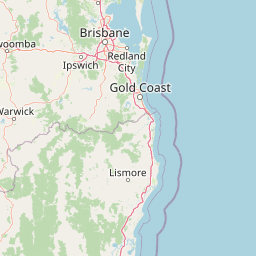
The landscape of D'Aguilar National Park is defined by the D'Aguilar Range, a series of mountainous ridges and valleys that rise from the Brisbane metropolitan area toward the northwest. The terrain features steep slopes, rocky outcrops, and numerous crevasses throughout the higher areas. The park encompasses a pronounced elevational gradient that drives significant variation in vegetation and environmental conditions across its relatively compact area. From the lower foothills with their drier, shallower soils, the landscape transitions through mid-altitude forests to the highest points where moisture-loving subtropical rainforests develop on deeper, richer basaltic soils. Several lookouts scattered throughout the park provide expansive views across the surrounding countryside, with Moreton Bay visible on clear days to the east and the distinctive volcanic peaks of the Glass House Mountains standing prominently on the horizon. The park also overlooks Lake Wivenhoe, a large reservoir created by damming the Brisbane River, which adds another dimension to the scenic landscape from elevated viewpoints.
D'Aguilar National Park ecosystems, habitats, and plant life
The ecological character of D'Aguilar National Park is defined by a striking transition from dry eucalyptus-dominated woodlands to lush subtropical rainforests as elevation increases. The lower foothills support woodlands and dry eucalypt forests dominated by spotted gum and narrow-leaved ironbark on the shallower, drier soils, with areas of heath and grass trees on ridge tops. Small pockets of lowland rainforest persist in the valley floors along watercourses. At mid-altitudes, where rainfall increases and soils deepen, the forests become more complex with grey gum, pink bloodwood, and brush box forming the canopy, while a dense understorey of ferns, vines, and shrubs develops. The highest parts of the range, particularly on the basaltic soils north of Mount Glorious, support moist subtropical rainforest where enormous strangler figs emerge dramatically through the canopy. This elevational gradient creates a mosaic of habitats that supports remarkable biodiversity across relatively limited geographic area.
D'Aguilar National Park wildlife and species highlights
D'Aguilar National Park supports an exceptional diversity of wildlife, with more than 240 bird species recorded within its boundaries. The avian community includes notable species such as the noisy pitta, southern logrunner, paradise riflebird, regent bowerbird, and satin bowerbird, along with more common species like the laughing kookaburra, pied currawong, and white-bellied sea eagle. The birdlife is particularly diverse due to the range of habitat types present. Mammal diversity is equally impressive with 66 species recorded, including the iconic koala and platypus, various marsupials such as red-necked pademelon, several possum species including short-eared and common ringtail possums, bandicoots, the long-nosed potoroo, and numerous fruit bats and insectivorous bats. Reptile diversity includes the large tree goanna or lace monitor and the distinctive land mullet, a large glossy black skink. The park also supports 26 amphibian species, with the great barred frog among the notable native species, though the introduced cane toad has become common.
D'Aguilar National Park conservation status and protection priorities
D'Aguilar National Park plays an important conservation role in the Brisbane region by protecting a significant area of mountainous forest ecosystem that would otherwise face development pressure given its proximity to a major city. The park preserves important examples of both dry eucalyptus woodland and subtropical rainforest, representing habitat types that have been extensively cleared in the surrounding region. The protected area serves as a corridor for wildlife movement through the Brisbane landscape, connecting larger forest areas and allowing species to maintain populations in an otherwise fragmented environment. The diversity of bird and mammal species recorded demonstrates the ecological health of the area and its importance as a biodiversity refuge. Protection of the D'Aguilar Range also safeguards the scenic values that make it a landmark feature of the Brisbane skyline and a valued recreational resource for the community.
D'Aguilar National Park cultural meaning and human context
The D'Aguilar Range and surrounding area have long been associated with the traditional lands of Indigenous peoples, though the specific cultural relationships of local Aboriginal groups with this landscape would require consultation with traditional knowledge holders for detailed documentation. The park's proximity to Brisbane has shaped its history as a recreational resource for the city, with the former Brisbane Forest Park designation reflecting its role as a forest reserve serving metropolitan recreation needs. The villages of Mount Nebo, Mount Glorious, and Mount Mee developed alongside the forest area, with their positions on the mountain roads reflecting the park's boundaries. These communities maintain close connections to the national park, which continues to form an important part of the local identity and economy.
Top sights and standout views in D'Aguilar National Park
The panoramic views from lookouts such as Jolly's Lookout, Westridge Outlook, and Wivenhoe Lookout rank among the park's most visited attractions, offering sweeping vistas over Moreton Bay, the Glass House Mountains, and Lake Wivenhoe. The moist subtropical rainforests north of Mount Glorious, with their towering strangler figs emerging through the canopy, represent a distinctive and visually striking environment. The birdwatching opportunities are exceptional, with over 240 species providing one of the most diverse avian communities in any Australian national park near a major city. The contrast between dry foothills woodlands and cloud forest environments can be experienced in a single day's walk, making the park an excellent destination for understanding Queensland's forest ecosystems.
Best time to visit D'Aguilar National Park
D'Aguilar National Park can be visited throughout the year, though the cooler months from autumn through spring typically offer the most comfortable conditions for walking and outdoor exploration. The subtropical climate means summer months can be hot and humid, particularly at lower elevations, while winter generally brings mild days and cooler nights. The rainforests at higher elevations tend to be wettest during the summer months, creating lush conditions but also making some tracks potentially slippery. Birdwatching can be productive year-round, though spring and early summer often bring increased bird activity. The scenic drives through the park are popular in all seasons, though fog may occasionally reduce visibility on mountain roads during winter mornings.