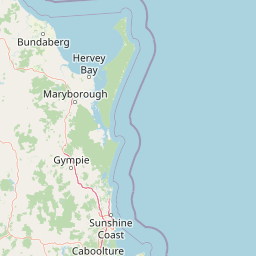
Why Mount Coolum National Park stands out
Mount Coolum National Park is best known for its unique geological identity as a coastal laccolith, a rare formation where magma cooled underground to create a distinctive dome-shaped mountain. The mountain's rhyolite cliffs display dramatic columnar jointing patterns, and the peak offers panoramic views across the Sunshine Coast landscape. The park is equally notable for its exceptional botanical diversity, supporting more than 700 plant species within a small footprint, including rare coastal montane heath communities and pockets of subtropical rainforest. The Peregrine falcons that nest on the cliffs add notable wildlife significance to this compact coastal reserve.
Mount Coolum National Park history and protected-area timeline
Mount Coolum National Park was formally established in 1990 when the Queensland government protected the mountain and its surrounding slopes as a national park, recognizing both the geological significance of the laccolith formation and the ecological values of the remnant vegetation communities. Prior to protection, the eastern foothills of the mountain contained a quarry operation, the remains of which still occupy a portion of the foothills today. The establishment of the park ended potential further development on the slopes and ensured the preservation of the mountain's character and biodiversity. The walking track to the summit has been maintained to provide public access while managing visitor impact on the sensitive ecological communities, and the installation of an aircraft hazard light on the summit reflects the ongoing balance between recreation and safety considerations given the mountain's proximity to Sunshine Coast Airport.
Mount Coolum National Park landscape and geographic character
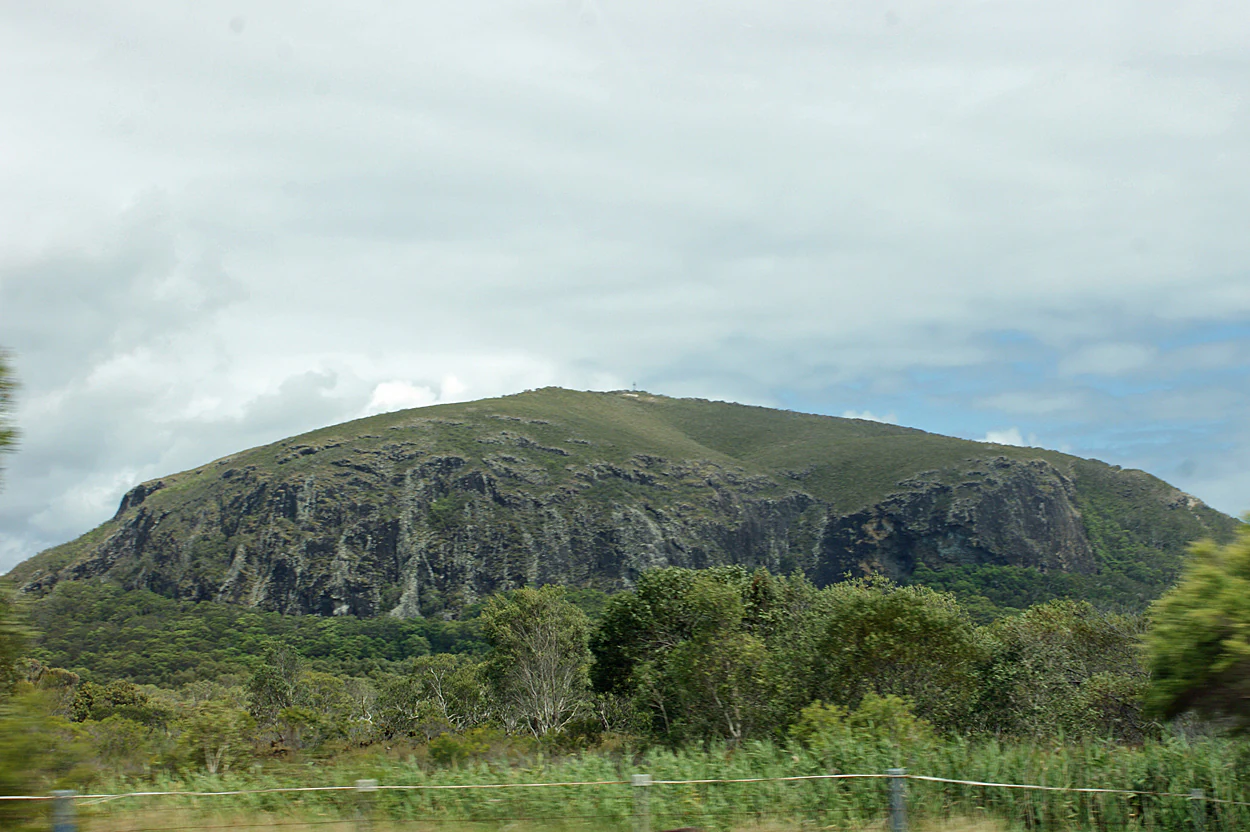
The landscape of Mount Coolum National Park is defined by the prominent dome-shaped peak that rises abruptly from the flat coastal plain, creating a striking visual landmark visible across much of the northern Sunshine Coast. The laccolith formation results in a roughly circular mountain with steep to vertical cliffs on the eastern and southern sides, contrasting with more gradual slopes on other aspects. The rhyolite geology produces distinctive columnar structures visible in the cliff faces, and the weathering of the rock creates interesting jointing patterns throughout the exposed rock. A disused quarry occupies the lower eastern foothills, marking human modification of the landscape prior to national park establishment. After periods of rainfall, temporary waterfalls cascade down the cliff faces, adding dynamic water features to the otherwise dry granite landscape. The vegetation cloaks the lower slopes in varying density, with the forest and heath communities creating a green backdrop that frames the grey granite dome.
Mount Coolum National Park ecosystems, habitats, and plant life
The nature of Mount Coolum National Park is characterized by remarkable botanical diversity concentrated within a small area, with more than 700 plant species documented within the park boundaries. The vegetation communities transition across the elevation gradient, starting with coastal wallum-heath communities on the lower slopes and transitioning through eucalypt forest to reach rare coastal montane heath and small patches of subtropical rainforest near the summit. The paperbark wetlands in the lower areas provide contrast to the drier forest and heath communities, creating a mosaic of habitat types that supports the high species count. The coastal setting influences the plant communities, with salt-tolerant species and coastal species interacting with montane elements that find their northernmost expression in this location. The diversity of habitats within such a small area makes the park botanically significant at both regional and national scales.
Mount Coolum National Park wildlife and species highlights
While the Wikipedia source provides limited specific wildlife detail, Mount Coolum National Park supports notable bird species including peregrine falcons that are reported to nest on the cliffs of the mountain. The diverse vegetation communities provide habitat for various bird species, and the cliff faces offer nesting sites for raptors. The varied habitat types from wetlands through forest to heath support different wildlife assemblages, though detailed species inventories are not extensively documented in available sources. The proximity to the coast also means marine and coastal bird species may be observable from the summit viewpoints.
Mount Coolum National Park conservation status and protection priorities
Mount Coolum National Park serves as an important conservation reserve despite its small size, protecting a rare laccolith formation and exceptional botanical diversity on Australia's heavily developed Sunshine Coast. The park preserves multiple vegetation types that have been largely cleared from surrounding areas, including remnants of coastal wallum, eucalypt forest, and the particularly rare coastal montane heath community that occurs on the mountain slopes. The more than 700 plant species documented within the park represent significant biodiversity value, particularly in the context of the urbanized Sunshine Coast region where much of the original vegetation has been removed for development. Protection of the mountain also preserves geological features of scientific and educational interest, including the columnar jointing in the rhyolite and evidence of the laccolith formation process.
Mount Coolum National Park cultural meaning and human context
The Mount Coolum area holds significance as a local landmark and visual identity for the surrounding community, with the suburb of Mount Coolum taking its name from the mountain itself. The traditional Aboriginal context of the area is not extensively documented in the available source material, though the broader Sunshine Coast region contains areas of Indigenous cultural heritage. The mountain's prominence as a visual landmark and recreational destination has shaped the local landscape character and community identity, with the national park status ensuring the mountain's preservation as a natural asset for future generations.
Top sights and standout views in Mount Coolum National Park
The standout features of Mount Coolum National Park include the unique laccolith formation visible as a dramatic granite dome rising from the coastal plain, the challenging summit walk offering panoramic views across the Sunshine Coast, the exceptional botanical diversity with more than 700 plant species across varied habitats, and the rare coastal montane heath communities that occur on the mountain slopes. The columnar jointing in the rhyolite cliffs, the seasonal waterfalls after heavy rain, and the peregrine falcon nesting sites add additional notable elements to this compact coastal reserve.
Best time to visit Mount Coolum National Park
Mount Coolum National Park can be visited year-round, though the cooler winter months from May through September typically offer more comfortable conditions for climbing. The track becomes dangerously slippery when wet, so visitors should avoid starting the climb during or after rainfall, and the steep rough terrain means the walk should not be attempted in late afternoon when dusk could pose a safety risk. Summer months may be hot and humid, while storm activity in the warmer months can create hazardous conditions on the exposed summit. The best conditions for climbing are typically clear, dry days when the track is safe and the visibility from the summit provides the full benefit of the panoramic views.