

Mori Atlas logo
National parkTewantin National Park

Discover mapped boundaries, rare Wallum Heath, and amphibian habitats in this vital protected area.

Tewantin National Park: Queensland's Protected Volcanic Landscape and Coastal Rainforest

Tewantin National Park represents a crucial protected landscape within Queensland, safeguarding rare coastal rainforest, distinctive Wallum Heath ecosystems, and the prominent volcanic peak of Mount Tinbeerwah. This national park, situated west of Noosa Heads, offers a unique opportunity to explore mapped terrain and understand the conservation of endangered species habitats. Its geographic context within the Sunshine Coast region highlights its importance as an intact natural area amidst development, providing critical ecological value and contributing to the broader atlas of Australian protected lands.

coastal rainforestvolcanic landscapeQueensland national parkWallum Heathendangered speciesSunshine Coast

Tewantin National Park

National park

Park overview

Structured park overview, official facts, and landscape profile for Tewantin National Park

Tewantin National Park park facts, protected area profile, and essential visitor context
Review the core facts for Tewantin National Park, including designation, size, terrain, visitor scale, habitats, and operating context in one park-focused overview.

About Tewantin National Park

Tewantin National Park represents a vital green corridor along Queensland's Sunshine Coast, where coastal development has substantially altered the original landscape. The park's location west of Noosa Heads places it within one of Queensland's most visited tourism regions, yet it retains significant natural values despite its fragmented configuration. The protection of coastal rainforest communities within the park is particularly important, as these ecosystems have been extensively cleared throughout the Southeast Queensland bioregion. The eucalyptus forests that dominate the park's higher ground provide a contrasting habitat to the shaded rainforest gullies, while the remnant Wallum Heath areas represent a specialized habitat type adapted to the nutrient-poor sandy soils of the coastal plain. Mount Tinbeerwah serves as the park's most prominent geological feature, its 265-metre summit offering panoramic views over the surrounding landscape and demonstrating the volcanic origins that shaped much of the Noosa hinterland. The park's proximity to major population centres also makes it an important site for environmental education and nature-based recreation.

Quick facts and research context for Tewantin National Park

Tewantin National Park occupies a strategic position along Queensland's Sunshine Coast, protecting five separate land parcels within and around the Lake Macdonald catchment area. The park's elevation ranges from near sea level to 265 metres at Mount Tinbeerwah, with the volcanic geology providing a distinctive backdrop to the surrounding eucalyptus woodlands and rainforest gullies. The Wallum Heath ecosystem, once widespread along this coastal strip, survives here in only fragmented remnants, making the park particularly significant for conservation. The area falls under the management of Queensland Parks and Wildlife Service, and a major expansion project approved in 2017 aims to more than double the park's area by incorporating adjacent state forest land.

Park context

Deeper park guide and search-rich context for Tewantin National Park

Tewantin National Park history, landscape, wildlife, and travel context
Explore Tewantin National Park through its history, landscape character, ecosystems, wildlife, conservation priorities, cultural context, and seasonal travel timing in a structured park guide built for atlas discovery and search intent.

Why Tewantin National Park stands out

Tewantin National Park is distinguished primarily by its rare combination of coastal rainforest and Wallum Heath ecosystems in a coastal setting, along with the prominent volcanic cone of Mount Tinbeerwah. The park protects the endangered swamp stringybark tree, a species characterized by its multiple trunks, gray fibrous bark, and clusters of white flowers. It also serves as crucial habitat for several endangered and near-threatened amphibian species, including the tusked frog, green-thighed frog, wallum froglet, and giant barred frog. The diversity of habitats within a relatively small area supports approximately 70 documented bird species, making it a significant site for birdlife in the region.
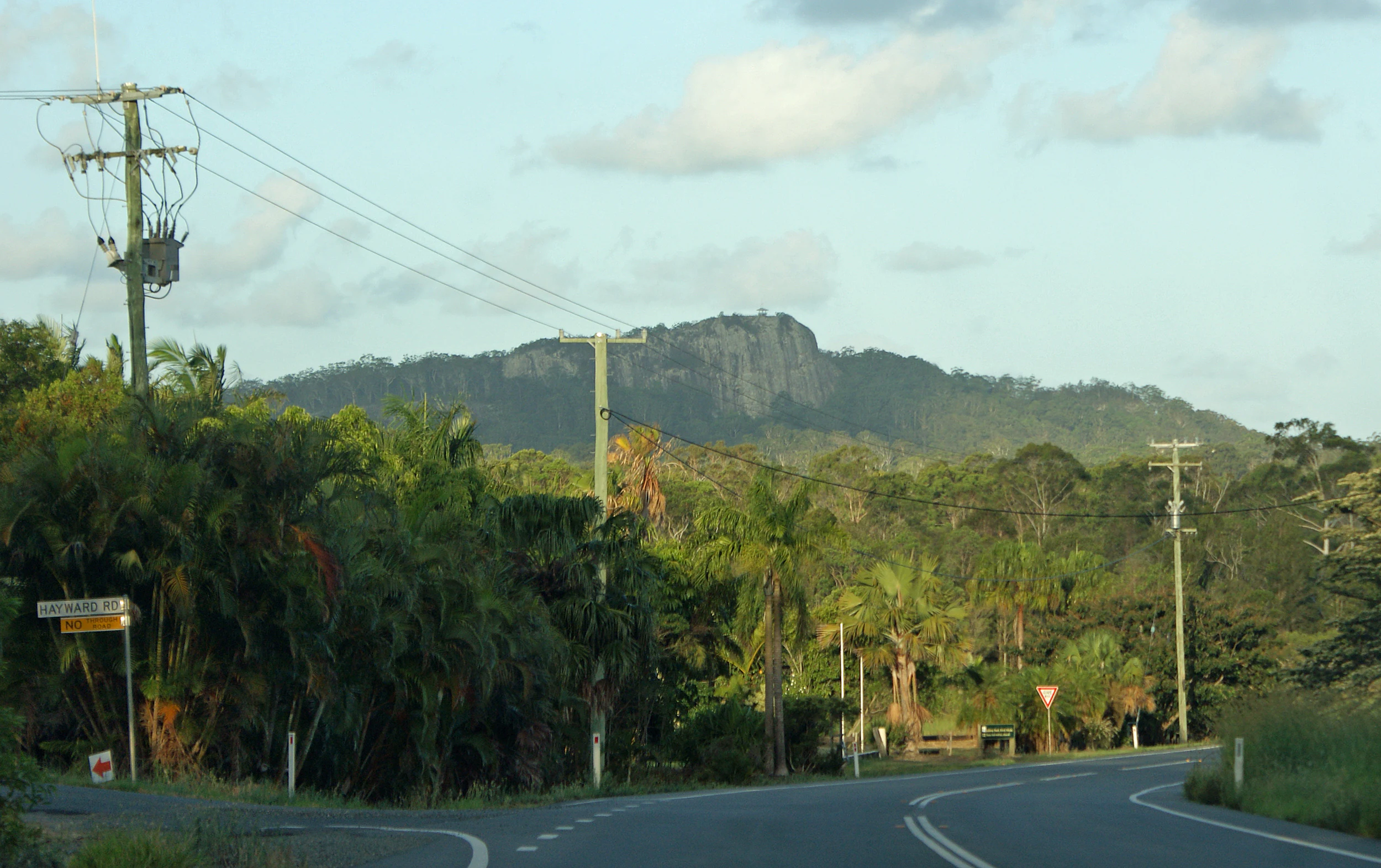
Mount Tinbeerwah, Tewantin National Park
View of Mount Tinbeerwah within Tewantin National Park, Queensland, Australia.

Tewantin National Park history and protected-area timeline

Tewantin National Park was established as a protected area under Queensland's national park system to preserve the remaining natural ecosystems in a region experiencing significant coastal development. The park's creation reflects growing recognition of the need to maintain biodiversity corridors and representative ecosystems along the Sunshine Coast. A significant development occurred in 2017 when the Noosa Council approved a motion to support the expansion of the park through the joint purchase of land rights from HQPlantations. The project, involving the Department of Environment and Science, Noosa Council, and Noosa Parks Association, aims to incorporate approximately 1,492 hectares of Yurol State Forest and Ringtail State Forest into the national park. An additional 900 hectares not subject to plantation harvesting is intended to become national park as soon as possible. Upon completion, this expansion will more than double the park's size to approximately 38 square kilometres, creating a much more substantial conservation area that will border the towns of Cooroy, Pomona, and Cootharaba. The project demonstrates ongoing commitment to landscape-scale conservation in the Noosa region.

Tewantin National Park landscape and geographic character

The landscape of Tewantin National Park is defined by the interplay of volcanic geology and coastal ecosystems. Mount Tinbeerwah rises as a prominent volcanic dome formed from solidified lava, standing 265 metres above the surrounding terrain and providing the park's most distinctive topographical feature. The ancient volcanic activity that created this peak occurred millions of years ago, leaving behind a landscape of rolling hills, steep gullies, and ridgelines that contrast with the flatter coastal plains beyond the park's boundaries. The park encompasses a variety of landforms including steep forested slopes, ephemeral creeks and drainage lines, and the wetland margins associated with Lake Macdonald. The coastal rainforest occupies the sheltered gullies and lower slopes where moisture is retained, while the more exposed ridges and plateaus support open eucalyptus woodland. The disconnected nature of the park's five sections reflects the pattern of land acquisition that created the protected area, with the sections following the natural topography of the landscape between Noosa and Cooroy.

Tewantin National Park ecosystems, habitats, and plant life

The ecological character of Tewantin National Park is defined by three primary habitat types that occur in close proximity to each other. The coastal rainforest communities represent the most ecologically significant habitat, containing species typical of the Subtropical Rainforest of Southeast Queensland, a vegetation type that has been extensively cleared across its former range. The bright eucalyptus forest that covers much of the park's area provides a more open canopy and supports different assemblages of plants and animals adapted to drier conditions. The Wallum Heath, surviving in only small remnants within the park, is characterized by low shrubs adapted to acidic, nutrient-poor soils and represents a specialized coastal heath ecosystem. The park's position in the transition between subtropical and temperate zones contributes to its botanical diversity, while the variety of soil types and moisture regimes created by the volcanic terrain supports a mix of species from different ecological origins. The endangered swamp stringybark is a particularly notable component of the park's flora, with its distinctive multi-trunked growth form and fibrous bark making it recognizable throughout its limited range.

Tewantin National Park wildlife and species highlights

The wildlife of Tewantin National Park is notable for the diversity of amphibians supported by its varied habitats, particularly the wetland areas and moist rainforest environments. The tusked frog, classified as near-endangered, inhabits the park's streams and temporary pools, while the green-thighed frog, wallum froglet, and giant barred frog all receive protection as endangered or threatened species. These amphibians depend on the combination of permanent water sources, seasonal breeding pools, and surrounding forest habitat that the park provides. Approximately 70 bird species have been recorded within the park, including the Red-browed treecreeper, a small bird that forages on the bark of eucalyptus trees. The mosaic of forest types, from dense rainforest to open woodland, supports different bird communities, while the presence of flowering eucalypts provides food resources for honeyeaters and other nectar-feeding species. The park's location along the Sunshine Coast also places it within a region important for migratory bird species that move along the east Australian coast.

Tewantin National Park conservation status and protection priorities

Tewantin National Park plays a significant conservation role in one of Queensland's most heavily modified coastal regions. The protection of remaining coastal rainforest, Wallum Heath remnants, and volcanic landscape features represents the preservation of ecosystem types that have been substantially reduced by rural and urban development. The park provides habitat for several species listed as endangered or threatened under Queensland and Commonwealth legislation, including the swamp stringybark tree and multiple amphibian species. The 2017 expansion project demonstrates strategic thinking about landscape-scale conservation, as the incorporation of adjacent state forest will more than double the protected area and create connections to larger tracts of forested land. This expansion will enhance the park's viability as a wildlife corridor and increase the resilience of its populations by providing greater area for ecological processes. The collaborative approach involving state government, local council, and community organizations reflects a model of protected area management that recognizes the importance of multiple stakeholders in achieving conservation outcomes.

Tewantin National Park cultural meaning and human context

Tewantin National Park lies within the traditional country of the Gubbi Gubbi people, the Indigenous inhabitants of the Sunshine Coast region from the Brisbane area to around Maryborough. The Gubbi Gubbi Nation encompasses numerous clan groups who maintained deep connections to the landscape, waterways, and resources of this coastal area over thousands of years. The name Tewantin itself is derived from an Aboriginal word, reflecting the long human presence in this landscape prior to European settlement. The volcanic peaks and rainforest environments of the park would have held cultural significance for local Aboriginal people, providing resources, spiritual connections, and navigation landmarks. The Noosa region has been recognized as having one of the longest continuous Indigenous heritage sequences in Australia, with evidence of Aboriginal occupation dating back tens of thousands of years.

Top sights and standout views in Tewantin National Park

The volcanic dome of Mount Tinbeerwah stands as the park's most recognizable landmark, offering panoramic views from its 265-metre summit over the Noosa hinterland and coast. The endangered swamp stringybark, with its distinctive gray fibrous bark and clusters of white flowers, represents a rare species found only in limited locations in Southeast Queensland. The diversity of amphibians, including four threatened frog species, makes the park significant for reptile and amphibian conservation. The fragmented Wallum Heath remnants preserve a habitat type that has largely disappeared from the developed coastal zone. The planned expansion will transform the park from a small conservation enclave into a substantial 38-square-kilometre protected area connecting multiple communities.

Best time to visit Tewantin National Park

The park can be visited throughout the year in Queensland's subtropical climate, though the warmer months from September through April typically offer the most comfortable conditions for hiking and outdoor activities. The dry winter season from June to August generally provides clearer visibility for views from Mount Tinbeerwah and more comfortable temperatures for vigorous activity, though this is also the period when the park's amphibians are less active. Spring and early summer bring the peak flowering period for many eucalypts and the swamp stringybark, providing the best opportunities for observing flowering plants and the wildlife they support. The wet summer months from December to February can bring heavy rainfall and higher humidity, which may limit access to some trails but also bring the frog activity to its peak. Birdwatching is productive year-round, though migratory species are most present during the austral spring and summer months.
Park location guide

Geography guide, regional context, and park location map for Tewantin National Park

Tewantin National Park park geography, regions, and map view in Australia
Understand where Tewantin National Park sits in Australia through a broader geographic reading of the surrounding landscape, nearby location context, and its mapped position within the national park landscape.

How Tewantin National Park fits into Australia

Australia is a constitutional monarchy and federal parliamentary democracy comprising six states and ten territories. With a population of nearly 28 million, it is one of the world's most urbanised countries, with most people concentrated on the eastern seaboard. The country has a high Human Development Index and is known for its cultural diversity, ancient Aboriginal heritage, and unique wildlife.

Wider geography shaping Tewantin National Park in Australia

Australia occupies the entire Australian continent, the island of Tasmania, and numerous smaller islands. It is the world's flattest and driest inhabited continent, featuring vast deserts in the interior (the Outback), tropical rainforests along the eastern coast, and a coastline bordering the Indian and Pacific Oceans.

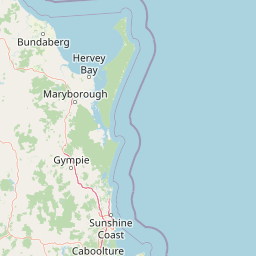
Map view of Tewantin National Park

Use this park location map to pinpoint Tewantin National Park in Australia, understand its exact geographic position, and read its mapped placement within the surrounding landscape more clearly.

Pigeon | © OpenStreetMap contributors

Location context for Tewantin National Park

Queensland

Discover the Coastal Rainforest, Wallum Heath Ecosystems, and Volcanic Terrain of this Queensland Park

Tewantin National Park Photos: Visual Guide to Its Protected Landscapes and Scenery
Explore detailed imagery of Tewantin National Park to understand its distinctive mix of coastal rainforest, eucalyptus forests, and rare Wallum Heath ecosystems. These visual references offer clear insights into the park's diverse habitats, unique protected-area character, and the prominent volcanic peak of Mount Tinbeerwah, essential for grasping its conservation significance.

Mount Tinbeerwah, Tewantin National Park

Park atlas

Explore Queensland's Protected Landscapes, Volcanic Peaks, and Coastal Ecosystems in the Region Surrounding Tewantin

Explore Nearby National Parks and Protected Areas Beyond Tewantin National Park's Unique Landscapes
Continue your park exploration by comparing national parks and protected areas near Tewantin National Park, tracing the regional spread of diverse conservation landscapes across Queensland's Sunshine Coast. This geographic view provides essential context for understanding distinct ecosystems, from Wallum Heath remnants to volcanic peaks, and mapping adjacent natural areas in Australia.
National parkQueensland

Mount Coolum National Park: Mapped Boundaries and Geological Significance in Queensland

Explore Queensland's unique laccolith national park and its diverse botanical landscapes.

Mount Coolum National Park offers a concentrated study in unique geological formations and botanical richness within Queensland's protected lands. As a prominent laccolith, the park's dome-shaped mountain and rhyolite cliffs provide a striking natural landmark. Explore its mapped terrain, from forested slopes to rare heath communities, and grasp its significance as a protected area contributing to the regional landscape context. Understand the distinct natural character of this Sunshine Coast national park.

Area
0.69 km²
Established
1990
IUCN
II
Relief
Mixed relief
National parkQueensland

Kondalilla National Park: Protected Waterfall Landscape and Bunya Pine Atlas

Explore Queensland's Blackall Range geography and mapped natural terrain.

Kondalilla National Park is a protected national park on the Blackall Range in Queensland, recognized for its significant remnant subtropical rainforest and spectacular waterfalls. This atlas entry provides detailed insight into its mapped boundaries, geographic setting, and the unique landscape character, including the easternmost bunya pine stands, making it a key destination for protected-area discovery.

Area
3.27 km²
Established
1945
IUCN
II
Relief
Mixed relief
National parkQueensland

Conondale National Park: Protected Landscape, Biodiversity Hotspot in Queensland

Explore its rugged terrain and subtropical rainforests within regional geography.

Conondale National Park offers a deep dive into protected landscape geography, showcasing one of Queensland's most significant subtropical rainforests and a vital refuge for numerous threatened species. Its rugged mountain terrain, deep gorges, and scenic creeks form a pronounced catchment divide, contributing essential regional context. This national park is an Important Bird Area and a stronghold for threatened amphibians and the Richmond birdwing butterfly, highlighting its ecological significance.

Area
368 km²
Established
1977
IUCN
II
Relief
Mountain
National parkFraser Coast Region

Poona National Park: Coastal Wetland Refuge and Protected Landscape Exploration

Discover the mapped terrain and regional geography of this national park.

Poona National Park protects a critical coastal wetland ecosystem in Queensland's Fraser Coast Region, renowned for its role as a refuge for endangered trees and threatened animal species. The park's landscape is characterized by extensive marshy areas and coastal forests situated between river systems and the ocean. This undeveloped protected area provides essential habitat, highlighting the unique geographic context and conservation importance of these coastal environments within Australia.

Area
53.68 km²
Established
1991
IUCN
II
Relief
Lowland
National parkQueensland

D'Aguilar National Park: A Queensland National Park with Diverse Mountain Landscapes and Scenic Views

Explore its mapped protected area boundaries and regional geography.

D'Aguilar National Park presents a compelling geographic profile within Queensland, featuring the rugged terrain of the D'Aguilar Range. This national park is notable for its impressive biodiversity and the distinct ecological zones, ranging from arid eucalyptus forests to lush subtropical rainforests. The park's mapped landscape offers significant interest for atlas exploration, providing context on its role as a protected area and its contribution to the regional natural heritage.

Area
20.5 km²
Established
1938
IUCN
II
National parkAustralia

Mount Binga National Park National Park: Protecting South East Queensland's Araucarian Vine Forest

Explore its mapped terrain and significant protected landscape.

Mount Binga National Park stands as a crucial protected area within Australia's South East Queensland, recognized for its conservation of the rare araucarian vine forest. This national park preserves a significant remnant of this vital vegetation type, offering habitat to multiple endangered species. Delve into its specific geographic context and the importance of its mapped boundaries for maintaining regional biodiversity and ecological integrity.

Area
10.667 km²
Established
2006
IUCN
II
National parkQueensland

Mount Walsh National Park: Mapped Granite Landscape and Protected Area in Queensland

Explore Queensland's unique volcanic terrain and regional park geography.

Mount Walsh National Park in Queensland, Australia, offers a compelling study in landscape contrasts, defined by its striking granite bluff and rugged topography. This protected area features dramatic exposed rock formations, steep forested slopes, and sheltered gullies, a direct result of ancient geological processes. The park's unique terrain, from bare granite summits to vegetated ridges, provides essential habitat and illustrates the intricate relationship between geology and ecology. For those interested in atlas-style geographic discovery, Mount Walsh National Park serves as a prime example of a distinctive Australian protected landscape.

Area
52.4 km²
Established
1947
IUCN
II
Relief
Mountain
National parkQueensland

Tamborine National Park: Queensland's Accessible Rainforest and Waterfall Landscape

Explore unique plateau geography and mapped protected areas.

Tamborine National Park stands as a crucial protected area nestled atop the Tamborine Mountain plateau in South East Queensland. It preserves vital remnants of subtropical rainforest and eucalypt forests, presenting a rich tapestry of landscapes and biodiversity. The park's unique configuration, with its accessible walking tracks leading to waterfalls like Witches Falls, offers a remarkable opportunity to engage with a protected natural environment. This national park serves as an excellent resource for understanding regional geography and the importance of conservation within populated areas, featuring distinct terrain and mapped natural features.

Area
11.6 km²
Established
1993
IUCN
II

Common questions about visiting, size, designation, and location context for Tewantin National Park

Tewantin National Park FAQs for park facts, access, geography, and protected area context
Find quick answers about Tewantin National Park, including protected-area facts, park geography, trail and visitor context, and how the park fits into its surrounding country and regional landscape.
MoriAtlas Explorer

Continue Your Protected Areas Search Across the Global Atlas

Deepen your exploration by continuing the structured search for national parks and protected areas worldwide. Utilize the comprehensive filtering capabilities to compare different conservation landscapes and refine your understanding of global park geography. Discover more about the distribution and characteristics of protected natural areas.

Global natural geography