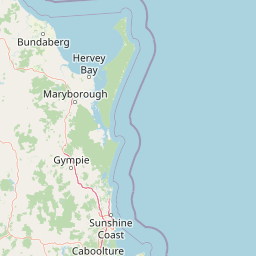

Why Mount Walsh National Park stands out
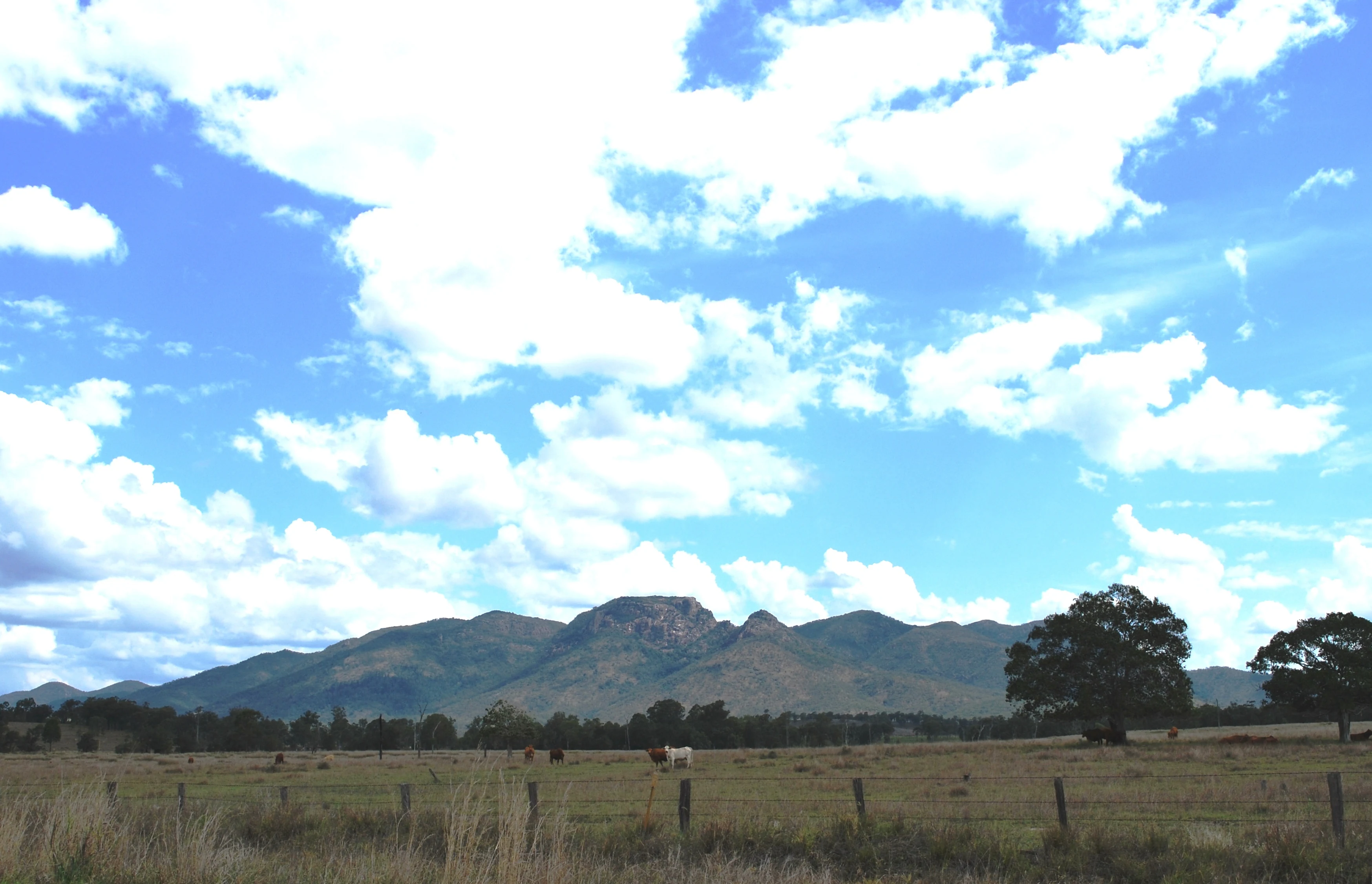
The park is best known for its dramatic granite bluff formation, a striking landmark visible across the Biggenden region. The summit's three-peaked granite dome offers spectacular exposed cliffs and panoramic views from the surrounding countryside. The park's ecological significance lies in the diversity of vegetation communities supported by its complex terrain, which provides habitat for several endangered animal species including the powerful owl and grey goshawk. The contrast between the bare granite summits and the forested slopes below creates a visually distinctive landscape characteristic of this protected area.
Mount Walsh National Park history and protected-area timeline
Mount Walsh National Park was established in 1947, representing one of Queensland's earlier protected area designations that recognized the scientific and scenic significance of the granite formation. The creation of the park reflected growing awareness in the mid-twentieth century of the need to preserve distinctive landscapes and their associated wildlife. Management of the park was assigned to what is now the Queensland Parks and Wildlife Service, the state agency responsible for managing Queensland's national park estate. The park has maintained its protected status continuously since establishment, surviving various pressures for resource extraction that affected other areas of Queensland. The long-standing protection has allowed the park's ecosystems to remain relatively intact, preserving both the geological features and the biodiversity they support.
Mount Walsh National Park landscape and geographic character
The physical landscape of Mount Walsh National Park is defined by its granite geology, which creates a terrain markedly different from the surrounding pastoral and agricultural land. The central feature is Mount Walsh itself, a dome of exposed granite that rises to 703 meters above sea level. The summit area consists of three peaks separated by rocky cols and cliffs. Below the bare rock summits, the slopes descend steeply through forested terrain, with exposed rock outcrops and cliff bands visible along the ridge lines. The weathering of the granite has produced a distinctive landscape of tors, rocky pavements, and boulder-strewn slopes. In the deeper gullies, the terrain becomes more sheltered and the microclimate supports vegetation types more typical of wetter environments. The contrast between the stark, exposed granite summits and the vegetated slopes below creates a landscape of considerable visual interest and scientific value.
Mount Walsh National Park ecosystems, habitats, and plant life
The ecological character of Mount Walsh National Park reflects the interaction between the park's granite terrain, altitude range, and position within Queensland's bioregional context. The complex topography has produced a diversity of vegetation communities including heath on exposed ridges, shrubland in rocky areas, woodland on the lower slopes, open forest in the more fertile areas, and dry forest in drier aspects. Some gullies contain patches of hoop pine, a distinctive Australian conifer that typically occurs in sheltered rainforest-like settings. The mosaic of vegetation types results from variations in aspect, soil depth, moisture availability, and exposure across the park's terrain. This ecological diversity is significant at both regional and state levels, as the park preserves vegetation communities that have been extensively cleared in the surrounding landscape for agriculture and grazing.
Mount Walsh National Park wildlife and species highlights
The diverse habitats within Mount Walsh National Park support a variety of animal species, including several of conservation significance. The forested slopes and gullies provide important habitat for the powerful owl, one of Australia's largest owl species and listed as endangered in some states. The grey goshawk, a raptor of conservation concern, also occurs in the park's forest habitats. Visitors may encounter peregrine falcons nesting on the cliff faces, while the more open forest areas support populations of eastern grey kangaroos and wallabies. Dingoes, Australia's wild dog, are present in the park and represent an important apex predator in the ecosystem. Lace monitors, a species of large goanna, are commonly seen among the trees and rocky areas. The combination of old-growth forest habitat, rocky nesting sites, and diverse prey populations makes the park particularly valuable for wildlife conservation.
Mount Walsh National Park conservation status and protection priorities
Mount Walsh National Park contributes to Queensland's protected area network by preserving a distinctive granite landscape and its associated biodiversity. The park protects habitat for several species of conservation concern, including the powerful owl and grey goshawk, which depend on forested environments with suitable nesting sites. The preservation of the park's vegetation communities also maintains ecological processes and species populations that have declined across much of the surrounding agricultural landscape. The park's long-term protection since 1947 has allowed ecosystems to remain largely intact, providing a reference area for understanding the region's natural character. The combination of geological significance, habitat diversity, and species protection establishes the park's value within Queensland's conservation estate.
Top sights and standout views in Mount Walsh National Park
The granite summit of Mount Walsh, with its three peaks and exposed rock formations, represents the park's most dramatic feature and a major attraction for visitors. The views from the summit lookouts extend across the surrounding Biggenden region, offering perspectives on the park's distinctive landscape character. The walking trail from the picnic area provides access through changing vegetation, from open eucalypt forest to rainforest-fringed creek gully, before reaching lookouts over the countryside. The park's biodiversity, particularly the presence of powerful owls and grey goshawks, makes it significant for wildlife observation. The contrast between the bare granite peaks and the forested slopes exemplifies the park's distinctive visual identity.
Best time to visit Mount Walsh National Park
The park can be visited throughout the year, with the cooler months typically offering more comfortable conditions for walking and summit hikes. Summer in Queensland brings higher temperatures and increased humidity, particularly in the forest areas, while winter generally provides clearer skies and more comfortable temperatures for outdoor activities. The dry winter and spring months often provide the most stable weather for exploring the park's trails and viewpoints. Visitors planning extended walks or overnight camping should consider seasonal conditions and carry appropriate supplies, as facilities within the park are minimal and self-sufficiency is required.