Mori Atlas logo
National parkBulburin National Park

Mapped protected landscape and ecological refuge in the heart of Queensland.

Bulburin National Park: Central Queensland's Largest Subtropical Rainforest Remnant

Bulburin National Park stands as a vital protected area, safeguarding the largest remaining fragment of subtropical rainforest in central Queensland. This national park serves as a critical ecological refuge, preserving a unique landscape rich in biodiversity and distinct from surrounding cleared regions. Users can explore its protected boundaries and understand its significance as a mapped natural asset within Queensland's geographic context.

subtropical rainforestcentral Queenslandnational parkprotected areaIUCN Category IImarsupial habitat

Bulburin National Park

National park

Park overview

Structured park overview, official facts, and landscape profile for Bulburin National Park

Bulburin National Park park facts, protected area profile, and essential visitor context
Review the core facts for Bulburin National Park, including designation, size, terrain, visitor scale, habitats, and operating context in one park-focused overview.

About Bulburin National Park

Bulburin National Park serves as a vital ecological sanctuary in central Queensland, protecting what remains of the region's once-extensive subtropical rainforest. The establishment of this protected area in 2015 marked an important milestone in Queensland's conservation efforts, providing formal protection to an ecosystem type that had suffered significant historical clearance across the central highlands and coastal regions. The park's rainforest habitat supports a diversity of species that depend on the complex structure of the forest, from the canopy-dwelling birds to ground-dwelling marsupials. The preservation of this remnant forest patch is particularly significant given the surrounding landscape, which has been largely modified for grazing and other rural land uses. Visitors to the park experience one of central Queensland's most intact forest environments, with the dense vegetation and biodiversity providing a counterpoint to the more open landscapes that dominate much of the region.

Quick facts and research context for Bulburin National Park

Bulburin National Park occupies a significant position in central Queensland's conservation estate as the largest remaining subtropical rainforest tract in the region. The park was formally established in 2015, relatively recently in Australia's protected area history, reflecting growing recognition of the ecological value of central Queensland's remaining forest habitats. It is situated in the broader Gladstone Region and is administered by Queensland's state conservation agency.

Park context

Deeper park guide and search-rich context for Bulburin National Park

Bulburin National Park history, landscape, wildlife, and travel context
Explore Bulburin National Park through its history, landscape character, ecosystems, wildlife, conservation priorities, cultural context, and seasonal travel timing in a structured park guide built for atlas discovery and search intent.

Why Bulburin National Park stands out

Bulburin National Park is best known for preserving the largest remnant of subtropical rainforest in central Queensland. This forest ecosystem represents a critical habitat for numerous species, including several that are threatened or endangered. The park provides refuge for notable bird species such as wompoo pigeons and regent bowerbirds, as well as mammals including red-necked and red-legged pademelons. The endangered long-nosed potoroo also inhabits the park, along with distinctive amphibians like the red-eyed tree frog.

Bulburin National Park history and protected-area timeline

Bulburin National Park was formally established in 2015, making it one of Queensland's more recently declared national parks. The park's creation reflected increased recognition of the conservation importance of central Queensland's remaining forest remnants. The area had previously existed in some form of informal protection or was managed for multiple use before receiving national park status. The declaration of the park as a national park provided enhanced legal protection and formalized management under the Queensland Parks and Wildlife Service, ensuring that the rainforest ecosystem and its resident wildlife would be preserved for future generations.

Bulburin National Park landscape and geographic character

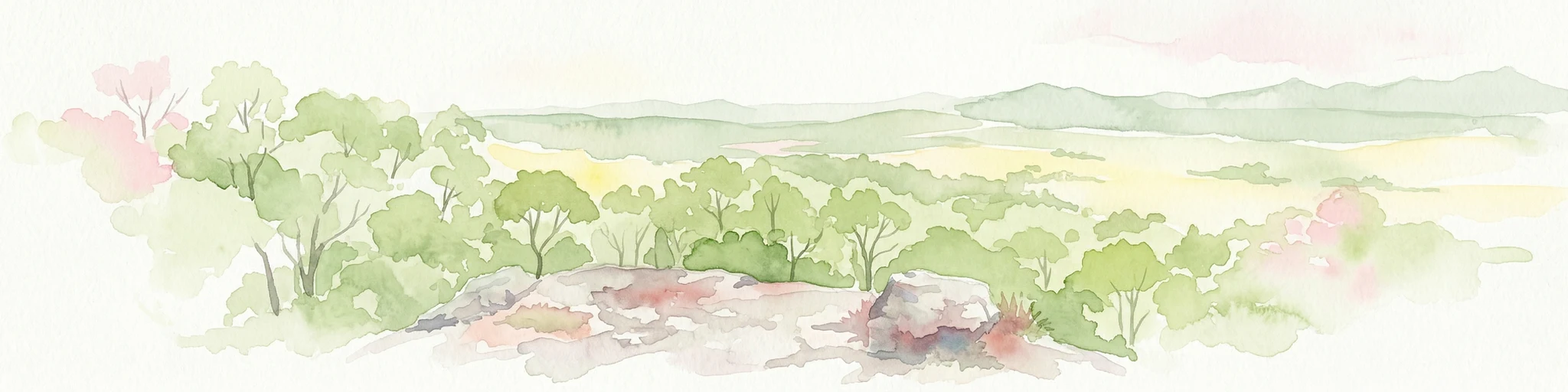
The park is characterized by subtropical rainforest vegetation growing on the undulating terrain of central Queensland. The forest creates a dense, humid environment distinct from the surrounding eucalypt woodlands and open grazing lands. The terrain provides varied microhabitats within the forest, from slopes to drainage lines, supporting the diverse plant and animal communities that depend on these different conditions. This rainforest remnant stands as a green enclave within a landscape that has been significantly altered by human activity.

Bulburin National Park ecosystems, habitats, and plant life

Bulbulrin National Park protects an ecologically significant subtropical rainforest ecosystem in central Queensland. The forest supports a complex community of plants and animals adapted to the warm, humid conditions. The biodiversity present includes species from both northern tropical lineages and temperate austral species, reflecting the transitional nature of the region's position. The forest structure provides multiple ecological niches, from the canopy where birds move through the foliage to the forest floor where mammals forage among the leaf litter.

Bulburin National Park wildlife and species highlights

The wildlife of Bulburin National Park reflects the rainforest's importance as a habitat refuge in central Queensland. Bird species including wompoo pigeons and regent bowerbirds are notable inhabitants, the latter being particularly associated with the park's intact forest understory. Marsupials represented include red-necked pademelons and red-legged pademelons, which graze on the forest floor in the twilight hours. The endangered long-nosed potoroo, a small ground-dwelling marsupial, finds refuge in the park's protective vegetation. Amphibians such as red-eyed tree frogs inhabit the forest, utilizing the moisture and shelter provided by the rainforest environment.

Bulburin National Park conservation status and protection priorities

The protection of Bulburin National Park represents an important conservation outcome for central Queensland. By preserving the largest remaining subtropical rainforest in the region, the park maintains habitat for species that have declined across much of their former range. The endangered long-nosed potoroo population demonstrates the park's significance for species of conservation concern. The forest also contributes to broader landscape connectivity, serving as a reference ecosystem for understanding how central Queensland's environments functioned before extensive European modification. The national park status provides the highest level of terrestrial protection available under Queensland law.

Top sights and standout views in Bulburin National Park

The largest subtropical rainforest remnant in central Queensland stands as the park's defining feature, providing habitat for endangered species and serving as a living demonstration of the region's ecological heritage. The birdlife, particularly the colorful regent bowerbird and wompoo pigeon, offers rewarding observation opportunities for visitors. The presence of the long-nosed potoroo underscores the park's conservation significance at a state and national level.

Best time to visit Bulburin National Park

The subtropical climate of central Queensland influences visiting conditions throughout the year, with the warmer and more humid months supporting active wildlife activity in the forest. The cooler winter months from June to August typically offer more comfortable conditions for walking among the dense rainforest vegetation.

Park location guide

Geography guide, regional context, and park location map for Bulburin National Park

Bulburin National Park park geography, regions, and map view in Australia
Understand where Bulburin National Park sits in Australia through a broader geographic reading of the surrounding landscape, nearby location context, and its mapped position within the national park landscape.

How Bulburin National Park fits into Australia

Australia is a constitutional monarchy and federal parliamentary democracy comprising six states and ten territories. With a population of nearly 28 million, it is one of the world's most urbanised countries, with most people concentrated on the eastern seaboard. The country has a high Human Development Index and is known for its cultural diversity, ancient Aboriginal heritage, and unique wildlife.

Wider geography shaping Bulburin National Park in Australia

Australia occupies the entire Australian continent, the island of Tasmania, and numerous smaller islands. It is the world's flattest and driest inhabited continent, featuring vast deserts in the interior (the Outback), tropical rainforests along the eastern coast, and a coastline bordering the Indian and Pacific Oceans.

Map view of Bulburin National Park

Use this park location map to pinpoint Bulburin National Park in Australia, understand its exact geographic position, and read its mapped placement within the surrounding landscape more clearly.

Pigeon | © OpenStreetMap contributors

Location context for Bulburin National Park

Queensland
Park atlas

Browse adjacent conservation landscapes and compare protected area geography across the region surrounding Bulburin National Park.

Explore More National Parks and Protected Areas Near Bulburin National Park in Central Queensland
Continue your park discovery beyond Bulburin National Park by exploring other significant national parks and protected areas mapped within central Queensland's varied geography. Compare distinct rainforest fragments, eucalypt woodlands, and conservation landscapes, gaining deeper insight into regional protected area spread and ecological connections.
National parkQueensland

Eurimbula National Park: Central Queensland's Diverse Coastal Protected Landscape

Explore mapped terrain and protected ecosystem boundaries.

Eurimbula National Park in Queensland is an exceptional example of a protected coastal wilderness, featuring a remarkable array of habitats including mangroves, littoral rainforests, and extensive paperbark wetlands. Its diverse landscape supports significant biodiversity and offers a clear representation of central Queensland's natural heritage. Understanding Eurimbula National Park's geography through its mapped protected area helps situate its ecological importance within the broader Australian atlas.

Area
125 km²
Established
1977
IUCN
II
National parkQueensland

Castle Tower National Park: Queensland National Park with Granite Peaks and Woodland

Mapped terrain and protected landscape in the Gladstone Region.

Castle Tower National Park in Queensland represents a significant protected natural area characterized by striking granite peak formations and expansive eucalypt woodlands. Established in 1932, the park's rugged terrain, including Mount Stanley, offers a unique geographic perspective within Central Queensland. This national park provides an opportunity to explore its mapped boundaries and distinctive landscape context, distinguishing it as a notable protected area in the Gladstone Region.

Area
49.8 km²
Established
1932
IUCN
II
National parkQueensland

Cania Gorge National Park: A Distinct Queensland National Park with Dramatic Sandstone Cliff Formations

Explore mapped gorge terrain, rock art sites, and diverse Queensland landscapes.

Cania Gorge National Park represents a significant protected area within Queensland, Australia, distinguished by its dramatic 70-meter sandstone cliffs and the ancient Aboriginal rock art found within its caves. The park's rugged gorge terrain, shaped by Three Moon Creek, offers a unique geographic context and landscape to explore. Its mapped boundaries encompass diverse ecological communities and geological features, making it a focal point for understanding regional park identity and natural heritage within Queensland's broader atlas.

Area
30 km²
Established
1977
IUCN
II
National parkQueensland

Goodnight Scrub National Park: Protected Dry Rainforest and Hoop Pine Ecosystems

Explore the mapped terrain and conservation significance of this Queensland park.

Goodnight Scrub National Park safeguards a rare dry rainforest ecosystem, a significant ecological asset within Queensland's protected area network. Dominated by iconic hoop pine trees, this national park showcases a unique landscape characterized by its distinct vegetation and geographic setting. The park's conservation value is highlighted by its role in preserving a habitat type uncommon in Australia, offering insights into regional landscape dynamics and protected land importance.

Area
63.3 km²
IUCN
II
National parkQueensland

Mount Walsh National Park: Mapped Granite Landscape and Protected Area in Queensland

Explore Queensland's unique volcanic terrain and regional park geography.

Mount Walsh National Park in Queensland, Australia, offers a compelling study in landscape contrasts, defined by its striking granite bluff and rugged topography. This protected area features dramatic exposed rock formations, steep forested slopes, and sheltered gullies, a direct result of ancient geological processes. The park's unique terrain, from bare granite summits to vegetated ridges, provides essential habitat and illustrates the intricate relationship between geology and ecology. For those interested in atlas-style geographic discovery, Mount Walsh National Park serves as a prime example of a distinctive Australian protected landscape.

Area
52.4 km²
Established
1947
IUCN
II
Relief
Mountain
National parkNorth Burnett Region

Auburn River National Park: A Protected Landscape Defined by River Gorge and Hardwood Forests

Explore the mapped terrain and protected area geography of this Queensland national park.

Auburn River National Park, designated a national park in Australia, showcases a remarkable protected landscape sculpted by the Auburn River. Its geography is characterized by a steep, dramatic river gorge and extensive hardwood forests, creating a visually striking and ecologically significant area. This park provides crucial insight into riparian ecosystems and their role within the regional geographic context of the North Burnett Region, inviting detailed exploration of its mapped terrain and conservation value.

Area
3.9 km²
Established
1964
IUCN
II
National parkFraser Coast Region

Poona National Park: Coastal Wetland Refuge and Protected Landscape Exploration

Discover the mapped terrain and regional geography of this national park.

Poona National Park protects a critical coastal wetland ecosystem in Queensland's Fraser Coast Region, renowned for its role as a refuge for endangered trees and threatened animal species. The park's landscape is characterized by extensive marshy areas and coastal forests situated between river systems and the ocean. This undeveloped protected area provides essential habitat, highlighting the unique geographic context and conservation importance of these coastal environments within Australia.

Area
53.68 km²
Established
1991
IUCN
II
Relief
Lowland
National parkQueensland

Baga National Park: Unique Volcanic Geography and Protected Landscape in Queensland

Mapped terrain and protected area identity for a distinctive national park.

Baga National Park stands as a notable protected area in central Queensland, Australia, centered around the striking Mount Baga, a trachyte volcanic plug. This geological marvel offers a unique landscape context, showcasing the remnants of ancient volcanic activity within the regional geography. As a national park, it serves to preserve this distinctive natural feature and its associated habitats, providing a compact yet significant destination for atlas-based discovery of Queensland's diverse protected lands.

Area
1.44 km²
Established
1977
IUCN
II

Common questions about visiting, size, designation, and location context for Bulburin National Park

Bulburin National Park FAQs for park facts, access, geography, and protected area context
Find quick answers about Bulburin National Park, including protected-area facts, park geography, trail and visitor context, and how the park fits into its surrounding country and regional landscape.
MoriAtlas Explorer

Continue Your Protected Areas Search Across the Global Atlas

Deepen your exploration by continuing the structured search for national parks and protected areas worldwide. Utilize the comprehensive filtering capabilities to compare different conservation landscapes and refine your understanding of global park geography. Discover more about the distribution and characteristics of protected natural areas.

Global natural geography