Why Castle Tower National Park stands out
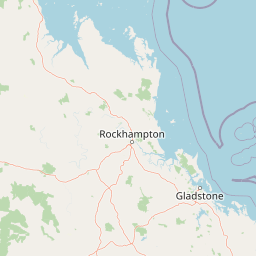
Castle Tower National Park is best known for its prominent granite peak formations, particularly Mount Castle Tower, which is visible from Lake Awoonga located nearby. The park's dramatic elevated terrain and relatively isolated character distinguish it within the Gladstone Region. The combination of exposed granite summits rising above eucalypt woodland creates a distinctive landscape that has attracted conservation protection for over nine decades.
Castle Tower National Park history and protected-area timeline
Castle Tower National Park was established in 1932, representing an early commitment by the Queensland government to protecting notable natural landscapes within the state. The park's creation reflects historical recognition of the granite peak formations around Mount Castle Tower as a landscape worthy of formal protection. Management responsibility rests with the Queensland Parks and Wildlife Service, which oversees the park's conservation mandate. The requirement for permission to access the park through adjacent property owned by the Gladstone Area Water Board has helped maintain the park's relatively undeveloped character over the decades.
Castle Tower National Park landscape and geographic character
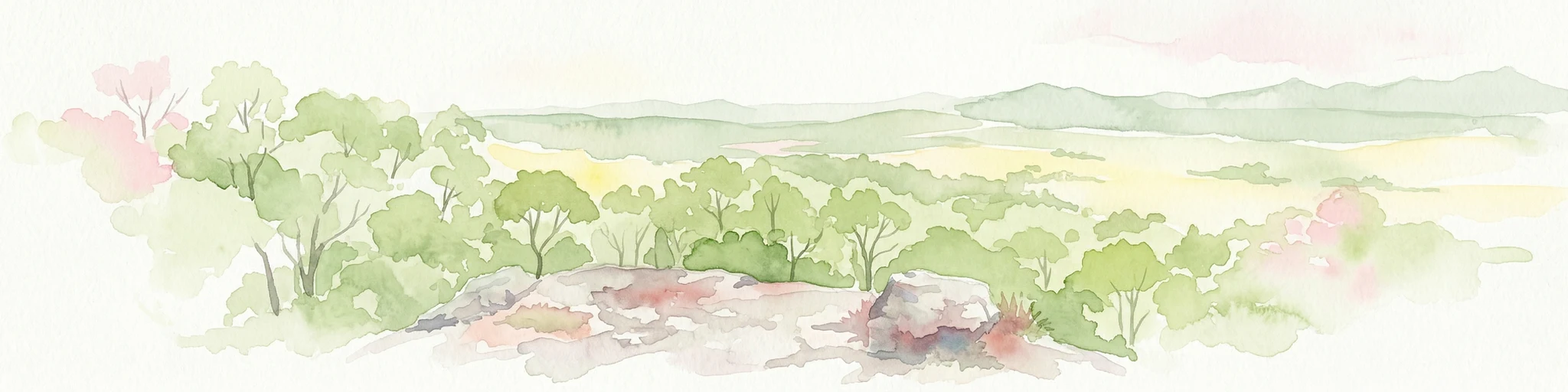
The landscape of Castle Tower National Park is defined by granite bedrock formations creating a series of prominent peaks and ridges. The terrain rises sharply from the surrounding plains, with Mount Stanley at 690.9 metres representing the highest elevation. The general park elevation sits around 313 metres above sea level, with significant variation across the rocky ridgelines and slopes. The open eucalypt woodland dominates the lower slopes and valley areas, while the exposed granite surfaces of the peaks support limited vegetation, creating a contrast between the vegetated lower terrain and the bare rock summits.
Castle Tower National Park ecosystems, habitats, and plant life
The park's vegetation is characterized by open eucalypt woodland, representing a common vegetation type across central Queensland. Scattered stands of hoop pine add compositional diversity to the woodland, occurring in pockets where conditions support this conifer species. The combination of eucalypt woodland with hoop pine patches creates a heterogeneous forest structure across the park. The granite peak environments support distinct ecological conditions compared to the woodland slopes, with exposed rock surfaces and associated specialized plant communities.
Castle Tower National Park wildlife and species highlights
While specific wildlife details are limited in available sources, the open eucalypt woodland and granite peak environments of Castle Tower National Park provide habitat for various Australian native species typical of central Queensland. The maintained vegetation cover and relative isolation of the park support ecological communities that have persisted through the surrounding modified landscapes.
Castle Tower National Park conservation status and protection priorities
Castle Tower National Park holds IUCN protected area category II status, designating it as a national park focused on ecosystem protection and biodiversity conservation. The park's protected status since 1932 has preserved the granite peak landscape and associated eucalypt woodland communities. The park contributes to the conservation network within the Gladstone Region, protecting natural values in an area otherwise largely converted to other land uses.
Top sights and standout views in Castle Tower National Park
The most notable highlight of Castle Tower National Park is the dramatic granite peak of Mount Castle Tower, which can be viewed from Lake Awoonga, creating a scenic backdrop to the reservoir. The park's highest peak, Mount Stanley, offers elevated terrain within a relatively compact protected area. The combination of exposed granite summits rising above eucalypt woodland creates a distinctive visual landscape. The limited access and lack of formal visitor facilities contribute to a remote, undeveloped wilderness character uncommon among more accessible Queensland national parks.
Best time to visit Castle Tower National Park
The park can be visited year-round given its location in central Queensland. The warmer months from October through March bring higher temperatures typical of the subtropics, while winter from June to August offers milder conditions. Visitors should note that access requires prior permission from the Gladstone Area Water Board, and there are no formal visitor facilities within the park. The lack of established trails means visitors should be prepared for self-guided exploration of the remote terrain.