

Mori Atlas logo
National parkEurimbula National Park

Discover the diverse ecosystems and geographic context of this significant Queensland national park.

Eurimbula National Park: A Mapped Protected Coastal Landscape in Queensland

Eurimbula National Park represents a vital protected coastal wilderness in central Queensland, Australia. This national park offers a unique opportunity to explore its diverse ecosystems, from extensive paperbark swamps and littoral rainforests to coastal vine thickets and eucalypt forests, all situated within a dynamic coastal geography. The park's mapped boundaries encompass a significant area dedicated to preserving this rich natural heritage, providing valuable insight into the region's ecological mosaic and landscape character for atlas-driven discovery.

Coastal national parksQueensland protected areasWetland ecosystemsLittoral rainforestMangrove environmentsSubtropical forests

Eurimbula National Park

National park

Park overview

Structured park overview, official facts, and landscape profile for Eurimbula National Park

Eurimbula National Park park facts, protected area profile, and essential visitor context
Review the core facts for Eurimbula National Park, including designation, size, terrain, visitor scale, habitats, and operating context in one park-focused overview.

About Eurimbula National Park

Eurimbula National Park protects a substantial tract of central Queensland's coastal environment, representing an important conservation reserve within the Gladstone Region. The park's three-part structure reflects the complex geography of this coastal landscape, with the main section centred on Eurimbula Creek providing the primary visitor access and camping facilities. This central area features the park's most accessible landscapes, where visitors can explore the interface between paperbark swamps, eucalypt forests, and coastal environments. The northern section extends onto Rodds Peninsula and encompasses Bustard Head, where the historic lighthouse stands as a reminder of the region's maritime history. This portion of the park is largely accessible only by boat, preserving a more remote and less visited coastal wilderness character. The western section of the park remains rugged and extremely difficult to access, maintaining a near-pristine state in the more inland portions of the reserve. The park's proximity to Agnes Water and the Town of 1770, both popular tourist destinations on the central Queensland coast, makes it an important component of the region's protected area network and a significant destination for visitors seeking to experience the natural landscapes of this coastal area.

Quick facts and research context for Eurimbula National Park

Eurimbula National Park spans 125 square kilometres along the central Queensland coast in the Gladstone Region, approximately 411 kilometres north of Brisbane and accessible via Agnes Water. The park features an average elevation of 40 metres and comprises three distinct sections: the main area centred on Eurimbula Creek, the northern section encompassing Rodds Peninsula and Bustard Head with its historic lighthouse, and a rugged western section. The protected area supports 757 documented plant species and 430 animal species, including 26 species listed as rare or endangered. The park offers visitor facilities including camping at Bustard Beach near the mouth of Eurimbula Creek and at Middle Creek, with a 4WD recommended for access to most areas.

Park context

Deeper park guide and search-rich context for Eurimbula National Park

Eurimbula National Park history, landscape, wildlife, and travel context
Explore Eurimbula National Park through its history, landscape character, ecosystems, wildlife, conservation priorities, cultural context, and seasonal travel timing in a structured park guide built for atlas discovery and search intent.

Why Eurimbula National Park stands out

Eurimbula National Park is distinguished by its remarkable coastal ecosystem diversity, encompassing one of Queensland's most comprehensive representations of subtropical coastal habitats within a single protected area. The park's exceptional plant diversity, with over 750 species documented, includes significant stands of littoral rainforest, coastal vine thickets, and extensive paperbark wetlands that create a visually striking and ecologically important landscape. The presence of the historic Bustard Head Lighthouse at the park's northern tip adds maritime heritage significance, while the Ganoonga Noonga lookout provides visitors with panoramic views of the park's coastal and wetland scenery. The park's location on the central Queensland coast positions it as a key destination for understanding the region's natural heritage and coastal conservation values.
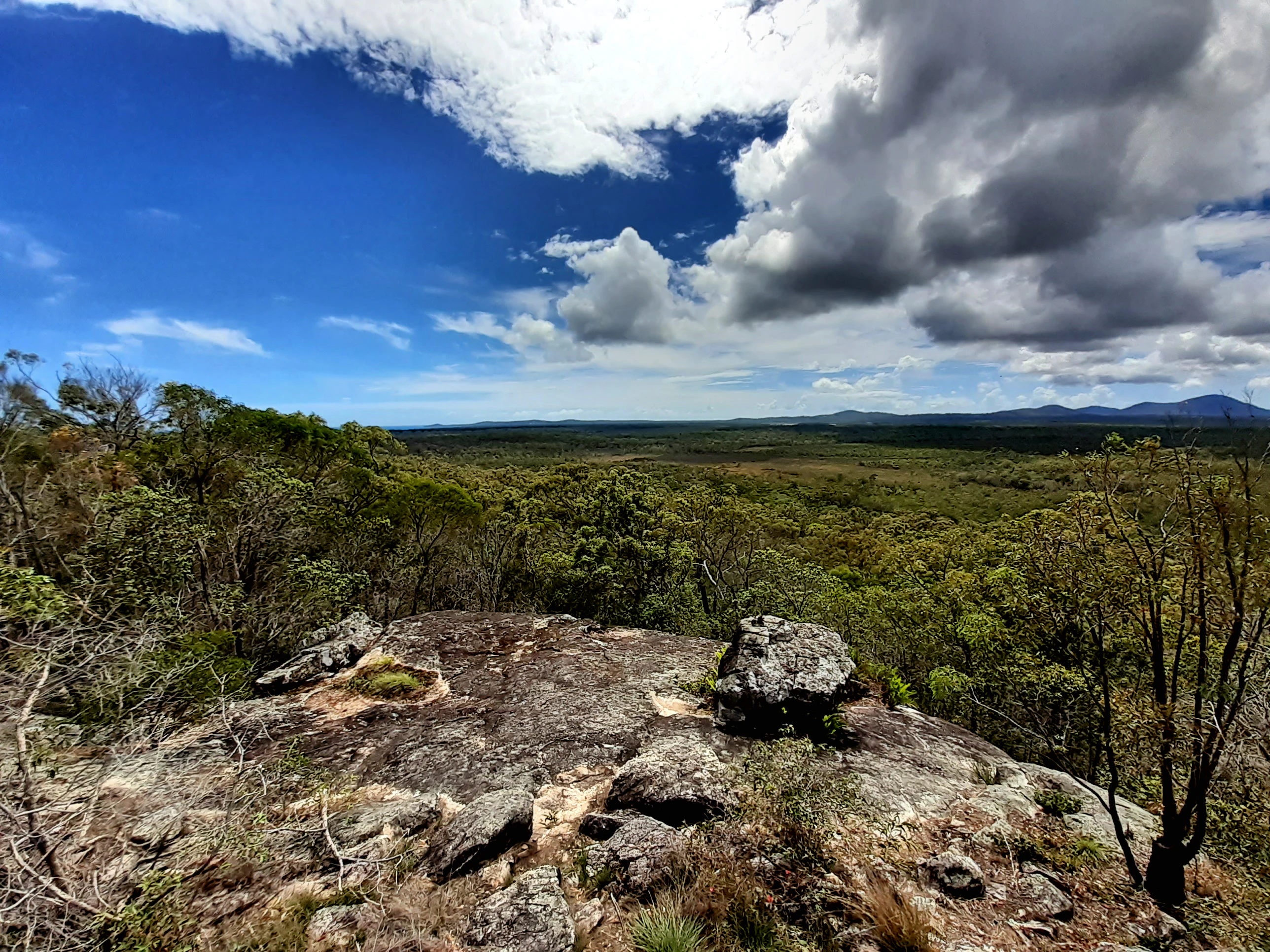
Eurimbula National Park
View from Ganoonga Noonga lookout, showing coastal beaches, mangrove swamps, and Eucalypt forests in Eurimbula National Park.

Eurimbula National Park history and protected-area timeline

Eurimbula National Park was established in 1977, creating formal protection for the coastal landscapes and ecosystems that characterize this portion of central Queensland. The park's establishment reflected growing recognition during the 1970s of the need to preserve significant coastal and forest environments within Queensland's protected area system. The region holds particular historical significance as the site of Captain James Cook's first recorded contact with the Queensland coast in 1770, when HMS Endeavour sailed along this section of coastline. Cook was accompanied by Sir Joseph Banks, the renowned botanist whose scientific documentation of the region's flora contributed to early European understanding of Australian plant life. The historic Bustard Head Lighthouse, constructed in 1968 and still operational, adds a more recent layer of maritime heritage to the park's northern section, though the site had been used as a navigation point since the early days of European settlement. The park is managed by the Queensland Parks and Wildlife Service, which maintains visitor facilities and implements conservation management programs for the protection of the area's significant natural values.

Eurimbula National Park landscape and geographic character

The landscape of Eurimbula National Park reflects the complex physical geography of central Queensland's coastal zone, where marine, wetland, and forest environments create a visually diverse terrain. The park's relatively low average elevation of approximately 40 metres characterizes much of the protected area, with gentle undulating terrain supporting the extensive wetland systems that form a distinctive component of the park's character. The coastal sections feature mangrove communities along tidal waterways and estuary edges, while the more inland areas support paperbark swamps that create moody, atmospheric landscapes particularly distinctive to this region. Littoral rainforest and coastal vine thickets occur in pockets throughout the park, representing some of the most botanically diverse communities within the reserve. Eucalypt forests dominate the higher ground and more freely draining areas, providing a contrast to the wetland environments and contributing to the overall habitat diversity. The park's coastline features sandy beaches, particularly at Bustard Beach near the mouth of Eurimbula Creek, while the northern section around Rodds Peninsula and Bustard Head offers more rugged coastal scenery with rocky headlands and clearer views across the marine environment.

Eurimbula National Park ecosystems, habitats, and plant life

The ecological character of Eurimbula National Park is defined by the remarkable diversity of habitats contained within its boundaries, supporting an exceptional array of plant and animal species. The park encompasses one of the most significant representations of central Queensland coastal ecosystems, with vegetation communities ranging from mangroves and tidal wetlands through to littoral rainforest, coastal vine thickets, freshwater paperbark swamps, and eucalypt forests. This habitat complexity supports extraordinary biodiversity, with 757 plant species and 430 animal species documented within the park. The coastal wetlands and paperbark swamps provide critical habitat for waterbirds and aquatic species, while the rainforest communities support more specialized flora and fauna adapted to shadier, more humid conditions. The eucalypt forests provide habitat for a range of woodland species and contribute to the overall ecological richness of the reserve. The presence of 26 species listed as rare or endangered within the park highlights its significant conservation value and the importance of maintaining protection for these vulnerable species and their habitats.

Eurimbula National Park wildlife and species highlights

The wildlife community within Eurimbula National Park reflects the diversity of habitats present, with 430 animal species documented including notable populations of significant conservation value. The park's wetland environments, particularly the extensive paperbark swamps and mangrove communities, provide critical habitat for waterbirds and marsh-dwelling species, supporting populations that depend on these coastal wetlands for feeding and breeding. The varied forest environments, from littoral rainforest through to eucalypt woodlands, support diverse terrestrial fauna communities. The presence of 26 species classified as rare or endangered within the park emphasizes the conservation significance of this protected area, with these species relying on the protected habitats for their continued survival. The coastal and marine environments adjacent to the park also contribute to the overall biodiversity value, with the nearby waters supporting marine species that utilize the coastal zone. The park's location along the central Queensland coast positions it within broader migratory pathways for various species, adding seasonal dimensions to wildlife viewing opportunities.

Eurimbula National Park conservation status and protection priorities

Eurimbula National Park serves as a critical conservation reserve within central Queensland, protecting a representative sample of the region's coastal and forest ecosystems. The park's IUCN Category II designation reflects its status as a national park with primary objectives of protecting natural ecosystems while allowing for sustainable visitor use and enjoyment. The exceptional biodiversity documented within the park, including 757 plant species and 430 animal species, underscores the ecological significance of this protected area and its contribution to Queensland's conservation estate. The presence of 26 species listed as rare or endangered highlights the park's particular importance for threatened species conservation, with the protected habitats providing essential refuge for these vulnerable populations. The diverse range of habitat types represented within the park, from mangroves through rainforests to eucalypt forests, ensures that multiple ecosystem types receive protection, supporting ecological processes and species that depend on these varied environments. Management by the Queensland Parks and Wildlife Service ensures ongoing protection and appropriate visitor access that balances conservation values with recreational opportunities.

Eurimbula National Park cultural meaning and human context

Eurimbula National Park occupies a region of significant historical importance in Queensland's colonial history, representing the northernmost point of Captain James Cook's documented 1770 voyage along the Australian coast. Cook's mapping and description of this section of coastline, undertaken alongside botanist Sir Joseph Banks, marked the beginning of European scientific and cartographic documentation of central Queensland. The landscape that Cook and Banks first observed in 1770 would have featured many of the same ecosystems now protected within the park, including the coastal wetlands, forests, and mangrove communities that characterize the area today. The historic Bustard Head Lighthouse, located within the park's northern section, represents later human modification of the landscape and the ongoing maritime significance of this section of coast. The area's traditional owners, the Gureng Gureng people and other Aboriginal groups with connections to this coastal region, have long-standing relationships with the landscape that predate European contact by many thousands of years, though detailed documentation of indigenous cultural values within the park is limited in the available source material.

Top sights and standout views in Eurimbula National Park

Eurimbula National Park offers visitors several distinctive experiences that reflect the park's diverse coastal environments and cultural heritage. The Ganoonga Noonga lookout provides one of the park's signature views, offering panoramic perspectives across the coastal landscape including the paperbark swamps that create moody wetland scenery. Camping at Bustard Beach near the mouth of Eurimbula Creek places visitors directly adjacent to the coastal environment, with beach access and wetland views creating a distinctive camping experience. The northern section's historic Bustard Head Lighthouse adds maritime heritage interest, though this area requires boat access for most visitors, preserving a more remote wilderness character. The park's exceptional plant diversity, with over 750 species, creates remarkable botanical interest throughout the seasons, while the wetland environments provide habitat for diverse birdlife. The 4WD access requirements for most of the park contribute to a sense of adventure and wilderness exploration that distinguishes Eurimbula from more easily accessible protected areas.

Best time to visit Eurimbula National Park

The central Queensland climate shapes visitor opportunities throughout the year, with the park's coastal setting influencing seasonal conditions. The warmer months from November through April bring higher temperatures and increased humidity, typical of the subtropical climate that characterizes this section of Queensland coast. This period coincides with the wet season, when rainfall is more frequent and the park's wetland environments reach their fullest extent, creating lush scenery but potentially affecting access on some tracks. The cooler months from May through October generally offer more comfortable conditions for bushwalking and camping, with reduced rainfall and milder temperatures making outdoor activities more pleasant. The park's coastal location means that sea breezes can provide relief from summer heat, while winter temperatures remain mild compared to southern areas of Australia. Visitors planning trips should be aware that the 4WD access requirements mean that conditions can vary significantly depending on recent weather, and checking current road conditions with the Queensland Parks and Wildlife Service is advisable before traveling.
Park location guide

Geography guide, regional context, and park location map for Eurimbula National Park

Eurimbula National Park park geography, regions, and map view in Australia
Understand where Eurimbula National Park sits in Australia through a broader geographic reading of the surrounding landscape, nearby location context, and its mapped position within the national park landscape.

How Eurimbula National Park fits into Australia

Australia is a constitutional monarchy and federal parliamentary democracy comprising six states and ten territories. With a population of nearly 28 million, it is one of the world's most urbanised countries, with most people concentrated on the eastern seaboard. The country has a high Human Development Index and is known for its cultural diversity, ancient Aboriginal heritage, and unique wildlife.

Wider geography shaping Eurimbula National Park in Australia

Australia occupies the entire Australian continent, the island of Tasmania, and numerous smaller islands. It is the world's flattest and driest inhabited continent, featuring vast deserts in the interior (the Outback), tropical rainforests along the eastern coast, and a coastline bordering the Indian and Pacific Oceans.

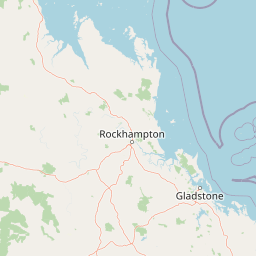
Map view of Eurimbula National Park

Use this park location map to pinpoint Eurimbula National Park in Australia, understand its exact geographic position, and read its mapped placement within the surrounding landscape more clearly.

Pigeon | © OpenStreetMap contributors

Location context for Eurimbula National Park

Gladstone RegionQueensland

Trace Eurimbula National Park's diverse terrain, visually understanding its unique coastal ecosystems, paperbark swamps, and dense rainforest pockets.

Eurimbula National Park Photos: Explore Coastal Landscapes, Wetlands, and Subtropical Habitats
View compelling Eurimbula National Park photos to visually grasp its unique coastal landscapes, from extensive mangrove environments and atmospheric paperbark swamps to diverse littoral rainforests and sandy beaches. These images offer crucial insights into the park's protected terrain, allowing for a deeper appreciation of its ecological mosaic and Queensland's distinctive subtropical conservation values.

Eurimbula National Park

Park atlas

Trace the protected landscape geography of central Queensland, exploring diverse coastal wilderness and wetland ecosystems around Eurimbula.

Compare National Parks and Protected Areas Near Eurimbula National Park
After exploring Eurimbula National Park, browse other national parks and protected areas situated within Queensland's expansive coastal zone. Compare their distinct geographic features, from diverse wetland ecosystems to subtropical forests, to understand the broader conservation context of the region.
National parkQueensland

Castle Tower National Park: Queensland National Park with Granite Peaks and Woodland

Mapped terrain and protected landscape in the Gladstone Region.

Castle Tower National Park in Queensland represents a significant protected natural area characterized by striking granite peak formations and expansive eucalypt woodlands. Established in 1932, the park's rugged terrain, including Mount Stanley, offers a unique geographic perspective within Central Queensland. This national park provides an opportunity to explore its mapped boundaries and distinctive landscape context, distinguishing it as a notable protected area in the Gladstone Region.

Area
49.8 km²
Established
1932
IUCN
II
National parkQueensland

Bulburin National Park: Central Queensland's Significant Subtropical Rainforest Preserve

Mapped protected landscape and ecological refuge.

Bulburin National Park represents the most substantial remaining area of subtropical rainforest in central Queensland, established as a protected national park. Its dense forest ecosystem provides crucial habitat for numerous species, including endangered marsupials and notable birdlife. Exploring Bulburin National Park reveals a distinct natural landscape within Queensland, offering insights into regional conservation and the geographic distribution of vital protected areas.

Established
2015
IUCN
II
National parkQueensland

Cania Gorge National Park: A Distinct Queensland National Park with Dramatic Sandstone Cliff Formations

Explore mapped gorge terrain, rock art sites, and diverse Queensland landscapes.

Cania Gorge National Park represents a significant protected area within Queensland, Australia, distinguished by its dramatic 70-meter sandstone cliffs and the ancient Aboriginal rock art found within its caves. The park's rugged gorge terrain, shaped by Three Moon Creek, offers a unique geographic context and landscape to explore. Its mapped boundaries encompass diverse ecological communities and geological features, making it a focal point for understanding regional park identity and natural heritage within Queensland's broader atlas.

Area
30 km²
Established
1977
IUCN
II
National parkQueensland

Goodnight Scrub National Park: Protected Dry Rainforest and Hoop Pine Ecosystems

Explore the mapped terrain and conservation significance of this Queensland park.

Goodnight Scrub National Park safeguards a rare dry rainforest ecosystem, a significant ecological asset within Queensland's protected area network. Dominated by iconic hoop pine trees, this national park showcases a unique landscape characterized by its distinct vegetation and geographic setting. The park's conservation value is highlighted by its role in preserving a habitat type uncommon in Australia, offering insights into regional landscape dynamics and protected land importance.

Area
63.3 km²
IUCN
II
National parkQueensland

Keppel Bay Islands National Park: Queensland's Coastal National Park and Archipelago Discovery

Explore protected islands, mapped coral reefs, and marine ecosystems.

Delve into the geographic identity of Keppel Bay Islands National Park, a significant protected area comprising thirteen islands off the coast of Queensland. This national park showcases a dynamic coastal landscape, featuring distinct island terrains, diverse marine life, and essential coral reef systems. Through its mapped boundaries and conservation focus, the park offers a unique lens for understanding island geography and the importance of marine protected areas within the broader Australian atlas.

Area
7.2 km²
Established
1994
IUCN
II
National parkQueensland

Baga National Park: Unique Volcanic Geography and Protected Landscape in Queensland

Mapped terrain and protected area identity for a distinctive national park.

Baga National Park stands as a notable protected area in central Queensland, Australia, centered around the striking Mount Baga, a trachyte volcanic plug. This geological marvel offers a unique landscape context, showcasing the remnants of ancient volcanic activity within the regional geography. As a national park, it serves to preserve this distinctive natural feature and its associated habitats, providing a compact yet significant destination for atlas-based discovery of Queensland's diverse protected lands.

Area
1.44 km²
Established
1977
IUCN
II
National parkQueensland

Mount Walsh National Park: Mapped Granite Landscape and Protected Area in Queensland

Explore Queensland's unique volcanic terrain and regional park geography.

Mount Walsh National Park in Queensland, Australia, offers a compelling study in landscape contrasts, defined by its striking granite bluff and rugged topography. This protected area features dramatic exposed rock formations, steep forested slopes, and sheltered gullies, a direct result of ancient geological processes. The park's unique terrain, from bare granite summits to vegetated ridges, provides essential habitat and illustrates the intricate relationship between geology and ecology. For those interested in atlas-style geographic discovery, Mount Walsh National Park serves as a prime example of a distinctive Australian protected landscape.

Area
52.4 km²
Established
1947
IUCN
II
Relief
Mountain
National parkNorth Burnett Region

Auburn River National Park: A Protected Landscape Defined by River Gorge and Hardwood Forests

Explore the mapped terrain and protected area geography of this Queensland national park.

Auburn River National Park, designated a national park in Australia, showcases a remarkable protected landscape sculpted by the Auburn River. Its geography is characterized by a steep, dramatic river gorge and extensive hardwood forests, creating a visually striking and ecologically significant area. This park provides crucial insight into riparian ecosystems and their role within the regional geographic context of the North Burnett Region, inviting detailed exploration of its mapped terrain and conservation value.

Area
3.9 km²
Established
1964
IUCN
II

Common questions about visiting, size, designation, and location context for Eurimbula National Park

Eurimbula National Park FAQs for park facts, access, geography, and protected area context
Find quick answers about Eurimbula National Park, including protected-area facts, park geography, trail and visitor context, and how the park fits into its surrounding country and regional landscape.
MoriAtlas Explorer

Continue Your Protected Areas Search Across the Global Atlas

Deepen your exploration by continuing the structured search for national parks and protected areas worldwide. Utilize the comprehensive filtering capabilities to compare different conservation landscapes and refine your understanding of global park geography. Discover more about the distribution and characteristics of protected natural areas.

Global natural geography