Why Llullaillaco National Park stands out
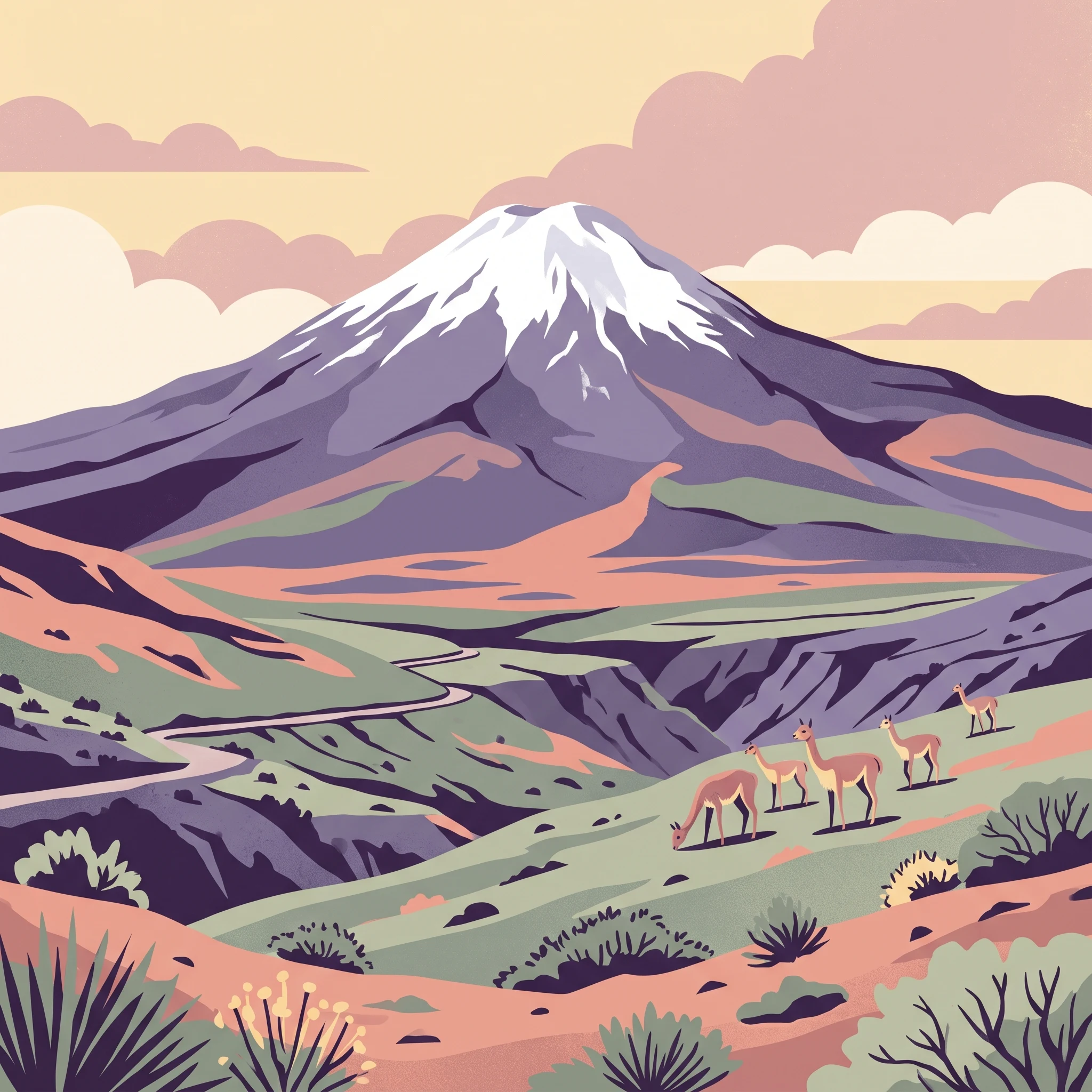
Llullaillaco National Park is best known for its dramatic setting amid one of the world's highest and most arid volcanic landscapes. The park protects the slopes and summit region of Llullaillaco volcano, which rises to over 6,700 meters and ranks among the highest active volcanoes on Earth. The contrast between the stark semi-desert terrain and the snow-capped volcanic peaks creates a visually striking environment unlike typical Andean protected areas. The park also preserves a segment of the ancient Inca road system in the Río Frío area, connecting visitors to the region's pre-Columbian heritage. Herds of vicuñas, the wild relatives of llamas and alpacas, wander freely through the park's terrain, representing a successful conservation story for this culturally and ecologically significant camelid species.
Llullaillaco National Park history and protected-area timeline
The establishment of Llullaillaco National Park reflects Chile's broader efforts in the late twentieth century to protect representative examples of the nation's diverse ecological regions. The park was created to safeguard the unique high-altitude desert ecosystems of the northern Andes, an area that had previously received limited formal protection despite its ecological and geological significance. The management of the park falls to CONAF, Chile's National Forest Corporation, which oversees conservation activities, visitor management, and research programs within the protected area. The park's designation as an IUCN Category II protected area recognizes its primary function of preserving natural ecosystems while allowing for sustainable visitation and environmental education. The Inca road system running through the park represents a heritage dimension that adds cultural significance to the area's conservation value, though much of the historical context surrounding this infrastructure remains less documented than in more extensively studied regions.
Llullaillaco National Park landscape and geographic character
The physical landscape of Llullaillaco National Park is dominated by the interplay between high-altitude volcanic terrain and extensive semi-desert plains. The park's most dramatic feature is the stratovolcano that shares its name, Llullaillaco, whose snow-capped summit rises well above 6,700 meters to form one of the highest peaks in the central Andes. The volcano's slopes descend through varying terrain, from rocky alpine zones at higher elevations to the more gently undulating plains that characterize much of the protected area. Between the volcanic heights and the plains, the quebradas create essential topographic diversity, carving deep channels that historically carry seasonal flows and provide sheltered microhabitats for vegetation. The Cordillera Domeyko forms the park's western boundary, adding another dimension to the varied topography. The color palette of the landscape ranges from the rusts and browns of exposed volcanic rock to the paler tones of mineral-rich soils, all beneath a sky that typically displays remarkable clarity in this high-altitude desert environment.
Llullaillaco National Park ecosystems, habitats, and plant life
The ecological character of Llullaillaco National Park is defined by its position within the Central Andean dry puna ecoregion, one of the most distinctive high-elevation environments in South America. This ecoregion experiences extreme aridity combined with intense solar radiation and significant temperature fluctuations between day and night, creating conditions that have shaped specialized plant communities adapted to water stress and temperature extremes. The park's documented flora includes 126 species, a remarkable figure given the harsh conditions, with 21 of these species found nowhere else on Earth, underscoring the area's conservation significance. Vegetation in the park is distributed according to water availability and elevation, with more dense communities occurring in the quebradas where moisture accumulates, while the open plains support more scattered, drought-resistant species. The adaptation strategies of these plants, including deep root systems, waxy leaf coatings, and reduced leaf areas, represent millions of years of evolution in response to the challenging environmental conditions.
Llullaillaco National Park wildlife and species highlights
The wildlife of Llullaillaco National Park is characterized by species adapted to the extreme conditions of high-altitude desert environments. The most visible large mammal in the park is the vicuña, a wild camelid that has recovered from near-threatened status through successful conservation efforts across the Andes. Herds of these elegant animals can be observed moving across the semi-desert plains, their behavior adapted to navigating the challenging terrain while exploiting scattered vegetation resources. The park's location along major migratory routes and its proximity to diverse habitat zones mean that birdlife, while not extensively documented in available sources, includes species adapted to both Andean and desert environments. The quebradas provide critical habitat for smaller fauna that depend on the more sheltered conditions these watercourses provide, while the broader landscape supports species capable of ranging across large areas in search of food and water.
Llullaillaco National Park conservation status and protection priorities
Llullaillaco National Park plays a significant role in protecting one of the world's most unusual high-altitude desert ecosystems. The Central Andean dry puna, while not as globally renowned as other ecoregions, contains irreplaceable biodiversity adapted to conditions found nowhere else, making protected areas like this park essential for maintaining ecological processes and evolutionary potential. The presence of 21 endemic plant species within the park boundaries highlights its importance as a repository of unique genetic material and specialized organisms that cannot be found in any other location. The successful protection of vicuña populations in the park contributes to broader Andean conservation efforts for this culturally significant species. However, the park faces ongoing challenges related to water scarcity, climate change impacts on high-altitude ecosystems, and the need to balance conservation objectives with sustainable visitation. The requirement for official permission to visit the park reflects management approaches designed to minimize human impact on this sensitive environment.
Llullaillaco National Park cultural meaning and human context
The cultural dimension of Llullaillaco National Park centers on the presence of the Inca road system within the Río Frío area of the park. This ancient infrastructure represents one of the most extensive and sophisticated pre-Columbian road networks in the Americas, connecting diverse regions of the former Inca Empire across thousands of kilometers of varied terrain. The segment passing through this high-altitude park demonstrates how Inca engineers and travelers navigated some of the most challenging environments in the empire, establishing routes through terrain that presented significant logistical challenges. The road system in this region would have connected lowland agricultural areas with high-altitude zones used for mining, llama husbandry, and ritual purposes. While the park does not contain major archaeological sites open to visitation, the presence of this heritage dimension adds layers of historical significance beyond the area's ecological value, connecting the modern protected area to millennia of human engagement with this dramatic landscape.
Top sights and standout views in Llullaillaco National Park
The most compelling highlights of Llullaillaco National Park include the opportunity to experience one of the highest volcanic landscapes in the world, with the imposing Llullaillaco volcano serving as an ever-present backdrop to the park's terrain. The chance to observe wild vicuña herds moving across semi-desert plains at high altitude offers a wildlife viewing experience found in few other protected areas. The presence of the ancient Inca road system provides a tangible connection to pre-Columbian civilization and the remarkable engineering achievements of the Inca in conquering extreme terrain. The park's location in the Atacama Desert region means that visitors experience some of the clearest skies and most star-filled nights accessible from Chile's protected areas. The combination of geological, ecological, and cultural significance within a single protected area makes this park a destination of interest for those seeking to understand the diverse dimensions of northern Chile's high-altitude environments.
Best time to visit Llullaillaco National Park
Visiting Llullaillaco National Park is influenced by the extreme conditions of its high-altitude desert environment, which experiences pronounced seasonal variations in temperature and weather patterns. The austral summer months from December through March tend to offer the most accessible conditions, with warmer daytime temperatures and generally clearer weather, though conditions can still be harsh. Winter months bring colder temperatures and potentially snowy conditions at higher elevations, which while creating dramatic scenery, can also complicate access and movement within the park. The shoulder seasons of spring and autumn may offer a balance between favorable weather and reduced visitation, though the park's remote location and access restrictions mean that visitor numbers remain low year-round. Regardless of season, visitors should be prepared for significant temperature swings between day and night, intense ultraviolet radiation at these elevations, and the need to carry sufficient water and supplies given the limited facilities within the park.