Mori Atlas logo
National parkAconquija National Park

Discover mapped boundaries and the unique Southern Andean Yungas ecosystem.

Aconquija National Park: Protected Landscape Atlas & Geography in Tucumán Province

(Parque Nacional Aconquija)

Aconquija National Park, situated in Argentina's Tucumán Province, represents a vital federal protected area safeguarding the Southern Andean Yungas montane forest. This park preserves a significant ecological transition zone, from the Gran Chaco plain rising dramatically to high Andean peaks. Users can explore the park's diverse natural landscapes, mapped protected boundaries, and the rich montane forest ecosystem that defines this significant Argentine protected area.

National ParkArgentinaSouthern Andean YungasMontane ForestCloud ForestBiodiversity Hotspot

Aconquija National Park

National park

Park overview

Structured park overview, official facts, and landscape profile for Aconquija National Park

Aconquija National Park park facts, protected area profile, and essential visitor context
Review the core facts for Aconquija National Park, including designation, size, terrain, visitor scale, habitats, and operating context in one park-focused overview.

About Aconquija National Park

Aconquija National Park represents a significant conservation achievement in northwestern Argentina, protecting a montane forest ecosystem that has been relatively well preserved compared to similar habitats elsewhere in the Yungas region. The park occupies a strategic position along the eastern front of the Aconquija Mountains, where moist air masses from the Atlantic are forced upward, creating the cloud forest conditions that characterize the Southern Andean Yungas. These forests are characterized by dense vegetation, high humidity, and extraordinary biodiversity, though they have been heavily modified in surrounding areas for agriculture and settlement. The protected area serves as a biological corridor connecting high-altitude grasslands with lower-elevation forest habitats, enabling species to migrate seasonally in response to changing conditions. The Aconquija Mountains themselves form a natural barrier that influences regional climate patterns and creates the ecological conditions that make this area distinct from the surrounding Gran Chaco lowlands.

Quick facts and research context for Aconquija National Park

Located in the Chicligasta Department of Tucumán Province in northwestern Argentina, Aconquija National Park encompasses 499.94 square kilometers of mountainous terrain. The park was originally established as Campo de los Alisos National Park in 1995 and received its current name in 2018 when boundaries were expanded to their present extent. The Aconquija Mountains, known locally as Nevados del Aconquija, represent the southernmost reaches of the Calchaquí Valleys, creating a dramatic transition zone where the Gran Chaco meets the Andes. The park protects critical headwater catchments for river systems that flow eastward toward the Paraguay-Paraná basin.

Park context

Deeper park guide and search-rich context for Aconquija National Park

Aconquija National Park history, landscape, wildlife, and travel context
Explore Aconquija National Park through its history, landscape character, ecosystems, wildlife, conservation priorities, cultural context, and seasonal travel timing in a structured park guide built for atlas discovery and search intent.

Why Aconquija National Park stands out

Aconquija National Park is best known for protecting one of the most accessible and well-preserved examples of the Southern Andean Yungas ecosystem, a biodiversity-rich montane forest that forms part of the larger Tropical Andes hotspot. The park's defining feature is the dramatic elevational gradient that supports distinct ecological zones: from subtropical cloud forests dominated by Andean alder at mid elevations through Central Andean puna montane grasslands to snow-capped peaks exceeding 5,000 meters. This habitat diversity supports a remarkable assemblage of wildlife including several endangered species such as the rare Andean mountain cat, the Chaco eagle, and the furtive tuco-tuco.

Aconquija National Park history and protected-area timeline

The protected area that became Aconquija National Park was originally established in 1995 under the name Campo de los Alisos National Park, a reference to the alder forests that dominate much of the park's mid-elevation terrain. The name reflected the ecological character of the area, where Andean alder forms pure stands in many locations. In 2018, the park underwent a significant administrative change that included both renaming and boundary expansion, bringing the protected area to its current extent of nearly 500 square kilometers. This expansion strengthened protection for the headwaters of the Jaya and las Pavas rivers, which are critical water sources for communities downstream. The establishment and subsequent enlargement of the park reflects Argentina's commitment to preserving representative samples of its diverse ecosystems, particularly in the Yungas region, which has been identified as a biodiversity hotspot of global significance.

Aconquija National Park landscape and geographic character

The landscape of Aconquija National Park is defined by the dramatic topography of the Aconquija Mountains, which rise steeply from the Gran Chaco plain to create a formidable barrier between the lowland dry forests and the high Andes. The eastern slope of these mountains receives significant moisture from easterly winds, creating the conditions that sustain the Southern Andean Yungas cloud forests. The terrain is characterized by rugged ridgelines, deep valleys, and numerous watercourses that descend from the upper catchments. At lower elevations within the park, the terrain supports dense montane forest, while higher areas give way to rolling grasslands of the Central Andean puna. The highest peaks of the Aconquija range reach elevations exceeding 5,000 meters and maintain permanent snow cover, creating a striking visual backdrop and serving as important water storage for the watersheds below. This vertical arrangement of distinct landscape zones within a relatively compact area makes the park an excellent example of the ecological transitions that occur along the eastern edge of the Andes.

Aconquija National Park ecosystems, habitats, and plant life

The ecological character of Aconquija National Park is defined by the Southern Andean Yungas, a montane forest ecosystem that represents a transitional zone between the tropical forests of the Amazon basin and the more arid environments of the southern Andes. From approximately 1,500 to 2,000 meters elevation, the Yungas forest features dense vegetation dominated by Andean alder, which in many places forms pure stands creating a distinctive visual character. This forest type supports extraordinarily high biodiversity, with numerous endemic species adapted to the specific conditions of montane cloud forests. Above the forest zone, the Central Andean puna montane grasslands extend to higher elevations, characterized by different vegetation suited to the cooler, more exposed conditions. The elevational range continues upward through alpine zones to the snow-covered peaks, where extreme conditions limit vegetation to specialized cushion plants and scattered grasses. The protection of this complete elevational gradient is one of the park's most significant ecological values, as it preserves the connections between different habitat types that many species require for their seasonal movements and long-term survival.

Aconquija National Park wildlife and species highlights

The wildlife community of Aconquija National Park reflects the diverse habitats contained within its boundaries, from the cloud forest to the high alpine zones. The mammal fauna includes several species of felids, notably the puma, ocelot, and the rare Andean mountain cat, one of South America's most elusive and endangered felines. Additional felids present include the Pampas cat and Geoffroy's cat. Canids are represented by the South American gray fox and Pampas fox, while the guanaco persists in the higher grasslands. The gray brocket deer occupies the forest edges and shrubland areas. The avian community is particularly rich, with species such as the turquoise-fronted amazon, mountain parakeet, and grey-hooded parakeet adding color to the forest canopies. The endangered Andean mountain cat and the furtive tuco-tuco occupy restricted niches within the park, while the Chaco eagle patrols the open grasslands. Vulnerable bird species include the white-tailed shrike-tyrant, rufous-throated dipper, and Tucumán mountain finch, each representing different habitat requirements within the park's ecological mosaic.

Aconquija National Park conservation status and protection priorities

Aconquija National Park serves as a critical protected area within Argentina's national park system, preserving a representative sample of the Southern Andean Yungas ecosystem that has been heavily impacted by human activities in the surrounding region. The Yungas forest is recognized as part of the global biodiversity hotspot, yet much of its extent has been converted to agriculture, particularly for soybean production and cattle ranching. The park's protection of the headwaters for the Jaya and las Pavas rivers adds additional conservation value, ensuring that water quality and flow are maintained for downstream users. The presence of several endangered species, including the Andean mountain cat and the Chaco eagle, places the park within important conservation networks for these species. The 2018 expansion of the park boundaries strengthened these protections and improved the ecological integrity of the protected area. As an IUCN Category II protected area, the park balances conservation objectives with limited sustainable use opportunities, serving as a model for Yungas conservation in Argentina.

Aconquija National Park cultural meaning and human context

The Aconquija Mountains hold cultural significance for the indigenous peoples of northwestern Argentina, particularly the Omaguaca and other groups who have inhabited these lands for centuries. The region was historically part of theCalchaquí territories, and the mountains themselves feature in traditional narratives and spiritual practices. The town of Concepción, identified as the nearest city to the park, serves as a regional center for the surrounding agricultural communities and provides access to the protected area. The transition from the original name Campo de los Alisos to Aconquija reflects a broader recognition of the cultural and geographic identity of the region, using the more widely recognized name for the mountain range that defines the park's setting. The landscape has been shaped by centuries of human use, though the steep terrain and high elevations have limited intensive development within the park boundaries compared to surrounding areas.

Top sights and standout views in Aconquija National Park

The Southern Andean Yungas cloud forest, with its characteristic alder-dominated stands and high species diversity, represents the park's most distinctive ecological asset. The dramatic elevation gradient from around 1,500 meters to snow-capped peaks provides exceptional habitat diversity within a relatively compact area. The presence of the Andean mountain cat, one of South America's rarest felines, makes the park significant for global feline conservation. The protection of critical watershed areas for the Jaya and las Pavas rivers adds hydrological value beyond the biodiversity considerations. The transition from humid forest to puna grassland to alpine terrain creates a visually stunning landscape that illustrates ecological zonation in a single protected area.

Best time to visit Aconquija National Park

The park can be visited year-round, though the cooler months from April through September typically offer more comfortable conditions for hiking and wildlife observation. The summer months from November through March correspond to the wet season, when higher precipitation can make some trails more difficult to navigate but also brings the forest to life with flowering plants and increased bird activity. The drier winter months often provide clearer views and more stable weather, though temperatures can be quite cold at higher elevations. The shoulder seasons of spring and autumn offer a balance of favorable weather conditions and moderate precipitation, though specific conditions vary from year to year.
Park location guide

Geography guide, regional context, and park location map for Aconquija National Park

Aconquija National Park park geography, regions, and map view in Argentina
Understand where Aconquija National Park sits in Argentina through a broader geographic reading of the surrounding landscape, nearby location context, and its mapped position within the national park landscape.

How Aconquija National Park fits into Argentina

Argentina is a federal republic located in the southern cone of South America, bordering Chile, Bolivia, Paraguay, Brazil, Uruguay, and the Atlantic Ocean. With an area of 2,780,085 km², it is the second-largest country in South America and the eighth-largest globally. The capital and largest city is Buenos Aires, and the official language is Spanish. The country claims sovereignty over the Falkland Islands, South Georgia and the South Sandwich Islands, and a portion of Antarctica.

Wider geography shaping Aconquija National Park in Argentina

Argentina occupies the southern portion of South America, sharing the Southern Cone region with Chile to the west. The country borders Bolivia and Paraguay to the north, Brazil to the northeast, Uruguay and the South Atlantic Ocean to the east, and the Drake Passage to the south. The Andes mountain range runs along the western border, while the Pampas plains dominate the central region. Argentina also claims territories in Antarctica.

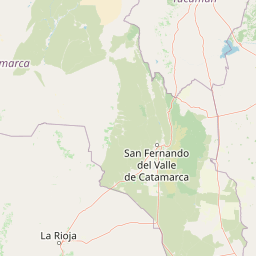
Map view of Aconquija National Park

Use this park location map to pinpoint Aconquija National Park in Argentina, understand its exact geographic position, and read its mapped placement within the surrounding landscape more clearly.

Pigeon | © OpenStreetMap contributors

Location context for Aconquija National Park

Tucumán Province
Park atlas

Compare Aconquija National Park's montane forest with adjacent protected areas, tracing the Southern Andean Yungas and broader regional geography.

Explore Other National Parks and Protected Areas Near Aconquija National Park
Explore other national parks and protected areas geographically relevant to Aconquija National Park, tracing the distinct montane forests and high-altitude landscapes of the Southern Andes. Broaden your atlas-style discovery by comparing diverse protected zones, understanding their ecological transitions and regional importance within the larger protected-area network.
National parkLa Rioja Province

Talampaya National Park: Argentinian National Park with Dramatic Desert Canyons

Explore protected landscape and mapped geography in La Rioja Province.

Talampaya National Park, a significant national park in Argentina's La Rioja Province, offers a profound exploration of a dramatic desert canyon environment. This protected area is renowned for its rich paleontological sites, yielding crucial dinosaur fossils, and for its well-preserved indigenous petroglyphs carved into ancient rock formations. Understanding Talampaya National Park provides vital context for the region's geography and its place within Argentinian protected lands and mapped natural landscapes.

Area
2,150 km²
Established
1997
IUCN
II
National parkAntofagasta Region

Llullaillaco National Park: Mapped Volcanic Terrain and Protected Andean Landscape

Explore the high-altitude desert ecosystem and national park boundaries.

Llullaillaco National Park is a significant protected area in the Antofagasta Region, characterized by its striking volcanic landscape and high-altitude desert environment. The park's geography includes the towering Llullaillaco volcano, ancient ravines, and expansive semi-desert plains, forming a unique segment of the Central Andean dry puna ecoregion. Discover the mapped terrain and protected area context of this remarkable Chilean national park, offering insights into its arid-adapted biodiversity and geological significance.

Area
2,687 km²
IUCN
II
National parkSantiago del Estero Province

Copo National Park: A Vital Dry Chaco Protected Landscape in Argentina

Explore its mapped boundaries and endemic forest ecosystems.

Copo National Park represents a significant conservation effort within Santiago del Estero Province, protecting a representative segment of the Dry Chaco biome. This national park preserves the iconic quebracho scrubland, a habitat that has been drastically reduced province-wide, serving as a critical refuge for endangered species like the jaguar and maned wolf. The park's landscape features warm climate conditions and characteristic forest formations dominated by the Santiago red quebracho, offering a unique opportunity to study and appreciate a vital, yet vulnerable, regional ecosystem. Its protected status underscores its importance for understanding Argentine protected areas and landscape ecology.

Area
1,181.18 km²
Established
2000
IUCN
II
National parkAtacama Region

Llanos de Challe National Park: Unique Coastal Desert and Lomas Ecosystem

Atacama Region National Park with Dramatic Terrain and Wildlife

Llanos de Challe National Park presents a rare protected coastal desert environment within the Atacama Region. Its unique lomas ecosystem, sustained by coastal fog, supports a surprising diversity of life. The park encompasses striking geographic features, from unspoiled white-sand beaches to rugged mountainous terrain, offering a clear example of a vital protected landscape with significant guanaco populations and unique flora, all mapped within its regional context.

IUCN
II
National parkCórdoba Province

Quebrada del Condorito National Park: Mapped Protected Landscape and Biological Island Ecosystem

Argentina National Park in Córdoba Province

Quebrada del Condorito National Park is a federally protected area in Argentina's Córdoba Province, established to safeguard a significant portion of the Sierras Pampeanas mountain ecosystem. The park's rugged terrain, including deep gorges and high-altitude plateaus, creates a distinct biological island environment supporting a wealth of endemic species. Its geographic isolation and dramatic landscape make it a unique focus for protected-area discovery and understanding Argentina's natural geography.

Area
373.44 km²
Established
1996
IUCN
II
National parkChaco Province

Chaco National Park: Protected Landscape and Regional Geography Atlas

Explore mapped boundaries within the Eastern Chaco's unique ecosystem.

Chaco National Park is an important protected area in Chaco Province, Argentina, dedicated to preserving the unique Eastern Chaco ecosystem. Covering 150 square kilometers, its landscape comprises warm lowland terrain with scrubland, savanna, swamp areas, and scattered lakes. This national park is recognized for its efforts to conserve the distinctive quebracho forests and supports a rich array of wildlife, making it a key site for understanding regional protected-area geography and landscape context.

Area
150 km²
Established
1954
IUCN
II
Protected areaGran Chaco Province

Aguaragüe National Park and Integrated Management Natural Area: Bolivia's Easternmost Sub-Andean Protected Landscape

Explore its mapped mountain geography and ecological diversity.

Aguaragüe National Park and Integrated Management Natural Area is a crucial protected area in Bolivia's Gran Chaco Province, defined by the Serranía del Aguaragüe mountain range. This landscape offers a unique opportunity to explore a geographic transition zone where Southern Andean Yungas montane forests converge with Dry Chaco ecosystems. The park's protected boundaries encompass a rugged mountain backbone rising from the lowlands, representing a vital segment of Bolivia's Sub-Andean geography and protected natural areas.

Area
1,083.07 km²
Established
2000
IUCN
II
National parkEntre Ríos Province

Predelta National Park: Mapped Boundaries and Protected Wetland Geography in Entre Ríos

Explore the unique river island ecosystems and dynamic delta landscape.

Predelta National Park stands as a critical protected landscape at the initial stages of the vast Paraná Delta, located in Argentina's Entre Ríos Province. This national park is defined by its intricate network of lagoons, natural levees, and forested islands, showcasing a transition zone where the river fragments into a complex wetland ecosystem. Understanding Predelta National Park involves exploring its mapped geography, its role in the Paraná River's delta formation, and its significance as a protected natural area vital for regional biodiversity and ecological processes.

Area
24.58 km²
Established
1992
IUCN
II

Common questions about visiting, size, designation, and location context for Aconquija National Park

Aconquija National Park FAQs for park facts, access, geography, and protected area context
Find quick answers about Aconquija National Park, including protected-area facts, park geography, trail and visitor context, and how the park fits into its surrounding country and regional landscape.
MoriAtlas Explorer

Continue Your Protected Areas Search Across the Global Atlas

Deepen your exploration by continuing the structured search for national parks and protected areas worldwide. Utilize the comprehensive filtering capabilities to compare different conservation landscapes and refine your understanding of global park geography. Discover more about the distribution and characteristics of protected natural areas.

Global natural geography