Mori Atlas logo
Protected areaAguaragüe National Park and Integrated Management Natural Area

Discover the Serranía del Aguaragüe's unique mountain terrain and ecological boundaries.

Aguaragüe National Park and Integrated Management Natural Area: Protected Landscape Geography in Gran Chaco Province

(Parque Nacional y Área Natural de Manejo Integrado Serranía del Aguaragüe)

Aguaragüe National Park and Integrated Management Natural Area stands as a significant protected landscape in Bolivia's Gran Chaco Province, safeguarding the dramatic Serranía del Aguaragüe mountain range. This area represents a critical geographic and ecological transition zone where the distinctive Sub-Andean uplifts rise sharply from the surrounding Chaco lowlands. Users can explore the mapped boundaries and unique terrain of this protected zone, understanding its role in preserving the intersection of Andean Yungas forests and Dry Chaco ecosystems.

national parksBoliviamountain protected areasSub-Andean rangeYungas forestsDry Chaco

Aguaragüe National Park and Integrated Management Natural Area

Protected area

Park overview

Structured park overview, official facts, and landscape profile for Aguaragüe National Park and Integrated Management Natural Area

Aguaragüe National Park and Integrated Management Natural Area park facts, protected area profile, and essential visitor context
Review the core facts for Aguaragüe National Park and Integrated Management Natural Area, including designation, size, terrain, visitor scale, habitats, and operating context in one park-focused overview.

About Aguaragüe National Park and Integrated Management Natural Area

Aguaragüe National Park and Integrated Management Natural Area represents one of Bolivia's significant mountainous protected areas, established to conserve the unique ecosystems of the Serranía del Aguaragüe range in the country's southern region. The protected area occupies a distinctive geographic position as the easternmost major Sub-Andean range in Bolivia, forming a dramatic north-south ridgeline that rises prominently from the surrounding Chaco plain. This mountainous terrain creates a complex environmental gradient, with moist montane forests on the higher slopes transitioning into drier woodland and thorn forest at lower elevations. The park's creation in 2000 reflected growing recognition of the ecological importance of Bolivia's Yungas forests and the need to protect the transitional ecosystems where these forests meet the extensive Dry Chaco. The integrated management approach applied to a significant portion of the protected area acknowledges the presence of local communities and allows for sustainable resource use while maintaining core conservation objectives in the national park zone. This dual-zoning strategy represents a pragmatic response to the realities of conservation in inhabited landscapes, attempting to balance ecological protection with livelihood needs.

Quick facts and research context for Aguaragüe National Park and Integrated Management Natural Area

Aguaragüe National Park and Integrated Management Natural Area covers approximately 108,307 hectares, with 45,822 hectares designated as national park and 62,485 hectares as integrated management natural area. The protected area was established on April 20, 2000, and is administered by Bolivia's Servicio Nacional de Áreas Protegidas (SERNAP). Located in the Gran Chaco Province of Tarija Department in southern Bolivia, the park encompasses the entire Serranía del Aguaragüe, the easternmost significant Sub-Andean mountain range in the country. The area lies at the ecological transition between Southern Andean Yungas montane forests and the Dry Chaco ecoregion.

Park context

Deeper park guide and search-rich context for Aguaragüe National Park and Integrated Management Natural Area

Aguaragüe National Park and Integrated Management Natural Area history, landscape, wildlife, and travel context
Explore Aguaragüe National Park and Integrated Management Natural Area through its history, landscape character, ecosystems, wildlife, conservation priorities, cultural context, and seasonal travel timing in a structured park guide built for atlas discovery and search intent.

Why Aguaragüe National Park and Integrated Management Natural Area stands out

Aguaragüe is best known for protecting the easternmost Sub-Andean mountain range in Bolivia, a dramatic landscape of forested ridges that rises sharply from the surrounding Chaco lowlands. The park is notable for spanning a critical ecological transition zone, where Southern Andean Yungas montane forests meet the Dry Chaco, creating a diversity of habitats within a relatively compact protected area. The Serranía del Aguaragüe itself forms a biogeographic island of cloud forest and montane woodland surrounded by arid lowland ecosystems, making it especially significant for conservation. The protected area's dual designation combining national park strict protection with integrated management natural area zoning also represents a thoughtful approach to balancing conservation with sustainable use in this mountainous frontier region.
Aguaragüe National Park and Integrated Management Natural Area history and protected-area timeline

Aguaragüe National Park and Integrated Management Natural Area was established on April 20, 2000, through Bolivia's national protected areas framework. The creation of this protected area reflected the growing commitment in the late 1990s and early 2000s to expand Bolivia's network of national parks and protected territories. The selection of the Serranía del Aguaragüe for protection recognized the ecological distinctiveness of this Sub-Andean range and its importance as a biodiversity corridor. Administration of the protected area was assigned to the Servicio Nacional de Áreas Protegidas (SERNAP), Bolivia's national protected areas service. The designation of portions of the area as an Integrated Management Natural Area rather than strict national park allowed for the recognition of existing land uses and community presence while establishing conservation zoning that permits sustainable activities in designated zones.

Aguaragüe National Park and Integrated Management Natural Area landscape and geographic character

The landscape of Aguaragüe National Park is dominated by the Serranía del Aguaragüe, a prominent north-south mountain range that forms the easternmost major Sub-Andean uplift in Bolivia. The range rises abruptly from the surrounding Chaco lowlands, creating dramatic topography with steep slopes, narrow valleys, and ridgeline crests. The elevation gradient from the lower foothills to the higher peaks creates significant variation in terrain, vegetation, and microclimate. Rock outcrops and cliff faces characterize portions of the steeper terrain, while the valleys below support more developed soils and denser forest cover. The range acts as a barrier to moisture-laden winds from the east, creating moist conditions on its upper slopes that support cloud forest development, while the western rain shadow effects contribute to the transitional nature of the lower elevation vegetation.

Aguaragüe National Park and Integrated Management Natural Area ecosystems, habitats, and plant life

The ecological character of Aguaragüe is defined by its position at the intersection of two major Neotropical biomes. The Southern Andean Yungas ecoregion dominates the higher elevations and eastern-facing slopes, characterized by montane evergreen forests, cloud forest formations, and high biodiversity. These forests receive significant moisture from easterly winds and support a rich assemblage of plant and animal species adapted to humid mountain conditions. In the lower portions and western slopes, the Dry Chaco ecoregion extends into the park, bringing drier conditions, thorn forest, and xerophytic vegetation. This blending of Yungas and Dry Chaco ecosystems within a single protected area creates unusual ecological diversity and provides habitat for species from both biomes. The montane forests of the Yungas are recognized as a biodiversity hotspot, and the protection of these forests within Aguaragüe contributes to the conservation of this threatened ecosystem.

Aguaragüe National Park and Integrated Management Natural Area wildlife and species highlights

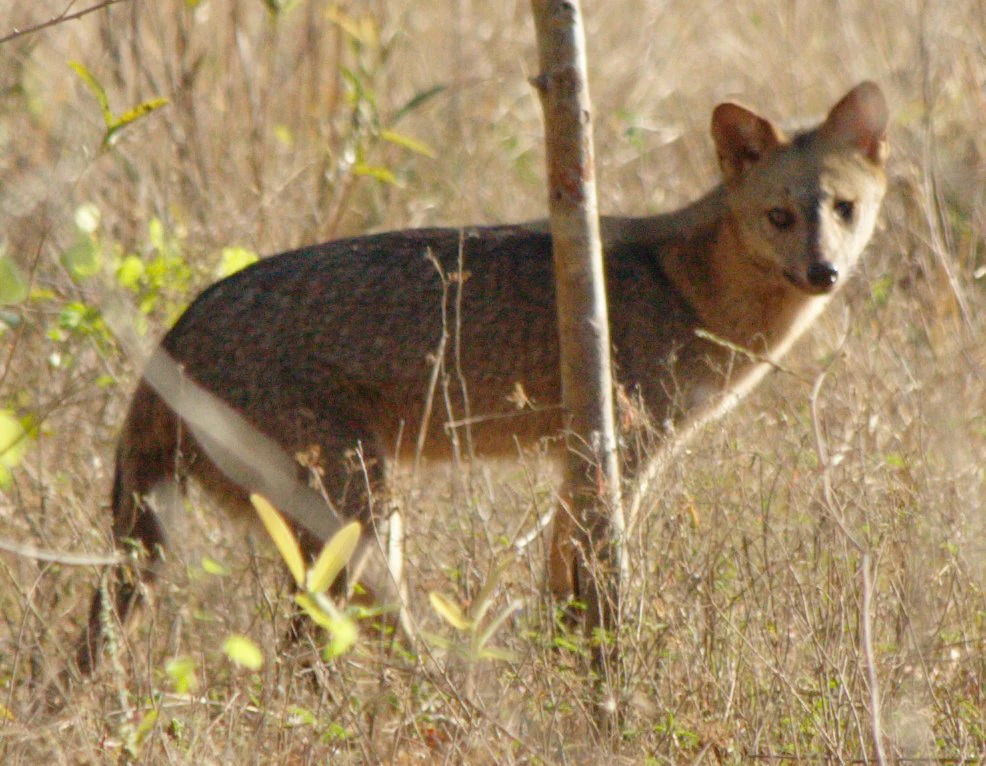
The wildlife of Aguaragüe reflects the park's position at the ecological crossroads between Andean and Chaco faunas. The montane forest environments support species characteristic of the Yungas, while the lower elevation woodlands contain species more typical of the Dry Chaco. The presence of the crab-eating fox (Cerdocyon thousand) in the park is documented through photographic records, indicating that this canid species occupies the transitional environments within the protected area. The diverse habitats created by the elevation gradient and the blend of forest types support a range of vertebrate species, though detailed species inventories for the park are limited in the available source material. The protected status of the Serranía del Aguaragüe provides important habitat continuity for species requiring intact forest environments along the Sub-Andean corridor.

Aguaragüe National Park and Integrated Management Natural Area conservation status and protection priorities

Aguaragüe National Park and Integrated Management Natural Area contributes significantly to Bolivia's protected areas network by conserving a unique mountain ecosystem that would otherwise face pressure from logging, agriculture, and grazing. The protection of the Serranía del Aguaragüe preserves critical habitat within the Southern Andean Yungas, an ecoregion recognized for its high endemism and conservation importance. The integrated management approach applied to much of the protected area represents a practical conservation model that attempts to balance strict protection with sustainable use, recognizing that many mountainous landscapes have historical human presence. The park's position at the eastern edge of the Sub-Andean system means it serves as an important conservation node in the broader network of protected areas that follow the Andean mountain chain, supporting connectivity for species that require elevational migration or expanded ranges.

Aguaragüe National Park and Integrated Management Natural Area cultural meaning and human context

The Aguaragüe protected area exists within a region of Tarija Department that has historical human presence and ongoing land use. The integrated management natural area designation within the park reflects the practical reality of community presence and traditional land use practices in portions of the territory. The Gran Chaco Province where the park is located has been inhabited by various communities whose livelihoods have historically depended on the surrounding lands. While the national park zone receives stricter protection, the broader protected area framework attempts to accommodate both conservation objectives and sustainable community activities.

Top sights and standout views in Aguaragüe National Park and Integrated Management Natural Area

The defining highlight of Aguaragüe is its dramatic mountain landscape rising from the Chaco lowlands, protecting the easternmost major Sub-Andean range in Bolivia. The park's unique ecological position at the transition between Southern Andean Yungas montane forests and Dry Chaco creates unusual biodiversity within a single protected area. The dual-zoned approach combining strict national park protection with integrated management natural area provides a model for balancing conservation with sustainable use. The Serranía del Aguaragüe forms a biogeographic island of humid forest surrounded by arid lowlands, making it especially significant for endemic species and ecological study.

Best time to visit Aguaragüe National Park and Integrated Management Natural Area

The best time to visit Aguaragüe National Park would typically be during the dry season months from May to October, when visitor access is easier and trail conditions are more favorable. The park's subtropical mountain environment experiences wet and dry seasons, with the wet season from November to April bringing heavier rainfall that can affect road access and trail usability. Visiting during the dry season offers clearer views from the ridgelines and more comfortable conditions for hiking and exploration. The higher elevations may experience cooler temperatures year-round due to the mountain environment.
Park location guide

Geography guide, regional context, and park location map for Aguaragüe National Park and Integrated Management Natural Area

Aguaragüe National Park and Integrated Management Natural Area park geography, regions, and map view in Bolivia
Understand where Aguaragüe National Park and Integrated Management Natural Area sits in Bolivia through a broader geographic reading of the surrounding landscape, nearby location context, and its mapped position within the national park landscape.

How Aguaragüe National Park and Integrated Management Natural Area fits into Bolivia

Bolivia, officially the Plurinational State of Bolivia, is a landlocked country in central South America. It features diverse geography including the Andean mountain range, Amazonian plains, Gran Chaco, and the Pantanal wetland. The country has a population of approximately 11.4 million and is administratively divided into nine departments, with La Paz as the seat of government and Sucre as the constitutional capital.

Wider geography shaping Aguaragüe National Park and Integrated Management Natural Area in Bolivia

Bolivia is located in central South America, bordered by Brazil to the north and east, Paraguay to the southeast, Argentina to the south, Chile to the southwest, and Peru to the west. The country is divided between a western Andean region and tropical lowlands to the east and north. It includes the Amazonian plain, Gran Chaco, temperate valleys, the high-altitude Altiplano plateau, and part of the Pantanal wetland along its eastern border.

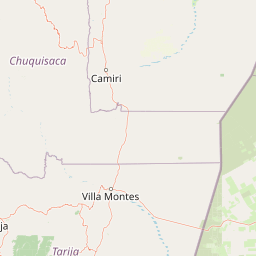
Map view of Aguaragüe National Park and Integrated Management Natural Area

Use this park location map to pinpoint Aguaragüe National Park and Integrated Management Natural Area in Bolivia, understand its exact geographic position, and read its mapped placement within the surrounding landscape more clearly.

Pigeon | © OpenStreetMap contributors

Location context for Aguaragüe National Park and Integrated Management Natural Area

Gran Chaco ProvinceTarija Department
Park atlas

Explore the geographic context of Aguaragüe National Park and Integrated Management Natural Area within Bolivia's diverse protected estate.

Find Nearby National Parks and Protected Areas Similar to Aguaragüe National Park and Integrated Management Natural Area
Continue your park exploration by browsing national parks and protected areas near Aguaragüe National Park and Integrated Management Natural Area in Bolivia's Sub-Andean range. Compare their mapped geography and conservation landscapes to understand the regional spread of protected areas across the Gran Chaco and Yungas transition zones.
National parkChuquisaca Department

Iñao National Park and Integrated Management Natural Area: Bolivia National Park and Protected Landscape

Explore the Serranía del Iñao's geography and conservation role.

Iñao National Park and Integrated Management Natural Area is a protected territory located within Chuquisaca Department, Bolivia, centered on the prominent Serranía del Iñao mountain range. This page offers detailed geographic context and an atlas perspective on the park's landscape, its role as a national park, and its contribution to regional conservation efforts in the Andean foothills.

Area
2,630.9 km²
Established
2004
IUCN
II
National parkPotosí Department

Torotoro National Park: Paleontology and Karst Landscape Exploration in Bolivia

Discover prehistoric footprints within dramatic Andean canyon geography.

Torotoro National Park in the Potosí Department is a protected area distinguished by its rich paleontological significance and unique semi-arid mountain terrain. Featuring dramatic canyon systems plunging hundreds of meters deep, the park showcases thousands of Cretaceous dinosaur footprints alongside its complex karst topography, complete with caves and sinkholes, offering a profound glimpse into both ancient life and sculpted natural geography.

Area
165 km²
Established
1989
IUCN
II
National parkSantiago del Estero Province

Copo National Park: A Vital Dry Chaco Protected Landscape in Argentina

Explore its mapped boundaries and endemic forest ecosystems.

Copo National Park represents a significant conservation effort within Santiago del Estero Province, protecting a representative segment of the Dry Chaco biome. This national park preserves the iconic quebracho scrubland, a habitat that has been drastically reduced province-wide, serving as a critical refuge for endangered species like the jaguar and maned wolf. The park's landscape features warm climate conditions and characteristic forest formations dominated by the Santiago red quebracho, offering a unique opportunity to study and appreciate a vital, yet vulnerable, regional ecosystem. Its protected status underscores its importance for understanding Argentine protected areas and landscape ecology.

Area
1,181.18 km²
Established
2000
IUCN
II
National parkAntofagasta Region

Llullaillaco National Park: Mapped Volcanic Terrain and Protected Andean Landscape

Explore the high-altitude desert ecosystem and national park boundaries.

Llullaillaco National Park is a significant protected area in the Antofagasta Region, characterized by its striking volcanic landscape and high-altitude desert environment. The park's geography includes the towering Llullaillaco volcano, ancient ravines, and expansive semi-desert plains, forming a unique segment of the Central Andean dry puna ecoregion. Discover the mapped terrain and protected area context of this remarkable Chilean national park, offering insights into its arid-adapted biodiversity and geological significance.

Area
2,687 km²
IUCN
II
National parkTucumán Province

Aconquija National Park: Southern Andean Yungas Protected Landscape in Tucumán Province

Explore its montane forest and mapped geographic context.

Aconquija National Park is a significant federal protected area located in Tucumán Province, Argentina. This national park is dedicated to conserving the diverse Southern Andean Yungas montane forest ecosystem, characterized by a dramatic elevational gradient. Its landscapes transition from cloud forest to high alpine terrain, offering a unique opportunity to study and appreciate a well-preserved montane environment within a critical geographic region. Discover the mapped extent and ecological importance of this protected area.

Area
499.94 km²
Established
1995
IUCN
II
National parkFormosa Province

Río Pilcomayo National Park: Protected Humid Chaco Wetland Landscape & Geography

Explore mapped boundaries and unique floodplain terrain in Formosa Province.

Río Pilcomayo National Park represents a significant protected natural area within Argentina's Formosa Province, characterized by the unique ecosystems of the Humid Chaco. The park's landscape is defined by extensive floodplains, marshes, lakes, and forests, all influenced by the Pilcomayo River's dynamic hydrological cycle. As a Ramsar site, it safeguards crucial habitats, including those for the endangered jaguar, and showcases iconic Caranday palm savannas. This detailed atlas entry provides insights into its mapped geography and the vital protected landscape it preserves.

Area
518.89 km²
Established
1951
IUCN
II
National parkArica-Parinacota Region

Lauca National Park: Mapped Volcanic Terrain and High-Altitude Protected Landscapes

Explore the geography of this Arica-Parinacota Region national park.

Lauca National Park is a significant protected area in Chile's Arica-Parinacota Region, offering a unique glimpse into the dramatic geography of the high Andes. Its landscape is characterized by imposing volcanic formations, including Parinacota Volcano, and expansive altiplano terrain. This national park serves as a vital protected landscape, inviting detailed exploration of its mapped boundaries, diverse ecosystems, and remarkable natural features for those interested in geographic context and conservation.

Area
1,379 km²
Established
1970
IUCN
II
National parkChaco Province

Chaco National Park: Protected Landscape and Regional Geography Atlas

Explore mapped boundaries within the Eastern Chaco's unique ecosystem.

Chaco National Park is an important protected area in Chaco Province, Argentina, dedicated to preserving the unique Eastern Chaco ecosystem. Covering 150 square kilometers, its landscape comprises warm lowland terrain with scrubland, savanna, swamp areas, and scattered lakes. This national park is recognized for its efforts to conserve the distinctive quebracho forests and supports a rich array of wildlife, making it a key site for understanding regional protected-area geography and landscape context.

Area
150 km²
Established
1954
IUCN
II

Common questions about visiting, size, designation, and location context for Aguaragüe National Park and Integrated Management Natural Area

Aguaragüe National Park and Integrated Management Natural Area FAQs for park facts, access, geography, and protected area context
Find quick answers about Aguaragüe National Park and Integrated Management Natural Area, including protected-area facts, park geography, trail and visitor context, and how the park fits into its surrounding country and regional landscape.
MoriAtlas Explorer

Continue Your Protected Areas Search Across the Global Atlas

Deepen your exploration by continuing the structured search for national parks and protected areas worldwide. Utilize the comprehensive filtering capabilities to compare different conservation landscapes and refine your understanding of global park geography. Discover more about the distribution and characteristics of protected natural areas.

Global natural geography