Mori Atlas logo
National parkMburucuyá National Park

Explore the unique geography where Chaco, Espinal, and Paranaense biomes converge.

Mburucuyá National Park: National Park in Corrientes Province, Argentina - Protected Landscape Atlas

(Parque Nacional Mburucuyá)

Mburucuyá National Park represents a crucial protected landscape within Corrientes Province, Argentina, noted for its exceptional ecological crossroads. This national park encompasses a rich mosaic of landscapes, including iconic yatay palm savannas, sprawling wetlands of the Iberá Wetlands system, and subtropical forest patches. Its geographic position makes it a vital hub for understanding regional biodiversity and the intricate interplay of diverse South American biomes. Discover the mapped boundaries and protected terrain that define this significant natural area.

WetlandsNational ParkChaco EcosystemPalm SavannaWildlife ConservationIberá Wetlands

Mburucuyá National Park

National park

Park overview

Structured park overview, official facts, and landscape profile for Mburucuyá National Park

Mburucuyá National Park park facts, protected area profile, and essential visitor context
Review the core facts for Mburucuyá National Park, including designation, size, terrain, visitor scale, habitats, and operating context in one park-focused overview.

About Mburucuyá National Park

Mburucuyá National Park represents one of Argentina's most ecologically significant protected areas, established in 2001 to preserve a unique portion of the Iberá Wetlands system in Corrientes Province. The park's 17,660 hectares encompass a remarkable diversity of ecosystems, from palm-dominated savannas to subtropical forest and permanent wetlands. This geographical complexity stems from the park's position at the ecological crossroads of the Humid Chaco to the west, the Espinal grasslands to the south, and the Selva Paranaense forest corridor to the north. The Iberá Wetlands themselves constitute one of South America's largest freshwater marsh systems, and Mburucuyá protects a particularly well-preserved section that retains much of its original ecological character. Beyond its biological significance, the park provides critical ecosystem services including water filtration, flood storage, and drought regulation that benefit the surrounding agricultural region. The park's establishment following Dr. Troels Pederson's donation of his property after World War II reflects a tradition of conservation stewardship that continues to guide management of this remarkable wilderness area.

Quick facts and research context for Mburucuyá National Park

Mburucuyá National Park covers 17,660 hectares in northeastern Argentina's Corrientes Province, forming part of the vast Iberá Wetlands system. Established in 2001 through a land donation by Dr. Troels Pederson following World War II, the park protects a transitional landscape where the Humid Chaco, Espinal, and Selva Paranaense biomes converge. The area has been inhabited for approximately 5,000 years, originally by indigenous peoples and later by Guaraní communities who introduced agricultural practices including yerba mate cultivation. The park's wetland ecosystems provide essential hydrological services to the local region.

Park context

Deeper park guide and search-rich context for Mburucuyá National Park

Mburucuyá National Park history, landscape, wildlife, and travel context
Explore Mburucuyá National Park through its history, landscape character, ecosystems, wildlife, conservation priorities, cultural context, and seasonal travel timing in a structured park guide built for atlas discovery and search intent.

Why Mburucuyá National Park stands out

Mburucuyá National Park is best known for its extraordinary ecological diversity arising from its location at the meeting point of three major South American biomes. The park's yatay palm savannas and wetlands are iconic, representing one of the best-preserved portions of the Iberá Wetlands. It protects significant populations of large mammals including jaguars, maned wolves, and brown howler monkeys, as well as approximately 150 bird species. The convergence of chaqueña, espinal, and selva paranaense plant communities within a single protected area makes it botanically exceptional, featuring species such as quebracho colorado, quebracho blanco, and the distinctive yatay palm.

Mburucuyá National Park history and protected-area timeline

The territory that now comprises Mburucuyá National Park has been inhabited by human communities for approximately 5,000 years. Indigenous peoples first established settlements in this fertile wetland region, and more recently the Guaraní people occupied the area, introducing agricultural practices that would become foundational to regional culture. The Guaraní cultivated maize, squash, beans, cassava, cotton, and particularly yerba mate, a plant that remains central to Argentine cultural traditions. When Spanish colonizers arrived, they substantially modified the existing settlement patterns and introduced large-scale agriculture. This colonial period brought widespread deforestation of native trees as land was cleared for cultivation and grazing. The modern protected area emerged after the Second World War when Dr. Troels Pederson donated his property for the creation of a national park. The park's dual objectives of environmental preservation and historical contextualization reflect a commitment to maintaining both ecological integrity and cultural connection to the land.

Mburucuyá National Park landscape and geographic character

The landscape of Mburucuyá National Park is defined by its position within the Iberá Wetlands system, characterized by extensive marshland, palm savannas, and mixed woodland. The terrain is predominantly flat to gently rolling, with the three plant communities creating distinct visual zones across the park. The Chaco Oriental portion features quebracho woodlands interspersed with palm stands and open grass plains that flood seasonally. The Selva Paranaense areas occupy subtle rises and hillocks where subtropical forest creates a denser, more enclosed environment. The Espinal zone displays the park's most iconic scenery, with the distinctive yatay palm forming elegant stands across grassland that turns golden in the dry season. Wetlands scattered throughout the park create productive habitat for wildlife and contribute to the region's hydrological function. The overall character is one of subtle beauty rather than dramatic terrain, with the horizontal expanse of wetland and savanna punctuated by the vertical lines of palm trees and the dark canopy of forest patches.

Mburucuyá National Park ecosystems, habitats, and plant life

The ecological richness of Mburucuyá National Park stems from its position at the convergence of three major South American biomes, each bringing distinct plant communities and associated wildlife. The park's vegetation spans from the xerophile woodlands of the Espinal to the humid subtropical forests of the Selva Paranaense, with the Humid Chaco providing transitional communities. Characteristic tree species include quebracho colorado and quebracho blanco, whose dense hardwoods once drove regional logging operations, while the yatay palm serves as an iconic species of the Espinal grasslands. Wetland areas support emergent vegetation and provide critical habitat for aquatic species. The park's position within the larger Iberá Wetlands system means its ecological processes are connected to one of South America's most important freshwater ecosystems, which functions as a giant natural sponge that absorbs flood waters and releases them during dry periods.

Mburucuyá National Park wildlife and species highlights

Mburucuyá National Park supports remarkable wildlife diversity, with approximately 150 bird species recorded within its boundaries. The mammal fauna includes several species of significant conservation concern, most notably the jaguar, South America's largest cat, which still maintains populations in the park's forest and wetland habitats. The maned wolf, one of South America's most distinctive canids, inhabits the more open areas of the park and represents an endangered species dependent on conservation protection. Other notable mammals include the brown howler monkey, capybara, various armadillo species, and the marsh deer, which occupies wetland habitats. The caiman, South America's crocodilian resident, inhabits the park's rivers and ponds. Aquatic ecosystems support fish species including the golden dorado, a prized sport fish, and various catfish species. The combination of forest, savanna, and wetland habitats creates the ecological diversity necessary to support this impressive array of species.

Mburucuyá National Park conservation status and protection priorities

Mburucuyá National Park plays a vital role in the conservation of Argentina's northeastern ecosystems, protecting a relatively intact portion of the Iberá Wetlands that has escaped the extensive modification that has transformed much of the region. The park's multi-objective mandate to maintain both environmental quality and historical context recognizes that conservation in this cultural landscape must address human heritage alongside ecological values. The wetland ecosystems provide critical services beyond biodiversity protection, including water provision, flood regulation, and microclimate stabilization for the surrounding agricultural region. The presence of several endangered species, including the maned wolf, neotropical river otter, and marsh deer, elevates the park's conservation significance at both national and continental scales. Management focuses on maintaining the ecological processes that sustain this diverse landscape while providing educational opportunities that connect visitors with the region's natural and cultural heritage.

Mburucuyá National Park cultural meaning and human context

The cultural landscape of Mburucuyá reflects thousands of years of human habitation and modification, beginning with indigenous peoples approximately 5,000 years ago and continuing through Guaraní occupation and Spanish colonization. The Guaraní communities that inhabited the region introduced agricultural practices that remain central to local culture, particularly the cultivation of yerba mate, which is still harvested throughout northeastern Argentina. The Spanish colonial period brought significant changes as original settlements were substantially modified and large-scale agriculture replaced traditional land use patterns, leading to widespread deforestation. The park's establishment through Dr. Troels Pederson's donation reflects a conservation tradition that valued the region's natural heritage. The park's objective to present the region in its historical context acknowledges that this landscape cannot be fully understood without recognizing the human communities and practices that have shaped it over millennia.

Top sights and standout views in Mburucuyá National Park

Mburucuyá National Park protects a remarkable ecological crossroads where the Humid Chaco, Espinal, and Selva Paranaense biomes converge within a single protected area. The yatay palm savannas of the Espinal represent one of the park's most distinctive visual features, while the wetlands provide critical habitat for jaguars, maned wolves, caimans, and over 150 bird species. The park's position within the Iberá Wetlands connects it to one of South America's largest freshwater ecosystems, providing essential hydrological services to the region. Historical significance stems from 5,000 years of continuous human habitation, from indigenous peoples through Guaraní culture to modern conservation.

Best time to visit Mburucuyá National Park

The optimal time to visit Mburucuyá National Park depends on the experience sought, with distinct seasons offering different advantages. The dry season from May to September typically provides easier wildlife observation as animals concentrate around remaining water sources, and the landscape takes on a golden quality as grass dries. The wet season from October to April brings fuller wetlands and lusher vegetation, with migratory bird species present during the southern hemisphere summer. The shoulder seasons of spring and autumn offer moderate temperatures and balanced conditions. Visitors should note that the park's wetland character means that some areas may be inaccessible during periods of high water, while the dry season may present fire management concerns.
Park location guide

Geography guide, regional context, and park location map for Mburucuyá National Park

Mburucuyá National Park park geography, regions, and map view in Argentina
Understand where Mburucuyá National Park sits in Argentina through a broader geographic reading of the surrounding landscape, nearby location context, and its mapped position within the national park landscape.

How Mburucuyá National Park fits into Argentina

Argentina is a federal republic located in the southern cone of South America, bordering Chile, Bolivia, Paraguay, Brazil, Uruguay, and the Atlantic Ocean. With an area of 2,780,085 km², it is the second-largest country in South America and the eighth-largest globally. The capital and largest city is Buenos Aires, and the official language is Spanish. The country claims sovereignty over the Falkland Islands, South Georgia and the South Sandwich Islands, and a portion of Antarctica.

Wider geography shaping Mburucuyá National Park in Argentina

Argentina occupies the southern portion of South America, sharing the Southern Cone region with Chile to the west. The country borders Bolivia and Paraguay to the north, Brazil to the northeast, Uruguay and the South Atlantic Ocean to the east, and the Drake Passage to the south. The Andes mountain range runs along the western border, while the Pampas plains dominate the central region. Argentina also claims territories in Antarctica.

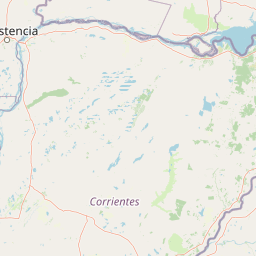
Map view of Mburucuyá National Park

Use this park location map to pinpoint Mburucuyá National Park in Argentina, understand its exact geographic position, and read its mapped placement within the surrounding landscape more clearly.

Pigeon | © OpenStreetMap contributors

Location context for Mburucuyá National Park

Corrientes Province
Park atlas

Map and compare protected areas, expanding your atlas discovery from Mburucuyá's unique ecological crossroads into broader regional conservation landscapes.

Mburucuyá National Park: Explore Other Protected Areas and Regional Landscapes
Continue your exploration beyond Mburucuyá National Park by browsing other protected areas that share its distinctive wetland, Chaco, and Espinal ecosystems across northeastern Argentina. Examine their varied landscapes, conservation strategies, and regional spread, gaining a deeper geographic understanding of these vital protected zones.
National parkChaco Province

Chaco National Park: Protected Landscape and Regional Geography Atlas

Explore mapped boundaries within the Eastern Chaco's unique ecosystem.

Chaco National Park is an important protected area in Chaco Province, Argentina, dedicated to preserving the unique Eastern Chaco ecosystem. Covering 150 square kilometers, its landscape comprises warm lowland terrain with scrubland, savanna, swamp areas, and scattered lakes. This national park is recognized for its efforts to conserve the distinctive quebracho forests and supports a rich array of wildlife, making it a key site for understanding regional protected-area geography and landscape context.

Area
150 km²
Established
1954
IUCN
II
National parkParaguay

Ypoá National Park: Paraguay's Protected Wetland Landscape and Lake Ecosystem

Explore mapped boundaries and significant bird habitats in the Ñeembucú region.

Ypoá National Park is a critical protected area in Paraguay, renowned for its extensive wetland ecosystems dominated by Lake Ypoá. This national park encompasses a rich mosaic of marshlands, riparian forests, and aquatic vegetation, making it a significant habitat for numerous bird species, including several rare and endemic types. Its designation as a Ramsar Wetland underscores its ecological importance, offering a unique lens for understanding landscape context and protected-area geography within South America.

Area
1,000 km²
Established
1992
IUCN
II
National parkFormosa Province

Río Pilcomayo National Park: Protected Humid Chaco Wetland Landscape & Geography

Explore mapped boundaries and unique floodplain terrain in Formosa Province.

Río Pilcomayo National Park represents a significant protected natural area within Argentina's Formosa Province, characterized by the unique ecosystems of the Humid Chaco. The park's landscape is defined by extensive floodplains, marshes, lakes, and forests, all influenced by the Pilcomayo River's dynamic hydrological cycle. As a Ramsar site, it safeguards crucial habitats, including those for the endangered jaguar, and showcases iconic Caranday palm savannas. This detailed atlas entry provides insights into its mapped geography and the vital protected landscape it preserves.

Area
518.89 km²
Established
1951
IUCN
II
National parkSantiago del Estero Province

Copo National Park: A Vital Dry Chaco Protected Landscape in Argentina

Explore its mapped boundaries and endemic forest ecosystems.

Copo National Park represents a significant conservation effort within Santiago del Estero Province, protecting a representative segment of the Dry Chaco biome. This national park preserves the iconic quebracho scrubland, a habitat that has been drastically reduced province-wide, serving as a critical refuge for endangered species like the jaguar and maned wolf. The park's landscape features warm climate conditions and characteristic forest formations dominated by the Santiago red quebracho, offering a unique opportunity to study and appreciate a vital, yet vulnerable, regional ecosystem. Its protected status underscores its importance for understanding Argentine protected areas and landscape ecology.

Area
1,181.18 km²
Established
2000
IUCN
II
National parkEntre Ríos Province

Predelta National Park: Mapped Boundaries and Protected Wetland Geography in Entre Ríos

Explore the unique river island ecosystems and dynamic delta landscape.

Predelta National Park stands as a critical protected landscape at the initial stages of the vast Paraná Delta, located in Argentina's Entre Ríos Province. This national park is defined by its intricate network of lagoons, natural levees, and forested islands, showcasing a transition zone where the river fragments into a complex wetland ecosystem. Understanding Predelta National Park involves exploring its mapped geography, its role in the Paraná River's delta formation, and its significance as a protected natural area vital for regional biodiversity and ecological processes.

Area
24.58 km²
Established
1992
IUCN
II
National parkCórdoba Province

Quebrada del Condorito National Park: Mapped Protected Landscape and Biological Island Ecosystem

Argentina National Park in Córdoba Province

Quebrada del Condorito National Park is a federally protected area in Argentina's Córdoba Province, established to safeguard a significant portion of the Sierras Pampeanas mountain ecosystem. The park's rugged terrain, including deep gorges and high-altitude plateaus, creates a distinct biological island environment supporting a wealth of endemic species. Its geographic isolation and dramatic landscape make it a unique focus for protected-area discovery and understanding Argentina's natural geography.

Area
373.44 km²
Established
1996
IUCN
II
National parkTucumán Province

Aconquija National Park: Southern Andean Yungas Protected Landscape in Tucumán Province

Explore its montane forest and mapped geographic context.

Aconquija National Park is a significant federal protected area located in Tucumán Province, Argentina. This national park is dedicated to conserving the diverse Southern Andean Yungas montane forest ecosystem, characterized by a dramatic elevational gradient. Its landscapes transition from cloud forest to high alpine terrain, offering a unique opportunity to study and appreciate a well-preserved montane environment within a critical geographic region. Discover the mapped extent and ecological importance of this protected area.

Area
499.94 km²
Established
1995
IUCN
II
National parkRocha Department

Santa Teresa National Park: Mapped Coastal Forest and Beach Protected Landscape

Explore Rocha Department's unique protected Atlantic coast geography.

Santa Teresa National Park, a designated national park in Uruguay's Rocha Department, offers a compelling example of a protected coastal environment. Its landscape is characterized by a distinctive blend of dense forests that reach down to the sandy shores of the Atlantic Ocean, a rare feature in the region's protected areas. This page provides detailed geographic context and map-based exploration for understanding this unique seaside national park and its place within Uruguay's conservation atlas.

IUCN
II

Common questions about visiting, size, designation, and location context for Mburucuyá National Park

Mburucuyá National Park FAQs for park facts, access, geography, and protected area context
Find quick answers about Mburucuyá National Park, including protected-area facts, park geography, trail and visitor context, and how the park fits into its surrounding country and regional landscape.
MoriAtlas Explorer

Continue Your Protected Areas Search Across the Global Atlas

Deepen your exploration by continuing the structured search for national parks and protected areas worldwide. Utilize the comprehensive filtering capabilities to compare different conservation landscapes and refine your understanding of global park geography. Discover more about the distribution and characteristics of protected natural areas.

Global natural geography