Why Mount Aberdeen National Park stands out
The park is best known for protecting the only tropical cloud forest occurrence in the region, an ecological enclave supported by the summit conditions of Mount Aberdeen. The hoop pine forests covering the slopes of both peaks represent significant old-growth vegetation, while the unusual red gum-snow grass community found nowhere else in Queensland demonstrates the park's botanical uniqueness. These features, combined with the granite-dominated landscape rising abruptly from the surrounding terrain, make Mount Aberdeen a distinctive protected area in the Queensland park system.
Mount Aberdeen National Park history and protected-area timeline
The Mount Aberdeen section of the park was dedicated in 1952, establishing initial protection for the mountain's unique ecosystems. The Highlander's Bonnet section followed in 1967, expanding the protected area to encompass the second granite peak and connecting the two highland habitats. The establishment of these protected areas reflected growing recognition in mid-twentieth century Australia of the need to preserve distinctive mountain ecosystems and endemic vegetation communities. Queensland Parks and Wildlife Service has administered the park since its establishment, maintaining the protected status while acknowledging the challenges of access and management inherent to the rugged terrain. The park's designation as a national park under IUCN Category II reflects its national significance as a conservation estate.
Mount Aberdeen National Park landscape and geographic character
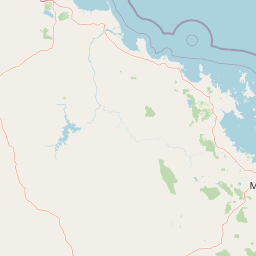
The park is characterized by two prominent granite peaks that rise abruptly from the coastal lowlands of North Queensland. Mount Aberdeen reaches 901 meters above sea level, while Highlander's Bonnet stands at 624 meters. Both peaks are composed of exposed granite, with rocky summit areas and steep slopes descending to the surrounding terrain. The granite geology creates distinctive boulder fields, tors, and cliff formations characteristic of Queensland's ancient continental landscapes. The mountain slopes support forest cover that contrasts sharply with the more open vegetation of the surrounding lowlands. The combination of elevation, granite substrate, and relative isolation has allowed ecological communities to develop that are distinct from the regional norm.
Mount Aberdeen National Park ecosystems, habitats, and plant life
The park protects several distinctive ecological communities that reflect its unique position in the Queensland landscape. The tropical cloud forest at Mount Aberdeen's summit represents the only occurrence of this habitat type in the region, supported by persistent moisture and reduced temperature fluctuations at high elevation. Large areas of hoop pine occupy the slopes of both peaks, forming tall forest that provides habitat and substrate for numerous species. The semi-evergreen vine thicket found in sheltered areas represents subtropical dry broadleaf forest, adapted to seasonal conditions and protected from extreme weather by the surrounding terrain. Most distinctive is the red gum-snow grass community, a vegetation association found nowhere else in Queensland, indicating the park's botanical significance and the unique environmental conditions it protects.
Mount Aberdeen National Park wildlife and species highlights
The park supports several mammal species typical of Queensland's forests, including eastern grey kangaroos, common wallaroos, and koalas. The rocky terrain provides habitat for unadorned rock wallabies, while northern quolls occupy the granite crevices and boulder fields. The park also contains the Mt Elliott grey ant at its southern limit, representing the edge of this species' distribution range. The diverse habitats, from cloud forest to pine forests to rocky outcrops, support varying faunal communities that contribute to the park's biodiversity value.
Mount Aberdeen National Park conservation status and protection priorities
Mount Aberdeen National Park serves as a critical refuge for ecological communities that cannot survive in the surrounding modified landscape. The protection of the only regional tropical cloud forest occurrence represents a conservation priority of regional significance, as this habitat type is inherently limited in distribution and vulnerable to disturbance. The red gum-snow grass community found exclusively within the park demonstrates the area's role as a site of botanical endemism. The absence of public access infrastructure has inadvertently protected the park from recreational impacts that affect more accessible protected areas, preserving its ecological integrity.
Mount Aberdeen National Park cultural meaning and human context
The park exists within the traditional lands of various Aboriginal peoples of North Queensland, though detailed cultural context is not well documented in the available sources. The granite peaks and their distinctive appearance would have held significance in traditional indigenous geography, as such landmarks often did in Queensland's cultural landscape.
Top sights and standout views in Mount Aberdeen National Park
The park's defining feature is its tropical cloud forest at Mount Aberdeen's summit, the only occurrence of this habitat in the region. The hoop pine forests covering the slopes represent significant old-growth conifer communities. The red gum-snow grass community found nowhere else in Queensland demonstrates unique botanical value. The two granite peaks rising from the surrounding landscape create scenic mountain terrain unusual in coastal Queensland.
Best time to visit Mount Aberdeen National Park
The best time to experience Mount Aberdeen would typically be during the cooler, drier months from April to September when weather conditions are most stable and access to similar areas in Queensland is most comfortable. However, the park has no public access road or facilities, limiting visitation opportunities and requiring careful planning for any visit. The wet season from November to March brings higher rainfall that sustains the cloud forest but may make terrain conditions more difficult.