Why Mount Ntringui National Park stands out
The park is best known for protecting the rugged volcanic highlands of central Anjouan, including the island's two highest peaks and the dramatic crater lake known as Lake Dzialandzé. It encompasses the last substantial forest tract on Anjouan, the Moya Forest, which contains several endemic and endangered species. The combination of montane forest, volcanic crests, and wetland habitats makes this park ecologically significant for the western Indian Ocean region.
Mount Ntringui National Park history and protected-area timeline
The park's establishment in 2010 marked a significant milestone in Comoros conservation history, formalizing protection for what remained of the island's highland ecosystems. Prior to formal designation, the area had already received international recognition when Lake Dzialandzé and surrounding wetlands were designated as a Ramsar Wetland in November 2006, reflecting the site's significance for biodiversity conservation under the Ramsar Convention on wetlands. The creation of the Comoros National Parks Agency provided the institutional framework for managing the protected area. The designation came at a critical time, as the island's remaining forests faced increasing pressure from human activities.
Mount Ntringui National Park landscape and geographic character
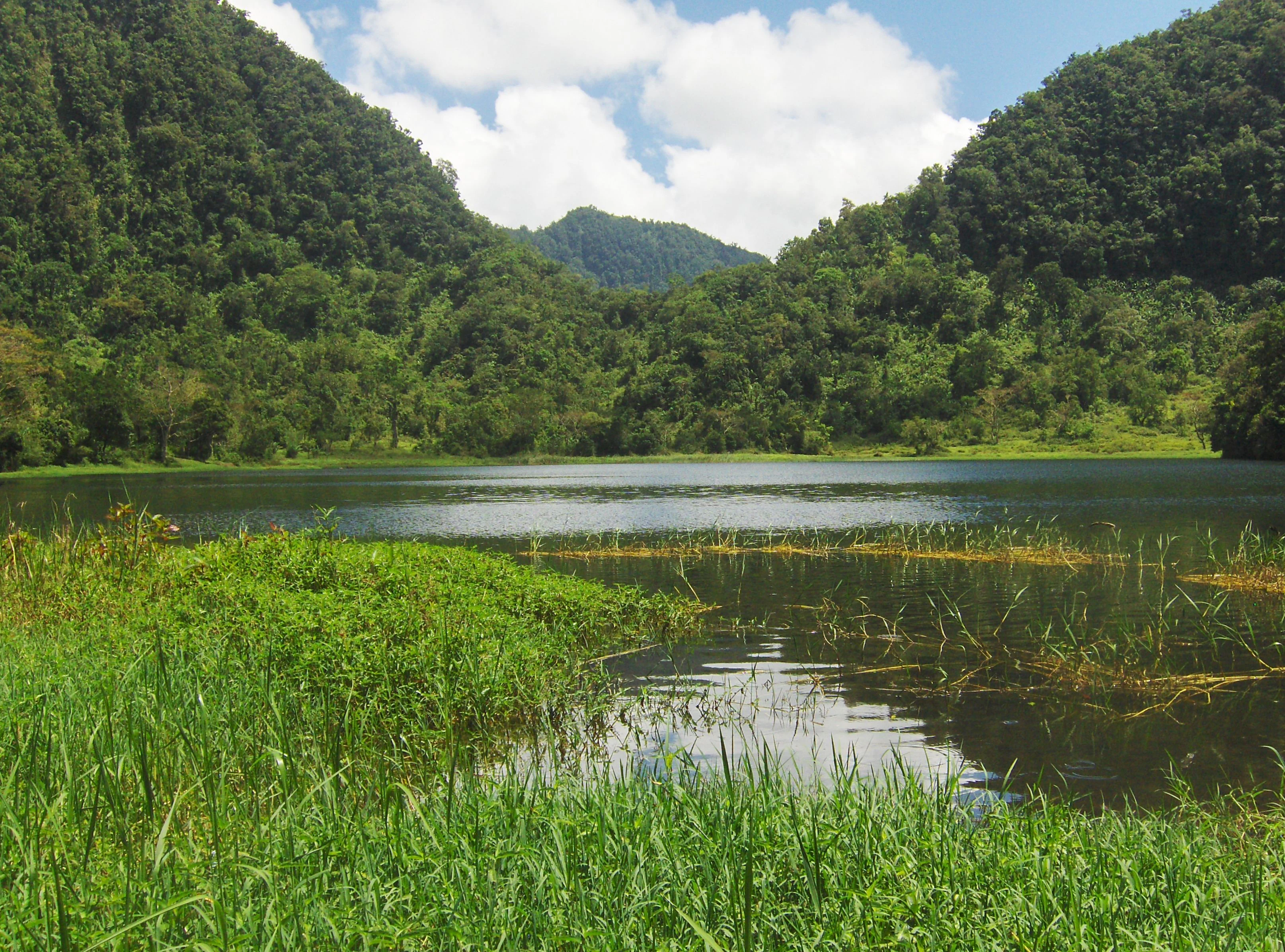
The park's landscape is characterized by volcanic mountain terrain rising dramatically from the island's central highlands. Mount Ntringui reaches 1,595 meters above sea level, making it the highest peak on Anjouan, while Mount Trindrini rises to 1,474 meters as the island's second-highest point. These twin peaks form the visual and ecological core of the park. Between and around them, deep ravines have been carved by the numerous permanent streams that originate from their slopes. Lake Dzialandzé sits at approximately 900 meters elevation in a volcanic crater on the southeastern flank of Mount Ntringui, its dark waters covering two hectares and forming Anjouan's largest lake. The terrain transitions from rocky summit ridges through forested slopes to the remnant forest tract of Moya Forest in the southern portion of the park.
Mount Ntringui National Park ecosystems, habitats, and plant life
The ecosystems within Mount Ntringui National Park represent what remains of the forest that originally covered all of Anjouan. The Moya Forest, located south of Mount Trindrini in the park's southern sector, is the largest contiguous forest remaining on the island, covering approximately 500 hectares. This forest remnant contains native vegetation communities adapted to the island's tropical montane environment. The crater lake and associated wetlands provide aquatic and riparian habitats distinct from the surrounding forested and exposed terrain. The park's elevation range, from lake level at 900 meters to the highest peaks, creates diverse microclimates and habitat zones across a relatively limited area.
Mount Ntringui National Park wildlife and species highlights
The park supports several notable species, particularly within the Moya Forest. Two species of fruit bats inhabit the forest canopy: Livingstone's flying fox (Pteropus livingstonii) and a Comoros variant of the Seychelles flying fox (Pteropus seychellensis var. comorensis). The forest also provides habitat for the Anjouan scops owl (Otus capnodes), an endemic owl species, and the mongoose lemur (Eulemur mongoz), a lemur species found only on Anjouan and the nearby island of Mohéli. Lake Dzialandzé is home to the little grebe, a small diving bird, as well as indigenous freshwater fish species that are found nowhere else in the world. This combination of endemic terrestrial and aquatic species gives the park particular conservation significance for biodiversity in the western Indian Ocean.
Mount Ntringui National Park conservation status and protection priorities
Mount Ntringui National Park represents the most important conservation site in Comoros, protecting the island's last significant forest remnants and highest biodiversity areas. The Ramsar designation in 2006 acknowledged the international importance of the wetland habitats within the park boundary. The park provides critical habitat for species with extremely restricted ranges, including several endemics found only on Anjouan. The remaining forest within the park continues to face pressures from timber harvesting and conversion to agricultural land, making active protection essential for the survival of the island's native species and ecosystems.
Mount Ntringui National Park cultural meaning and human context
Anjouan has a long history of human habitation, and the landscape within the park has been influenced by the island's rural communities over generations. The peaks of Mount Ntringui and Mount Trindrini hold local significance as the sources of many of the island's permanent water sources. The forests and waterways have historically provided resources for local populations. While the park itself does not contain major archaeological or historical structures, the landscape reflects centuries of traditional land use that have shaped both the environment and local cultural practices.
Top sights and standout views in Mount Ntringui National Park
The park's defining features include the twin volcanic peaks of Mount Ntringui and Mount Trindrini, the crater lake at Lake Dzialandzé, and the significant Moya Forest with its endemic wildlife including the mongoose lemur and Anjouan scops owl. The combination of montane forest, volcanic terrain, and wetland habitats within a single protected area creates exceptional ecological diversity. As the highest point on Anjouan, Mount Ntringui offers dramatic views across the island and Indian Ocean beyond.
Best time to visit Mount Ntringui National Park
The park can be visited throughout the year, though the cooler dry season from May through October typically offers more comfortable conditions for hiking and exploration. The mountain environment can be misty and wet during the warmer rainy season from November to April. Visitors interested in wildlife viewing may find different species more active during different seasons, though the forest wildlife is present year-round.