
Mori Atlas logo
National parkRanomafana National Park

Discover the mapped geographic context and unique landscape of this vital national park.

Ranomafana National Park: Madagascar's Tropical Rainforest Protected Area Atlas

Ranomafana National Park is a significant protected area in southeastern Madagascar, encompassing over 400 square kilometers of tropical rainforest. This detail page provides an atlas-style exploration of its geography, mapped boundaries, and critical role as a habitat for endemic species. Understand its place within the regional landscape and its importance as a national park for conservation and discovery.

Tropical RainforestUNESCO World Heritage SiteLemur ConservationEndemic BiodiversityPrimatesEastern Madagascar

Ranomafana National Park

National park

Park overview

Structured park overview, official facts, and landscape profile for Ranomafana National Park

Ranomafana National Park park facts, protected area profile, and essential visitor context
Review the core facts for Ranomafana National Park, including designation, size, terrain, visitor scale, habitats, and operating context in one park-focused overview.

About Ranomafana National Park

Ranomafana National Park occupies a mountainous landscape in southeastern Madagascar characterized by steep terrain, deep valleys, and numerous streams descending from the central highlands. The park protects one of the island's most biodiverse rainforest ecosystems, where the combination of elevation range and geographic isolation has produced exceptional levels of endemism. The area's ecological significance was brought to international attention in the late 1980s when researchers confirmed the existence of the golden bamboo lemur, previously unknown to science, and rediscovered the greater bamboo lemur, which had been presumed extinct. These discoveries catalyzed the establishment of the park in 1991 as Madagascar's fourth national park and have driven ongoing research priorities. Visitors to the park experience a network of seven maintained hiking trails ranging from 10 to 20 kilometers in length, with guided walks offering opportunities to observe lemurs, birds, and the park's other fauna. The adjacent town of Ranomafana provides access to hot springs, while the Centre ValBio research station supports both scientific work and specialized ecological tourism experiences.

Quick facts and research context for Ranomafana National Park

Located approximately 65 kilometers northeast of Fianarantsoa in southeastern Madagascar, Ranomafana National Park protects 41,600 hectares of tropical rainforest spanning elevations from 800 to 1,200 meters. The park was established in 1991 following significant primate discoveries and serves as a UNESCO World Heritage Site component. It features diverse forest types including lowland rainforest and cloud forest, supporting remarkable biodiversity including 118 bird species, 112 frog species, and numerous lemur species. The Centre ValBio research station, operated by Stony Brook University since 2003, provides ongoing scientific research infrastructure within the park.

Park context

Deeper park guide and search-rich context for Ranomafana National Park

Ranomafana National Park history, landscape, wildlife, and travel context
Explore Ranomafana National Park through its history, landscape character, ecosystems, wildlife, conservation priorities, cultural context, and seasonal travel timing in a structured park guide built for atlas discovery and search intent.

Why Ranomafana National Park stands out

Ranomafana National Park is renowned as one of Madagascar's premier destinations for lemur viewing, protecting several critically endangered bamboo lemur species including the golden bamboo lemur and the greater bamboo lemur, both rediscovered or discovered within the park's boundaries. The park's exceptional bird diversity includes endemic species such as ground rollers, blue vangas, short-legged ground rollers, and brown mesites. Its status as a UNESCO World Heritage Site and the presence of the Centre ValBio research station have cemented its reputation as a globally significant site for tropical rainforest conservation and primatology research.

Ranomafana National Park history and protected-area timeline

The formal establishment of Ranomafana National Park in 1991 marked a pivotal moment in Madagascar's conservation history. The park's creation followed a remarkable period of primate discovery in the late 1980s when primatologist Dr. Patricia Wright led research efforts that resulted in the rediscovery of the greater bamboo lemur, a species not observed since the 1970s and feared extinct, and the first scientific description of the golden bamboo lemur. These findings demonstrated that the Ranomafana region contained significant populations of bamboo-feeding lemurs that had evolved specialized adaptations to exploit this unique ecological niche. The establishment of the park represented both a recognition of the area's conservation importance and a response to growing threats to Madagascar's eastern rainforest corridor from deforestation and habitat fragmentation. In 2007, the park was inscribed as part of the Rainforests of the Atsinanana World Heritage Site, a transnational designation that recognized six protected areas in eastern Madagascar for their outstanding biodiversity value. The Centre ValBio research station was established in 2003 by Stony Brook University, creating a permanent research presence that has supported continuous biodiversity monitoring, conservation programs, and community health initiatives.

Ranomafana National Park landscape and geographic character

The physical landscape of Ranomafana National Park is characterized by a mountainous terrain dissected by numerous rivers and streams that flow from the central highlands of Madagascar down to the eastern coastal plain. The park encompasses elevations ranging from 800 to 1,200 meters above sea level, creating conditions that support both lowland rainforest at lower elevations and cloud forest at higher elevations. The vegetation structure varies with topography, with dense canopy forest dominating valley floors and more open canopy conditions on ridge crests. The area receives significant annual rainfall, maintaining the evergreen character of the forest throughout the year. Streams within the park create waterfalls and cascades that are visible along several of the hiking trails, adding to the scenic diversity of the landscape. The combination of steep terrain, year-round water flow, and continuous forest cover creates a visually striking environment that differs markedly from the more arid western regions of Madagascar.

Ranomafana National Park ecosystems, habitats, and plant life

The ecological character of Ranomafana National Park is defined by its position within the eastern rainforest belt of Madagascar, one of the island's most species-rich and threatened ecosystems. The park's elevation gradient supports multiple distinct habitat types, from humid lowland forest dominated by tall trees and dense understory to montane cloud forest characterized by shorter trees, abundant epiphytes, and frequent mist. These forests contain exceptional plant diversity, including numerous endemic species adapted to the specific conditions of Madagascar's eastern mountains. The park has been the site of significant botanical research and contains species that have been described relatively recently, reflecting the ongoing discovery of biodiversity in this region. The forest structure provides critical habitat for the park's diverse fauna, with the bamboo-dominated areas being especially important for the specialized lemur species that depend on this vegetation type for food and shelter.

Ranomafana National Park wildlife and species highlights

The wildlife of Ranomafana National Park is characterized by exceptional diversity and high levels of endemism, particularly among primates and birds. The park protects at least 12 species of lemurs, including the critically endangered golden bamboo lemur and greater bamboo lemur, both of which are restricted to bamboo-dominated habitats within the park. Diurnal lemur species include Milne-Edwards's sifaka, the southern black and white ruffed lemur, the Ranomafana grey bamboo lemur, red-bellied lemur, and red-fronted brown lemur. Nocturnal lemur species include the aye-aye, brown mouse lemur, Crossley's dwarf lemur, Peyrieras's woolly lemur, Sibree's dwarf lemur, and small-toothed sportive lemur. Bird diversity includes 118 species, with 30 being endemic to the park. Notable bird species include ground rollers, blue vangas, short-legged ground rollers, and brown mesites. The park also supports 90 species of butterflies, 112 species of frogs, 22 species of lizards, and 22 species of snakes, making it one of Madagascar's most biodiverse protected areas.

Ranomafana National Park conservation status and protection priorities

Ranomafana National Park represents a critical component of Madagascar's protected area network and contributes to the preservation of the island's extraordinary endemic biodiversity. The park's designation as a UNESCO World Heritage Site in 2007 reflects recognition of its outstanding universal value and the international commitment to its long-term protection. Conservation priorities within the park focus on protecting the remaining forest habitat, particularly the bamboo stands that support the critically endangered bamboo lemurs. The Centre ValBio research station supports ongoing conservation science, including population monitoring, habitat restoration, and community-based conservation initiatives. The park's location within the eastern rainforest corridor connects it to other protected areas, supporting broader landscape-level conservation objectives. Threats to the park include pressure from agriculture, logging, and mining activities in surrounding areas, making the maintenance of effective protection and community engagement essential for long-term conservation success.

Ranomafana National Park cultural meaning and human context

The name Ranomafana derives from the Malagasy language, combining rano meaning water and mafana meaning hot, in reference to the thermal hot springs located in the nearby town of Ranomafana. The local community has historical ties to the landscape that predate the establishment of the national park, with traditional land use practices having shaped the surrounding terrain. The park's establishment has created both opportunities and challenges for local communities, with tourism providing economic benefits while also requiring adjustments to traditional practices. Community involvement in conservation is supported through employment at the park, participation in research programs, and benefit-sharing arrangements associated with the Centre ValBio operations. The Malagasy language remains the primary means of communication for communities surrounding the park, and visitors typically engage local guides for park interpretation.

Top sights and standout views in Ranomafana National Park

The exceptional lemur population of Ranomafana remains the park's most celebrated feature, with the golden bamboo lemur and greater bamboo lemur representing flagship species that drew international attention to the area. The presence of Centre ValBio provides unique opportunities for visitors to engage with ongoing scientific research and contribute to conservation efforts through participation in reforestation programs. The seven hiking trails offer access to diverse habitats, with well-maintained paths at Talatakely providing opportunities to observe Prolemur simus, one of the park's most sought-after species. Bird enthusiasts find the park particularly rewarding, with endemic species such as ground rollers and blue vangas being regularly observed along trail corridors. The combination of biodiversity, research infrastructure, and accessible trails makes Ranomafana one of Madagascar's most comprehensively valuable protected areas.

Best time to visit Ranomafana National Park

The most favorable period for visiting Ranomafana National Park generally falls during the drier months from April through October, when rainfall is reduced and trail conditions are more stable for hiking. During this period, the forest remains verdant from the preceding wet season while visitor comfort is improved by less frequent rain events. The cooler months from June through August can bring cooler temperatures at higher elevations within the park. The wet season from November through March brings more frequent rainfall, which can make trails slippery and some areas less accessible, though this period coincides with calving season for some lemur species and may offer different wildlife viewing opportunities. Year-round, a local guide is required for all park visitors, and arrangements are typically made through the park office or through operators in Ranomafana village.
Park location guide

Geography guide, regional context, and park location map for Ranomafana National Park

Ranomafana National Park park geography, regions, and map view in Madagascar
Understand where Ranomafana National Park sits in Madagascar through a broader geographic reading of the surrounding landscape, nearby location context, and its mapped position within the national park landscape.

How Ranomafana National Park fits into Madagascar

Madagascar is an island nation in the Indian Ocean, positioned off the southeastern coast of Africa. As the world's fourth-largest island and second-largest island country, it stands out for its exceptional biodiversity, over 90% of its wildlife is endemic, making it one of 17 megadiverse countries. The population is approximately 32 million, with Antananarivo as both the capital and largest city.

Wider geography shaping Ranomafana National Park in Madagascar

Madagascar lies in the Indian Ocean off the southeastern coast of Africa, separated from the mainland by the Mozambique Channel. The island is situated approximately 400 km from the African continent. As the world's fourth-largest island, it also includes numerous smaller peripheral islands.

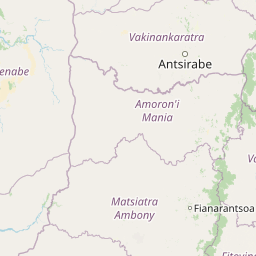
Map view of Ranomafana National Park

Use this park location map to pinpoint Ranomafana National Park in Madagascar, understand its exact geographic position, and read its mapped placement within the surrounding landscape more clearly.

Pigeon | © OpenStreetMap contributors

Location context for Ranomafana National Park

Haute MatsiatraVatovavy
Park atlas

Compare diverse rainforest landscapes and conservation sites across Madagascar's central highlands and eastern slopes

Explore Other National Parks and Protected Areas Near Ranomafana National Park in Eastern Madagascar
Continue your exploration from Ranomafana National Park by discovering other protected areas and national parks across Madagascar's rich eastern and central regions. Browsing these nearby landscapes provides essential geographic context, revealing the spread of tropical rainforests and unique biodiversity conservation efforts beyond a single park entity.
National parkHaute Matsiatra

Andringitra National Park: A Protected Landscape within Haute Matsiatra's Geography

Explore mapped park boundaries and regional terrain.

Andringitra National Park represents a vital protected area within the Haute Matsiatra region, contributing significantly to the mapped landscape of central Madagascar. Its designation as a national park underscores its importance for conservation and geographic study. Users exploring this destination can gain a detailed understanding of its specific protected boundaries, the surrounding natural terrain, and its overall contribution to the regional geography, making it a key site for atlas-based landscape discovery.

Area
311.6 km²
Established
1999
IUCN
II
Visitors
3.4K annual
National parkMadagascar

Marolambo National Park: Madagascar's National Park and Protected Landscape

Explore mapped boundaries and regional geography.

Marolambo National Park stands as a protected national park within Madagascar's globally recognized biodiversity hotspot. This entry provides focused insight into its protected landscape, its specific geographic context within the island nation, and its role in the conservation of unique natural terrain. Understanding Marolambo National Park through its mapped boundaries and regional geography contributes to a broader atlas exploration of Madagascar's endemic ecosystems.

Area
950.63 km²
Climate
Tropical
Access
Remote access
Scope
Terrestrial
National parkIhorombe Region

Isalo National Park: Explore Madagascar's Sandstone Canyons and Protected Landscape Geography

Discover unique geology, tapia woodlands, and regional park context.

Isalo National Park is a prominent protected area in Madagascar's Ihorombe Region, celebrated for its spectacular sandstone landscape. This national park features deep canyons, eroded rock domes, and striking runiform mountains, formed from ancient sedimentary deposits. The park preserves significant tapia woodlands and remarkable plant endemism, offering a rich context for understanding protected land distribution and Madagascar's unique geography. Its mapped terrain provides a visual atlas of natural wonders.

Area
815.4 km²
Established
1962
IUCN
II
Visitors
32.7K annual
National parkAtsimo-Atsinanana

Midongy du sud National Park: National Park in Atsimo-Atsinanana, Madagascar

Explore its protected landscape and mapped geography.

Midongy du sud National Park is a significant protected area located in the Atsimo-Atsinanana region of Madagascar. This entry provides detailed geographic context, focusing on the park's mapped boundaries and its identity as a national park. It supports atlas-based discovery by offering insights into the park's specific landscape and its regional setting within southeastern Madagascar, serving as a factual resource for understanding its protected status.

Area
1,922 km²
Established
1997
IUCN
II
Relief
Mountain
National parkAlaotra-Mangoro

Andasibe-Mantadia National Park: National Park and Protected Landscape Identity

Explore its mapped boundaries and geographic context.

Andasibe-Mantadia National Park is a distinct protected territory within the Alaotra-Mangoro region, serving as a crucial focal point for understanding Madagascar's regional geography and protected land distribution. This detail page provides essential atlas-style information on the park's mapped area and its natural landscape characteristics. Engage with structured data that highlights the park's protected status and its position within the broader geographic framework of eastern Madagascar, supporting focused discovery for researchers and explorers.

Area
155 km²
Established
1989
IUCN
II
Visitors
26.1K annual
Watercolor illustration of a landscape featuring mountains, a lake, trees, and pink flowers in the foreground
National parkAlaotra-Mangoro

Analamazaotra National Park: Protected Rainforest Ecosystem and Mapped Landscape in Alaotra-Mangoro

Explore Madagascar's Eastern Highlands protected area geography.

Analamazaotra National Park, situated in Madagascar's Alaotra-Mangoro region, represents a critical segment of the island's protected eastern rainforests. This national park is mapped as a vital conservation area, offering insights into its unique ecosystems and natural terrain. Understanding Analamazaotra National Park's geographic placement and protected boundaries provides essential context for regional landscape exploration and atlas-based geographic discovery within Madagascar.

Area
26.53 km²
Established
2015
IUCN
II
Relief
Highland
National parkAtsimo-Andrefana

Zombitse-Vohibasia National Park: Protected Landscape and Regional Geographic Context

Mapped protected areas and natural terrain discovery.

Investigate Zombitse-Vohibasia National Park, a designated national park within the Atsimo-Andrefana region. This dedicated entry provides detailed geographic information, focusing on the park's mapped terrain and its contribution to the regional protected landscape. Gain insight into the park's atlas-relevant features and its specific place within Madagascar's conservation geography.

Area
363.08 km²
Established
2002
IUCN
II
Relief
Upland
National parkMadagascar

Kirindy Mitea National Park: Madagascar National Park with Distinct Protected Landscape Identity

Explore the mapped geographic context of Kirindy Mitea National Park.

Kirindy Mitea National Park serves as a notable protected area, holding national park status within Madagascar's distinctive island geography. This entry focuses on understanding the park's unique protected landscape and its charted boundaries, offering essential context for atlas-driven exploration. Discover the geographic elements that define Kirindy Mitea National Park and its place within the broader conservation map of the region.

Area
1,563.5 km²
Established
1997
IUCN
IV
Relief
Mixed relief

Common questions about visiting, size, designation, and location context for Ranomafana National Park

Ranomafana National Park FAQs for park facts, access, geography, and protected area context
Find quick answers about Ranomafana National Park, including protected-area facts, park geography, trail and visitor context, and how the park fits into its surrounding country and regional landscape.
MoriAtlas Explorer

Continue Your Protected Areas Search Across the Global Atlas

Deepen your exploration by continuing the structured search for national parks and protected areas worldwide. Utilize the comprehensive filtering capabilities to compare different conservation landscapes and refine your understanding of global park geography. Discover more about the distribution and characteristics of protected natural areas.

Global natural geography