Mori Atlas logo
National parkNamib-Naukluft National Park

Trace the mapped boundaries of Africa's largest national park and its dramatic desert terrain.

Namib-Naukluft National Park: Namibia's Vast Protected Landscape and Desert Atlas

Namib-Naukluft National Park represents one of Africa's most expansive protected areas, anchoring the ancient Namib Desert within Namibia's geographic atlas. This park showcases an unparalleled diversity of arid landscapes, from the towering, iron-rich sand dunes of Sossusvlei to the rugged Naukluft mountain range and the unique coastal fog zones. Understanding this park involves exploring its vast mapped territory, appreciating its geological history, and recognizing its significance as a conservation landscape defined by extreme environmental conditions and unique desert ecosystems.

desert landscapesand dunescoastal parkmountain terrainwildlife conservationIUCN Category II

Namib-Naukluft National Park

National park

Park overview

Structured park overview, official facts, and landscape profile for Namib-Naukluft National Park

Namib-Naukluft National Park park facts, protected area profile, and essential visitor context
Review the core facts for Namib-Naukluft National Park, including designation, size, terrain, visitor scale, habitats, and operating context in one park-focused overview.

About Namib-Naukluft National Park

Namib-Naukluft National Park represents one of the most ecologically diverse and visually spectacular protected areas in Africa. The park's extraordinary size and geographic range encompass multiple distinct ecosystems, from the fog-deposited desert interior to the marine environment along the Atlantic coast. The Namib Desert itself stretches along the entire coast of Namibia, but the section protected within the park contains the most iconic dune formations, particularly in the Sossusvlei area where massive dunes surround a central clay pan fed by the occasional flow of the Tsauchab River. These dunes, some of the tallest in the world, have been shaped by winds over millions of years, creating the steep, sharp-crested star dunes that characterize the landscape. Beyond the dunes, the Naukluft Mountains rise dramatically from the desert floor, their blood-red granite and sandstone formations providing habitat for Hartmann's mountain zebra and other adapted species. The park's coastline includes important wetlands at Sandwich Harbour, where shallow lagoons and mudflats attract hundreds of thousands of migratory birds. This combination of extreme desert, mountain, and marine environments makes Namib-Naukluft a unique conservation landscape of global significance.

Quick facts and research context for Namib-Naukluft National Park

Namib-Naukluft National Park occupies a narrow coastal strip in western Namibia extending roughly 600 kilometers north to south along the Atlantic Ocean. The park was formally established in 1907 as Game Reserve No. 3 during German colonial administration and underwent significant expansion in 1979 with the incorporation of the Naukluft Mountain Zebra Park and the addition of a marine component extending 1,600 kilometers into the Atlantic. The park protects a segment of the Namib Desert, the world's oldest desert, characterized by massive orange sand dunes that can exceed 300 meters in height. The Naukluft Mountains in the eastern portion of the park feature dramatic granite and sandstone formations. Fog from the Atlantic Ocean provides more moisture than rainfall in many areas, supporting unique desert-adapted wildlife.

Park context

Deeper park guide and search-rich context for Namib-Naukluft National Park

Namib-Naukluft National Park history, landscape, wildlife, and travel context
Explore Namib-Naukluft National Park through its history, landscape character, ecosystems, wildlife, conservation priorities, cultural context, and seasonal travel timing in a structured park guide built for atlas discovery and search intent.

Why Namib-Naukluft National Park stands out

Namib-Naukluft is best known for its extraordinary sand dunes at Sossusvlei, where ancient dunes reaching over 300 meters in height create one of the most visually dramatic desert landscapes on Earth. The distinctive burnt orange color of these dunes, caused by iron oxidation similar to rusting metal, intensifies with age, with the oldest dunes displaying the most vivid colors. The nearby Dead Vlei, containing the bleached skeletons of trees that died approximately 550 years ago, has become an iconic photographic destination. The park also protects the Naukluft mountain range with its dramatic red granite inselbergs and kopjes, as well as Sandwich Harbour, a coastal lagoon and wetland that supports enormous congregations of flamingos and other waterbirds. The presence of the ancient Welwitschia mirabilis plant, which can live for over 2,000 years, further underscores the park's extraordinary ecological significance.

Namib-Naukluft National Park history and protected-area timeline

The formal protection history of Namib-Naukluft began in 1907 when the German Colonial Administration proclaimed three game reserves in German South West Africa. The territory that would become Namib-Naukluft was established as Game Reserve No. 3, with its northern border five kilometers south of the Swakop River and its southern border ten kilometers south of the Kuiseb River. After World War I, the South African administration confirmed the German proclamation. Significant expansions occurred over the following decades: Sandwich Harbour was added in 1941, and a small southern extension followed in 1962. In 1966, Game Reserve No. 3 was deproclaimed and replaced by the Namib Desert Park, which included areas north of the Swakop River where Welwitschia grows and the Moon Landscape near Swakopmund. The most transformative expansion came in 1979 when two large areas were incorporated: the former Naukluft Mountain Zebra Park, comprising 14 commercial farms purchased to protect the Hartmann's mountain zebra, and a 1,600-kilometer strip of the Atlantic Ocean, creating Namibia's first marine reserve. The present boundaries were established in 1986 when government control over parts of the Sperrgebiet, an area historically restricted for diamond mining, was transferred to the park.

Namib-Naukluft National Park landscape and geographic character

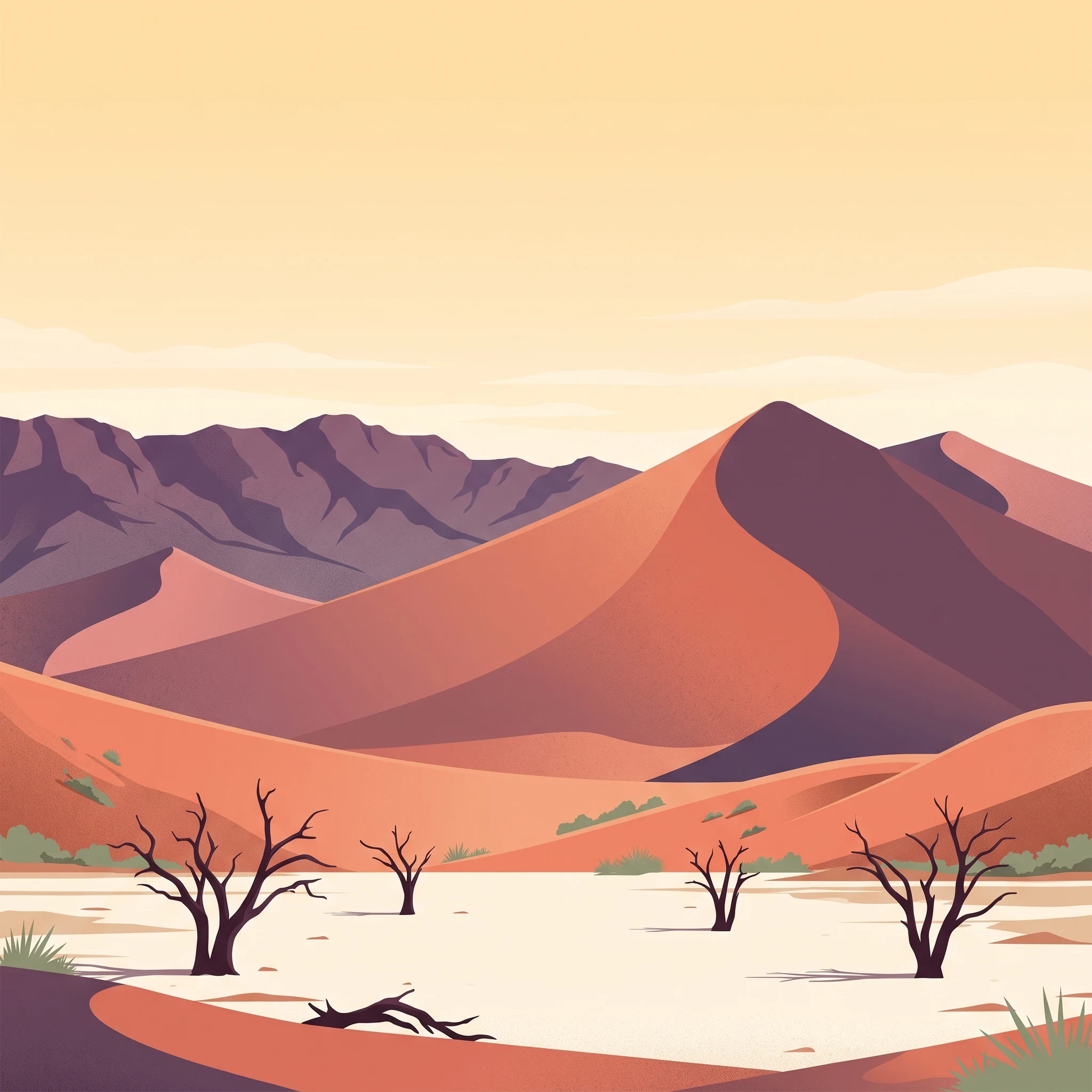
The Namib-Naukluft landscape presents an extraordinary variety of terrain shaped by millions of years of geological and wind processes. The most visually commanding features are the massive sand dunes of the central Namib, particularly around Sossusvlei, where dunes rise more than 300 meters above the desert floor. These dunes display a remarkable range of shapes, from linear dunes running parallel to the wind to complex star dunes formed by winds from multiple directions. The color gradient from pale yellow at the dune base to deep orange at the crests reflects the age of the dune, with older dunes developing more intense iron oxidation. In contrast to the dunes, the Naukluft Mountains feature isolated inselbergs and kopjes of dramatic blood-red granite and sandstone, rich in feldspars, rising abruptly from the surrounding plains. The coastal zone near Sandwich Harbour contains shallow lagoons, wetlands, and mudflats that contrast sharply with the arid interior. The landscape also includes the distinctive Moon Landscape near Swakopmund, a terrain of exposed granite inselbergs that resembles a lunar surface. Throughout the park, the influence of fog from the Atlantic Ocean creates a moisture gradient that shapes vegetation and wildlife distribution.

Namib-Naukluft National Park ecosystems, habitats, and plant life

The Namib-Naukluft protects one of the most remarkable desert ecosystems on Earth, where extreme aridity supports a surprisingly diverse community of specially adapted species. The Namib Desert is considered the world's oldest desert, with hyper-arid conditions prevailing for an estimated 55 to 80 million years. Fog rather than rain provides the primary water source for much of the park, with the coastal fog belt extending inland as moisture-bearing fog clouds. This fog belt supports unique plants and animals that have evolved remarkable strategies for extracting water from fog droplets. The park spans a remarkable ecological gradient from the hyper-arid dune fields through the fog-influenced coastal zone to the slightly more moist Naukluft Mountains, creating multiple distinct habitat types. Vegetation varies from near-absent on the dunes to scattered desert scrub on the plains, with the Naukluft Mountains supporting more lush vegetation in areas where moisture collects. The park also protects the unusual Welwitschia mirabilis, an ancient conifer that can live for more than 2,000 years and is found in the northern portions of the park.

Namib-Naukluft National Park wildlife and species highlights

Despite the extreme aridity of the Namib-Naukluft, the park supports a surprising diversity of wildlife that has evolved remarkable adaptations to survive in this harsh environment. The mammal population includes gemsbok and springbok, both elegantly adapted to desert conditions and frequently seen throughout the park. Predators include leopards, African wildcats, caracals, and Cape foxes, along with spotted and brown hyenas. Smaller carnivores include bat-eared foxes and various jackal species, while baboons are common in the Naukluft Mountains. The reptile population features various snakes and geckos adapted to the desert environment. The insect fauna is particularly notable, with the Namib desert beetle (Stenocara gracilipes) demonstrating extraordinary water-collection abilities by positioning itself head-down to collect fog droplets on its body. The coastal wetlands at Sandwich Harbour support enormous concentrations of flamingos, along with numerous other waterbird species. The bird population also includes Rüppell's korhaan found in the grasslands near the dunes, and various raptors that hunt across the open desert.

Namib-Naukluft National Park conservation status and protection priorities

Namib-Naukluft National Park represents a landmark conservation achievement, protecting one of the world's most unique and threatened desert ecosystems. The park's inclusion of marine environments makes it one of the first protected areas in Africa to recognize the importance of coastal and ocean conservation, extending protection from the desert dunes to a 1,600-kilometer strip of Atlantic Ocean. The protection of the Namib Desert is particularly significant given its status as the world's oldest desert and the extensive scientific research conducted there, including studies at the Gobabeb research station. The park protects critical habitat for Hartmann's mountain zebra, a subspecies endemic to the Naukluft Mountains that was the focus of intensive conservation efforts leading to the establishment of the former Naukluft Mountain Zebra Park. The Sandwich Harbour lagoon and wetland system provides crucial habitat for migratory bird populations, making the park important for international bird conservation. The establishment of the park also played a role in restricting access to the Sperrgebiet, a historically restricted diamond-mining area that now benefits from protection.

Namib-Naukluft National Park cultural meaning and human context

The name Namib derives from the Khoikhoi language, meaning "open space," and this vast desert gave its name to the nation of Namibia, which translates as "land of open spaces." The park's territory was historically inhabited by indigenous peoples who adapted to the challenging desert environment. The German colonial period left a lasting imprint on the region, with the establishment of game reserves in 1907 representing one of the earliest conservation efforts in the territory. The Sperrgebiet, or forbidden area, was restricted for diamond mining during the colonial period, and its incorporation into the park in 1986 marked an important transition from industrial extraction to conservation protection. The Naukluft Mountains hold cultural significance for local communities and contain evidence of historical human presence in the region. The park's contemporary management by Namibia's Ministry of Environment and Tourism reflects the nation's post-independence commitment to conservation and sustainable development.

Top sights and standout views in Namib-Naukluft National Park

Namib-Naukluft offers several unforgettable highlights that make it one of Africa's most distinctive protected areas. The sunrise view from the dunes at Sossusvlei, when the low sun transforms the orange dunes into glowing monuments, ranks among the most photographed landscapes in Africa. The Dead Vlei, with its ancient dead trees silhouetted against the white clay pan and surrounding red dunes, creates an otherworldly scene of striking beauty. The drive through the dune sea from Sesriem to Sossusvlei provides continuous visual drama as the landscape shifts through changing light and dune patterns. The Naukluft Mountains offer a different experience, with hiking trails through dramatic granite terrain and the possibility of encountering Hartmann's mountain zebra in their natural habitat. The coastal wetlands at Sandwich Harbour provide a stark contrast, where the sight of thousands of flamingos wading in shallow lagoon waters against a backdrop of sand dunes creates a remarkable wildlife spectacle.

Best time to visit Namib-Naukluft National Park

The Namib-Naukluft can be visited year-round, though the cooler months from May through October generally offer more comfortable conditions for exploration. Summer temperatures from November to April can be extremely hot, particularly in the interior desert areas, though this is also the season when occasional rainfall occurs and the desert can bloom with ephemeral flowers. The winter months bring cooler nights and more moderate daytime temperatures, making outdoor activities more pleasant. The fog that provides moisture to much of the park occurs throughout the year, most commonly during early morning hours along the coast. Wildlife viewing is possible throughout the year, though animals are more active during cooler parts of the day. The dry season from May to September tends to concentrate wildlife around remaining water sources, potentially making animals easier to observe. Regardless of season, the park's dramatic landscape rewards visitors at any time, with the quality of light at sunrise and sunset providing especially memorable views of the dune fields.
Park location guide

Geography guide, regional context, and park location map for Namib-Naukluft National Park

Namib-Naukluft National Park park geography, regions, and map view in Namibia
Understand where Namib-Naukluft National Park sits in Namibia through a broader geographic reading of the surrounding landscape, nearby location context, and its mapped position within the national park landscape.

How Namib-Naukluft National Park fits into Namibia

Namibia is a sovereign country in Southern Africa that gained independence from South Africa in 1990. It is the driest country in sub-Saharan Africa, characterized by the Namib Desert along its coast. The population is approximately 3 million, with Windhoek as the capital and largest city. Namibia operates as a unitary semi-presidential republic with a multi-party system.

Wider geography shaping Namib-Naukluft National Park in Namibia

Namibia occupies 825,615 km2 in Southern Africa, making it the 34th largest country in the world. It is bordered by the Atlantic Ocean to the west, Angola and Zambia to the north, Botswana to the east, and South Africa to the south. The country features the Namib Desert along its coastal region, with varied terrain including savannas, mountains, and plateaus inland. A notable geographic feature is that Zimbabwe lies less than 200 metres away along the Zambezi river near Kazungula in the northeast.

Map view of Namib-Naukluft National Park

Use this park location map to pinpoint Namib-Naukluft National Park in Namibia, understand its exact geographic position, and read its mapped placement within the surrounding landscape more clearly.

Pigeon | © OpenStreetMap contributors
Park atlas

Compare Namibia's Protected Areas, Tracing Diverse Desert, Mountain, and Coastal Geographies

Explore Related National Parks and Protected Landscapes Near Namib-Naukluft National Park
After exploring Namib-Naukluft National Park, browse other protected areas within Namibia and its surrounding regions. Continue your atlas-style park discovery by mapping diverse landscapes, from coastal desert zones to rugged mountain ranges, comparing their unique conservation profiles and geographic features.
National parkNamibia

Dorob National Park: Namibia's Expansive Coastal Desert and Protected Bird Habitat

Explore mapped landscapes and regional geography.

Dorob National Park is a prime example of a protected coastal desert landscape, stretching along Namibia's Atlantic coast. This national park is renowned for its significant bird populations, making it an Important Bird Area with extensive mapped habitats supporting diverse species. Understand the park's geographic context, from its dramatic dunes to its ephemeral river systems, and its role as a key conservation area within the region.

Area
107,540 km²
Established
2010
IUCN
II
National parkKgalagadi District

Kgalagadi Transfrontier Park National Park: Explore Its Mapped Protected Landscape

Discover the desert geography and unique terrain of the southern Kalahari.

Kgalagadi Transfrontier Park is a monumental protected area within the Kgalagadi District, embodying the vastness and stark beauty of the Kalahari Desert. This national park page offers an atlas-centric view of its sweeping red dunes, sparse vegetation, and the crucial dry river systems that shape its arid environment. Understand the geographic scope and the protected landscape character of this significant cross-border conservation area, perfect for detailed map exploration and understanding regional desert ecosystems.

Area
38,000 km²
Established
2000
IUCN
II
National parkNamibia

Skeleton Coast National Park: Namibia's Remote Desert-Coast National Park Exploration

Mapped landscape, shipwrecks, and profound geographic isolation.

Delve into the Skeleton Coast National Park, a monumental protected area in Namibia defined by its stark desert and ocean interface. This page provides detailed geographic context for the park's vast expanse, highlighting its characteristic shipwrecks and the dramatic landscape where towering sand dunes confront the cold Atlantic. Understand the unique protected-area identity of this legendary coastal wilderness through its mapped features and remote setting.

Area
16,845 km²
Established
1971
IUCN
II
National parkNorthern Cape

Augrabies Falls National Park: A South African National Park Defined by Granite Gorge and Semi-Desert Terrain

Explore the mapped natural landscape and protected boundaries.

Augrabies Falls National Park in South Africa's Northern Cape Province is a key protected area known for its thundering waterfall on the Orange River and the profound granite gorge carved over millennia. The park's semi-desert environment showcases the distinctive quiver trees and geological landmarks like Moon Rock, offering a unique landscape context. Understand its protected status and geographic significance within the arid Nama-Karoo biome through detailed mapping and landscape information.

Area
820 km²
Established
1966
IUCN
II
National parkNamibia

Khaudum National Park: Namibia's Remote Kalahari Protected Landscape and Predatory Wildlife

Explore mapped boundaries and seasonal river ecosystems.

Khaudum National Park is a substantial protected landscape in northeastern Namibia, deep within the Kalahari Desert. This remote national park encompasses over 3,800 square kilometers of dry forest and acacia woodland, dissected by three major Omuramba dry river systems. It is globally recognized for its thriving populations of large predators like lions and spotted hyenas, alongside significant numbers of elephants and giraffes. The park's unique semi-arid terrain and biodiversity make it a key destination for understanding regional protected-area geography and landscape context.

Area
3,842 km²
IUCN
II
National parkZambezi Region

Bwabwata National Park: National Park in the Zambezi Region, Namibia

Explore savanna ecosystem and riverine landscapes.

Bwabwata National Park represents a significant protected landscape in Namibia's Zambezi Region, notable for its integrated community conservation model and its function as a vital wildlife corridor. This national park spans the Caprivi Strip, featuring savanna woodlands and crucial riparian zones along the Okavango and Kwando rivers. As a key component of the Kavango-Zambezi Transfrontier Conservation Area, it facilitates significant elephant migrations, providing rich opportunities for atlas-based exploration of mapped protected areas and regional geography.

Area
6,274 km²
Established
2007
IUCN
II
National parkBotswana

Nxai Pan National Park: Botswana's Iconic Baobab Forests and Salt Pan Landscape

Explore mapped boundaries and unique regional geography.

Nxai Pan National Park offers a compelling glimpse into Botswana's unique semi-arid ecosystems, characterized by the expansive, salt-crusted Nxai Pan itself and the iconic Baines Baobabs dotting its edges. As a protected national park, it represents a significant conservation landscape within the Kalahari Desert region. Understanding its geography involves appreciating the stark visual contrasts, seasonal wetland transformations, and the vast openness of the salt pan environment.

Area
2,578 km²
Established
1992
IUCN
Ib
National parkAngola

Luengue-Luiana National Park: Angola's Premier Protected Woodland and Floodplain Ecosystem

Mapping crucial habitats for large mammals and avian wildlife.

Luengue-Luiana National Park is a vital protected landscape in southeastern Angola, covering an immense area that transitions from open woodland ecosystems to vast, seasonal floodplain grasslands. As a cornerstone of the Kavango-Zambezi Transfrontier Conservation Area, it facilitates critical wildlife movements and supports significant populations of large mammals. Its geography provides essential habitat, particularly within the extensive wetland wilderness and riparian zones along the Cuando River, making it a significant site for regional biodiversity and atlas exploration.

Area
42,000 km²
Established
2011
IUCN
II

Common questions about visiting, size, designation, and location context for Namib-Naukluft National Park

Namib-Naukluft National Park FAQs for park facts, access, geography, and protected area context
Find quick answers about Namib-Naukluft National Park, including protected-area facts, park geography, trail and visitor context, and how the park fits into its surrounding country and regional landscape.
MoriAtlas Explorer

Continue Your Protected Areas Search Across the Global Atlas

Deepen your exploration by continuing the structured search for national parks and protected areas worldwide. Utilize the comprehensive filtering capabilities to compare different conservation landscapes and refine your understanding of global park geography. Discover more about the distribution and characteristics of protected natural areas.

Global natural geography