Mori Atlas logo
National parkSkeleton Coast National Park

Discover the stark beauty and mapped geography of this unique desert-ocean protected area.

Skeleton Coast National Park: Namibia's Remote Protected Landscape and Shipwreck Atlas

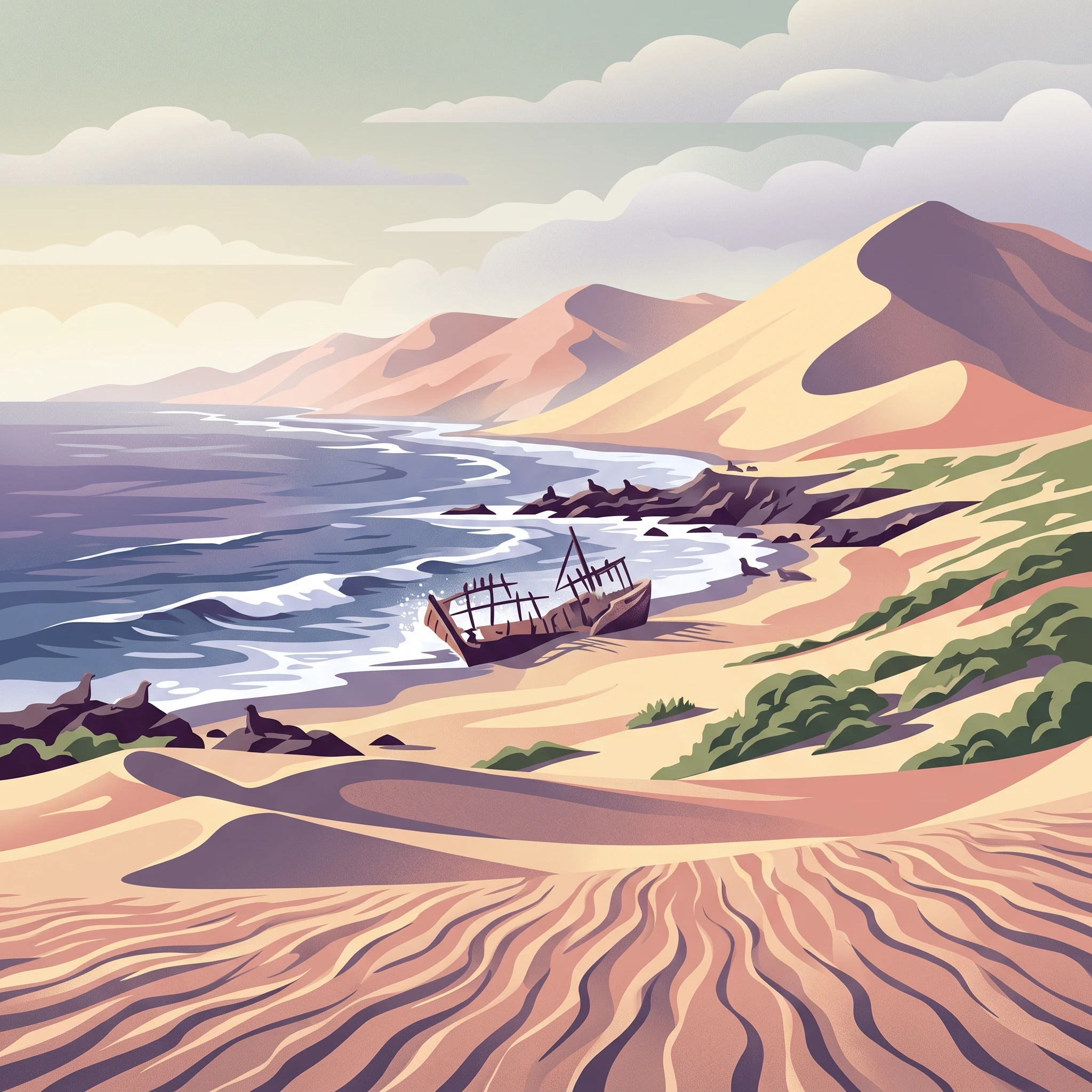
Skeleton Coast National Park in Namibia protects a dramatic and exceptionally remote stretch of the Atlantic coastline, a stark environment where towering sand dunes meet the cold ocean. Established as one of Africa's largest national parks, it safeguards a unique desert-marine ecosystem, famously marked by the skeletal remains of countless shipwrecks that lie scattered along its shores. This page offers an atlas-style exploration of its unique geography, mapped boundaries, and profound sense of wilderness, providing essential context for understanding this legendary protected landscape.

Desert CoastShipwrecksRemote WildernessNamibiaAtlantic OceanFour Wheel Drive Access

Skeleton Coast National Park

National park

Park overview

Structured park overview, official facts, and landscape profile for Skeleton Coast National Park

Skeleton Coast National Park park facts, protected area profile, and essential visitor context
Review the core facts for Skeleton Coast National Park, including designation, size, terrain, visitor scale, habitats, and operating context in one park-focused overview.

About Skeleton Coast National Park

Skeleton Coast National Park represents one of Namibia's most distinctive protected landscapes, encompassing a vast expanse of desert coastline that has long captivated adventurous travelers and nature enthusiasts. The park's coastline stretches along the cold Atlantic waters of the Skeleton Coast, a name that evokes both the historical maritime tragedies and the eerie, otherworldly quality of the landscape. Access to the park remains extremely limited, contributing significantly to its wilderness character and ensuring that those who visit experience a form of remoteness increasingly rare in the modern world. The park's size of approximately 16,845 square kilometers places it among the larger national parks in Southern Africa, yet its terrain is so challenging that much of the area sees few human visitors. The park is bisected by the Ugab River, which serves as a natural boundary between the more accessible southern sector and the strictly controlled northern wilderness area.

Quick facts and research context for Skeleton Coast National Park

Skeleton Coast National Park is located in northwest Namibia along the cold Atlantic coastline. The park was established in 1971 and covers roughly 16,845 square kilometers, making it one of Namibia's most extensive protected areas. The park is administratively divided into northern and southern sectors, with the southern section accessible by four-wheel-drive vehicles up to the Ugab River Gate, while the northern sector can only be reached by aircraft. The coastline is famous for its shipwrecks, earning the area its haunting name, and features notable attractions including the South West Seal viewpoint, Huab lagoon, and a collapsed oil drilling rig.

Park context

Deeper park guide and search-rich context for Skeleton Coast National Park

Skeleton Coast National Park history, landscape, wildlife, and travel context
Explore Skeleton Coast National Park through its history, landscape character, ecosystems, wildlife, conservation priorities, cultural context, and seasonal travel timing in a structured park guide built for atlas discovery and search intent.

Why Skeleton Coast National Park stands out

Skeleton Coast National Park is best known for its legendary shipwrecks and extraordinary remoteness. The fog-shrouded coastline has claimed numerous vessels over centuries, and the skeletal remains of these ships have become iconic symbols of the park's character. The park also protects a unique desert-marine ecosystem where massive sand dunes meet the Atlantic Ocean, creating photographerically stunning scenes of contrast. The seal colonies at certain points along the coast, particularly at the South West Seal viewpoint, represent another major attraction, while the abandoned oil drilling rig provides an eerie man-made element amid the pristine wilderness.

Skeleton Coast National Park history and protected-area timeline

Skeleton Coast National Park was established in 1971 as part of Namibia's growing commitment to protecting its unique natural heritage. Prior to formal protection, this coastline had long been known to maritime travelers as an extremely dangerous stretch of ocean, with its fog, strong currents, and unpredictable weather contributing to numerous shipwrecks over the centuries. The establishment of the park formalized protection for both the coastal marine environment and the adjoining desert landscape. Management of the park is structured around the division between its northern and southern sectors, with the Ugab River serving as the boundary point. The southern sector was designed to accommodate limited vehicular access, while the northern sector was intentionally left accessible only by aircraft to preserve its pristine character and minimize human impact on the environment.

Skeleton Coast National Park landscape and geographic character

The landscape of Skeleton Coast National Park presents a striking interplay between desert and ocean. Massive sand dunes rise from the coastline, their shapes constantly reshaped by the persistent Atlantic winds, while the cold ocean waters crash against the shore in a dramatic contrast of temperature and texture. The coastline itself is characterized by rocky headlands, sandy beaches, and the scattered remains of shipwrecks that have become embedded in the landscape over centuries. Inland, the terrain transitions from the coastal dunes into the Namib Desert, one of the oldest deserts in the world, creating an environment of profound aridity and stark visual impact. The Ugab River, though often dry or reduced to seasonal flows, carves a significant course through the park, providing a natural dividing line between the northern and southern sectors.

Skeleton Coast National Park ecosystems, habitats, and plant life

The ecosystem of Skeleton Coast National Park represents a remarkable adaptation to extreme conditions. Despite the apparent hostility of the desert coastline, the area supports a surprising diversity of life, particularly where moisture from fog and occasional rainfall creates pockets of productivity. The marine environment along the coast is particularly rich, supported by the cold, nutrient-bearing waters of the Atlantic, which sustain important populations of marine mammals and seabirds. The interaction between the desert and the ocean creates a unique ecological tension, with species adapted to both maritime and arid conditions coexisting in this challenging environment. The park's inaccessibility has paradoxically served to protect many species and habitats from the pressures that affect more accessible areas.

Skeleton Coast National Park wildlife and species highlights

Wildlife in Skeleton Coast National Park is concentrated in areas where environmental conditions allow for greater productivity. Cape fur seals form significant colonies along the coastline, with the South West Seal viewpoint providing one of the most accessible opportunities to observe these animals in their natural habitat. Seabirds are abundant, taking advantage of the rich marine waters, while small desert-adapted mammals and reptiles occupy the inland areas. The marine environment supports various cetaceans that pass through the cold Atlantic waters adjacent to the park. The野生动物 that does persist in this harsh environment has evolved remarkable adaptations to survive the extreme aridity and the challenges of the coastal climate.

Skeleton Coast National Park conservation status and protection priorities

Skeleton Coast National Park plays a critical role in protecting one of Africa's most unusual coastal environments. The park safeguards a stretch of coastline that represents a transition between the Namib Desert and the Atlantic Ocean, preserving both terrestrial and marine habitats in a relatively natural state. The remote and inaccessible nature of much of the park has inherently provided a degree of protection from development pressures that affect more accessible regions. Conservation efforts focus on maintaining the park's wilderness character while managing visitor access to ensure that the unique ecological values remain intact. The park also contributes to broader regional conservation networks by protecting corridors of habitat that allow for the movement of species across the desert-coastal interface.

Skeleton Coast National Park cultural meaning and human context

The cultural context of Skeleton Coast National Park is deeply intertwined with maritime history and the narratives of survival along one of Africa's most dangerous coastlines. The name Skeleton Coast itself derives from the bones and shipwreck remains that have long marked this shoreline, creating a powerful sense of historical presence amid the stark landscape. The shipwrecks that dot the coast represent a human dimension to the park's story, reminding visitors of the risks that sailors have faced navigating these waters over centuries. Beyond maritime heritage, the indigenous peoples of the region have long maintained connections to this coastline, though the park's extreme conditions have limited permanent human settlement in most areas.

Top sights and standout views in Skeleton Coast National Park

The most compelling highlights of Skeleton Coast National Park include the haunting shipwrecks that give the park its name, the extraordinary landscape where massive sand dunes meet the cold Atlantic, and the profound sense of remoteness that defines the visitor experience. The South West Seal viewpoint offers one of the park's more accessible wildlife viewing opportunities, while the collapsed oil drilling rig provides an unexpected industrial artifact amid the pristine wilderness. The distinction between the accessible southern sector and the fly-in only northern sector creates two very different experiences within the same protected area, allowing visitors to choose their level of wilderness immersion.

Best time to visit Skeleton Coast National Park

The best time to visit Skeleton Coast National Park is during the dry winter months from May to October, when temperatures are milder and rainfall is minimal. The coastal fog that characterizes this region is most prevalent during the cooler months, creating an atmospheric quality that enhances the landscape's haunting beauty while also providing important moisture to the desert environment. Summer months can bring extreme heat and occasional rainfall that may affect access to certain areas. Visitors planning to explore the southern sector by vehicle should be aware that the experience requires a four-wheel-drive vehicle and a spirit of adventure, while those seeking to access the northern sector must arrange chartered flights as part of an organized safari operation.
Park location guide

Geography guide, regional context, and park location map for Skeleton Coast National Park

Skeleton Coast National Park park geography, regions, and map view in Namibia
Understand where Skeleton Coast National Park sits in Namibia through a broader geographic reading of the surrounding landscape, nearby location context, and its mapped position within the national park landscape.

How Skeleton Coast National Park fits into Namibia

Namibia is a sovereign country in Southern Africa that gained independence from South Africa in 1990. It is the driest country in sub-Saharan Africa, characterized by the Namib Desert along its coast. The population is approximately 3 million, with Windhoek as the capital and largest city. Namibia operates as a unitary semi-presidential republic with a multi-party system.

Wider geography shaping Skeleton Coast National Park in Namibia

Namibia occupies 825,615 km2 in Southern Africa, making it the 34th largest country in the world. It is bordered by the Atlantic Ocean to the west, Angola and Zambia to the north, Botswana to the east, and South Africa to the south. The country features the Namib Desert along its coastal region, with varied terrain including savannas, mountains, and plateaus inland. A notable geographic feature is that Zimbabwe lies less than 200 metres away along the Zambezi river near Kazungula in the northeast.

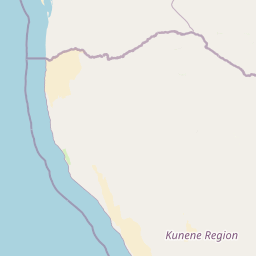
Map view of Skeleton Coast National Park

Use this park location map to pinpoint Skeleton Coast National Park in Namibia, understand its exact geographic position, and read its mapped placement within the surrounding landscape more clearly.

Pigeon | © OpenStreetMap contributors
Park atlas

Trace the regional geography of other protected areas, mapping their spread and contrasting landscapes near Skeleton Coast.

Explore Other National Parks and Protected Areas Near Skeleton Coast National Park
Browse a curated selection of other national parks and protected areas located geographically near Skeleton Coast National Park, including diverse desert and coastal conservation landscapes. Gaining this broader regional context allows for structured atlas-style comparisons, highlighting the varied terrain and protected status across Namibia and its adjacent wildernesses.
National parkNamibia

Dorob National Park: Namibia's Expansive Coastal Desert and Protected Bird Habitat

Explore mapped landscapes and regional geography.

Dorob National Park is a prime example of a protected coastal desert landscape, stretching along Namibia's Atlantic coast. This national park is renowned for its significant bird populations, making it an Important Bird Area with extensive mapped habitats supporting diverse species. Understand the park's geographic context, from its dramatic dunes to its ephemeral river systems, and its role as a key conservation area within the region.

Area
107,540 km²
Established
2010
IUCN
II
National parkNamibia

Namib-Naukluft National Park: Namibia's Iconic Desert Landscape and Protected Terrain

Explore its ancient dunes, Naukluft mountains, and coastal geography.

Namib-Naukluft National Park is a colossal protected area in Namibia, holding the distinction of being Africa's largest national park. This park is renowned for its iconic sand dunes, particularly at Sossusvlei, which are among the highest in the world and display dramatic colors due to iron oxidation. The landscape also features the rugged Naukluft Mountains and vital coastal fog zones, creating a diverse arid environment. Delve into the mapped geography and unique terrain of this ancient desert setting, understanding its protected landscape significance within Namibia's atlas.

Area
49,768 km²
Established
1907
IUCN
II
National parkNamibia

Khaudum National Park: Namibia's Remote Kalahari Protected Landscape and Predatory Wildlife

Explore mapped boundaries and seasonal river ecosystems.

Khaudum National Park is a substantial protected landscape in northeastern Namibia, deep within the Kalahari Desert. This remote national park encompasses over 3,800 square kilometers of dry forest and acacia woodland, dissected by three major Omuramba dry river systems. It is globally recognized for its thriving populations of large predators like lions and spotted hyenas, alongside significant numbers of elephants and giraffes. The park's unique semi-arid terrain and biodiversity make it a key destination for understanding regional protected-area geography and landscape context.

Area
3,842 km²
IUCN
II
National parkAngola

Luengue-Luiana National Park: Angola's Premier Protected Woodland and Floodplain Ecosystem

Mapping crucial habitats for large mammals and avian wildlife.

Luengue-Luiana National Park is a vital protected landscape in southeastern Angola, covering an immense area that transitions from open woodland ecosystems to vast, seasonal floodplain grasslands. As a cornerstone of the Kavango-Zambezi Transfrontier Conservation Area, it facilitates critical wildlife movements and supports significant populations of large mammals. Its geography provides essential habitat, particularly within the extensive wetland wilderness and riparian zones along the Cuando River, making it a significant site for regional biodiversity and atlas exploration.

Area
42,000 km²
Established
2011
IUCN
II
National parkZambezi Region

Bwabwata National Park: National Park in the Zambezi Region, Namibia

Explore savanna ecosystem and riverine landscapes.

Bwabwata National Park represents a significant protected landscape in Namibia's Zambezi Region, notable for its integrated community conservation model and its function as a vital wildlife corridor. This national park spans the Caprivi Strip, featuring savanna woodlands and crucial riparian zones along the Okavango and Kwando rivers. As a key component of the Kavango-Zambezi Transfrontier Conservation Area, it facilitates significant elephant migrations, providing rich opportunities for atlas-based exploration of mapped protected areas and regional geography.

Area
6,274 km²
Established
2007
IUCN
II
National parkKgalagadi District

Kgalagadi Transfrontier Park National Park: Explore Its Mapped Protected Landscape

Discover the desert geography and unique terrain of the southern Kalahari.

Kgalagadi Transfrontier Park is a monumental protected area within the Kgalagadi District, embodying the vastness and stark beauty of the Kalahari Desert. This national park page offers an atlas-centric view of its sweeping red dunes, sparse vegetation, and the crucial dry river systems that shape its arid environment. Understand the geographic scope and the protected landscape character of this significant cross-border conservation area, perfect for detailed map exploration and understanding regional desert ecosystems.

Area
38,000 km²
Established
2000
IUCN
II
National parkBotswana

Chobe National Park: Botswana National Park Atlas and Mapped Landscape Explorer

Discover Botswana's diverse protected areas and unique savanna wetlands.

Chobe National Park represents a cornerstone of protected land discovery in Botswana, offering an unparalleled glimpse into a landscape shaped by dynamic water systems and iconic wildlife. This national park is not merely a destination; it is a vital ecosystem supporting vast elephant populations and showcasing a remarkable variety of terrain from riverine floodplains to savanna marshes. Understanding Chobe National Park through its mapped boundaries and regional geographic context reveals its significance as a protected natural area with diverse habitats supporting critical conservation efforts.

Area
11,700 km²
Established
1967
IUCN
II
National parkMoxico Leste Province

Cameia National Park: Unique Zambezi Basin Wetlands and Miombo Woodlands in Angola

Explore the mapped geography of Angola's sole Zambezi basin ecological sample.

Cameia National Park is a significant protected area in Moxico Leste Province, Angola, distinguished by its status as the country's only representation of Zambezi River basin ecosystems. The park features extensive seasonally inundated plains and characteristic miombo woodlands, offering a unique mosaic of wetland and forest landscapes. Understanding its geographic setting, hydrological connections to the Chifumage, Lumege, and Luena rivers, and its position within the broader Zambezi drainage system provides essential context for this irreplaceable protected territory.

Area
1,445 km²
Established
1938
IUCN
II
Relief
Lowland

Common questions about visiting, size, designation, and location context for Skeleton Coast National Park

Skeleton Coast National Park FAQs for park facts, access, geography, and protected area context
Find quick answers about Skeleton Coast National Park, including protected-area facts, park geography, trail and visitor context, and how the park fits into its surrounding country and regional landscape.
MoriAtlas Explorer

Continue Your Protected Areas Search Across the Global Atlas

Deepen your exploration by continuing the structured search for national parks and protected areas worldwide. Utilize the comprehensive filtering capabilities to compare different conservation landscapes and refine your understanding of global park geography. Discover more about the distribution and characteristics of protected natural areas.

Global natural geography