Why Dorob National Park stands out
Dorob National Park is best known for its remarkable coastal bird populations, particularly the Damara tern, a seabird species endemic to Namibia that serves as the park's flagship species. The park protects a spectacular coastal dune belt, vast gravel plains, Namibia's richest coastal bird habitat, and major ephemeral river systems that flow into the Atlantic. The dramatic landscape where the hyper-arid Namib Desert meets the cool Atlantic Ocean creates a starkly beautiful environment that supports unexpected biodiversity in one of the world's driest regions.
Dorob National Park history and protected-area timeline
Before achieving national park status, the area that now comprises Dorob National Park was known as the Walvis Bay Nature Reserve under the administration of South Africa's Cape Department of Nature Conservation. Following Namibia's independence in 1990, the Walvis Bay enclave was incorporated into Namibian territory, and the reserve came under national administration. Various proposals to rename the protected area Walvis Bay National Park did not come to fruition, ultimately leading to the decision to name the central coastal area Dorob National Park, derived from the local word meaning "dry land." The park was officially gazetted under the Nature Conservation Ordinance No.4 of 1975 on December 1, 2010. The establishment of Dorob completed a significant conservation corridor along Namibia's coast, with National Geographic noting in June 2011 that the creation of the park had resulted in an almost continuous chain of protected areas from the Kunene River to the Orange River. The Trans-Kalahari Highway passes through the park, connecting several mining, fishing, and industrial towns in the region. In 2012, the park gained international attention when parts of Mad Max: Fury Road were filmed there, with allegations that filming caused significant damage to the park's habitat.
Dorob National Park landscape and geographic character
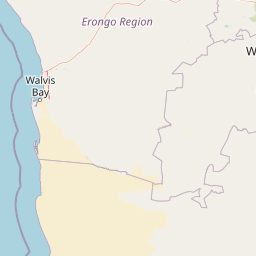
The landscape of Dorob National Park is defined by the dramatic encounter between the hyper-arid Namib Desert and the cold waters of the Atlantic Ocean. The park encompasses a spectacular coastal dune belt that runs parallel to the shore, creating a striking visual boundary between desert and sea. Vast gravel plains extend inland from the dunes, interrupted by the dry beds of major ephemeral river systems including the Kuiseb River, Swakop River, and their respective deltas. The Kuiseb Delta, located south of Walvis Bay, and the Tsumas Delta represent critical wetland habitats within this generally arid environment. The Walvis Bay Lagoon, a designated Ramsar Site of international importance, marks a key coastal wetland area within the park's boundaries. The landscape transitions from the coastal zone westward across the dune and gravel plain systems toward the interior escarpment, creating a gradient from marine-influenced environments to true desert conditions.
Dorob National Park ecosystems, habitats, and plant life
The nature of Dorob National Park is characterized by remarkable ecological adaptations to extreme aridity along the coast, combined with exceptional biodiversity in specific habitat pockets. The central coast's 1,600-kilometer stretch represents an area of hyper-arid desert where rainfall is extremely limited and fog from the Atlantic provides the primary moisture source for many organisms. The park contains Namibia's richest coastal area for birds, with approximately 75 bird species recorded and nearly 1.6 million individual birds counted along the coast. Major ephemeral river systems and their river mouths create important habitat corridors, while the dune and gravel plain environments support specialized desert-adapted species. Lichen fields represent a particularly notable component of the park's ecological character, with these slow-growing organisms forming delicate communities on gravel substrates. The park's ecological significance has been recognized through its designation as an Important Bird Area by BirdLife International, acknowledging its global importance for seabird conservation.
Dorob National Park wildlife and species highlights
Dorob National Park supports exceptional birdlife that represents the park's most notable wildlife significance. The coastline hosts nearly 1.6 million birds across approximately 75 species, making it Namibia's richest coastal bird area. The Damara tern, a small seabird endemic to Namibia, serves as the park's flagship species and breeds along the coast, though individuals migrate northward in winter. This tern species is recognized as a flagship for coastal conservation in the region. The park provides critical habitat for numerous seabird species that utilize the coastal waters, beaches, and dune systems for feeding and breeding. The Walvis Bay Lagoon and other wetland areas attract substantial waterbird populations, while the dune systems and gravel plains support specialized desert bird species adapted to the harsh coastal desert environment.
Dorob National Park conservation status and protection priorities
The conservation significance of Dorob National Park centers on its role in protecting a critical coastal corridor that links marine, terrestrial, and aquatic ecosystems along Namibia's central coast. The park's designation as an Important Bird Area by BirdLife International underscores its global significance for seabird conservation, particularly for the endemic Damara tern. Management of the park follows a zoned approach that identifies specific areas for protection including Damara tern breeding sites, important bird areas, the Kuiseb Delta, Sandwich Harbour, Swakop River, Tsumas Delta, Walvis Bay Lagoon, birding areas, and lichen fields. The park is managed as a connected system spanning marine, coastal, and escarpment environments, with explicit goals to prevent and minimize damage to important habitats while promoting long-term ecosystem health and climate change adaptation. Strict regulations govern activities within the park, prohibiting commercial, construction, and competitive activities without permits, and explicitly forbidding the feeding, containing, hunting, chasing, injuring, or killing of any animal.
Dorob National Park cultural meaning and human context
The cultural context of Dorob National Park reflects the historical development of Namibia's coastal regions and the evolution of conservation in the post-independence era. The park's name, Dorob, comes from the local word meaning "dry land," directly describing the hyper-arid desert environment that characterizes the region. Prior to national park designation, the area was administered as the Walvis Bay Nature Reserve under colonial-era structures, with the transition to Namibian control occurring following independence in 1990. The Walvis Bay enclave, including the former nature reserve, became incorporated into Namibia at this time. The park encompasses the traditional lands of indigenous communities who have inhabited this coastal desert region, with the ephemeral river systems historically providing critical water sources for both human populations and wildlife in an otherwise water-scarce environment.
Top sights and standout views in Dorob National Park
Dorob National Park stands out for protecting one of the world's most striking coastal desert environments where the Namib Desert meets the Atlantic Ocean. The park's 1,600-kilometer coastline represents a critical habitat corridor supporting exceptional bird biodiversity, with nearly 1.6 million birds of 75 species recorded, including the endemic Damara tern. The combination of spectacular coastal dunes, vast gravel plains, ephemeral river deltas, and the Walvis Bay Lagoon creates a mosaic of important habitats within a single protected area. The park's role in completing Namibia's coastal conservation corridor from Angola to South Africa represents a significant achievement in regional biodiversity protection. The dramatic landscape of desert dunes rising from the Atlantic coast provides one of Africa's most visually distinctive protected areas.
Best time to visit Dorob National Park
The optimal time to visit Dorob National Park depends on desired activities, with the cooler winter months from May to October generally offering more comfortable conditions for exploration. During this period, daytime temperatures are moderate and wildlife viewing, particularly birdwatching, is rewarding as migratory species are present along the coast. The dry season typically provides clearer visibility across the landscape, though fog from the Atlantic can create atmospheric conditions particularly in morning hours. Summer months bring higher temperatures but also the green season when ephemeral rivers may flow, creating temporary wetland conditions that attract additional birdlife. The Damara tern can be observed during breeding season, though specific timing varies. Visitors should note that certain zones within the park have access restrictions to protect sensitive habitats, particularly during breeding seasons.