

Mori Atlas logo
National parkReliance Creek National Park

A vital remnant of coastal palm forest mapped within Queensland's diverse geography.

Reliance Creek National Park: Queensland's Coastal Palm Forest Protected Landscape

Reliance Creek National Park offers a unique glimpse into Queensland's historical coastal ecosystems. This protected national park preserves the most intact example of coastal palm forest in the Mackay region, a vital habitat type that once defined the low-lying coastal plains. Explore its mapped boundaries and understand its significance as a preserved natural landscape within the broader Queensland geography.

Coastal Palm ForestQueensland National ParkRemnant ForestSubtropical EcosystemProtected AreaIUCN Category II

Reliance Creek National Park

National park

Park overview

Structured park overview, official facts, and landscape profile for Reliance Creek National Park

Reliance Creek National Park park facts, protected area profile, and essential visitor context
Review the core facts for Reliance Creek National Park, including designation, size, terrain, visitor scale, habitats, and operating context in one park-focused overview.

About Reliance Creek National Park

Reliance Creek National Park protects a rare and ecologically significant pocket of coastal palm forest in Queensland, Australia. Despite its small size, the park holds outsized conservation value as the most intact remaining example of a forest type that once dominated the coastal plain surrounding Mackay. The palm forest ecosystem here represents a distinctive coastal vegetation community characterized by palm species adapted to the moist, relatively warm conditions of the Queensland mid-coast. This habitat exists in stark contrast to the surrounding landscape, which has been largely converted to agricultural uses, making the park's preserved remnant increasingly rare and valuable. The park is named for Reliance Creek, which flows through or near the protected area, providing hydrological context to the palm forest community. Visitors to the park can observe a forest ecosystem that otherwise exists only in fragmented, degraded, or highly altered forms across the broader regional landscape.

Quick facts and research context for Reliance Creek National Park

Reliance Creek National Park lies in coastal Queensland, Australia, near the city of Mackay. The park covers 0.14 square kilometers and was formally established in 1980 under the management of Queensland Parks and Wildlife Service, classified as an IUCN Category II protected area. Its defining feature is the remnant palm forest, which represents the best-preserved example of this ecosystem type remaining in the region. The coastal palm forest community was once widespread across the local plain but now survives in only a few fragmented locations, making this park particularly valuable for biodiversity conservation.

Park context

Deeper park guide and search-rich context for Reliance Creek National Park

Reliance Creek National Park history, landscape, wildlife, and travel context
Explore Reliance Creek National Park through its history, landscape character, ecosystems, wildlife, conservation priorities, cultural context, and seasonal travel timing in a structured park guide built for atlas discovery and search intent.

Why Reliance Creek National Park stands out

Reliance Creek National Park is best known for its preservation of remnant coastal palm forest, the most intact example of this ecosystem in the Mackay region. This palm forest community once covered vast stretches of the Queensland coastal plain but has been drastically reduced by historical land clearing. The park serves as a living reference site for understanding what the original coastal plain landscape looked like before extensive European settlement transformed the region.

Reliance Creek National Park history and protected-area timeline

Reliance Creek National Park was established in 1980 through the formal protection of land by the Queensland state government. The park's creation reflected growing recognition during the late 20th century of the need to preserve remaining examples of Queensland's coastal forest ecosystems, which had been extensively cleared for agriculture, grazing, and urban development. The Queensland Parks and Wildlife Service assumed management responsibility for the protected area, implementing conservation protocols appropriate for a small but significant remnant ecosystem. The establishment of the park represented a recognition that even small areas of intact native vegetation could serve important conservation, educational, and ecological reference functions, particularly for ecosystems like coastal palm forest that had suffered dramatic loss across their former range.

Reliance Creek National Park landscape and geographic character

The landscape of Reliance Creek National Park centers on a low-lying coastal plain setting near the Queensland central coast. The terrain is relatively flat, consistent with the coastal plain environment, and supports a palm forest canopy that creates a distinctive visual character quite different from the surrounding rural and agricultural lands. The area likely experiences the moist, subtropical conditions typical of the Mackay coast, with the palm forest community adapted to these relatively warm and humid conditions. The presence of Reliance Creek provides a hydrological element to the landscape, supporting the moisture-dependent palm forest ecosystem. The forest's structure and composition contrast sharply with the modified agricultural landscapes that dominate the surrounding region.

Reliance Creek National Park ecosystems, habitats, and plant life

The ecological character of Reliance Creek National Park is defined by its coastal palm forest community, a vegetation type that represents a distinct ecosystem of the Queensland coastal plain. This palm forest would have originally formed a nearly continuous belt along the coast, but now survives only in remnants like this protected area. The forest likely features a mix of palm species characteristic of the region, with a relatively open understory adapted to the palm canopy's filtered light conditions. The ecosystem supports a community of plants and animals adapted to the specific microclimate created by the palm forest structure. The conservation significance of this remnant lies not just in the palms themselves but in the entire associated community of plants, invertebrates, and other organisms that depend on this habitat type.

Reliance Creek National Park wildlife and species highlights

The coastal palm forest habitat at Reliance Creek supports wildlife adapted to this distinctive ecosystem. Palm forests provide roosting and nesting sites for various bird species, while the forest floor and understory support ground-dwelling creatures including reptiles, amphibians, and invertebrates. The moist, sheltered environment created by the palm canopy supports a different animal community than the surrounding cleared agricultural lands. While specific species are not detailed in available sources, the intact nature of this forest remnant suggests it supports a more complete ecological community than the heavily modified surrounding landscape, likely including woodland birds, arboreal mammals, and diverse invertebrate populations that depend on the palm forest ecosystem.

Reliance Creek National Park conservation status and protection priorities

Reliance Creek National Park holds significant conservation value as the most intact remaining example of coastal palm forest in the Mackay region. This ecosystem type was once prolific across the coastal plain but has suffered extensive clearance, leaving only fragmentary remnants. The park preserves not just a tree community but an entire ecosystem with its associated biodiversity, soil conditions, and ecological processes. As a protected area managed by Queensland Parks and Wildlife Service under IUCN Category II, the park receives formal conservation recognition and protection from development pressures that have eliminated similar habitat elsewhere. The small size of the park actually enhances its value as a reference site, as it represents a relatively unmodified example of what the broader coastal plain once looked like.

Reliance Creek National Park cultural meaning and human context

The Reliance Creek area lies within the traditional lands of Aboriginal peoples with connections to the Queensland coast. While specific indigenous associations with this particular site are not detailed in available sources, the broader Mackay region contains Aboriginal cultural heritage stretching back thousands of years. The coastal palm forest and creek systems would have provided resources and cultural connections for local Indigenous groups. The park's establishment in 1980 reflects a later phase of formal protection that built upon but did not necessarily incorporate traditional Indigenous land management approaches.

Top sights and standout views in Reliance Creek National Park

The defining highlight of Reliance Creek National Park is its status as the finest remaining example of coastal palm forest in the Mackay region, a rare and diminished ecosystem type preserved within this small protected area. The park offers visitors the opportunity to experience a forest community that once covered vast stretches of the Queensland coast but now survives in only a few places. Its compact size makes it accessible for focused nature observation, while its ecological significance far exceeds its spatial extent. The park serves as an important conservation reference site and educational resource for understanding Queensland's coastal ecosystem history.

Best time to visit Reliance Creek National Park

Reliance Creek National Park can be visited throughout the year in Queensland's subtropical climate. The winter months from May to October typically offer milder, drier conditions comfortable for outdoor exploration, while the summer months from November to April bring warmer temperatures and higher rainfall, which may affect visitor comfort and trail conditions. The park's small size means visits can be relatively brief but meaningful, with the palm forest offering a distinct atmosphere regardless of season. The subtropical coastal setting ensures the forest remains green and viable for observation year-round, though visitors should check current conditions with Queensland Parks and Wildlife Service before traveling.
Park location guide

Geography guide, regional context, and park location map for Reliance Creek National Park

Reliance Creek National Park park geography, regions, and map view in Australia
Understand where Reliance Creek National Park sits in Australia through a broader geographic reading of the surrounding landscape, nearby location context, and its mapped position within the national park landscape.

How Reliance Creek National Park fits into Australia

Australia is a constitutional monarchy and federal parliamentary democracy comprising six states and ten territories. With a population of nearly 28 million, it is one of the world's most urbanised countries, with most people concentrated on the eastern seaboard. The country has a high Human Development Index and is known for its cultural diversity, ancient Aboriginal heritage, and unique wildlife.

Wider geography shaping Reliance Creek National Park in Australia

Australia occupies the entire Australian continent, the island of Tasmania, and numerous smaller islands. It is the world's flattest and driest inhabited continent, featuring vast deserts in the interior (the Outback), tropical rainforests along the eastern coast, and a coastline bordering the Indian and Pacific Oceans.

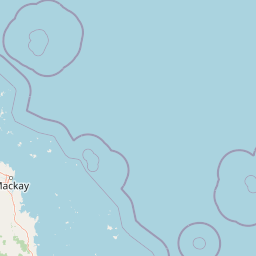
Map view of Reliance Creek National Park

Use this park location map to pinpoint Reliance Creek National Park in Australia, understand its exact geographic position, and read its mapped placement within the surrounding landscape more clearly.

Pigeon | © OpenStreetMap contributors

Location context for Reliance Creek National Park

Queensland
Park atlas

Trace the protected-area geography of coastal Queensland, comparing other parks and their diverse landscapes around the Mackay region.

Explore More National Parks and Protected Areas Near Reliance Creek National Park
Discover other national parks and protected areas throughout Queensland's coastal plain, exploring diverse ecosystems and remnant palm forests beyond Reliance Creek National Park. Use this regional view to compare conservation landscapes, trace their geographic spread, and understand their unique ecological context within the wider Mackay region.
National parkQueensland

Cape Hillsborough National Park: Queensland's Volcanic Peninsula National Park

Mapped geography and protected landscape context in Central Queensland.

Cape Hillsborough National Park is a notable protected area defined by its unique volcanic peninsula landform in Queensland. Its rugged terrain features dense rainforest interiors that contrast with the surrounding coastal environments and tidal zones. As a national park, it offers an excellent opportunity to study landscape context, mapped geological features, and the distribution of protected natural areas within the Central Queensland region.

Area
10.22 km²
Established
1985
IUCN
II
National parkQueensland

Round Top Island National Park: Protected Island Landscape in Queensland

Explore mapped boundaries and regional conservation context.

Round Top Island National Park preserves the natural character of a small coastal island in Queensland's Coral Sea region. This national park offers a clear example of an entire island protected area, contributing to the broader atlas of Australian conservation landscapes. Understanding its mapped boundaries and its place within North Queensland's geography provides insight into the diversity of protected island ecosystems preserved for their ecological significance.

Area
0.19 km²
IUCN
II
Relief
Mixed relief
Scope
Mixed
National parkQueensland

Smith Islands National Park: Queensland Coastal Protected Area Map

Discover the mapped geography and island landscapes of North Queensland.

Smith Islands National Park represents a significant protected island landscape off the coast of Queensland, Australia. This page allows for detailed exploration of its geographic features, mapped boundaries, and role as a national park within the North Queensland region's atlas of natural areas. Understand the unique character of these tropical islands and their place within Australia's network of preserved coastal environments.

Area
18.7 km²
IUCN
II
Scope
Terrestrial
National parkQueensland

South Cumberland Islands National Park: Queensland's Dramatic Granite Island Protected Landscape

Explore its unique mapped geography and natural terrain.

South Cumberland Islands National Park, situated in Queensland, Australia, is a remarkable collection of islands characterized by dramatic granite landscapes, steep interior slopes cloaked in tropical rainforest, and surrounding coral fringing reefs. As the largest island, Scawfell Island rises to a prominent 397-metre peak, showcasing the island group's significant geological features and contributing to its distinct protected landscape identity within the Whitsunday region. Understanding this park offers insight into the mapped natural context of Australia's coastal protected areas.

Area
21.8 km²
IUCN
II
Relief
Mountain
Climate
Subtropical
National parkQueensland

Repulse Island National Park: Queensland's Coastal Protected Area and Mapped Geography

Explore this key national park's mapped boundaries and island landscape.

Repulse Island National Park is an important protected natural area offering unique insights into coastal island geography within Queensland's expansive conservation network. Established as a national park, it signifies a commitment to preserving representative natural landscapes. This page focuses on the mapped boundaries, regional geographic context, and the protected landscape identity of Repulse Island National Park, providing a detailed entry point for atlas-driven discovery of Australia's protected areas.

Area
1.51 km²
Established
1994
IUCN
II
Scope
Terrestrial
National parkQueensland

Eungella National Park: National Park Protected Landscape and Queensland Geography

Explore mapped boundaries and regional landscape context.

Gain a detailed understanding of Eungella National Park as a protected landscape within Queensland. This page focuses on its mapped boundaries and geographic positioning, offering an atlas-oriented view for those interested in regional park discovery. Delve into the specific natural terrain and protected area context that characterizes Eungella National Park, enhancing your geographic comprehension.

Area
517 km²
Established
1941
IUCN
II
National parkMackay Region

Cape Palmerston National Park: Coastal Protected Area and Geographic Context in Mackay Region

Mapped landscape, dune systems, and mangrove ecosystems.

Delve into the protected landscape of Cape Palmerston National Park, a significant national park in Australia's Mackay Region. This page offers detailed insights into its geographic identity, characterized by 28 kilometers of pristine coastline, dynamic sand dunes, and extensive mangrove forests. Understand its position within the Central Mackay Coast bioregion and explore the mapped boundaries of this diverse protected area, from its beaches to the inland woodland habitats and wetland basins, providing essential atlas context for this unique coastal environment.

Area
71.9 km²
Established
1976
IUCN
II
Relief
Mixed relief
National parkIsaac Region

Homevale National Park: Central Queensland's Protected Sandstone and Fossil Landscape

Explore dramatic cliffs, peaks, and ancient Permian fossil sites.

Homevale National Park in Australia's Isaac Region is a testament to geological time and conservation. Its landscape is defined by striking sandstone formations, including dramatic cliffs, rugged peaks, and distinctive spires. Beyond its visual appeal, the park is scientifically vital for its Permian-period fossil discoveries, dating back 280 to 225 million years. This protected area offers a unique glimpse into ancient marine environments and the geological evolution of Central Queensland, making it a key destination for atlas-driven landscape discovery.

Area
218 km²
Established
1995
IUCN
II

Common questions about visiting, size, designation, and location context for Reliance Creek National Park

Reliance Creek National Park FAQs for park facts, access, geography, and protected area context
Find quick answers about Reliance Creek National Park, including protected-area facts, park geography, trail and visitor context, and how the park fits into its surrounding country and regional landscape.
MoriAtlas Explorer

Continue Your Protected Areas Search Across the Global Atlas

Deepen your exploration by continuing the structured search for national parks and protected areas worldwide. Utilize the comprehensive filtering capabilities to compare different conservation landscapes and refine your understanding of global park geography. Discover more about the distribution and characteristics of protected natural areas.

Global natural geography