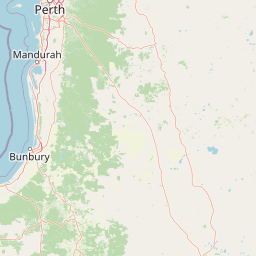
Why Wellington National Park stands out
Wellington National Park is best known for its extensive jarrah and marri forests, which represent one of the last significant old-growth forest areas in south-west Western Australia. The park protects critical habitat for several endangered marsupials including the chuditch (a carnivorous marsupial), western ringtail possum, quokka, and woylie. The presence of five cockatoo species of conservation concern, including Carnaby's black cockatoo and Baudin's cockatoo, makes the park particularly significant for avian biodiversity. The scenic Wellington Dam, with its surrounding kiosk and camping facilities, provides a central recreation hub within the park.
Wellington National Park history and protected-area timeline
The land now comprising Wellington National Park was previously owned by the Worsley Timber Company and subject to commercial logging operations. Following growing recognition of the ecological and conservation significance of the region's old-growth forests, the Western Australian Labor state government established the 2001 "Protecting our old-growth forests" policy, which led to a major expansion of protected areas across the state's south-west. Under this initiative, Wellington National Park was increased from its original 4,300 hectares to 17,000 hectares, representing more than a fourfold increase in size. The land was formally gazetted as a Class A reserve for the purpose of national park protection in 2000. In December 2004, an additional 13,745 hectares of State Forest No. 25 was incorporated into the park, bringing the total area to approximately 16,790 hectares. This consolidation transformed the reserve from a small conservation pocket into a meaningful forest wilderness area capable of supporting viable populations of forest-dependent wildlife.
Wellington National Park landscape and geographic character
The park's physical landscape consists of rolling to hilly terrain typical of the Western Australian wheatbelt and forest transition zone. The Collie River traverses the park in a generally north-south direction, with its valley floor providing lower-lying wetland areas and riparian vegetation corridors. Wellington Dam, constructed on the Collie River, creates a large artificial lake that has become an integral part of the park's character and visitor experience. The underlying geology belongs to the Yilgarn craton, one of Australia's ancient continental shields, composed of metamorphosed sedimentary and volcanic rock sequences with extensive granite intrusions. These granite outcrops add visual and ecological diversity to the forest landscape, creating exposed rock formations and influencing local soil patterns. The combination of timbered hills, river valleys, reservoir waters, and granite exposures creates a park of considerable scenic variety despite its relatively uniform vegetation structure.
Wellington National Park ecosystems, habitats, and plant life
Wellington National Park sits within the Jarrah Forest bioregion, one of Australia's most distinctive and biodiversity-rich temperate forest ecosystems. The predominant tree species are jarrah (Eucalyptus marginata), a large eucalypt valued for its durable timber and distinctive weeping form, marri (Corymbia calophylla), recognized for its large creamy flowers and angular seed capsules, and yarri or blackbutt (Eucalyptus patens), a tall forest tree forming the canopy in wetter valley positions. The understorey contains a diverse array of shrubs and understory plants including bull banksia (Banksia grandis), sheoak (Allocasuarina fraseriana), waterbush (Bossiaea aquifolium), snottygobble (Persoonia longifolia), and grasstrees (Xanthorrhoea preissii). This complex forest structure provides habitat layers suitable for numerous species and contributes to the park's high biodiversity value. The riparian zones along the Collie River support additional moisture-loving species and create important ecological corridors through the landscape.
Wellington National Park wildlife and species highlights
The park supports remarkable biodiversity, with 66 bird species recorded within its boundaries and numerous mammal species inhabiting the forest and woodland habitats. Several threatened and endangered species find refuge in the park, including the chuditch (Dasyurus geoffroii), a carnivorous marsupial once widespread across southern Australia but now confined to remnant forest areas. The western ringtail possum (Pseudocheirus occidentalis) and the quokka (Setonix brachyurus), a small wallaby famous for its appearance on Rottnest Island, both occur in the park's forest habitats. The woylie ( Bettongia penicillata), another endangered marsupial, has populations within the reserve. The avifauna is particularly noteworthy, with the park providing habitat for five cockatoo species of conservation concern: the red-tailed black cockatoo, Carnaby's black cockatoo, and Baudin's cockatoo are all listed as endangered or vulnerable. The peregrine falcon and carpet python round out the notable threatened species list.
Wellington National Park conservation status and protection priorities
Wellington National Park represents one of the most significant protected areas for old-growth forest conservation in Western Australia's south-west bioregion. The park's establishment and subsequent expansion addressed decades of forest clearance and timber harvesting that had dramatically reduced the extent of intact jarrah forest ecosystems. By protecting substantial areas of old-growth forest, the park preserves ecosystem services including water catchment function, soil stability, and carbon storage. The presence of multiple threatened species indicates the park's importance as habitat refugia in a landscape increasingly fragmented by agriculture and mining. The park is managed by the Western Australian Parks and Wildlife Service with a focus on maintaining ecological integrity while providing sustainable recreation opportunities. Conservation values are enhanced by the park's connectivity to other forest reserves in the region, creating a more comprehensive conservation network.
Wellington National Park cultural meaning and human context
The Wellington National Park region lies within the traditional country of the Noongar people, the Aboriginal inhabitants of the south-west of Western Australia. The Collie River and surrounding forest areas held cultural significance for local Noongar communities, though detailed historical documentation of traditional uses specific to the park area is limited in available sources. The name Wellington references the colonial-era naming of the dam and subsequent regional development associated with timber cutting and coal mining in the Collie basin. The park's relatively recent establishment in 2000 reflects a broader shift in Western Australian conservation policy toward protecting old-growth forests and recognizing the ecological values of remaining timbered landscapes. The transition from private timber company ownership to public protected status represents a significant change in the land's management trajectory.
Top sights and standout views in Wellington National Park
Wellington National Park offers visitors access to pristine jarrah forest wilderness with excellent recreational facilities. The Wellington Dam area provides the main visitor hub with a kiosk, camping ground, and scenic water views. Potter's Gorge delivers lakeside camping with facilities for both tents and caravans, while Honeymoon Pool offers a riverside camping experience with safe swimming and canoeing opportunities on the Collie River. Several walking trails traverse the park, including boardwalk-accessible sections along the river bank. The park's exceptional birdwatching opportunities, particularly for spotting endangered black cockatoos, draw nature enthusiasts from across Western Australia. The combination of quality camping, scenic waterways, and intact old-growth forest makes Wellington a valued destination for families and nature lovers alike.
Best time to visit Wellington National Park
The park can be enjoyed year-round, though autumn and spring typically offer the most comfortable conditions for outdoor activities. Summer months in the south-west can be warm but the forest provides shade and the river and dam areas offer refreshing swimming opportunities. Winter brings increased rainfall, which enhances the forest's lush appearance and waterfall flows but may affect some unsealed roads within the park. The wildflower season from late winter through spring (approximately August to November) showcases the park's botanical diversity, with many understorey species flowering. Birdwatching is particularly rewarding in cooler months when cockatoos are more active and visible in the canopy. The park remains popular throughout the year, with peak visitation during school holidays and warm weekends.