

Mori Atlas logo
National parkLake Muir National Park

Discover the protected geography and mapped boundaries of this significant Western Australian national park.

Lake Muir National Park: Ramsar Wetlands, Paperbark Woodlands, and Protected Landscape Atlas

Lake Muir National Park in Western Australia safeguards the ecologically vital Muir-Byenup System, an internationally recognized Ramsar wetland. This protected area encompasses Lake Muir and surrounding paperbark woodlands, offering a unique glimpse into a critical waterbird habitat within the southern forest region. Explore its mapped boundaries and understand its role as a key component of a larger conservation corridor.

WetlandsRamsar SiteNational ParkWestern AustraliaPaperbark WoodlandsWaterbird Habitat

Lake Muir National Park

National park

Park overview

Structured park overview, official facts, and landscape profile for Lake Muir National Park

Lake Muir National Park park facts, protected area profile, and essential visitor context
Review the core facts for Lake Muir National Park, including designation, size, terrain, visitor scale, habitats, and operating context in one park-focused overview.

About Lake Muir National Park

Lake Muir National Park occupies a distinctive position in Western Australia's protected area network as a relatively recent addition to the national park estate, established in 2004 after decades of advocacy for wetland protection in the region. The park is located in the shire of Manjimup, roughly 290 kilometres southeast of Perth, with access from the Muir Highway that passes to the north of the protected area. The landscape is characterised by the Lake Muir basin and its associated wetlands, forming part of the larger Muir-Byenup System that extends beyond the park boundaries into the adjoining Lake Muir Nature Reserve.

The ecological significance of this area cannot be overstated. The Muir-Byenup System has been recognised under the Ramsar Convention as a wetland of international importance, placing it among the world's most significant ecological sites. This designation reflects the system's role as a major breeding and feeding ground for waterbirds, its unique vegetation communities, and its function within the broader Warren River catchment. The park protects a mosaic of wetland types including open water, paperbark woodlands, sedge marshes, and seasonal floodplains that together support exceptional biodiversity.

The park's establishment was motivated by the ecological vulnerability of the wetland system and the need to integrate its protection with the surrounding forest landscape. Adjacent protected areas including Mount Roe National Park to the east and southeast, and Mount Frankland North National Park to the south, create a contiguous conservation corridor that enhances habitat connectivity and supports larger ecological processes across the regional landscape.

Quick facts and research context for Lake Muir National Park

Lake Muir National Park is located in the forested southern region of Western Australia, accessible via Muir Highway near Manjimup. The park was formally established in 2004 and covers 96.36 square kilometres of wetland, forest, and woodland environments. The Muir-Byenup wetland system within and adjacent to the park holds Ramsar Convention designation as a wetland of international importance. The park is managed by the Parks and Wildlife Service of Western Australia and forms part of a contiguous protected area network including Mount Roe National Park and Mount Frankland North National Park.

Park context

Deeper park guide and search-rich context for Lake Muir National Park

Lake Muir National Park history, landscape, wildlife, and travel context
Explore Lake Muir National Park through its history, landscape character, ecosystems, wildlife, conservation priorities, cultural context, and seasonal travel timing in a structured park guide built for atlas discovery and search intent.

Why Lake Muir National Park stands out

Lake Muir National Park is best known for its Ramsar-listed wetland system, the Muir-Byenup, which represents one of the most significant freshwater wetland complexes in Western Australia's south-west. The park protects the broader catchment of Lake Muir, a large inland lake surrounded by extensive paperbark woodlands and sedge wetlands. This wetland system provides critical habitat for waterbirds and supports remarkable biodiversity within the temperate forest biome of the Warren River region. The park's establishment in 2004 was driven by the need to protect this internationally significant wetland from surrounding agricultural and logging pressures.

Lake Muir National Park history and protected-area timeline

Lake Muir National Park was formally established in 2004, representing the culmination of prolonged conservation advocacy and scientific assessment of the wetland system's significance. Prior to national park designation, the area existed as a nature reserve or remained under other forms of tenure that offered varying levels of protection. The elevation to national park status reflected the growing recognition of the Muir-Byenup System's international importance and the need for more robust conservation mechanisms.

The history of human interaction with the Lake Muir region extends to the colonial period, when the area was subject to pastoral and timber interests that altered much of the surrounding landscape. The nearby town of Manjimup developed as a timber processing centre in the early twentieth century, and the broader region was progressively cleared for agriculture and plantation forestry. Within this context, the preservation of the Lake Muir wetlands became increasingly important as remaining examples of the original south-west Australian landscape. The formal recognition under the Ramsar Convention provided additional international attention and obligations that supported the case for enhanced protection through national park establishment.

Lake Muir National Park landscape and geographic character

The physical landscape of Lake Muir National Park is defined by its wetland character and the surrounding temperate forest biome. The park encompasses Lake Muir itself, a substantial inland lake, together with the interconnected wetlands of the Muir-Byenup System. This wetland complex occupies a valley setting within the broader undulating terrain of the Warren River region. The lake and surrounding wetlands are ringed by distinctive paperbark woodlands, a vegetation type adapted to permanent waterlogging and seasonal flooding. Beyond the wetland margins, the park includes pockets of open forest and woodland that transition to the taller forests of the adjacent national parks.

The terrain is generally low-lying, with the wetland basin providing flat to gently undulating topography. The surrounding landscape includes low ridges and laterite rises that provide visual contrast to the wetland flats. The hydrological function of the system is critical, with the wetlands acting as natural filters and flood storage within the Warren River catchment. Seasonal changes in water levels are a characteristic feature, with the system experiencing periods of inundation and drying that shape the ecological character of different wetland zones.

Lake Muir National Park ecosystems, habitats, and plant life

The nature of Lake Muir National Park centres on its Ramsar-listed wetland ecosystem, one of the most significant in Western Australia's south-west. The Muir-Byenup System supports an exceptional diversity of wetland habitats, from deep permanent water through to seasonal marshes and temporarily inundated flats. The vegetation is dominated by paperbark woodlands that form dense stands around wetland margins, interspersed with extensive sedge beds and floating aquatic vegetation. These habitats together support a remarkable concentration of waterbirds, with the system providing important breeding and feeding grounds for numerous species.

The broader park environment includes forest and woodland communities that are characteristic of the south-west Australian bioregion. While the wetland is the centrepiece, the surrounding vegetation contributes to habitat complexity and provides corridors for terrestrial species. The integration of wetland and forest environments within the protected area creates an ecological mosaic that supports higher biodiversity than either habitat type alone. The park's position within a larger protected area network, connected to Mount Roe and Mount Frankland North National Parks, enhances its conservation value by supporting landscape-scale ecological processes.

Lake Muir National Park wildlife and species highlights

Lake Muir National Park supports significant wildlife populations, with the wetland system being particularly important for waterbirds. The Ramsar-listed Muir-Byenup System provides critical habitat for breeding waterbirds including several species of ducks, swans, grebes, and herons. The seasonal flooding patterns create ideal conditions for waterbird nesting and foraging, with the extensive sedge beds and shallow waters supporting diverse feeding guilds. The paperbark woodlands surrounding the wetlands provide additional habitat for forest-dependent birds and arboreal mammals.

The fish and reptile communities of the wetland system also contribute to the park's ecological value, with the permanent water bodies supporting native fish species. The surrounding forest areas provide habitat for marsupials including possums and gliders, while the wetland margins support amphibians adapted to seasonal water fluctuations. The overall wildlife profile reflects the south-west Australian forest biota, adapted to the Mediterranean climate and seasonal patterns of the region.

Lake Muir National Park conservation status and protection priorities

Lake Muir National Park holds significant conservation value primarily due to its Ramsar Convention designation, which recognises the wetland system's international importance. This designation imposes obligations for wise use and conservation management, ensuring that the ecological character of the wetland is maintained. The park protects a rare example of intact freshwater wetland ecosystem in the agricultural and forestry-dominated landscape of south-west Western Australia.

The establishment of the park in 2004 represented a commitment to integrating wetland protection with the broader conservation network of the region. The connectivity with adjacent Mount Roe and Mount Frankland National Parks creates a landscape-scale conservation approach that supports ecological processes beyond what any single protected area could achieve. The park also protects the Warren River catchment, with the wetland system playing important water quality and flood regulation roles that benefit downstream environments. Conservation management focuses on maintaining the hydrological integrity of the wetland system and managing the interface with surrounding land uses.

Lake Muir National Park cultural meaning and human context

The Lake Muir region has been part of the traditional Country of Aboriginal people, though detailed historical documentation of indigenous connections to the wetland system is limited in the available source material. The broader south-west of Western Australia contains evidence of Aboriginal occupation spanning tens of thousands of years, and the wetland environments would have provided important resources for Traditional Owners.

European exploration and settlement of the Manjimup region began in the mid-nineteenth century, with timber extraction and pastoral development shaping the landscape surrounding the protected area. The township of Manjimup developed as a regional centre based on timber processing, with the surrounding landscape progressively cleared for agriculture. The survival of the Lake Muir wetland system in relatively intact condition is somewhat remarkable given the extent of landscape change in the surrounding region.

Top sights and standout views in Lake Muir National Park

The Ramsar-listed Muir-Byenup wetland system is the standout feature of Lake Muir National Park, representing one of Western Australia's most significant freshwater wetlands. The park protects a rare intact wetland complex in a region where most original habitats have been altered. The paperbark woodlands surrounding the lakes create distinctive scenery, particularly when the trees flower or when reflections appear on calm water. The park forms part of a larger connected protected area network that includes Mount Roe and Mount Frankland North National Parks, creating extensive conservation lands in the Warren River region.

Best time to visit Lake Muir National Park

Lake Muir National Park can be visited throughout the year, though the wetland experience varies with seasonal conditions. The winter and spring months typically bring higher water levels as rainfall drains into the catchment, creating more extensive inundation and optimal conditions for waterbird activity. The summer and autumn period may see lower water levels as the system dries, which can concentrate wildlife around remaining water and provide different viewing opportunities. The south-west of Western Australia experiences a Mediterranean climate with wet winters and dry summers, and the park's character changes accordingly across seasons.
Park location guide

Geography guide, regional context, and park location map for Lake Muir National Park

Lake Muir National Park park geography, regions, and map view in Australia
Understand where Lake Muir National Park sits in Australia through a broader geographic reading of the surrounding landscape, nearby location context, and its mapped position within the national park landscape.

How Lake Muir National Park fits into Australia

Australia is a constitutional monarchy and federal parliamentary democracy comprising six states and ten territories. With a population of nearly 28 million, it is one of the world's most urbanised countries, with most people concentrated on the eastern seaboard. The country has a high Human Development Index and is known for its cultural diversity, ancient Aboriginal heritage, and unique wildlife.

Wider geography shaping Lake Muir National Park in Australia

Australia occupies the entire Australian continent, the island of Tasmania, and numerous smaller islands. It is the world's flattest and driest inhabited continent, featuring vast deserts in the interior (the Outback), tropical rainforests along the eastern coast, and a coastline bordering the Indian and Pacific Oceans.

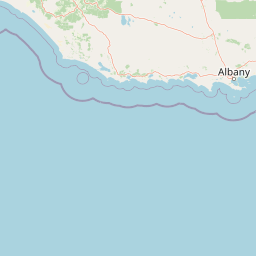
Map view of Lake Muir National Park

Use this park location map to pinpoint Lake Muir National Park in Australia, understand its exact geographic position, and read its mapped placement within the surrounding landscape more clearly.

Pigeon | © OpenStreetMap contributors

Location context for Lake Muir National Park

Western Australia
Park atlas

Explore the regional protected area network, encompassing unique wetland systems and temperate forests in Western Australia.

Discover Other National Parks and Protected Areas Near Lake Muir National Park
Explore national parks and protected areas found across the broader geographic region surrounding Lake Muir National Park, including expansive forest reserves and diverse wetland systems. Compare these protected landscapes to understand the wider conservation efforts and varied terrain in Western Australia's south-west.
National parkWestern Australia

Mount Frankland National Park: Explore Western Australia's Old-Growth Forested Landscape

Granite peaks and unique regional geography within a protected wilderness area.

Mount Frankland National Park in Western Australia is a protected area renowned for its exceptional old-growth karri and red tingle forests, some of the world's tallest tree species. The park's landscape is shaped by low granite hills and dramatic peaks, including the 411-meter Mount Frankland, offering expansive views across the wilderness. As a key component of the Walpole Wilderness Area, this national park provides a rich geographical context for understanding conservation and mapped natural landscapes in Southwest Australia.

Area
373.59 km²
Established
1988
IUCN
II
National parkSouth West

Jane National Park: Old-Growth Forest Protected Landscape and Regional Geography

Mapped terrain and ancient ecosystems of Western Australia.

Jane National Park stands as a vital protected area safeguarding some of Western Australia's last remaining old-growth forests. Located in the South West region, this national park preserves centuries-old karri trees and rich forest ecosystems within the Warren bioregion. Its mapped expanse offers insights into the region's natural terrain and the importance of conserving these rare, undisturbed landscapes for future exploration and understanding.

Area
68.63 km²
Established
2004
IUCN
II
National parkWestern Australia

Warren National Park: A Protected Landscape of Ancient Karri Forests in Western Australia

Explore mapped forest boundaries and river geography.

Warren National Park offers an unparalleled glimpse into the grandeur of old-growth karri forests, showcasing some of Western Australia's most towering trees. Situated in the South West region, this national park protects a vital tract of temperate forest ecosystem, characterized by rolling terrain and the scenic Warren River. Its mapped landscape and protected-area status highlight the critical importance of preserving these magnificent natural environments for atlas-based geographic discovery.

Area
29.81 km²
Established
1977
IUCN
II
National parkWestern Australia

Easter National Park: Protected Jarrah Forest Landscape Atlas

Explore its mapped terrain and regional geography.

Easter National Park serves as a protected national park in Western Australia, preserving crucial jarrah forest ecosystems within the Warren bioregion. As part of the Southwest Australia biodiversity hotspot, it contributes to a contiguous block of protected land safeguarding the region's distinctive woodland and forest communities. Users can explore its mapped boundaries and understand its role within the broader South West Australian geography, offering a detailed look at a representative forest reserve.

Area
29.85 km²
Established
2004
IUCN
II
National parkWestern Australia

West Cape Howe National Park: Western Australia's Southernmost Coastal Protected Landscape

Explore dramatic sea cliffs, ancient karri forests, and Torbay Head.

West Cape Howe National Park offers a distinct protected landscape experience in Western Australia, highlighted by its position at mainland Australia's southernmost point, Torbay Head. This park showcases a rugged 23-kilometer stretch of the Southern Ocean coastline, featuring towering sea cliffs that descend to pristine beaches and rocky shores. Inland, visitors find ancient karri forests and diverse vegetation types, contributing to a rich mosaic of protected habitats. Its geographic significance and unique coastal terrain make it a key destination for understanding regional protected area geography.

Area
36.05 km²
Established
1985
IUCN
II
Relief
Lowland
National parkWestern Australia

Porongurup National Park: Ancient Granite Peaks and Karri Forest Protected Landscape

Mapped terrain and geologic history in Western Australia.

Delve into Porongurup National Park, a protected landscape in Western Australia characterized by its ancient, billion-year-old granite peaks and a rare outlier of towering karri forest. This national park offers a unique geographic perspective, showcasing dramatic mountain terrain that has stood for eons. Explore the mapped boundaries and the distinct ecosystems that thrive within this ancient mountain system, providing rich context for regional atlas discovery and understanding the park's geological significance.

Area
26.21 km²
Established
1971
IUCN
II
National parkSouth West

Wiltshire-Butler National Park: Protected Jarrah Forest Landscape in Western Australia

Mapping the protected area and its regional geographic context.

Wiltshire-Butler National Park is a designated National Park in Western Australia's South West region, established in 2004 to protect significant jarrah forest ecosystems. This Class A reserve offers a clear example of protected landscape conservation, with its mapped boundaries defining a vital area within the Jarrah Forest bioregion. Users exploring this park can understand its role in the regional geography and appreciate the characteristics of its temperate forest terrain, contributing to a broader atlas of natural heritage.

Area
116.45 km²
Established
2004
IUCN
II
Relief
Highland
National parkWestern Australia

Wellington National Park: Protected Jarrah Forest & Collie River Landscape

Explore the mapped boundaries and regional geography.

Wellington National Park offers a deep dive into Western Australia's protected landscapes, characterized by extensive old-growth jarrah forests and the scenic Collie River valley. This national park provides a vital study of the region's unique geography, mapped terrain, and ecological significance within the Yilgarn craton. Understand the park's protected area identity and its place in the wider natural context of Western Australia through its detailed landscape features.

Area
170 km²
Established
2000
IUCN
II

Common questions about visiting, size, designation, and location context for Lake Muir National Park

Lake Muir National Park FAQs for park facts, access, geography, and protected area context
Find quick answers about Lake Muir National Park, including protected-area facts, park geography, trail and visitor context, and how the park fits into its surrounding country and regional landscape.
MoriAtlas Explorer

Continue Your Protected Areas Search Across the Global Atlas

Deepen your exploration by continuing the structured search for national parks and protected areas worldwide. Utilize the comprehensive filtering capabilities to compare different conservation landscapes and refine your understanding of global park geography. Discover more about the distribution and characteristics of protected natural areas.

Global natural geography