

Mori Atlas logo
National parkMount Frankland National Park

Discover the mapped geography and protected landscape of a key South West Australian wilderness area.

Mount Frankland National Park: Ancient Forests and Granite Peaks in Western Australia

Mount Frankland National Park represents a significant protected landscape within Western Australia, notable for its towering old-growth karri and rare red tingle forests. This national park encompasses 374 square kilometers of unique terrain, characterized by low granite hills and dramatic peaks like Mount Frankland itself. As part of the Walpole Wilderness Area, its forests and geological features offer a valuable atlas-driven insight into the region's biodiversity and natural heritage.

National ParkWestern AustraliaKarri ForestOld-Growth ForestGranite PeaksSouthwest Australia

Mount Frankland National Park

National park

Park overview

Structured park overview, official facts, and landscape profile for Mount Frankland National Park

Mount Frankland National Park park facts, protected area profile, and essential visitor context
Review the core facts for Mount Frankland National Park, including designation, size, terrain, visitor scale, habitats, and operating context in one park-focused overview.

About Mount Frankland National Park

Mount Frankland National Park protects a significant portion of Western Australia's Southwest Australian biodiversity hotspot, one of only 36 recognized global biodiversity hotspots. The park's terrain consists of ancient granite hills rising from the surrounding plain, with Mount Frankland serving as the most prominent landmark at 411 metres above sea level. The park's forests are remarkable for their age and size, with karri trees reaching immense proportions and the three species of tingle gum uniquely confined to the area between the park and the coast. Beyond the forested valleys, the park's many granite outcrops support low heathland communities adapted to the thin soils and exposed conditions. The park was formally dedicated in 1988, though the broader Walpole Wilderness Area concept was only formalised in 2004, linking this park with adjacent reserves to create a substantial conservation corridor.

Quick facts and research context for Mount Frankland National Park

The park was established in 1988 and is managed by the Western Australian Department of Environment and Conservation. It forms part of a cluster of adjacent protected areas including Mount Frankland North National Park, Mount Frankland South National Park, Mount Roe National Park, and Shannon National Park. The region receives substantial annual rainfall, with approximately 1,200 millimetres falling near Walpole and an estimated 1,500 millimetres at the higher elevations of Mount Frankland. The mountain was named in 1829 by explorer Thomas Braidwood Wilson after George Frankland, then Surveyor General of Tasmania.

Park context

Deeper park guide and search-rich context for Mount Frankland National Park

Mount Frankland National Park history, landscape, wildlife, and travel context
Explore Mount Frankland National Park through its history, landscape character, ecosystems, wildlife, conservation priorities, cultural context, and seasonal travel timing in a structured park guide built for atlas discovery and search intent.

Why Mount Frankland National Park stands out

Mount Frankland National Park is best known for its extraordinary old-growth karri and red tingle forests, which represent some of the most impressive timber formations in the world. The park contains two of the world's largest eucalypt species, with the distinctive buttressed roots of the red tingle reflecting the moist conditions unique to this coastal fringe of southwestern Australia. The granite peak of Mount Frankland itself, known as Caldyanup to traditional Aboriginal inhabitants, provides a dramatic focal point with panoramic views across the surrounding wilderness landscape.

Mount Frankland National Park history and protected-area timeline

The park was officially established in 1988, though the land had been recognised for its conservation value for decades prior. The naming of Mount Frankland dates to 1829 when explorer Thomas Braidwood Wilson named the granite peak after George Frankland, who served as Surveyor General of Tasmania at the time. The Aboriginal name Caldyanup reflects the long cultural history of the Noongar people in this region. The creation of the broader Walpole Wilderness Area in 2004 significantly expanded the protected status of the region, linking Mount Frankland National Park with adjacent reserves to form a coherent conservation landscape.

Mount Frankland National Park landscape and geographic character

The park's landscape is characterized by low granite hills rising from the surrounding terrain, with Mount Frankland being the highest point at 411 metres. The granite geology creates distinctive domed peaks and exposed rock outcrops across the park. Between the hills, valleys support dense forest growth, while the rockier ridges and exposed areas feature low heathland vegetation. The landscape extends from northwest to southeast, with the park bounded by several other national parks that together form the Walpole Wilderness Area.

Mount Frankland National Park ecosystems, habitats, and plant life

The park's ecological character is defined by its remarkable forest communities. The karri forest, dominated by Eucalyptus diversicolor, forms towering canopy stands that rank among the most impressive in the world. Equally distinctive is the red tingle forest, featuring Eucalyptus jacksonii, one of only three tingle species found nowhere else on Earth. The tingle trees are notable for their buttressed roots, a feature unique among eucalypts and reflecting the moist microclimate created by the proximity to the coast. On the granite outcrops where soils are thin and conditions harsh, low heathland dominates, creating a different but equally characteristic vegetation pattern.

Mount Frankland National Park wildlife and species highlights

The forests of Mount Frankland provide habitat for a variety of native Australian wildlife adapted to the tall forest environment. While the source material focuses on the forest types rather than specific species, the karri and tingle forests support birdlife, arboreal mammals, and the diverse invertebrate communities typical of old-growth forests in the Southwest Australia biodiversity hotspot.

Mount Frankland National Park conservation status and protection priorities

Mount Frankland National Park plays a significant role in protecting the Southwest Australia biodiversity hotspot, one of the world's 36 recognized biodiversity hotspots and the only one located entirely within Australia. The park's old-growth forests represent irreplaceable ecological communities, with the karri and tingle forests containing species found nowhere else on Earth. The inclusion of the park within the broader Walpole Wilderness Area in 2004 strengthened conservation outcomes by connecting multiple protected areas into a coherent landscape-level reserve system.

Mount Frankland National Park cultural meaning and human context

The mountain at the heart of the park, Mount Frankland, was known to the local Noongar Aboriginal people as Caldyanup, reflecting the long indigenous heritage of the South West region. The naming of the mountain after George Frankland in 1829 by Thomas Braidwood Wilson represents the colonial naming of the landscape, though the traditional Aboriginal name preserves the pre-colonial cultural connection to this terrain.

Top sights and standout views in Mount Frankland National Park

The park offers several notable features including the summit of Mount Frankland with its fire lookout providing 360-degree views across the wilderness, extensive walking trails ranging from accessible to challenging, and the rare opportunity to experience old-growth karri and tingle forests in their natural state. The treetop-level wilderness lookout provides an elevated perspective on the forest canopy.

Best time to visit Mount Frankland National Park

The Southwest region experiences its wettest period between May and August, with annual rainfall around 1,200 millimetres near Walpole. Unlike drier parts of southwestern Australia, summer showers are not uncommon, meaning the park can be visited year-round though wet weather gear is advisable for winter explorations. The forest atmosphere is particularly evocative during the cooler months when mist often lingers among the trees.
Park location guide

Geography guide, regional context, and park location map for Mount Frankland National Park

Mount Frankland National Park park geography, regions, and map view in Australia
Understand where Mount Frankland National Park sits in Australia through a broader geographic reading of the surrounding landscape, nearby location context, and its mapped position within the national park landscape.

How Mount Frankland National Park fits into Australia

Australia is a constitutional monarchy and federal parliamentary democracy comprising six states and ten territories. With a population of nearly 28 million, it is one of the world's most urbanised countries, with most people concentrated on the eastern seaboard. The country has a high Human Development Index and is known for its cultural diversity, ancient Aboriginal heritage, and unique wildlife.

Wider geography shaping Mount Frankland National Park in Australia

Australia occupies the entire Australian continent, the island of Tasmania, and numerous smaller islands. It is the world's flattest and driest inhabited continent, featuring vast deserts in the interior (the Outback), tropical rainforests along the eastern coast, and a coastline bordering the Indian and Pacific Oceans.

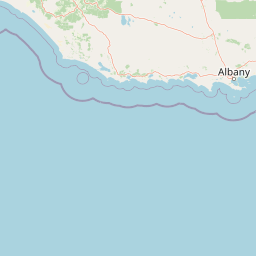
Map view of Mount Frankland National Park

Use this park location map to pinpoint Mount Frankland National Park in Australia, understand its exact geographic position, and read its mapped placement within the surrounding landscape more clearly.

Pigeon | © OpenStreetMap contributors

Location context for Mount Frankland National Park

Western Australia
Park atlas

Compare national parks and protected landscapes across Western Australia's South West region, tracing the connected Walpole Wilderness Area.

Explore Other National Parks and Protected Areas Near Mount Frankland National Park
After exploring Mount Frankland National Park, continue your discovery by browsing nearby national parks and protected areas that share similar karri and tingle forest ecosystems in Western Australia's South West region. This comparative geographic view allows for deeper understanding of the regional conservation efforts and connected landscapes within the Walpole Wilderness Area.
National parkWestern Australia

Lake Muir National Park: A Ramsar-Listed Wetland National Park in Western Australia

Explore mapped boundaries and the unique paperbark woodland landscapes.

Lake Muir National Park protects a significant portion of the Muir-Byenup System, a Ramsar-designated wetland complex in Western Australia's south-west. This national park serves as a vital habitat for waterbirds and features characteristic paperbark woodlands surrounding the large inland Lake Muir. Understanding its protected area status and mapped geographic features provides crucial insight into the region's ecological importance.

Area
96.36 km²
Established
2004
IUCN
II
National parkSouth West

Jane National Park: Old-Growth Forest Protected Landscape and Regional Geography

Mapped terrain and ancient ecosystems of Western Australia.

Jane National Park stands as a vital protected area safeguarding some of Western Australia's last remaining old-growth forests. Located in the South West region, this national park preserves centuries-old karri trees and rich forest ecosystems within the Warren bioregion. Its mapped expanse offers insights into the region's natural terrain and the importance of conserving these rare, undisturbed landscapes for future exploration and understanding.

Area
68.63 km²
Established
2004
IUCN
II
National parkWestern Australia

Warren National Park: A Protected Landscape of Ancient Karri Forests in Western Australia

Explore mapped forest boundaries and river geography.

Warren National Park offers an unparalleled glimpse into the grandeur of old-growth karri forests, showcasing some of Western Australia's most towering trees. Situated in the South West region, this national park protects a vital tract of temperate forest ecosystem, characterized by rolling terrain and the scenic Warren River. Its mapped landscape and protected-area status highlight the critical importance of preserving these magnificent natural environments for atlas-based geographic discovery.

Area
29.81 km²
Established
1977
IUCN
II
National parkWestern Australia

West Cape Howe National Park: Western Australia's Southernmost Coastal Protected Landscape

Explore dramatic sea cliffs, ancient karri forests, and Torbay Head.

West Cape Howe National Park offers a distinct protected landscape experience in Western Australia, highlighted by its position at mainland Australia's southernmost point, Torbay Head. This park showcases a rugged 23-kilometer stretch of the Southern Ocean coastline, featuring towering sea cliffs that descend to pristine beaches and rocky shores. Inland, visitors find ancient karri forests and diverse vegetation types, contributing to a rich mosaic of protected habitats. Its geographic significance and unique coastal terrain make it a key destination for understanding regional protected area geography.

Area
36.05 km²
Established
1985
IUCN
II
Relief
Lowland
National parkWestern Australia

Porongurup National Park: Ancient Granite Peaks and Karri Forest Protected Landscape

Mapped terrain and geologic history in Western Australia.

Delve into Porongurup National Park, a protected landscape in Western Australia characterized by its ancient, billion-year-old granite peaks and a rare outlier of towering karri forest. This national park offers a unique geographic perspective, showcasing dramatic mountain terrain that has stood for eons. Explore the mapped boundaries and the distinct ecosystems that thrive within this ancient mountain system, providing rich context for regional atlas discovery and understanding the park's geological significance.

Area
26.21 km²
Established
1971
IUCN
II
National parkWestern Australia

Easter National Park: Protected Jarrah Forest Landscape Atlas

Explore its mapped terrain and regional geography.

Easter National Park serves as a protected national park in Western Australia, preserving crucial jarrah forest ecosystems within the Warren bioregion. As part of the Southwest Australia biodiversity hotspot, it contributes to a contiguous block of protected land safeguarding the region's distinctive woodland and forest communities. Users can explore its mapped boundaries and understand its role within the broader South West Australian geography, offering a detailed look at a representative forest reserve.

Area
29.85 km²
Established
2004
IUCN
II
National parkSouth West

Wiltshire-Butler National Park: Protected Jarrah Forest Landscape in Western Australia

Mapping the protected area and its regional geographic context.

Wiltshire-Butler National Park is a designated National Park in Western Australia's South West region, established in 2004 to protect significant jarrah forest ecosystems. This Class A reserve offers a clear example of protected landscape conservation, with its mapped boundaries defining a vital area within the Jarrah Forest bioregion. Users exploring this park can understand its role in the regional geography and appreciate the characteristics of its temperate forest terrain, contributing to a broader atlas of natural heritage.

Area
116.45 km²
Established
2004
IUCN
II
Relief
Highland
National parkWestern Australia

Wooditjup National Park: Protected Forest Landscape and Regional Geographic Context

Explore mapped boundaries of this Western Australia national park.

Wooditjup National Park stands as a testament to Western Australia's unique forest ecosystems, specifically within the Jarrah Forest bioregion. This protected area offers a distinct natural landscape contrasting with the nearby coastal attractions of Margaret River. Delve into the park's mapped geography, understand its role as a national park, and appreciate its position within the broader South West Australian landscape and its traditional Wardandi Country heritage.

Area
38.92 km²
Established
2004
IUCN
II

Common questions about visiting, size, designation, and location context for Mount Frankland National Park

Mount Frankland National Park FAQs for park facts, access, geography, and protected area context
Find quick answers about Mount Frankland National Park, including protected-area facts, park geography, trail and visitor context, and how the park fits into its surrounding country and regional landscape.
MoriAtlas Explorer

Continue Your Protected Areas Search Across the Global Atlas

Deepen your exploration by continuing the structured search for national parks and protected areas worldwide. Utilize the comprehensive filtering capabilities to compare different conservation landscapes and refine your understanding of global park geography. Discover more about the distribution and characteristics of protected natural areas.

Global natural geography