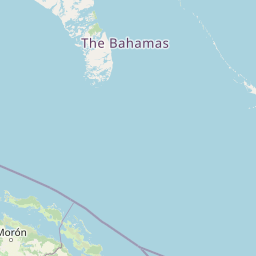
Why West Side National Park stands out
West Side National Park is most prominently recognized for its exceptional marine biodiversity and the completeness of its ecosystem representation, spanning from pine forests through mangrove systems to coral-associated marine environments. The park provides critical feeding grounds for the West Indian flamingo, one of the Caribbean's most iconic bird species. Its mangrove forests represent some of the most extensive and intact coastal wetland systems in the Bahamas, serving as nursery habitat for commercially important species such as conch, lobster, and bonefish. The park also protects important populations of the Andros rock iguana, an endemic subspecies found only on Andros Island.
West Side National Park history and protected-area timeline
West Side National Park was established in 2002 as part of the Bahamas' expanding network of national parks managed by the Bahamas National Trust, the nation's primary conservation authority. The initial designation protected a significant portion of Andros Island's western coast and adjacent marine waters, recognizing the area's ecological importance and the need for formal conservation protection. A major expansion occurred in 2012, which dramatically increased the park's boundaries and solidified its position as one of the largest protected areas in the Caribbean region. This expansion reflected growing recognition of the area's biodiversity significance and the importance of connecting protected zones to allow wildlife movement and ecological processes to function across larger landscapes. The park's establishment also represented an evolution in Bahamian conservation thinking, moving toward marine protected area designations that encompass not just terrestrial features but the surrounding ocean waters that are integral to the health of coastal ecosystems.
West Side National Park landscape and geographic character
The landscape of West Side National Park encompasses a distinctive progression from interior woodlands to coastal wetlands and marine environments. The inland areas feature Caribbean pine forests, a characteristic vegetation type of the Bahamian limestoneplatform, where these conifers grow atop relatively thin soils overlying the island's bedrock. Moving toward the coast, the vegetation transitions through buttonwood woodlands into the extensive mangrove systems that characterize the park's tidal zones. The mangroves, comprising red, white, and black mangrove species, form dense coastal forests that tolerate regular inundation by seawater and provide critical ecosystem services including coastal protection, sediment trapping, and nutrient cycling. The marine component of the park includes shallow coastal waters, tidal creeks, and the seafloor areas surrounding Andros Island, supporting seagrass beds and reef structures that add to the park's ecological diversity.
West Side National Park ecosystems, habitats, and plant life
The ecological character of West Side National Park reflects the intersection of Caribbean pine forest ecosystems, coastal mangrove systems, and marine environments within a single protected area. The pine forests of Andros represent a globally restricted habitat type, supporting specialized species including the atala butterfly, whose caterpillars feed exclusively on certain native plants. The mangrove forests constitute one of the most ecologically significant habitat types in the Caribbean, serving as breeding and nursery areas for countless fish, crustacean, and mollusk species. These wetland forests also provide important feeding and roosting habitat for waterbirds, including the West Indian flamingo. The marine waters within the park boundaries support seagrass meadows and patch reef environments that sustain populations of sea turtles, game fish, and invertebrates. This combination of interconnected habitats makes West Side National Park a model of integrated ecosystem conservation.
West Side National Park wildlife and species highlights
West Side National Park shelters a diverse assemblage of wildlife, spanning terrestrial reptiles, arboreal amphibians, marine turtles, and commercially important fishery species. The Andros rock iguana, a subspecies endemic to Andros Island, inhabits the rocky outcrops and forest edges within the park, representing a conservation priority given its restricted global range. The reptile community also includes the Bahamian boa constrictor, Cuban twig anole, Bahama brown anole, Bahama green anole, blue-tail lizard, curly-tailed lizard, and Cuban tree frog. Marine turtles are particularly prominent, with hawksbill and green sea turtles found throughout the park's waters and loggerhead turtles inhabiting the northern sections. The coastal waters support abundant populations of conch, lobster, bonefish, Atlantic tarpon, nurse sharks, bull sharks, and the endangered smalltooth sawfish. The park's mangrove forests and tidal creeks provide critical feeding areas for West Indian flamingos, whose pink plumage and distinctive feeding behavior make them a highlight for visitors.
West Side National Park conservation status and protection priorities
West Side National Park serves as a critical conservation stronghold in the Bahamas, protecting extensive examples of habitats that have been degraded or lost throughout much of the Caribbean. The park's designation as a marine protected area recognizes that effective conservation must extend beyond terrestrial boundaries to encompass the coastal waters that are intimately connected to island ecosystems. The mangrove forests within the park are among the most ecologically valuable coastal habitats in tropical regions, providing breeding grounds for fishery species, protecting coastlines from storm damage, and sequestering carbon at remarkable rates. The park's size and the relative remoteness of Andros Island have allowed ecological communities to persist with less human disturbance than on more heavily developed Bahamian islands. The presence of endangered species including the smalltooth sawfish and the Andros rock iguana adds to the park's conservation significance, as these populations depend on the protection afforded by the national park designation.
Top sights and standout views in West Side National Park
The combination of vast size, ecosystem completeness, and marine-terrestrial integration makes West Side National Park a standout protected area in the Caribbean. Its mangrove-dominated coastline represents some of the most extensive and intact coastal wetland habitat in the Bahamas, while the interior pine forests provide a glimpse of Andros's pre-development ecological character. The park's importance for West Indian flamingos, sea turtles, and the endemic Andros rock iguana gives it exceptional conservation value. The marine waters protect critical nursery habitat for conch, lobster, and bonefish, species that support both ecological function and local fishing livelihoods.
Best time to visit West Side National Park
The Bahamas enjoys a subtropical climate that makes West Side National Park a year-round destination, though the period from November through May generally offers the most comfortable conditions for outdoor exploration. During these months, temperatures are milder and rainfall is reduced compared to the summer hurricane season. The winter months often bring clearer skies and lower humidity, making this an popular time for wildlife observation and coastal exploration. Summer months bring warmer temperatures and the possibility of tropical storms, though the rain often comes in brief afternoon showers that clear quickly. Sea turtle nesting season occurs during the spring and summer months, offering opportunities to observe these marine reptiles, while flamingos can be observed feeding in the shallow coastal waters throughout the year.