Why Everglades National Park stands out
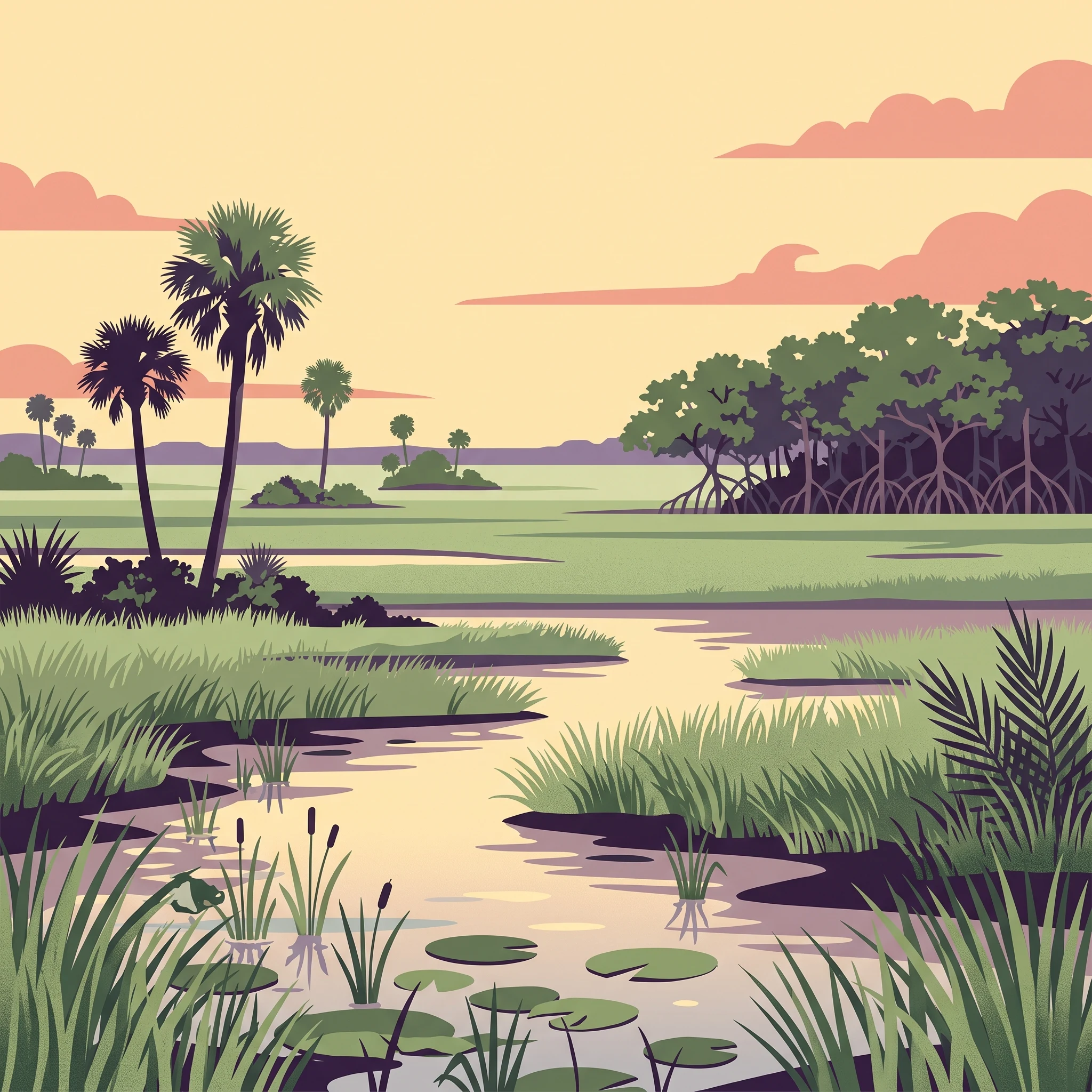
Everglades National Park is best known for its vast sawgrass prairies often called the River of Grass, a term popularized by Marjory Stoneman Douglas's influential 1947 book. The park protects the most significant breeding ground for tropical wading birds in North America, where species like roseate spoonbills, great blue herons, and wood storks gather in spectacular numbers. It contains the largest continuous mangrove system in the world and serves as critical habitat for endangered species including the Florida panther, American crocodile, and West Indian manatee. The park's flat, low-elevation landscape of nearly 1.5 million acres represents the largest subtropical wilderness in North America.
Everglades National Park history and protected-area timeline
The history of human interaction with the Everglades spans thousands of years, beginning with Native American peoples including the Tequesta on the eastern coast and the Calusa on the western side, both of whom used the wetlands primarily for hunting and fishing while living along the coastlines. Neither tribe survived beyond 1800, their populations devastated by disease, warfare, and capture for slavery. In the 19th century, Seminole and Miccosukee peoples settled in the region, with some members continuing to live within present-day park boundaries. Modern efforts to drain the Everglades began in 1882, and between 1905 and 1910, Governor Napoleon Bonaparte Broward ordered canal construction that successfully opened agricultural land. The 1926 and 1928 hurricanes that caused devastating floods led to construction of the Herbert Hoover Dike around Lake Okeechobee, which effectively cut off the Everglades from its historic water source. Conservation efforts intensified in the 1940s, culminating in Marjory Stoneman Douglas's landmark book The Everglades: River of Grass and the establishment of the national park in 1947, dedicated by President Harry Truman. Subsequent legislation in 1989 added over 109,000 acres and initiated major restoration efforts, while the Comprehensive Everglades Restoration Plan approved in 2000 represents the largest environmental restoration project in history.
Everglades National Park landscape and geographic character
The physical landscape of Everglades National Park is characterized by extraordinary flatness, with elevations ranging from sea level to only 8 feet above, making it one of the lowest-elevation national parks in the United States. The underlying limestone bedrock, formed from calcium carbonate deposits when this region was part of the shallow marine environment of ancient supercontinent Gondwana, creates the foundation for the park's unique hydrology. The terrain displays subtle but ecologically significant variations, including slight rises called pinnacles and depressions formed by erosion, which along with varying water depths determine whether soils develop as peat or marl. Sawgrass dominates much of the freshwater landscape, growing in dense stands that can reach 6 feet tall and giving the Everglades its famous River of Grass character. Tropical hardwood hammocks rise slightly above the surrounding marsh as islands of denser vegetation, while cypress domes form circular concentrations of these distinctive conifers adapted to standing water. The park's southern boundary meets Florida Bay, a vast shallow marine area spanning over 800 square miles where mangrove forests transition to seagrass meadows and coral environments. Coastal lowlands and salt marshes along the southern and western edges absorb tidal fluctuations and storm surges, creating dynamic transition zones between fresh and saltwater systems.
Everglades National Park ecosystems, habitats, and plant life
The Everglades supports an extraordinary array of interconnected habitats that together form one of the most ecologically significant wetland systems in the world. Freshwater sloughs and marl prairies form the heart of the ecosystem, their slow-moving channels and seasonal flooding patterns creating conditions that support specialized plant and animal communities adapted to constant water fluctuation. Tropical hardwood hammocks provide elevated, drier ground where diverse subtropical and tropical trees create dense canopies supporting unique animal communities. Pineland ecosystems, now reduced to fragmented stands outside the park, feature slash pines growing in solution holes within the limestone substrate and require periodic fire to maintain their ecological character. Cypress trees grow in characteristic dome formations and long strands, their distinctive knees protruding above water to provide oxygen to root systems. The mangrove forests along the coast represent the largest continuous system in the Western Hemisphere, with red, black, and white mangrove species forming complex interfaces between land and sea that serve as critical nurseries for marine life. Florida Bay itself contains extensive seagrass meadows, coral environments, and sponge habitats that support diverse marine communities.
Everglades National Park wildlife and species highlights
Everglades National Park provides critical habitat for an exceptional diversity of wildlife, including 36 federally threatened or protected species. The park supports approximately 350 species of birds, making it one of the most significant birding destinations in North America, particularly for wading birds that breed in the park in remarkable numbers. Notable species include roseate spoonbills, great blue herons, white ibises, brown pelicans, wood storks, and the endangered Everglade snail kite. Reptile populations include American alligators throughout freshwater areas and American crocodiles primarily in coastal waters, with the park protecting the only U.S. population of crocodiles. Mammals include the endangered Florida panther, white-tailed deer, Florida black bears, and West Indian manatees in coastal waters. The marine environments support over 300 species of fish, while the mangrove ecosystems provide habitat for 220 fish species, crabs, shrimp, and mollusks. The park also contains 50 reptile species and 40 mammal species, along with 25 orchid species growing in the cypress forests. Invasive species including Burmese pythons have become significant threats to native wildlife populations.
Everglades National Park conservation status and protection priorities
Everglades National Park represents one of the most complex and politically charged conservation challenges in American environmental history. Less than fifty percent of the original Everglades ecosystem remains intact today, with the rest drained for agriculture and urban development. The park was listed as a World Heritage Site in Danger from 1993 to 2007 and again from 2010 due to ongoing ecosystem degradation from water management practices, pollution, and invasive species. Water diversion for South Florida's growing metropolitan areas remains the primary threat, with over 1,400 miles of canals and extensive levee systems redirecting water away from the park. The Comprehensive Everglades Restoration Plan, approved in 2000 at a projected cost of $10.5 billion over 30 years, aims to restore natural water flow patterns and ecosystem function. Climate change poses additional threats through sea level rise, which causes saltwater intrusion into freshwater habitats and threatens to eliminate much of the park's current freshwater ecosystems within centuries. Conservation efforts also focus on invasive species control, with Burmese pythons representing a particularly significant ecological concern.
Everglades National Park cultural meaning and human context
The Everglades region has been home to human communities for thousands of years, with indigenous peoples including the Tequesta and Calusa developing distinct cultures adapted to the coastal and wetland environments. Both groups relied heavily on marine resources and maintained connections to the landscape despite rarely living within the permanent wetland interiors. The modern Seminole and Miccosukee peoples have historical connections to the region, with some tribal members continuing to live within park boundaries. American settlement patterns in the late 19th and early 20th centuries focused on coastal areas and the development of small communities like Flamingo and Chokoloskee Island, which were incorporated into the park through eminent domain. The conservation movement that led to the park's establishment was profoundly shaped by Marjory Stoneman Douglas's influential advocacy and writing, which transformed public understanding of the Everglades from a swamp to be drained to a vital ecosystem worth preserving. The park's management includes consultation with tribal representatives on policies affecting their interests within park boundaries.
Top sights and standout views in Everglades National Park
Everglades National Park offers visitors access to one of America's most distinctive and ecologically significant landscapes through a network of visitor centers, hiking trails, and waterways. The Anhinga Trail near Homestead provides easy access to sawgrass marsh habitat where alligators, wading birds, and turtles are commonly observed. Shark Valley Visitor Center on the Tamiami Trail offers a 15-mile tram route to an observation tower overlooking vast sawgrass expanses. The Wilderness Waterway extends 99 miles from Everglades City to Flamingo, providing paddling access through remote mangrove and marsh environments. The park protects the last remaining stands of pine rockland habitat in South Florida, while the mangrove system along the western coast represents the largest continuous mangrove forest in the world. The park's designation as an International Dark Sky site makes the remote southern areas excellent for stargazing, with the Milky Way visible in the clear night skies away from urban light pollution.
Best time to visit Everglades National Park
The optimal time to visit Everglades National Park is during the dry season from December through March, when temperatures are cooler, mosquitoes are less active, and wildlife is more concentrated around remaining water sources. This period coincides with the peak visitor season, and visitor centers and facilities operate on full schedules. The wet season from May through November brings higher temperatures, more mosquitoes, and periodic afternoon thunderstorms, but also offers opportunities to see the landscape in its fuller water state and observe breeding wading birds. The timing of water flow through the park is critical to ecosystem health, and visitors may observe the dynamic nature of the landscape as water levels fluctuate seasonally. Hurricane season runs from June through November, with the park having experienced significant damage from storms including Hurricanes Katrina, Wilma, and Irma in recent decades. Regardless of season, visitors should be prepared for remote conditions and limited services outside the main visitor areas.