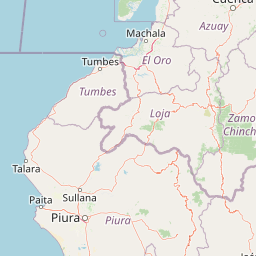
Why Cerros de Amotape National Park stands out
Cerros de Amotape National Park is best known for protecting some of the most intact remnants of the Tumbes-Piura dry forests and Pacific tropical forests in Peru. The park preserves critical habitat for jaguar and ocelot populations in the northern coastal region, as well as the endangered American crocodile in its river systems. The park's location at the southern end of the Pacific Tropical Forest ecoregion makes it a biodiversity hotspot, with 111 documented bird species including the grey-backed hawk and grey-cheeked parakeet. The Tumbes River, unique as the only navigable river on Peru's Pacific coast, flows through the park and supports both the American crocodile and neotropical otter populations.
Cerros de Amotape National Park history and protected-area timeline
Cerros de Amotape National Park was officially established on July 22, 1975, making it one of the older national parks in Peru's modern protected areas system. The creation of the park reflected growing recognition in the 1970s of the need to preserve the unique dry forest ecosystems of northern Peru, which had been subject to increasing pressure from agricultural development and logging. The park was designated as an IUCN Category II protected area, reflecting its primary purpose of protecting natural ecosystems while allowing for sustainable use in designated zones. Since its establishment, the park has served as a cornerstone of Peru's efforts to conserve the Tumbes-Piura dry forests, an ecoregion that extends across the border into Ecuador and represents the southernmost extent of the Pacific Tropical Forest. The park's establishment also acknowledged the ecological significance of the Tumbes River, the only navigable river on Peru's Pacific coast, which provides critical habitat for aquatic species including the endangered American crocodile.
Cerros de Amotape National Park landscape and geographic character
The landscape of Cerros de Amotape National Park is defined by the Cordillera de los Amotapes, a mountain range that rises steeply from the coastal plains of northern Peru. The terrain ranges from flat river valleys at around 120 meters elevation to mountain peaks reaching 1,538 meters, creating a varied topography of ridges, valleys, and steep slopes. The Tumbes River, the only navigable river on Peru's Pacific coast, traverses the park and provides a verdant corridor of riparian habitat through the otherwise dry landscape. The park spans a transition zone between the coastal desert and the tropical forest belt, resulting in a mosaic of habitat types. In the lower elevations, the landscape features tropical dry forest with scattered trees and seasonally dry streams, while higher elevations support more humid conditions with denser forest cover. The park's position in the southern portion of the Pacific Tropical Forest means that the landscape receives seasonal rainfall between December and April, with the southern and western areas of the park receiving less precipitation than the northern sections.
Cerros de Amotape National Park ecosystems, habitats, and plant life
The ecological character of Cerros de Amotape National Park is defined by its position at the southern edge of two major ecoregions: the Tumbes-Piura dry forests and the Pacific Tropical Forest. The tropical dry forest zone, receiving approximately 500 millimeters of annual precipitation, features deciduous and semi-deciduous tree species adapted to seasonal drought, while the Pacific tropical forest zone receives higher rainfall of around 1,450 millimeters annually and supports more dense, evergreen vegetation. The park's elevational gradient creates additional ecological zonation, with different species assemblages found at various altitudes. The Tumbes River and its tributaries provide aquatic habitats that support species more typical of tropical river systems, including the endangered American crocodile. The forest composition includes notable tree species such as Ceiba trischistandra with its distinctive swollen trunk, Prosopis pallida adapted to dry conditions, and valuable timber species in the genus Cedrela. The park's biodiversity significance is amplified by its location at a biogeographic crossroads where species from Central America, the Amazon, and the Andes meet.
Cerros de Amotape National Park wildlife and species highlights
Cerros de Amotape National Park supports a remarkable diversity of wildlife despite its relatively small size compared to other Peruvian protected areas. The mammal community includes several species of significant conservation concern, with the jaguar and ocelot representing the apex predators in the park's terrestrial ecosystems. The park also supports populations of mantled howler monkeys and white-fronted capuchins, which move through the forest canopy and serve as indicators of forest health. Smaller mammals include the red brocket, white-tailed deer, Guayaquil squirrel, and the semi-aquatic neotropical otter, which along the Tumbes River represents an important population in the northern Peru region. The bird fauna is particularly diverse, with 111 species documented including the grey-backed hawk, grey-cheeked parakeet, blackish-headed spinetail, and slaty becard. The park is perhaps most notable for its population of American crocodiles, an endangered species that finds critical habitat in the Tumbes River. This combination of large carnivores, primates, and crocodiles makes the park a priority site for conservation in the Pacific coastal region of South America.
Cerros de Amotape National Park conservation status and protection priorities
Cerros de Amotape National Park plays a critical role in the conservation of Peru's Pacific coastal ecosystems, protecting what remains of the historically extensive Tumbes-Piura dry forests and Pacific tropical forests. The park's designation as an IUCN Category II protected area recognizes its primary function of preserving natural ecosystems, though it also allows for sustainable activities such as hiking, research, and nature observation. The park faces significant conservation challenges, including pressure from livestock grazing within the protected area, illegal wood extraction for construction and charcoal production, hunting of wildlife, and overfishing in the Tumbes River. Additional threats include pollution from agricultural runoff, litter left by visitors, and the introduction of invasive plant species that can alter native ecosystem dynamics. Conservation efforts focus on managing these threats while maintaining the park's ecological integrity and supporting scientific research that can inform adaptive management strategies.
Cerros de Amotape National Park cultural meaning and human context
While Cerros de Amotape National Park is primarily valued for its ecological significance, the protected area exists within a region of human activity and historical land use. The Tumbes Region has a complex history involving pre-Columbian cultures and later Spanish colonization, though the park itself does not contain major archaeological sites of documented significance. Local communities in the surrounding areas maintain traditional land use practices, including small-scale agriculture and livestock keeping, which have shaped the landscape surrounding the protected area. The park's buffer zones and Checkpoints provide opportunities for visitors to experience the natural environment while respecting the park's conservation mandate, and the research facilities at El Caucho allow for scientific collaboration and environmental education.
Top sights and standout views in Cerros de Amotape National Park
The defining features of Cerros de Amotape National Park include its unique position protecting the southernmost Pacific tropical forests in Peru, the presence of the Tumbes River as the only navigable river on the Peruvian Pacific coast, and populations of jaguar and American crocodile that represent significant conservation achievements. The park's elevational range from 120 to 1,538 meters creates diverse habitats within a relatively compact area, supporting both dry forest and tropical forest ecosystems in close proximity. The Cordillera de los Amotapes provides scenic mountain landscapes, while the river corridors offer opportunities for canoeing and wildlife observation. With 111 documented bird species and notable mammal diversity including multiple primate species, the park offers exceptional wildlife viewing potential for visitors interested in the unique biodiversity of northern Peru's coastal region.
Best time to visit Cerros de Amotape National Park
The optimal time to visit Cerros de Amotape National Park aligns with the dry season, which runs from May through November and offers more predictable weather conditions for outdoor activities. During this period, rainfall is minimal and trail conditions are generally favorable for hiking and exploration. The rainy season from December to April brings more challenging conditions, though the forest becomes more lush and bird activity can increase during and after rainfall events. Mean annual temperatures range from 23 to 26 degrees Celsius, meaning the climate remains warm year-round, though the cooler months from June to September may offer more comfortable conditions for physical activities. Visitors interested in wildlife viewing should note that the dry season can make animals more concentrated around water sources, while the wet season may provide richer vegetation but more difficult access to remote areas of the park.