
Mori Atlas logo
National parkHallasan National Park

Discover the mapped protected area and dramatic terrain of this iconic Jeju Province national park.

Hallasan National Park: South Korea's Highest National Park and Volcanic Landscape

Hallasan National Park on Jeju Province represents the highest peak in South Korea and a significant UNESCO World Heritage volcanic landscape. This page offers an atlas-style exploration of the park's protected boundaries, unique shield volcano geology, and dramatic terrain, inviting discovery of its ecologically diverse slopes.

Volcanic LandscapeMountain HikingUNESCO World HeritageShield VolcanoAlpine EnvironmentKorean National Parks

Hallasan National Park

National park

Park overview

Structured park overview, official facts, and landscape profile for Hallasan National Park

Hallasan National Park park facts, protected area profile, and essential visitor context
Review the core facts for Hallasan National Park, including designation, size, terrain, visitor scale, habitats, and operating context in one park-focused overview.

About Hallasan National Park

Hallasan National Park occupies a central position on Jeju Island, the largest island in South Korea and a volcanic island formed by ancient volcanic activity. The park encompasses the entire mass of Hallasan, a massive shield volcano that rises dramatically from the surrounding terrain to become the country's tallest peak. The mountain's geological character is defined by its basalt composition and the remnants of volcanic activity that shaped the island during the Cenozoic era. The park's boundaries include not only the mountain itself but also the surrounding areas that form the ecological and visual backdrop to this iconic peak. Hallasan's significance extends beyond its recreational value to encompass important ecological, geological, and cultural dimensions that make it one of South Korea's most important protected areas. The mountain has traditionally been considered sacred, and its slopes contain areas of religious and historical significance. The park provides critical habitat for species adapted to the island's unique environmental conditions and serves as an outdoor laboratory for understanding volcanic ecology and succession.

Quick facts and research context for Hallasan National Park

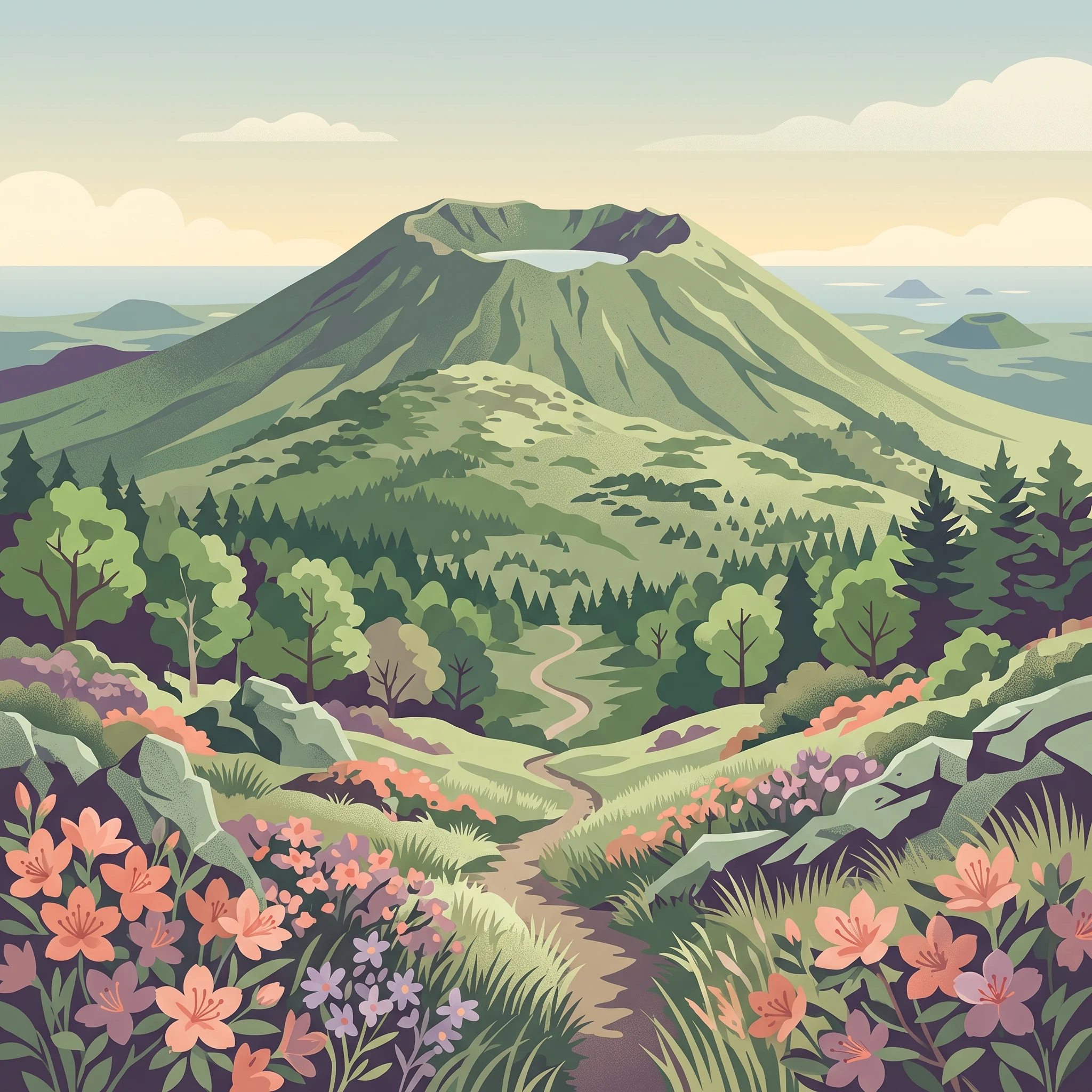
Hallasan National Park covers 153.11 square kilometers on Jeju Island, South Korea's largest island and a volcanic island in the Korea Strait. The park centers on Hallasan, a shield volcano that is the country's highest peak at 1,950 meters. Established in 1970, it was the ninth of South Korea's national parks and remains the only one not administered by the Korea National Park Service, instead being managed by Jeju Province. The mountain's composition is primarily basalt, with a summit crater lake called Baekrokdam. The park was designated a UNESCO Biosphere Reserve in 2002 and achieved World Heritage status in 2007 as part of the Jeju Volcanic Island and Lava Tubes inscription. Seven hiking trails traverse the mountain, ranging from the 1.3-kilometer Eoseungsaengak Trail to the 9.6-kilometer Seongpanak Trail.

Park context

Deeper park guide and search-rich context for Hallasan National Park

Hallasan National Park history, landscape, wildlife, and travel context
Explore Hallasan National Park through its history, landscape character, ecosystems, wildlife, conservation priorities, cultural context, and seasonal travel timing in a structured park guide built for atlas discovery and search intent.

Why Hallasan National Park stands out

Hallasan National Park is best known as the home of South Korea's highest mountain, a massive shield volcano that dominates Jeju Island and represents the geological heart of the island's volcanic landscape. The park is distinguished by its vertical ecological zonation, supporting approximately 1,800 plant species including 400 specimen plants and 50 specially protected species across its elevation gradient from sub-tropical forests at the base to sub-alpine vegetation near the summit. The summit crater lake, Baekrokdam, is a notable geological feature at the mountain's peak. The park's inclusion in the UNESCO World Heritage inscription of Jeju Volcanic Island and Lava Tubes underscores its global significance as a volcanic landscape of exceptional scientific and natural value.

Hallasan National Park history and protected-area timeline

Hallasan National Park was established on March 24, 1970, becoming the ninth designated national park in South Korea and the first to be established on Jeju Island. The park's creation reflected growing recognition of Hallasan's unique natural and geological significance, as well as the need to protect the mountain's ecosystems from development pressures that were increasing on the rapidly developing island. Unlike other South Korean national parks, Hallasan was placed under the management jurisdiction of Jeju Province rather than the Korea National Park Service, a distinction that remains unique among the country's 22 national parks. This administrative arrangement reflects Jeju's special autonomous status as a Special Self-Governing Province. The park gained additional recognition when Jeju Island was designated as a UNESCO Biosphere Reserve in 2002, placing Hallasan within an internationally recognized conservation framework. In 2007, the park achieved World Heritage status as a core component of the Jeju Volcanic Island and Lava Tubes inscription, which recognized the outstanding universal value of the island's volcanic landscapes and geological formations.

Hallasan National Park landscape and geographic character

The landscape of Hallasan National Park is defined by the mountain's distinctive shield volcano morphology, which creates a broad, gently sloping cone rising from sea level to the summit at 1,950 meters. The mountain extends predominantly in an east-west orientation, with a more gradual ascent on these sides compared to the steeper southern face. The upper reaches of the mountain feature rocky terrain and exposed basalt formations, while the lower slopes descend through forests and shrubland to the surrounding agricultural and rural landscapes of Jeju Island. At the summit, the crater lake Baekrokdam occupies a depression formed by volcanic activity, representing a key geological landmark. The park encompasses a range of micro-environments created by the interaction of elevation, aspect, and volcanic substrates, supporting diverse vegetation communities from the sub-tropical forests of the lower elevations through temperate zones to the sub-alpine conditions near the peak. The visual impact of Hallasan's towering mass is enhanced by its isolation in the center of Jeju Island, making it visible from virtually anywhere on the island and serving as a powerful landmark and symbol of Jeju's identity.

Hallasan National Park ecosystems, habitats, and plant life

The ecological character of Hallasan National Park is defined by the vertical zonation created by the mountain's significant elevation range, which supports an extraordinary diversity of habitats and species within a relatively compact area. Approximately 1,800 plant species have been documented within the park, including 400 specimen plants and 50 species of special conservation concern. This botanical richness reflects the transition from sub-tropical forest communities at lower elevations through temperate forest types to sub-alpine vegetation near the summit. The mountain's volcanic substrates create unique soil conditions that support specialized plant communities adapted to the island's volcanic geology. The park's position on Jeju Island, which lies at the southern limit of the Korean Peninsula's temperate zone, results in a mix of species with different biogeographic affinities. The recognition of Jeju as a UNESCO Biosphere Reserve in 2002 acknowledged the island's ecological significance, with Hallasan National Park serving as one of the reserve's core conservation areas.

Hallasan National Park wildlife and species highlights

The wildlife of Hallasan National Park reflects the ecological diversity created by the mountain's elevation gradient and the island's geographic position at the boundary between temperate and subtropical zones. While comprehensive species inventories for the park are limited in the available sources, the diverse habitat types from forest to alpine zones support varied animal communities. The forest environments of the lower and mid-elevations provide habitat for various bird species and small mammals, while the higher elevation areas support species adapted to more open, rocky conditions. The protected status of the park and its inclusion in the UNESCO Biosphere Reserve network contribute to conservation of the island's native wildlife, which has been impacted by habitat loss and invasive species in other parts of Jeju.

Hallasan National Park conservation status and protection priorities

Hallasan National Park represents a core component of South Korea's protected area network and holds particular significance as the only national park on Jeju Island and one of the country's most important volcanic landscape protected areas. The park's inclusion in the UNESCO World Heritage inscription of Jeju Volcanic Island and Lava Tubes in 2007 provides international recognition of its outstanding universal value and brings additional attention to conservation needs. The designation as a UNESCO Biosphere Reserve in 2002 further integrates the park into global conservation frameworks. Management by Jeju Province rather than the Korea National Park Service creates a unique administrative context that has both advantages and challenges for conservation effectiveness. The park faces ongoing pressures from the high volume of visitors attracted to Jeju Island's tourism industry, requiring careful management of visitor impacts on sensitive volcanic and ecological resources.

Hallasan National Park cultural meaning and human context

Hallasan holds significant cultural and spiritual importance in Jeju's heritage, traditionally regarded as a sacred mountain in local belief systems. The mountain's name and its Korean script (한라산) appear throughout Jeju's cultural identity, and the peak has been a site of religious significance including Buddhist temples such as Gwaneumsa, whose trail remains a popular hiking route. The park's trails pass through areas of historical and cultural interest, connecting visitors to the mountain's role in Jeju's traditional life and belief systems. Jeju's distinctive culture as an island society with its own dialect, traditions, and history is intertwined with Hallasan as the island's defining geographical feature. The mountain's presence has shaped Jeju's identity both locally and in the broader Korean cultural context.

Top sights and standout views in Hallasan National Park

The summit of Hallasan, reached via the Seongpanak or Gwaneumsa trails, offers panoramic views across Jeju Island and the surrounding sea from the highest point in South Korea. The crater lake Baekrokdam at the summit represents a unique geological feature and a memorable destination for hikers completing the mountain traverse. The vertical ecological zonation provides an exceptional opportunity to experience dramatic changes in vegetation and landscape within a single day's hike from subtropical forests to alpine conditions. The seven established trails offer options ranging from short interpretive walks to challenging full-day summit treks, accommodating various fitness levels and time constraints. The park's UNESCO World Heritage status recognizes its outstanding volcanic landscapes of global significance.

Best time to visit Hallasan National Park

The most favorable conditions for visiting Hallasan National Park occur during spring and autumn, when moderate temperatures make hiking more comfortable and the mountain's vegetation displays seasonal color changes. Spring typically brings blooming rhododendrons and other flowering plants to the slopes, while autumn offers clear visibility and the distinctive colors of changing foliage. Summer months can be hot and crowded, though the higher elevations provide some relief from lowland heat. Winter conditions can be harsh at summit elevations, with snow and ice making trails dangerous and access restricted. Visitors should check current trail conditions before ascending, as weather on the mountain can change rapidly and some trails may close during adverse conditions.
Park location guide

Geography guide, regional context, and park location map for Hallasan National Park

Hallasan National Park park geography, regions, and map view in South Korea
Understand where Hallasan National Park sits in South Korea through a broader geographic reading of the surrounding landscape, nearby location context, and its mapped position within the national park landscape.

How Hallasan National Park fits into South Korea

South Korea is a presidential republic on the Korean Peninsula in East Asia. It has a population of about 51 million and Seoul as its capital and largest city. The country is known for its rapid economic development, high technology industry, and cultural exports.

Wider geography shaping Hallasan National Park in South Korea

South Korea occupies the southern half of the Korean Peninsula in East Asia. It borders North Korea along the Demilitarized Zone to the north, the Yellow Sea to the west, and the Sea of Japan to the east. The terrain is predominantly mountainous with coastal plains along the southern and eastern shores.

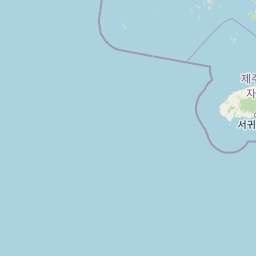
Map view of Hallasan National Park

Use this park location map to pinpoint Hallasan National Park in South Korea, understand its exact geographic position, and read its mapped placement within the surrounding landscape more clearly.

Pigeon | © OpenStreetMap contributors

Location context for Hallasan National Park

Jeju Province
Park atlas

Browse surrounding protected landscapes and compare park geography across South Korea's diverse natural terrain.

Discover National Parks Near Hallasan, Jeju Island, and Other Related Protected Areas
Continue your exploration from Hallasan National Park to survey other national parks and protected areas across Jeju Island and mainland South Korea, mapping their geographic spread. Compare diverse protected landscapes and specific park characteristics to understand the broader regional conservation efforts and unique natural features.
National parkNagasaki Prefecture

Unzen-Amakusa National Park: Volcanic Terrain and Island Geography

Explore Nagasaki Prefecture's Protected Landscape

Unzen-Amakusa National Park represents a significant protected area within Japan's geography, characterized by the imposing presence of Mount Unzen and the distinct maritime environment of the Amakusa islands. This national park offers an opportunity to study volcanic landscapes, coastal formations, and the rich cultural history intertwined with its natural setting. Understanding its mapped boundaries and geographic context provides valuable insight into Japan's protected lands and regional landscape diversity.

Area
282.79 km²
Established
1934
IUCN
II
National parkSouth Korea

Juwangsan National Park: Protected Mountain Landscape and Regional Geography in South Korea

Mapped terrain, park boundaries, and natural landscapes.

Juwangsan National Park is a protected natural area situated within South Korea's Taebaek mountain range, renowned for its steep valleys, waterfalls, and dense forests. This park offers a rich landscape context, showcasing dramatic ridgelines and providing a significant example of South Korea's protected mountain terrain. Discover its geographic placement, mapped protected boundaries, and the unique natural and cultural elements that define this national park.

Area
107.42 km²
Established
1976
IUCN
II
National parkGyeongsangbuk-do

Woraksan National Park: A Key National Park in Gyeongsangbuk-do's Regional Geography

Discover its mapped mountain terrain and protected landscape identity.

Woraksan National Park offers a detailed view of protected mountain landscapes within South Korea's Gyeongsangbuk-do region. The park is characterized by its prominent Mount Worak, steep ridgelines, and dense forested terrain, contributing significantly to the nation's network of protected areas. Users can explore the geographic context, mapped boundaries, and ecological significance of this vital national park, understanding its place in the broader regional atlas and natural landscape context.

Area
287.78 km²
Established
1984
IUCN
II
Relief
Mountain
National parkKagoshima Prefecture

Yakushima National Park: Ancient Cedar Forests and Volcanic Mountain Landscape

Discover the mapped boundaries and protected area geography.

Yakushima National Park, situated in Kagoshima Prefecture, is a prime example of protected island geography, renowned for its ancient yakusugi cedar trees and dramatic mountainous terrain. The park's protected status covers over 32,000 hectares, featuring peaks over 1,900 meters and significant biodiversity. This atlas-focused entry helps users grasp the park's unique landscape context, its position within Japan's protected areas, and the essence of its natural environment for geographic exploration.

Area
325.53 km²
Established
2012
IUCN
II
National parkJapan

Setonaikai National Park: Japan's Premier Island Archipelago and Coastal Protected Landscape

Explore the unique marine geography and mapped island environments.

Setonaikai National Park is Japan's largest national park, renowned for its stunning marine environment within the Seto Inland Sea. This protected area features approximately 3,000 islands, showcasing weathered granite formations, coastal forests, and dynamic tidal phenomena like the Naruto whirlpools. The park offers a unique atlas-style exploration of island geography, coastal landscapes, and significant cultural sites, making it a cornerstone of Japan's protected natural heritage.

Area
669.34 km²
Established
1934
IUCN
II
National parkJapan

Kerama Shotō National Park: Okinawa's Subtropical Archipelago National Park

Mapped Coral Reefs and Island Protected Landscapes.

Kerama Shotō National Park, located in Japan's Okinawa Prefecture, offers a unique atlas exploration of marine and terrestrial protected areas. The park is globally recognized for its extensive coral reef systems, home to hundreds of coral species and crucial for marine biodiversity, including sea turtles and whales. Above the water, the park encompasses subtropical islands with rolling hills and unique flora, providing a rich contrast to its vibrant underwater environments. Discover this important addition to Japan's network of protected lands, characterized by its striking natural beauty and ecological significance.

Area
939.95 km²
Established
2014
IUCN
II
National parkKansai

Yoshino-Kumano National Park: Protected National Park with Sacred Mountain Landscapes and Ancient Routes

Explore mapped park boundaries, gorges, and pilgrimage routes in Kansai.

Yoshino-Kumano National Park, a significant national park in Japan's Kansai region, invites exploration of its protected landscapes, which are deeply intertwined with spiritual heritage. Discover the park's rugged mountain terrain, ancient cypress and cedar forests, dramatic gorges like Dorokyō Gorge, and iconic coastal areas. This park is a vital entry for understanding Japan's confluence of natural geography and cultural pilgrimage, offering rich context for mapped landscape discovery.

Area
616.04 km²
Established
1936
IUCN
II
National parkIshikawa Prefecture

Hakusan National Park: Sacred Mountain Protected Landscape in Ishikawa Prefecture

Mapped alpine terrain and volcanic geography for protected area discovery.

Hakusan National Park offers a unique exploration of Japan's sacred mountain heritage and alpine natural beauty. This protected landscape, centered on Mount Haku, features distinct volcanic terrain, crater lakes, and exceptional alpine flora. Users can explore the park's mapped boundaries, understand its place within Ishikawa Prefecture's geography, and appreciate its role as a significant UNESCO Biosphere Reserve for detailed atlas-based discovery.

Area
477 km²
Established
1962
IUCN
II

Common questions about visiting, size, designation, and location context for Hallasan National Park

Hallasan National Park FAQs for park facts, access, geography, and protected area context
Find quick answers about Hallasan National Park, including protected-area facts, park geography, trail and visitor context, and how the park fits into its surrounding country and regional landscape.
MoriAtlas Explorer

Continue Your Protected Areas Search Across the Global Atlas

Deepen your exploration by continuing the structured search for national parks and protected areas worldwide. Utilize the comprehensive filtering capabilities to compare different conservation landscapes and refine your understanding of global park geography. Discover more about the distribution and characteristics of protected natural areas.

Global natural geography