Why La Corota Island Flora Sanctuary stands out
La Corota Island is best known as the only lake island in Colombia featuring old-growth Andean cloud forest, a rare ecosystem type that persists in very few protected areas nationwide. The sanctuary serves as a critical refuge for endemic subtropical cloud forest plant species and supports important populations of waterfowl and birdlife. Its compact size contrasts with its ecological richness, offering visitors an intimate experience of Andean forest ecology in a dramatic island setting surrounded by mountain waters. The sanctuary has also gained recognition as one of Colombia's most visited national parks, drawing ecotourism and birdwatching enthusiasts.
La Corota Island Flora Sanctuary history and protected-area timeline
La Corota Island was designated as a flora and fauna sanctuary on June 6, 1977, establishing its formal protection within Colombia's National Natural Park System. At the time of its establishment, the sanctuary represented an effort to preserve the remaining old-growth cloud forest on the island, which represented a unique and irreplaceable ecological resource in the Colombian context. The designation recognized that the island harbored plant communities and ecological processes found nowhere else in the national park network. In 2001, the sanctuary received additional recognition through its designation as a Ramsar Wetland, acknowledging the international significance of its aquatic and forest ecosystems. This dual designation as both a national protected area and a Ramsar site reflects the sanctuary's ecological complexity, encompassing both terrestrial forest and the surrounding lake waters that provide critical habitat for waterfowl and aquatic species. The sanctuary's prominence has grown over the decades, with visitor numbers reaching approximately 28,000 in 2018, making it one of the most visited parks in the Colombian protected area system.
La Corota Island Flora Sanctuary landscape and geographic character
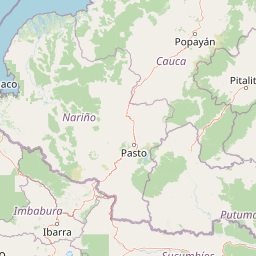
The sanctuary is set within Laguna de la Cocha, a scenic high-altitude lake surrounded by the mountainous terrain of the Nariño department in Colombia's southwestern Andean region. La Corota Island rises from the lake's waters as a forested dome, its slopes covered in dense cloud forest that creates a striking contrast against the open water. The island represents the only lake island in Colombia that retains old-growth Andean forest, a landscape feature of significant ecological and scenic value. The surrounding water area of approximately four hectares falls within the sanctuary's boundaries, protecting the lake habitat around the island. The overall terrain of the island is characterized by gentle slopes supporting the cloud forest, with the highest points offering views across the lake to the surrounding Andean landscape. The combination of island forest and lake waters creates a distinctive landscape that differs markedly from the continental forest reserves found elsewhere in Colombia's Andean region.
La Corota Island Flora Sanctuary ecosystems, habitats, and plant life
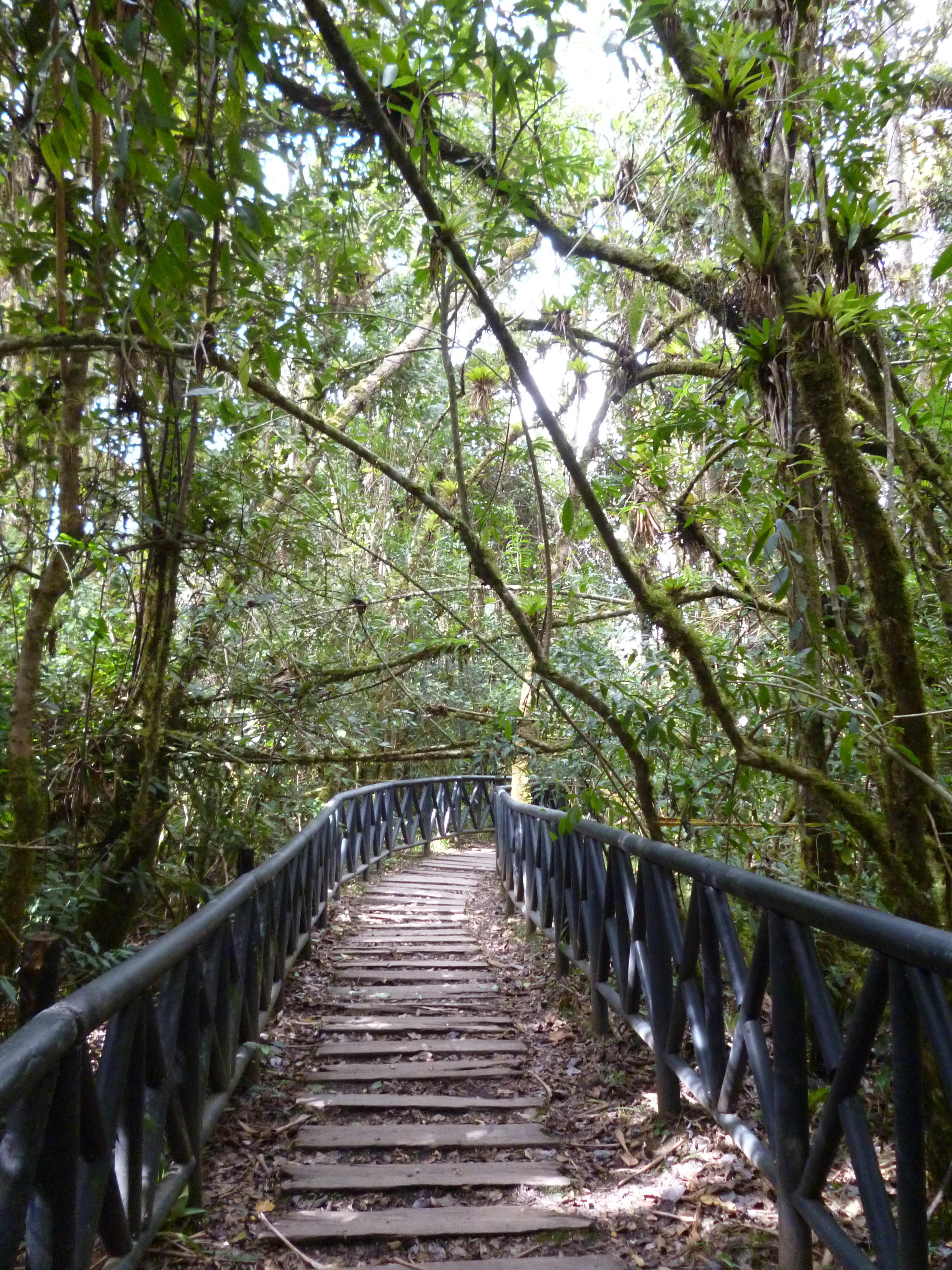
The ecological character of La Corota Island is defined by its subtropical Andean cloud forest, a moist forest type that forms where persistent mist and cloud cover create conditions of high humidity and moderate temperatures. This forest type supports a distinctive suite of plant species adapted to the cool, moist conditions of the high-altitude Andean environment. The sanctuary protects several endemic plant species including Hieronyma macrocarpa, Eugenia stipitata, Befaria glauca, Hesperomeles glabrata, and Drymis granantesis, representing a collection of species that find their stronghold in the island's protected forests. The cloud forest on the island exists in relatively intact condition, representing what remains of forest types that once covered much of the surrounding Andean landscape but have been largely converted to agriculture and pasture. The surrounding lake waters add ecological complexity, supporting aquatic habitats for fish, amphibians, and waterfowl that use the sanctuary's protected waters for feeding and breeding.
La Corota Island Flora Sanctuary wildlife and species highlights
The wildlife community of La Corota Island encompasses both forest-dwelling species and aquatic organisms associated with the surrounding lake. Among mammals, the sanctuary supports the soft-furred Oldfield mouse and various bat species (Chiroptera), representing the small mammal component of the island's terrestrial fauna. The lake environment attracts diverse waterfowl, with the Andean coot (Fulica ardesiaca) and pied-billed grebe among the more visible aquatic birds. The bird community of the sanctuary is notably diverse, featuring species such as the black-crowned night heron, rufous-collared sparrow, red-crested cotinga, great thrush, glossy-black thrush, spectacled whitestart, golden-fronted whitestart, slaty brushfinch, sparkling violetear, and collared Inca. This bird diversity makes the sanctuary particularly attractive to birdwatchers, who visit specifically to observe both resident forest species and migratory waterfowl that use the lake as a seasonal habitat. The aquatic environment also supports fish and amphibian populations, adding to the overall biodiversity value of the protected area.
La Corota Island Flora Sanctuary conservation status and protection priorities
La Corota Island Flora Sanctuary represents a conservation priority at multiple scales due to its unique ecological character and limited distribution. As the only lake island in Colombia with old-growth Andean cloud forest, the sanctuary preserves an ecosystem type that has nearly vanished from the surrounding landscape. The dual designation as a national protected area and a Ramsar Wetland reflects the international recognition of its ecological significance, particularly for waterfowl habitat and wetland conservation. The sanctuary's small size makes it vulnerable to external pressures, but its island isolation provides a degree of protection from the land-use change that has transformed continental Andean forests. The preservation of the cloud forest also contributes to watershed protection for Laguna de la Cocha, as the forest cover helps regulate water quality and flows into the lake. Conservation of this island ecosystem also carries educational and research value, offering a contained natural laboratory for studying Andean cloud forest ecology, succession dynamics, and species interactions in a relatively undisturbed setting.
La Corota Island Flora Sanctuary cultural meaning and human context
La Corota Island sits within the cultural landscape of Nariño, a department in southwestern Colombia with strong indigenous heritage and Spanish colonial history. The lake, Laguna de la Cocha, has historically served as a resource for local communities, and the island itself carries cultural significance as a natural landmark in the regional landscape. The sanctuary is managed as part of Colombia's National System of Protected Areas, with oversight provided through the national parks service. The proximity to Pasto, the departmental capital, connects the sanctuary to the administrative and cultural life of the region. Ecotourism at La Corota represents a contemporary use of the landscape that balances conservation with public enjoyment and environmental education, allowing visitors to experience the island's natural values while supporting protection of its ecological resources.
Top sights and standout views in La Corota Island Flora Sanctuary
La Corota Island stands out as Colombia's smallest national park yet one of its most visited, offering an intimate encounter with Andean cloud forest on a scenic island lake setting. The sanctuary provides access to two short hiking trails that wind through old-growth forest, while boardwalks protect the understory while allowing visitors to experience the forest environment. Birdwatching opportunities are exceptional, with over a dozen species including thrushes, whitestarts, and the colorful collared Inca readily observed in the forest canopy. The island's status as the only lake island in Colombia with intact cloud forest makes it a unique destination for understanding Andean ecological systems. The Ramsar designation highlights the international importance of the wetland surrounding the island, where waterfowl congregate among the emergent vegetation.
Best time to visit La Corota Island Flora Sanctuary
The sanctuary can be visited throughout the year, though the visitor experience varies with the Andean seasons. The dry season, typically from December through March, often provides clearer skies and more comfortable conditions for hiking the island trails. The wet season brings frequent mist and cloud that contribute to the cloud forest character, creating an atmospheric experience where the forest is often shrouded in moisture. Wildlife viewing may be most productive during the drier months when birds are more active and visible in the canopy. The lake environment remains accessible year-round, and the sanctuary's small size means that a visit of a few hours is sufficient to experience the main features of the island. Peak visitation tends to coincide with Colombian holiday periods and weekends, so those seeking a quieter experience may prefer weekday visits.