

Mori Atlas logo
National parkLos Remedios National Park

Discover the mapped terrain, geological features, and cultural boundaries of this significant national park.

Los Remedios National Park: Protected Area and Historical Landscape in Mexico State

Los Remedios National Park represents a unique protected landscape in Mexico State, centered on the historically rich Cerro Moctezuma. Established as a national park, it preserves a vital intersection of pre-Hispanic astronomical observatories, colonial engineering marvels like its iconic aqueduct, and significant post-conquest narratives. This page offers an atlas-style exploration of its mountainous terrain, geological context, and mapped boundaries, providing essential geographic context for this culturally dense protected area.

National ParkMexicoArchaeological SiteColonial ArchitectureHistorical HeritageProtected Area

Los Remedios National Park

National park

Park overview

Structured park overview, official facts, and landscape profile for Los Remedios National Park

Los Remedios National Park park facts, protected area profile, and essential visitor context
Review the core facts for Los Remedios National Park, including designation, size, terrain, visitor scale, habitats, and operating context in one park-focused overview.

About Los Remedios National Park

Los Remedios National Park occupies a distinctive position among Mexico's protected areas as a site where natural landscape, colonial architecture, and pre-Hispanic archaeological remains coexist within a mountainous setting immediately adjacent to one of the world's largest metropolitan areas. The park is located in the municipality of Naucalpan in Mexico State, approximately 400 meters above the Valley of Mexico floor, making it a prominent green space within the western edge of the Mexico City metropolitan region. The geological foundation consists primarily of clastic and volcanic rocks, with soils characterized by a dark, nutrient-rich surface layer. The park's establishment in 1938 reflected early 20th-century Mexican efforts to preserve significant natural and cultural landscapes, though the original declared area appears to have been larger than the current official 400 hectares. The mountain of Cerro Moctezuma serves as the park's central geographic and historical feature, providing both the archaeological significance and the elevated terrain that distinguishes this protected area from surrounding urban development. The interplay between the colonial aqueduct's monumental arches, the religious sanctuary, and the pre-Hispanic archaeological zone creates a cultural landscape of unusual density, while the surrounding vegetation and wildlife populations represent remnant ecological communities within an intensely urbanized region.

Quick facts and research context for Los Remedios National Park

Los Remedios National Park covers 400 hectares in Naucalpan, Mexico State, established in 1938. The park sits at roughly 2300 meters elevation on Cerro Moctezuma, featuring semi-dry steppe climate with average temperatures of 18°C and annual precipitation between 600 and 800 millimeters. Within its boundaries lie the Sanctuary of the Virgin of Los Remedios, a 500-meter colonial aqueduct with fifty arches standing 16 meters high, and a pre-Hispanic archaeological zone. The park contains more than 160 plant and animal species, with four species listed under Mexico's threatened species category NOM-059. The area holds significant historical importance as both an Aztec observatory and the reputed resting place of Hernán Cortés after the fall of Tenochtitlan.

Park context

Deeper park guide and search-rich context for Los Remedios National Park

Los Remedios National Park history, landscape, wildlife, and travel context
Explore Los Remedios National Park through its history, landscape character, ecosystems, wildlife, conservation priorities, cultural context, and seasonal travel timing in a structured park guide built for atlas discovery and search intent.

Why Los Remedios National Park stands out

Los Remedios National Park is most notably recognized for its extraordinary concentration of historical and cultural features within a relatively small protected area. The park preserves a 17th-century colonial aqueduct spanning 500 meters with fifty arches, flanking the Sanctuary of the Virgin of Los Remedies. This architectural monument, constructed in two phases between 1616 and 1765, represents significant colonial engineering achievement. Equally significant is the pre-Hispanic archaeological component, with evidence of a Chichimeca temple and confirmed use as an Aztec astronomical observatory on Cerro Moctezuma. The park's location on the same mountain where Cortés is believed to have paused after fleeing the Aztec capital creates a unique intersection of pre-Hispanic, colonial, and post-conquest historical narratives.

Los Remedios National Park history and protected-area timeline

Los Remedios National Park was established by federal decree on April 15, 1938, during a period when Mexico was systematically designating protected areas to preserve significant natural and cultural landscapes. The park's creation reflected recognition of the area's multiple historical layers and its importance as a green space serving the metropolitan region. The colonial infrastructure within the park, particularly the aqueduct, represents a significant construction history. The first phase of the aqueduct was built in 1616 under Viceroy Diego Fernández de Córdoba, Marquis of Guadalcázar, designed to transport water from a spring at San Francisco Chimalpa to the Sanctuary of Los Remedios. This water supply also served agricultural irrigation needs in the surrounding villages of San Bartolomé, Santa María Nativitas, and Santa Cruz. The original system consisted primarily of clay pipes with two spiral air-release towers, known locally as "caracoles" or snails, which flank the sanctuary. By 1764, the water supply proved insufficient, leading Viceroy Joaquín de Montserrat to commission the arched aqueduct system completed in 1765. Eventually, this system also failed to provide adequate water and became primarily an architectural monument. The park's historical significance extends further back to the pre-Hispanic period, when the site functioned as an Aztec astronomical observatory on Cerro Moctezuma, and is believed to be the location where Hernán Cortés and his forces rested during their retreat from Tenochtitlan following the 1521 conquest.

Los Remedios National Park landscape and geographic character

The physical landscape of Los Remedios National Park is defined by its mountainous terrain centered on Cerro Moctezuma, which rises prominently above the surrounding Valley of Mexico at approximately 2300 meters above sea level. The geological foundation consists predominantly of clastic and volcanic rocks, reflecting the region's tectonic and igneous heritage. Soils are characterized by a dark, soft surface layer that is rich in organic matter and nutrients, classified within the edaphological system as H-type soils. The terrain creates a distinctive topography within the western edge of the Mexico City metropolitan area, providing both visual prominence and ecological separation from surrounding urban development. The park's elevation and rocky substrate contrast with the valley floor below, creating a landscape of considerable topographic relief. The colonial aqueduct follows the terrain contour, its fifty arches creating a linear monumental element that integrates with the natural topography while serving as a defining cultural landscape feature. The surrounding area, despite heavy urbanization pressures, retains elements of the original landform character within the protected boundary.

Los Remedios National Park ecosystems, habitats, and plant life

The ecological character of Los Remedios National Park reflects its position within the Valley of Mexico's transition zone, characterized by semi-dry steppe climate conditions with summer rainfall patterns. Average annual temperature is approximately 18°C with precipitation ranging between 600 and 800 millimeters annually. Despite the park's small size and extreme urban pressures, biodiversity surveys have documented more than 160 plant and animal species within its boundaries, including four species recognized under Mexico's NOM-059 threatened species category. The vegetation community includes a mix of introduced and native species, with eucalyptus, white cedar, pine, and ash among the predominant tree species, along with capulín and areas of grassland. The presence of numerous exotic species, totaling 33 documented in the park, reflects both historical planting decisions and ongoing colonization by non-native plants. The park represents a remnant of the ecological communities that once covered larger areas of the Valley of Mexico's western slopes, with its biodiversity value enhanced by the contrast with surrounding urbanized landscape.

Los Remedios National Park wildlife and species highlights

The wildlife community within Los Remedios National Park, while limited by the park's small size and disturbed condition, includes several species adapted to the semi-urban environment. Mammalian species present include the cacomixtle, a type of opossum common in central Mexican landscapes, and the red-bellied squirrel. Bird diversity is more notable, with species including the long-tailed dove, several hummingbird species such as the berillo hummingbird and broad-billed hummingbird, the cardinal flycatcher, the spring robin, various tyrant flycatcher species, the butcherbird, the Mexican oropendola, and the Mexican woodpecker. Reptile diversity includes terrestrial snakes, the collared spiny lizard, and mountain alligator lizards. Amphibian species include canyon frogs. The presence of 33 exotic species, including the Argentine monk parakeet, house sparrow, and various introduced snails and plants, indicates significant ecological disturbance, though the remaining native species and habitat elements continue to support wildlife populations within this urban-proximate protected area.

Los Remedios National Park conservation status and protection priorities

Los Remedios National Park faces severe and ongoing conservation challenges that have dramatically reduced its effective protected area. Of the original declared forest area, which appears to have been approximately 410 hectares, less than 100 hectares of natural habitat remain today. Approximately 75 percent of the park's surface area now contains illegal settlements, including some authorized by local authorities despite federal law prohibiting such encroachment on protected lands. The park lacks a formal conservation and management program, protective fencing, and other mechanisms to resist development pressure. Environmental enforcement has been limited, with federal environmental agency Profepa responding to complaints about tree removal and development proposals only through inspections rather than effective protection. The illegal settlements and new construction have extended onto adjacent ejido lands and are beginning to encroach on the archaeological zone, prompting involvement from the National Institute of Anthropology and History (INAH) and community organizing among neighboring residents. The conversion of original forest to urban land uses, combined with the filling of ravines and watersheds with construction debris, represents a significant conservation failure that has diminished both the ecological and cultural values this national park was created to protect.

Los Remedios National Park cultural meaning and human context

The cultural context of Los Remedios National Park is exceptionally rich, encompassing multiple historical periods within a relatively compact area. The pre-Hispanic period is represented by archaeological evidence of a Chichimeca temple and the confirmed use of Cerro Moctezuma as an Aztec astronomical observatory, indicating the site's importance in pre-Columbian religious and scientific practices. Following the Spanish conquest, the site acquired new religious significance through the Sanctuary of the Virgin of Los Remedios, which became a destination for pilgrimages and remains an active religious site. The colonial period left the aqueduct, constructed in two phases between 1616 and 1765, as both a functional water supply system and an architectural landmark. The site also holds post-conquest historical significance as the reputed location where Hernán Cortés and his forces rested during their retreat from Tenochtitlan in 1521 after the fall of the Aztec capital. This layering of Chichimeca, Aztec, colonial, and post-conquest historical narratives within a single protected area creates cultural context of unusual depth and complexity.

Top sights and standout views in Los Remedios National Park

Los Remedios National Park stands out for the extraordinary density of significant cultural features within its boundaries, combining pre-colonial archaeological evidence, colonial-era religious architecture, and one of the region's most impressive colonial engineering structures. The 500-meter aqueduct with its fifty arches reaching 16 meters in height represents a remarkable architectural achievement, while the Sanctuary of the Virgin of Los Remedies continues to function as an active religious site. The archaeological zone on Cerro Moctezuma preserves evidence of Chichimeca and Aztec occupation, with the mountain's function as an astronomical observatory adding scientific significance to its cultural value. The park also serves as one of the few remaining green spaces in the heavily urbanized western Mexico City metropolitan area, providing ecological and recreational functions despite its compromised condition.

Best time to visit Los Remedios National Park

The park's proximity to Mexico City and its mixed cultural and natural features make it visitable throughout the year, though the summer rainy season from June through September brings the most verdant vegetation conditions. The semi-dry climate means that the dry winter and spring months, from November through May, offer clearer visibility and more comfortable conditions for walking among the archaeological and colonial structures, though the park's landscape will appear more brown during this period. The dry season also presents lower risks from weather-related access interruptions that could affect this mountainous site.

Park location guide

Geography guide, regional context, and park location map for Los Remedios National Park

Los Remedios National Park park geography, regions, and map view in Mexico
Understand where Los Remedios National Park sits in Mexico through a broader geographic reading of the surrounding landscape, nearby location context, and its mapped position within the national park landscape.

How Los Remedios National Park fits into Mexico

Mexico, officially the United Mexican States, is a country in North America spanning the Sierra Madre mountain ranges, coastal plains, and tropical regions. It borders the United States to the north, Guatemala and Belize to the southeast, and has coastlines along the Pacific Ocean, Gulf of Mexico, and Caribbean Sea. With a population exceeding 130 million, Mexico is home to one of the world's most significant concentrations of Indigenous languages alongside Spanish.

Wider geography shaping Los Remedios National Park in Mexico

Mexico occupies a land area of 1,972,550 km2, making it the thirteenth-largest country in the world. The terrain is highly diverse, featuring the Sierra Madre Occidental and Sierra Madre Oriental mountain ranges, the Mexican Plateau, coastal lowlands along the Pacific and Gulf/Caribbean margins, and the Yucatan Peninsula. The country spans multiple climate zones from desert in the north to tropical rainforest in the south.

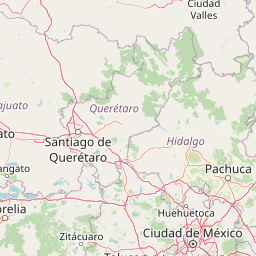
Map view of Los Remedios National Park

Use this park location map to pinpoint Los Remedios National Park in Mexico, understand its exact geographic position, and read its mapped placement within the surrounding landscape more clearly.

Pigeon | © OpenStreetMap contributors

Location context for Los Remedios National Park

Mexico State
Park atlas

Map the Regional Spread of Protected Areas and Compare Park Geography Near Mexico City.

Browse National Parks and Protected Areas Surrounding Los Remedios National Park
After exploring Los Remedios National Park, continue your discovery by browsing nearby protected areas and national parks that share the unique mountainous terrain and historical landscapes of the western Valley of Mexico. Comparing these regional parks offers valuable geographic context and highlights the diverse conservation efforts across similar cultural and natural environments.
National parkMexico City

Desierto de los Leones National Park: Protected National Park and its Geographic Setting

Explore mapped boundaries and regional landscape context near Mexico City.

Delve into the specifics of Desierto de los Leones National Park, a designated national park recognized for its protected landscape. This MoriAtlas entry focuses on its geographic presence within the Mexico City region, providing clear insights into its mapped boundaries and the surrounding natural terrain. Understand the park's importance as a conservation area and its contribution to the regional geography through dedicated atlas data.

Area
18.66 km²
Established
1917
IUCN
II
National parkMexico

Fuentes Brotantes de Tlalpan National Park: National Park Geographic Atlas and Terrain Exploration

Explore protected land boundaries and mapped natural landscapes.

Delve into the geographic specifics of Fuentes Brotantes de Tlalpan National Park, a protected national park situated within Mexico. This detailed view highlights the park's mapped terrain and its significance as a distinct natural landscape. Understand its role in the country's protected area network and its contribution to the broader atlas of natural geography.

Area
1.38 km²
Established
1936
IUCN
II
National parkMexico

Cumbres del Ajusco National Park: Exploring Mexico's National Park Protected Landscape

Discover mapped boundaries and regional geography.

Cumbres del Ajusco National Park is an important national park offering rich opportunities for geographic exploration. This detailed profile focuses on its identity as a protected landscape within Mexico, providing essential context for map-based discovery. Understand the park's specific location, its mapped territory, and its role within the nation's network of conservation areas, facilitating a structured atlas view.

Area
9.2 km²
Established
1936
IUCN
II
Relief
Mountain
National parkState of Mexico

Lagunas de Zempoala National Park: Protected Landscape and Geographic Atlas Entry

Explore mapped boundaries and natural terrain context.

Lagunas de Zempoala National Park is a dedicated protected area within the State of Mexico, serving as a vital point for understanding national park geography and landscape mapping. This entry provides foundational atlas data on its protected boundaries and its specific natural terrain. It is designed for users seeking structured information on the park's geographic scope and its importance as a mapped natural landscape for regional context.

Area
47.9 km²
Established
1936
IUCN
II
National parkMorelos

El Tepozteco National Park: Protected National Park in Morelos

Explore the mapped geography and protected landscape of this Mexican national park.

Delve into El Tepozteco National Park, a key protected area designated as a national park within the Morelos region of Mexico. This profile provides detailed insight into its mapped boundaries and its significance within the broader regional geography. It serves as a resource for understanding the park's protected landscape and its context for atlas-based geographic exploration.

Area
232.58 km²
Established
1937
IUCN
II
National parkMexico

Iztaccíhuatl, Popocatépetl National Park: Mexico's National Park Protected Area

Mapped boundaries and regional geographic context.

Iztaccíhuatl, Popocatépetl National Park is a protected natural landscape offering insight into Mexico's geography. This atlas entry focuses on the park's defined boundaries and its role within the national protected areas framework. Explore the unique geographic character and mapped extent of this significant park, understanding its position within the country's natural landscape atlas.

Area
398.19 km²
Established
1935
IUCN
II
National parkHidalgo

El Chico National Park: National Park Boundaries and Regional Geography in Hidalgo

Explore the mapped protected landscape and terrain of this national park.

El Chico National Park is a distinct protected area offering insight into Mexico's regional geography and conservation landscapes. This page details its specific geographic footprint, the character of its natural terrain, and its place within Hidalgo's broader protected areas atlas. Users can examine mapped boundaries and understand the park's unique environmental context.

Area
27.39 km²
Established
1982
IUCN
II
National parkMichoacán

Insurgente José María Morelos y Pavón National Park: Mapped Protected Landscape in Michoacán

Discover its geographic context and protected area boundaries.

Explore Insurgente José María Morelos y Pavón National Park, a designated national park in Michoacán, Mexico. This page provides detailed insights into its protected status, mapped geographic features, and its role as a significant natural landscape within the regional atlas. Understand the park's protected boundaries and its contribution to the geographic understanding of Michoacán.

Area
71.92 km²
Established
1939
IUCN
II

Common questions about visiting, size, designation, and location context for Los Remedios National Park

Los Remedios National Park FAQs for park facts, access, geography, and protected area context
Find quick answers about Los Remedios National Park, including protected-area facts, park geography, trail and visitor context, and how the park fits into its surrounding country and regional landscape.
MoriAtlas Explorer

Continue Your Protected Areas Search Across the Global Atlas

Deepen your exploration by continuing the structured search for national parks and protected areas worldwide. Utilize the comprehensive filtering capabilities to compare different conservation landscapes and refine your understanding of global park geography. Discover more about the distribution and characteristics of protected natural areas.

Global natural geography