Why El Tepozteco National Park stands out
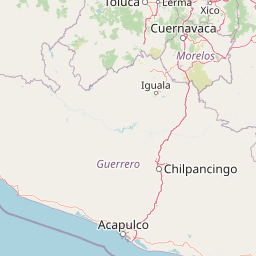
El Tepozteco National Park is best known for two interconnected features that make it distinctive among Mexico's protected areas. First, it protects a remarkable volcanic landscape within the Sierra Chichinautzin, a volcanic field that forms a natural boundary between the Valley of Mexico and the Balsas Basin. The landscape includes recent volcanic formations, steep canyons, and diverse forest types that change with elevation. Second, the park contains the archaeological site of El Tepozteco, where the ruins of an Aztec temple stand on a ridge overlooking the surrounding mountains, providing a cultural dimension that few other Mexican national parks can match. The combination of volcanic geology, ecological diversity, and pre-Hispanic heritage creates a uniquely layered protected area.
El Tepozteco National Park history and protected-area timeline
El Tepozteco National Park was established by presidential decree on January 22, 1937, during the administration of President Lázaro Cárdenas. This places it among the earlier national parks created in Mexico, reflecting a period when the country was developing its systematic approach to nature conservation. The park's creation recognized both the ecological importance of the Sierra Chichinautzin volcanic landscape and the cultural significance of the El Tepozteco archaeological site, which had long been a place of pilgrimage and historical importance in the region. The establishment came at a time when Mexico was consolidating its national parks system, which had begun with the creation of Desierto del Carmen (now known as Parque Nacional Desierto del Carmen) in 1917. Over the decades, the park has been managed under Mexico's federal protected area framework, with administration handled by the National Commission of Natural Protected Areas (CONANP). The park has evolved its zoning approach over time, dividing the territory into distinct management zones that balance preservation objectives with the needs of local communities who have lived within the park's boundaries for generations.
El Tepozteco National Park landscape and geographic character
The landscape of El Tepozteco National Park is defined by its volcanic origins and the dramatic topographical relief created by the Sierra Chichinautzin volcanic field. The terrain is predominantly steep and rugged, with deep canyons cutting through the volcanic terrain and ridges rising sharply from the surrounding lowlands. The volcanic field is geologically young by geological standards, with Chichinautzin Volcano's last major eruption occurring approximately 1,800 years ago. This recent volcanic activity has left an imprint on the landscape in the form of cinder cones, lava flows, and volcanic debris that create diverse microhabitats throughout the park. The highest elevations reach nearly 3,500 meters, where the climate transitions from subtropical conditions at lower elevations to cool temperate conditions near the summit. The park contains several distinct mountain masses, with Chichinautzin Volcano dominating the northwestern portion and the Sierra de Tepoztlán running through the central area. Valleys and ravines provide shade and moisture that support different vegetation types, particularly the montane cloud forests that develop on north-facing slopes with consistent moisture. The combination of volcanic terrain, elevation gradients, and varied aspect creates a visually striking landscape that changes dramatically as visitors move from the lower foothills to the high peaks.
El Tepozteco National Park ecosystems, habitats, and plant life
The ecological diversity of El Tepozteco National Park reflects the park's position at the intersection of multiple environmental zones and its dramatic elevation range. The vegetation communities follow a clear zonation pattern tied to elevation and moisture availability. Tropical dry deciduous forests dominate the lower elevations up to 1,600 meters in the southern portion of the park, forming part of the broader Balsas dry forests ecoregion. As elevation increases, the vegetation transitions to pine-oak forests characteristic of the Trans-Mexican Volcanic Belt pine-oak forests ecoregion. These mixed forests of pine and oak, often with juniper understory, extend from 1,600 to 2,800 meters. Above 2,800 meters, pine forests become predominant, transitioning to pine-fir and fir-dominated forests above 3,000 meters. Perhaps most distinctive are the patches of montane cloud forest that occur in steep canyons and on slopes with year-round moisture and frequent cloud immersion. These cloud forests support specialized species adapted to the constant humidity and create a dramatically different environment from the surrounding pine-oak woodlands. The climate gradient supports this ecological variation, with mean annual temperatures ranging from above 18°C at the lowest elevations to between 5°C and 12°C at the highest points, and mean annual rainfall increasing from around 800mm to 1,200mm with elevation.
El Tepozteco National Park wildlife and species highlights
El Tepozteco National Park supports notable biodiversity, particularly in terms of endemic species that are found nowhere else in Mexico. The park has documented 126 bird species, of which 42 are endemic to Mexico, reflecting the importance of the Trans-Mexican Volcanic Belt as a center of avian diversity and specialization. Notable bird species include the banded quail, dusky hummingbird, Boucard's wren, long-tailed wood partridge, and black-chested sparrow. The Sierra Madre sparrow, classified as endangered, represents a particularly significant conservation priority for the park. Mammal diversity includes 35 documented species, with three species endemic to Mexico. The reptile fauna is especially notable, with 27 species recorded, 19 of which are endemic to Mexico. This high level of reptile endemism reflects the isolated nature of the volcanic mountain islands within the broader landscape. The Mexican beaded lizard, a large venomous species, represents one of the park's more distinctive reptilian inhabitants. The park also supports three limited-range rattlesnake species, including the Mexican lance-headed rattlesnake, Central Mexican pygmy rattlesnake, and Cross-banded mountain rattlesnake. Amphibian diversity includes several species of frogs and tree frogs, with the dwarf Mexican tree frog among the species documented in the park's streams and moist habitats.
El Tepozteco National Park conservation status and protection priorities
El Tepozteco National Park implements a zoned approach to conservation that recognizes the varied conditions and human presence within its boundaries. The preservation zone covers 12,958.1 hectares and encompasses areas with relatively intact and sensitive habitat, including the Tenexcalli area in the northern portion (covering 10,031 hectares and including Chichinautzin Volcano) and the Barriga de Plata area. These zones are managed for maximum protection with limited human access. The recuperation or restoration zone, known as El Texcal, encompasses 2,682.9 hectares in the southwestern portion of the park where human activity has significantly altered the landscape. This zone is managed to allow recovery of natural vegetation and wildlife through limitations on human activities, with the restoration effort focused on an elevation band between 1,400 and 1,950 meters. The traditional use zone covers 6,496.6 hectares and permits residents of the park to utilize natural resources in ways that do not significantly degrade the ecological integrity of the area. This zone includes multiple community areas and reflects the reality that approximately 40,000 people live within the park boundaries across eight settlements. The park's conservation significance extends beyond its biodiversity value to include watershed protection, as the forests and volcanic substrates are critical for recharging the aquifers that supply water to Mexico City and Cuernavaca.
El Tepozteco National Park cultural meaning and human context
The cultural dimension of El Tepozteco National Park centers on the archaeological site of El Tepozteco, which gives the park its name and represents a significant pre-Hispanic heritage site. The Aztec temple ruins stand on a mountain ridge within the park, serving as a visible reminder of the region's pre-Columbian history and the spiritual significance of elevated natural features in Mesoamerican cultures. The town of Tepoztlán, located within the park's boundaries, has a long history as a settlement and continues as a living community within the protected area. The park contains eight settlements with approximately 40,000 residents, including Santa Catarina, San Andrés de la Cal, Tepoztlán, San Juan Tlacotenco, Santo Domingo Ocotitlán, Amatlán de Quetzalcóatl, Villa Santiago Tepetlapa, and Acolapa. These communities collectively occupy 1,121.1 hectares within the park and maintain traditional land use practices within the designated traditional use zone. The interaction between protected area management and resident communities represents an ongoing challenge and characteristic of many Mexican national parks that have historical settlements within their boundaries.
Top sights and standout views in El Tepozteco National Park
El Tepozteco National Park offers visitors a combination of natural and cultural attractions that distinguish it from many other Mexican protected areas. The volcanic landscape of the Sierra Chichinautzin provides dramatic mountain scenery with peaks reaching nearly 3,500 meters, while the relatively recent volcanic activity has created interesting geological features including cinder cones and ancient lava flows. The archaeological site of El Tepozteco, with its Aztec temple ruins, offers a tangible connection to pre-Hispanic history and can be visited as part of a park experience. The ecological diversity, with multiple forest types from tropical dry forest to pine-fir forest, creates opportunities to observe changing environments within a single visit. The birdlife, including 42 endemic species, makes the park particularly interesting for ornithologists and birdwatchers. The proximity to both Mexico City and Cuernavaca makes the park accessible for day trips, while the mountain environment provides a noticeably different climate from the metropolitan lowlands. The watershed function of the park, supplying fresh water to millions of people, adds an invisible but important dimension to its conservation significance.
Best time to visit El Tepozteco National Park
The best time to visit El Tepozteco National Park depends on what visitors hope to experience, but generally the drier months from November through April offer the most stable conditions for hiking and outdoor exploration. The climate varies significantly with elevation, from warm subhumid conditions at lower elevations to cool temperate conditions near the summit, so visitors should prepare for temperature changes appropriate to the altitudes they plan to reach. The higher elevations can be particularly pleasant during the cooler months, while the lower forest zones are more comfortable during the warmer dry season. The rainy season from May through October brings increased cloud cover and precipitation, which can limit visibility from higher peaks but also creates the moisture conditions that sustain the cloud forests and enhance waterfall flows in canyons. Wildlife activity may be more observable during the transitional periods at the beginning and end of the rainy season. Regardless of when visitors plan to come, they should be prepared for the elevation-related climate variations and steep terrain that characterize the park.