

Why Phrumsengla National Park stands out
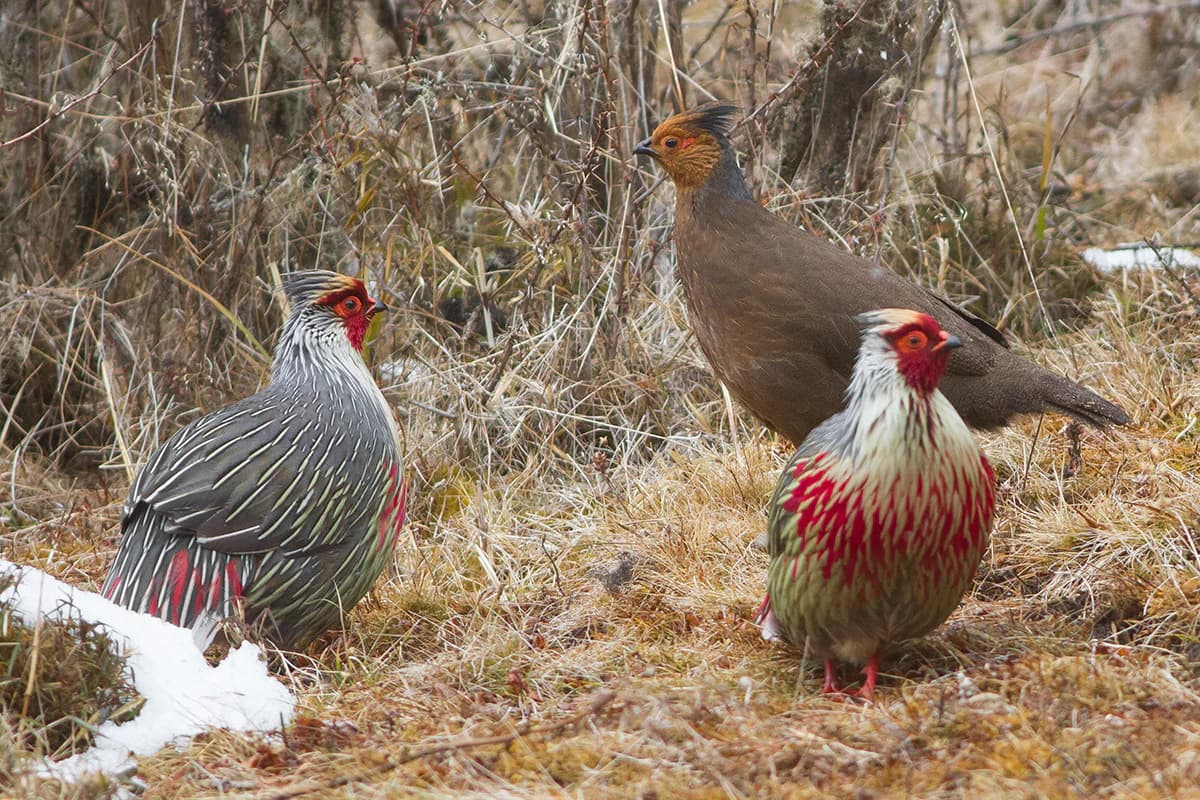
Phrumsengla National Park is especially known for its exceptional avifauna, protecting several threatened bird species within its temperate forest habitats. The park shelters the rufous-necked hornbill, satyr tragopan, beautiful nuthatch, Ward's trogon, rufous-throated wren-babbler, and chestnut-breasted partridge, making it a significant site for Himalayan bird conservation. The park also supports populations of large mammals including the snow leopard in its high-altitude zones, as well as Asian elephants, Indian rhinoceros, and wild water buffalo in lower elevations. Its extensive old-growth and fir forests, combined with the dramatic altitudinal range from subtropical valleys to alpine peaks, create a particularly varied protected landscape within the Himalayan region.
Phrumsengla National Park history and protected-area timeline
Phrumsengla National Park was officially established in 1998, representing a formalized recognition of the ecological significance of the Thrumshing La region in central Bhutan. The park was originally designated under the name Thrumshingla National Park but was subsequently renamed to reflect the more widely used spelling of Phrumsengla, aligning with local usage and official Dzongkha transliteration conventions. The protected area was created as part of Bhutan's systematic expansion of its national park network during the late 1990s, a period when the kingdom was consolidating its approach to biodiversity conservation and sustainable land management. The Bhutan Trust Fund for Environmental Conservation has played a central role in supporting park management and funding conservation initiatives within the protected area. The park's boundaries were drawn to encompass portions of four districts, recognizing that the ecological and watershed functions of the Thrumshing La area extended beyond any single administrative division.
Phrumsengla National Park landscape and geographic character
The physical landscape of Phrumsengla National Park is defined by its position in the Himalayan foothills, where elevation changes create dramatic transitions in terrain and scenery across relatively short distances. The park spans altitudes from approximately 700 metres in its lower valleys to 4,400 metres in its alpine zones, with the Thrumshing La pass serving as a distinctive high point within the protected area. The terrain includes steep mountain slopes, forested ridges, and valley bottoms carved by streams descending from higher elevations. The old-growth forests that characterize lower and middle elevations are dominated by fir species, creating dense canopy coverage across substantial portions of the park. Soils in the park are recognized as particularly fragile, a characteristic that has influenced management decisions regarding development activities and has reinforced the rationale for maintaining these areas under protection. The landscape changes substantially with season, as monsoonal rainfall transforms valley streams and the appearance of the forest changes across the year.
Phrumsengla National Park ecosystems, habitats, and plant life
The ecological character of Phrumsengla National Park reflects its position within a globally significant biodiversity hotspot, with the park protecting representative samples of Himalayan temperate forest ecosystems. The park's altitudinal range supports multiple distinct ecological zones, from sub-tropical forest at lower elevations through temperate broadleaf and coniferous forest to alpine meadows and rocky terrain at the highest points. The extensive old-growth forests represent increasingly rare examples of unmodified Himalayan woodland, providing habitat for species that depend on mature forest structure and the ecological continuity it provides. Fir forests dominate substantial portions of the park, creating the visual and ecological backbone of the protected landscape. The fragility of soils throughout the park has contributed to its preservation, as the terrain is considered unsuitable for logging or agricultural development, leaving large areas in natural condition. This ecological integrity has been maintained despite the presence of human communities within the park boundaries.
Phrumsengla National Park wildlife and species highlights
Phrumsengla National Park supports a remarkable diversity of wildlife, with particular significance attached to its bird species and large mammals. The park provides critical habitat for six threatened bird species: the rufous-necked hornbill, rufous-throroated wren-babbler, satyr tragopan, beautiful nuthatch, Ward's trogon, and chestnut-breasted partridge. The near-threatened wedge-billed wren babbler also occurs within the park. Mammalian fauna includes significant populations of large herbivores such as Asian elephants, Indian rhinoceros, and wild water buffalo, with the park representing an important area for these species within Bhutan. Smaller ungulates include the barasingha, Himalayan goral, hog deer, mainland serow, and northern red muntjac. The high-altitude zones provide habitat for the elusive snow leopard, while primate species including Assamese macaque, rhesus macaque, capped langur, and Gee's golden langur occur in forested areas. Carnivores present include dholes, Eurasian and smooth-coated otters, leopard cats, and yellow-throated marten. The rodent and shrew diversity is particularly notable, with numerous species recorded.
Phrumsengla National Park conservation status and protection priorities
Phrumsengla National Park holds significant conservation value within Bhutan's protected area network and contributes to broader regional and global biodiversity protection efforts. The park's IUCN designation as Category II reflects its primary purpose of protecting natural ecosystems while allowing for sustainable visitor use. Several species occurring within the park are classified as threatened under international conservation frameworks, making the protected area strategically important for their survival. The fragile soils and mountainous terrain that make development unsuitable have paradoxically contributed to habitat preservation, leaving large tracts of old-growth forest intact. The Bhutan Trust Fund for Environmental Conservation maintains active involvement in supporting park management and conservation programs. The World Wildlife Fund also maintains operations within the park, contributing additional capacity to conservation efforts. Nearly 11,000 residents within the park boundaries represent both a conservation challenge and an opportunity, as authorities have noted the park demonstrates relatively successful integration of human communities with natural resource protection.
Top sights and standout views in Phrumsengla National Park
Phrumsengla National Park offers exceptional Himalayan nature experiences through its combination of accessible landscapes along Bhutan's principal east-west highway, diverse forest ecosystems spanning dramatic elevation changes, and populations of threatened species including the snow leopard and rufous-necked hornbill. The park's bisection by the Lateral Road provides unique opportunities for visitors to traverse high-altitude terrain while observing temperate forest transitions. The old-growth fir forests represent particularly valuable examples of Himalayan forest ecosystems that remain relatively unmodified. Birdwatchers find significant interest in the park's threatened species, while the presence of large mammals including elephants and rhinoceros in lower elevations adds to wildlife viewing potential.
Best time to visit Phrumsengla National Park
Phrumsengla National Park can be visited throughout the year, though the experience varies substantially with seasonal conditions. The autumn months from September through November typically offer clear skies and stable weather, making this period popular for wildlife viewing and landscape appreciation. Winter months bring colder temperatures, particularly at higher elevations, but can provide opportunities for observing wildlife at lower elevations where animals congregate near available forage. The monsoon season from June through September brings heavy rainfall to the region, creating lush forest conditions but potentially affecting travel along the Lateral Road. Spring provides another favorable period for visiting, with moderate temperatures and the possibility of observing flowering vegetation in the forests. Visitors traveling along the Lateral Road should be aware that weather conditions in mountain passes can change rapidly regardless of season.