

Mori Atlas logo
National parkTsitsikamma National Park

Discover the mapped boundaries and unique terrain of this iconic national park.

Tsitsikamma National Park: South Africa's Coastal Protected Landscape and Geography

Tsitsikamma National Park represents a significant protected landscape along South Africa's southern coast, celebrated for its dramatic geography where ancient indigenous forests directly meet the powerful Indian Ocean. This national park, a recognized management unit within the larger Garden Route National Park framework, offers a distinctive setting for understanding regional conservation efforts and coastal terrain. Explore its mapped boundaries and diverse natural features, providing essential context for atlas-driven discovery of South Africa's protected areas.

Coastal ForestMarine Protected AreaGarden RouteHiking TrailsWildlife ViewingWhale Watching

Tsitsikamma National Park

National park

Park overview

Structured park overview, official facts, and landscape profile for Tsitsikamma National Park

Tsitsikamma National Park park facts, protected area profile, and essential visitor context
Review the core facts for Tsitsikamma National Park, including designation, size, terrain, visitor scale, habitats, and operating context in one park-focused overview.

About Tsitsikamma National Park

Tsitsikamma National Park represents a unique convergence of terrestrial and marine ecosystems along South Africa's southern coastline. The park forms part of the greater Garden Route National Park managed by South African National Parks (SANParks), though it retains its distinct identity as a recognized conservation unit. The coastal reserve encompasses a remarkable variety of habitats within a relatively compact area, from the high cliffs and rocky shores of the shoreline to the deep, shady ravines where forest streams descend toward the sea. The indigenous forests that characterize much of the park's interior represent some of the most significant remaining examples of southern African coastal forest, a vegetation type that has been greatly reduced by historical clearing for agriculture and development. These forests support a remarkable diversity of birdlife, including several endemic species, while the marine protected area safeguards one of the most important coastal marine ecosystems in the region. The park's location along the Garden Route, one of South Africa's most celebrated tourist corridors, makes it accessible to visitors while maintaining its wilderness character, particularly in the more remote sections accessible only by trail.

Quick facts and research context for Tsitsikamma National Park

Tsitsikamma National Park occupies a 80-kilometre coastal strip along South Africa's Garden Route, connecting the Western Cape and Eastern Cape provinces. The park features a marine protected area spanning 186 square kilometres with 60 kilometres of protected shoreline, established in 1964 and among the world's oldest no-take marine reserves. The Otter Trail, one of South Africa's most renowned hiking routes, begins at the Storms River camp and traverses the park's diverse landscapes. Nature's Valley at the park's western end offers a more secluded visitor experience, while the nearby Bloukrans Bridge hosts the world's highest commercial bungee jump at 216 metres.

Park context

Deeper park guide and search-rich context for Tsitsikamma National Park

Tsitsikamma National Park history, landscape, wildlife, and travel context
Explore Tsitsikamma National Park through its history, landscape character, ecosystems, wildlife, conservation priorities, cultural context, and seasonal travel timing in a structured park guide built for atlas discovery and search intent.

Why Tsitsikamma National Park stands out

Tsitsikamma is best known for its dramatic coastal scenery where ancient forests meet towering cliffs and turbulent seas. The park protects one of the last remaining tracts of relatively unmodified southern African coastal forest, home to species like the endangered Cape parrot and the elusive Cape grysbok. The Otter Trail, a multi-day hiking route that follows the coast through some of the park's most spectacular terrain, has become iconic among outdoor enthusiasts. The Tsitsikamma Marine Protected Area stands as one of the world's oldest and largest no-take marine reserves, providing crucial habitat for endangered fish species and supporting thriving populations of dolphins and seasonal whales. The suspension bridge at Storms River mouth offers visitors iconic views of the river meeting the sea, framed by indigenous vegetation.

Tsitsikamma National Park history and protected-area timeline

Tsitsikamma's protected area status evolved through several phases before achieving its current form within the Garden Route National Park. The Tsitsikamma Marine Protected Area was designated in 1964, making it one of the earliest marine reserves established along South Africa's coast and one of the oldest no-take marine protected areas in the world. On 6 March 2009, the Tsitsikamma National Park was amalgamated with Wilderness National Park and various additional tracts of land to form the unified Garden Route National Park. This consolidation brought together fragmented protected areas under single management, creating a more coherent conservation landscape along the Garden Route. The Storms River Mouth area has long served as the primary visitor gateway to the park, developing from early conservation-era facilities into the modern complex that includes accommodation, restaurant services, and adventure booking centres. A significant fire destroyed the restaurant facility at Storms River in November 2016, though the broader visitor infrastructure continued operating.

Tsitsikamma National Park landscape and geographic character

The landscape of Tsitsikamma National Park presents a dramatic contrast between the ancient forests of its interior and the wild, wave-battered coastline where the land meets the Indian Ocean. The coastal terrain features steep cliffs that drop sharply to the sea, interspersed with rocky coves and small sandy beaches accessible only at low tide or via forest trails. The Storms River mouth marks a particularly dramatic junction where the river carves a narrow gorge through the coastal plateau before entering the sea, creating the iconic setting that draws many visitors to the park. Further west, the landscape softens somewhat toward Nature's Valley, where the Groot River flows through a broader valley bottom before reaching the coast. The forest interior is characterized by tall trees including sickle-leaved yellowwoods, which can reach considerable age and size, creating a dense canopy that shades the forest floor. Streams cascade through the forest in numerous places, dropping over small waterfalls and cutting deep ravines that add vertical dimension to the otherwise gentle terrain. The coastal fynbos vegetation that occupies the more open areas supports a distinctly different character from the forest, with diverse ericaceous shrubs and proteas contributing to the area's remarkable plant diversity.

Tsitsikamma National Park ecosystems, habitats, and plant life

Tsitsikamma protects a remarkable concentration of ecological diversity within its coastal boundaries, representing one of the most significant remaining examples of southern African coastal forest ecosystems. The indigenous forests contain several tree species of particular conservation concern, including the sickle-leaved yellowwood, which dominates many forest patches and provides habitat for a range of forest-dependent species. The forest understory supports a diverse community of shrubs and smaller plants adapted to the relatively low light conditions beneath the canopy, while forest edges and openings support different assemblages characteristic of the broader fynbos vegetation of the Cape Floristic Region. The marine component of the protected area maintains near-pristine conditions along 60 kilometres of coastline, protecting critical habitat for numerous fish species that have been depleted in less-protected waters. The Tsitsikamma Marine Protected Area's long-standing no-take status has allowed marine ecosystems to function with minimal human interference, supporting populations of endangered fish species that serve as indicators of overall ecosystem health. The interaction between terrestrial and marine systems is particularly evident where forest streams carry nutrients to the coast, influencing the productivity of nearshore waters.

Tsitsikamma National Park wildlife and species highlights

The wildlife of Tsitsikamma reflects the park's diverse habitats, with different species assemblages occupying the forest interior, coastal cliffs, and marine environments. The indigenous forests support several mammal species including the endangered Cape parrot, which utilizes large hollow-bearing trees for nesting, and the small, secretive Cape grysbok that remains well-camouflaged in the understory. Blue duikers, the smallest of Africa's antelope species, are commonly encountered along forest trails, while porcupines and various small carnivores like the African civet maintain secretive lifestyles within the forest. The birdlife is particularly diverse, with forest-specific species including the Knysna turaco, emerald cuckoo, and numerous sunbird species that exploit the nectar resources of forest flowering plants. Coastal cliffs provide nesting habitat for various seabird species, while the marine environment supports resident populations of dolphins that are frequently observed from shore, particularly during winter months when seasonal whales also transit the area. The marine protected area's protected status allows fish species to grow to larger sizes than in adjacent waters, creating a more natural ecological structure within the reserve.

Tsitsikamma National Park conservation status and protection priorities

Tsitsikamma National Park occupies a critical position in the conservation of South Africa's coastal ecosystems, protecting both terrestrial and marine environments within a unified management framework. The Tsitsikamma Marine Protected Area, established in 1964, represents one of the longest-running no-take marine reserves globally, providing a reference ecosystem against which impacts of fishing and other extractive activities can be measured elsewhere. This long protection history has allowed fish populations to recover to natural density and size structures, making the area particularly valuable for scientific research on endangered fish species. The coastal forest habitats, though reduced from historical extent, remain some of the most significant intact examples of this vegetation type, representing a priority for ongoing protection given the extensive clearance that has occurred throughout the region. The park's integration into the Garden Route National Park in 2009 strengthened conservation outcomes by connecting Tsitsikamma with adjacent protected areas, facilitating the movement of wildlife and creating larger, more resilient conservation landscapes.

Tsitsikamma National Park cultural meaning and human context

The name Tsitsikamma originates from the Khoekhoe language, an indigenous language family spoken by the original inhabitants of much of southern Africa before European colonization. The etymology reflects the area's hydrological character, with 'tjisi' meaning ten and 'ǁamma' meaning water, interpreted as referring to the Tsitsikamma River or possibly to the numerous streams that characterize the landscape. Some interpretations suggest the name means 'place of much water' or 'waters begin', capturing the sense of abundant water sources that flow from the highlands to the coast. The Khoekhoe people maintained relationships with this landscape for generations before colonial displacement, and their place names persist as important connections to the region's pre-colonial history. The park contains sites of archaeological significance, including the Strandloper Cave mentioned in trail descriptions, which represents evidence of historical human occupation of the coastline.

Top sights and standout views in Tsitsikamma National Park

The suspension bridge at Storms River mouth provides the park's most iconic viewpoint, crossing the river entrance to offer sweeping views of the coastline and access to trail networks that penetrate the forest. The Otter Trail remains one of South Africa's premier hiking experiences, following the coast through some of the park's most dramatic terrain over its multi-day route. The Blue Duiker Trail offers excellent birdwatching opportunities in forest areas that support species found nowhere else, while the Waterfall Trail provides access to a striking cascade within reasonable distance of the main camp. Whale and dolphin watching from coastal vantage points, particularly during the winter months, adds marine wildlife viewing to the park's outdoor attractions. The Bloukrans Bridge, located near the park boundary, offers the world's highest commercial bungee jump for adventure seekers, adding a distinctive activity to the broader Tsitsikamma area.

Best time to visit Tsitsikamma National Park

The Tsitsikamma region enjoys a mild, temperate climate that permits year-round visitation, though different seasons offer distinct advantages for visitors seeking particular experiences. Summer months from December to February bring warmer temperatures and longer days, making this an excellent time for hiking and outdoor activities, though the park can become quite busy during this peak tourist season. Winter months from June to August see cooler temperatures and increased rainfall, creating lush conditions within the forest and adding dramatic cloud formations to the coastal scenery. The winter period from June to November coincides with the southern right whale migration, offering excellent opportunities for shore-based whale watching as these massive creatures transit the coastal waters. Dolphin sightings are possible throughout the year, though the marine protected area's clear waters allow for rewarding underwater experiences during the calmer summer months. The shoulder seasons of autumn and spring offer a balance of pleasant weather, reduced crowds, and the chance to witness seasonal flowering of fynbos vegetation.
Park location guide

Geography guide, regional context, and park location map for Tsitsikamma National Park

Tsitsikamma National Park park geography, regions, and map view in South Africa
Understand where Tsitsikamma National Park sits in South Africa through a broader geographic reading of the surrounding landscape, nearby location context, and its mapped position within the national park landscape.

How Tsitsikamma National Park fits into South Africa

South Africa is the southernmost country in Africa, spanning 1.22 million km² with a population of over 63 million. The country operates with three capital cities, Pretoria (executive), Cape Town (legislative), and Bloemfontein (judicial), and is renowned for its biodiversity, national parks, and multicultural society.

Wider geography shaping Tsitsikamma National Park in South Africa

South Africa occupies the southernmost region of Africa, with coastline along both the Atlantic Ocean to the west and the Indian Ocean to the east. The interior features elevated plateaus including the Highveld, with the Drakensberg escarpment marking the eastern highlands. The country shares borders with Namibia, Botswana, Zimbabwe, Mozambique, Eswatini, and Lesotho.

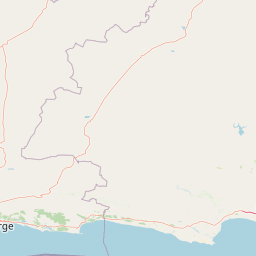
Map view of Tsitsikamma National Park

Use this park location map to pinpoint Tsitsikamma National Park in South Africa, understand its exact geographic position, and read its mapped placement within the surrounding landscape more clearly.

Pigeon | © OpenStreetMap contributors

Location context for Tsitsikamma National Park

Eastern CapeWestern Cape
Park atlas

Explore the connected protected landscapes and regional park geography around South Africa's Garden Route.

Discover More Protected Areas and National Parks Near Tsitsikamma National Park
After exploring Tsitsikamma National Park, discover other national parks and protected areas within South Africa's diverse coastal and forest regions. This view allows for detailed geographic comparison of different protected landscapes, offering insights into their unique conservation profiles and ecological characteristics.
National parkSouth Africa

Garden Route National Park: South Africa's Protected Landscape and Forest Atlas

Explore indigenous forests, coastal cliffs, and lake systems.

Garden Route National Park is a key national park in South Africa, celebrated for its rich indigenous forests and dramatic coastline. As a protected landscape, it offers a unique geographic profile, blending ancient woodlands with rugged coastal terrain and interconnected lake systems. This page serves as an atlas entry, detailing the park's spatial extent and its significance as a conservation area within the broader geography of South Africa.

Area
1,210 km²
Established
2009
IUCN
II
National parkEastern Cape

Addo Elephant National Park: South African National Park with Diverse Protected Landscapes

Explore its geographic context and unique Big Seven megafauna habitats.

Addo Elephant National Park is a crucial protected landscape within South Africa's Eastern Cape, covering approximately 1,640 square kilometers of varied terrain including karoo plains, coastal dunes, and marine protected areas. Its identity is deeply tied to the successful recovery of elephant populations and its distinction as the only African national park where all Big Seven megafauna can be observed in their natural surroundings. Discover the park's geographic spread, landscape diversity, and its role as a premier conservation area.

Area
1,640 km²
Established
1931
IUCN
II
National parkEastern Cape

Mountain Zebra National Park: A National Park within Eastern Cape's Geography

Explore its mapped protected boundaries and regional landscape context.

Mountain Zebra National Park serves as a key protected area within South Africa's Eastern Cape region. This page offers an atlas-driven perspective, detailing the park's geographic scope and mapped boundaries. Understand its role as a national park and its contribution to the regional landscape context, providing structured data for those interested in protected land distribution and natural terrain.

Area
284 km²
Established
1937
IUCN
II
National parkWestern Cape

Bontebok National Park: A Unique Protected Landscape in South Africa's Western Cape

Mapping the endemic bontebok's habitat and diverse fynbos.

Bontebok National Park represents a singular achievement in conservation, dedicated to protecting the rare bontebok antelope and showcasing the extraordinary biodiversity of the Cape Floristic Region. Located in the Western Cape, this smallest of South Africa's national parks features a landscape of fynbos-covered foothills beneath the Langeberg Mountains, with the Breede River defining its southern edge. Explore its mapped boundaries and unique ecosystems, offering a concentrated natural discovery experience within a UNESCO World Heritage Site.

Area
27.86 km²
Established
1931
IUCN
II
National parkQacha's Nek District

Sehlabathebe National Park: Mapped Protected Landscape in Lesotho's Maloti Mountains

Explore high-altitude terrain, waterfalls, and ancient rock art sites.

Sehlabathebe National Park stands as a protected national park within the rugged Maloti Mountains of Lesotho's Qacha's Nek District. This destination is vital for understanding the geographic context of protected areas, featuring dramatic cliffs, iconic waterfalls like Tsoelikana, and numerous rock art sites that speak to its cultural and historical significance. Its high-altitude Afro-Alpine and sub-alpine ecosystems offer unique landscape characteristics and support notable biodiversity, making it a key point of interest for atlas-driven exploration of natural and protected terrains.

Area
69.5 km²
Established
1969
IUCN
IV
National parkNorthern Cape

Augrabies Falls National Park: A South African National Park Defined by Granite Gorge and Semi-Desert Terrain

Explore the mapped natural landscape and protected boundaries.

Augrabies Falls National Park in South Africa's Northern Cape Province is a key protected area known for its thundering waterfall on the Orange River and the profound granite gorge carved over millennia. The park's semi-desert environment showcases the distinctive quiver trees and geological landmarks like Moon Rock, offering a unique landscape context. Understand its protected status and geographic significance within the arid Nama-Karoo biome through detailed mapping and landscape information.

Area
820 km²
Established
1966
IUCN
II
National parkLeribe District

Ts'ehlanyane National Park: Indigenous Forest & Maloti Mountain Protected Landscape

Explore unique terrain and endemic plant habitats.

Ts'ehlanyane National Park is a vital protected area in Lesotho's Leribe District, distinguished by its rare indigenous forest and the prevalence of berg bamboo. This national park offers insight into unique altitudinal landscapes and botanically significant ecosystems, situated within the expansive Maloti Mountains. Its protected status makes it a key destination for understanding the regional geography and the conservation of specialized natural habitats.

IUCN
II
National parkKgalagadi District

Kgalagadi Transfrontier Park National Park: Explore Its Mapped Protected Landscape

Discover the desert geography and unique terrain of the southern Kalahari.

Kgalagadi Transfrontier Park is a monumental protected area within the Kgalagadi District, embodying the vastness and stark beauty of the Kalahari Desert. This national park page offers an atlas-centric view of its sweeping red dunes, sparse vegetation, and the crucial dry river systems that shape its arid environment. Understand the geographic scope and the protected landscape character of this significant cross-border conservation area, perfect for detailed map exploration and understanding regional desert ecosystems.

Area
38,000 km²
Established
2000
IUCN
II
Visitors
52.5K annual

Common questions about visiting, size, designation, and location context for Tsitsikamma National Park

Tsitsikamma National Park FAQs for park facts, access, geography, and protected area context
Find quick answers about Tsitsikamma National Park, including protected-area facts, park geography, trail and visitor context, and how the park fits into its surrounding country and regional landscape.
MoriAtlas Explorer

Continue Your Protected Areas Search Across the Global Atlas

Deepen your exploration by continuing the structured search for national parks and protected areas worldwide. Utilize the comprehensive filtering capabilities to compare different conservation landscapes and refine your understanding of global park geography. Discover more about the distribution and characteristics of protected natural areas.

Global natural geography