Why Bach Ma National Park stands out
Bach Ma National Park is best known for its exceptional biodiversity and its position at the biogeographical border between northern and southern Vietnam. The park protects significant populations of Vietnamese endemic bird species including the Vietnamese crested argus, Annam partridge, and Edwards's pheasant, the latter rediscovered after being thought extinct. The mountainous terrain, granite composition, and extreme wetness of the region have created unique ecological conditions that support moist evergreen and montane forest habitats. The park also preserves the remnants of its colonial-era development, including the ruins of 139 French villas from the 1930s hill station era.
Bach Ma National Park history and protected-area timeline
The history of Bach Ma National Park reflects Vietnam's colonial and post-colonial transformations. In 1932, a French engineer named Girard selected the Bach Ma summit as the site for a colonial hill station intended to serve the administrative needs of Hue. Over the following years, the French developed a substantial mountain retreat complete with 139 villas and hotels, a post office, market, and hospital to accommodate holidaymakers without requiring travel down the steep 19-kilometer road to the lowland cities. By 1937, the development had earned the nickname "Dalat of central Vietnam" and primarily served high-ranking French VIPs. The area experienced military conflict during the early 1950s, and following Vietnam's independence from French rule, the villas were abandoned and have since fallen into ruin with only stone walls remaining visible today. The forest around Bach Ma received initial protection as a series of reserves in 1937, was declared a protected area by the South Vietnamese government in 1962, and was formally established as a national park in 1986. Like other Vietnamese forests including Cát Tiên, the park suffered environmental damage from the use of Agent Orange and other defoliants during the Vietnam War.
Bach Ma National Park landscape and geographic character
The landscape of Bach Ma National Park is characterized by steep, rugged terrain composed primarily of granite formations rising dramatically from the coastal lowlands of central Vietnam. The Annamite Mountains, also known as the Annamitic Range, form the backbone of the park, creating a mountainous environment with extremely steep slopes and deep valleys. The park's position at relatively high elevation, with its peak reaching above 1,400 meters, provides a cooler climate that contrasts sharply with the hot lowlands below. The combination of heavy rainfall, granite substrate, and steep topography has produced numerous streams, waterfalls, and drainage patterns throughout the park. The elevation gradient from near sea level to over 1,400 meters creates distinct landscape zones as the terrain rises through successive forest types and into the montane environment.
Bach Ma National Park ecosystems, habitats, and plant life
The nature of Bach Ma National Park is defined by its exceptional plant diversity, with the park area recognized as a center of plant diversity within Vietnam. The primary vegetation types include moist evergreen forest dominating the lower elevations and montane forest covering the higher slopes. Areas affected by historical human disturbance have developed scrub and grassland vegetation. The park's location at a biogeographical crossroads means it contains species elements from both northern and southern Vietnam, creating a unique混合 of flora that includes elements typically found in much wider geographic ranges. The extreme wetness of the region, receiving some of Vietnam's highest rainfall totals, supports dense vegetation growth and maintains soil moisture throughout the year, enabling the development of lush forest canopies and diverse understory communities.
Bach Ma National Park wildlife and species highlights
Bach Ma National Park supports significant wildlife populations, though mammalian species remain less well documented than avian fauna. Historically, the park provided habitat for notable species including the Asian elephant, white-cheeked gibbon, and red-shanked douc langur, though the status of these populations today is unclear due to historical defoliation impacts and ongoing conservation pressures. The park holds greater documented importance for bird conservation, supporting significant populations of Vietnamese endemic species. The Vietnamese crested argus, Annam partridge, and Edwards's pheasant all occur within the park, with Edwards's pheasant having been rediscovered after being previously thought extinct. These species, combined with other notable birds, led BirdLife International to designate Bach Ma as an Important Bird Area, recognizing its global significance for avian conservation.
Bach Ma National Park conservation status and protection priorities
Bach Ma National Park serves as an important conservation area within Vietnam's protected area network, holding IUCN Category II designation as a national park. The park's conservation significance derives from its position at a biogeographical transition zone, its diverse habitats spanning from coastal to montane environments, and its protection of species endemic to Vietnam. The designation as an Important Bird Area by BirdLife International recognizes the park's global importance for bird conservation, particularly for endemic species with restricted distributions. The park faces ongoing conservation challenges including the legacy impacts of Agent Orange deployment during the Vietnam War and pressures from human activities in surrounding areas. Proposals to expand the park in 2004 to create a corridor connecting the Laos border to the sea would significantly enhance regional ecological connectivity if implemented.
Bach Ma National Park cultural meaning and human context
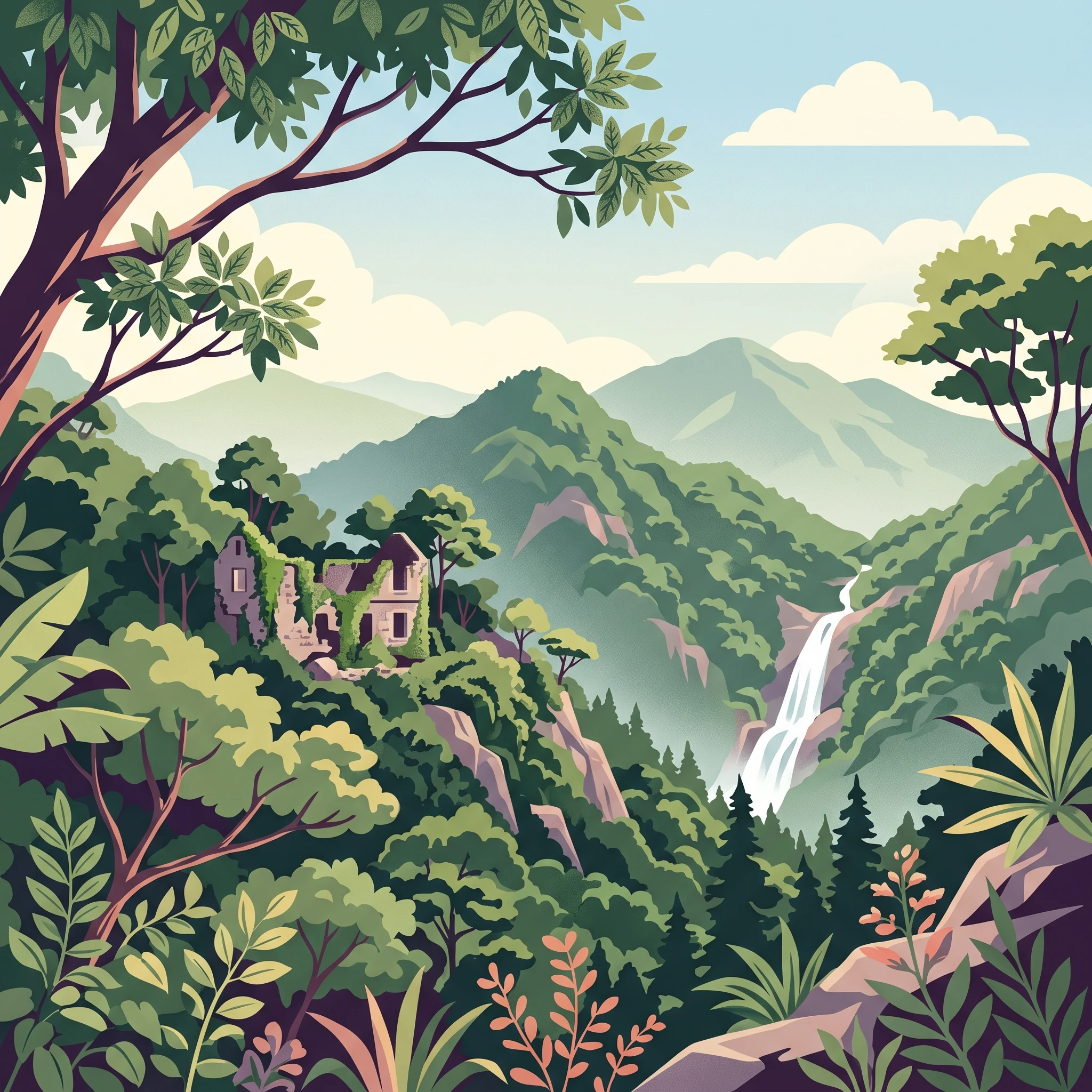
The cultural context of Bach Ma National Park is uniquely defined by its colonial-era development history. The remains of the 1930s French hill station, including foundations and stone walls from 139 villas, represent a tangible cultural layer within the park landscape. Once known as the "Dalat of central Vietnam," the area was exclusively developed for French colonial administrators and high-ranking officials, creating a retreat environment disconnected from the surrounding Vietnamese communities. Following Vietnam's independence, this development was abandoned and fell into ruin, leaving a historical cultural layer that now exists as a contrast to the park's primary natural conservation purpose. The elevation of 1,250 meters and associated cooler climate made this an attractive retreat from the tropical heat of the lowland cities, a pattern that continues today as Vietnamese visitors seek the mountain's pleasant temperatures during summer months.
Top sights and standout views in Bach Ma National Park
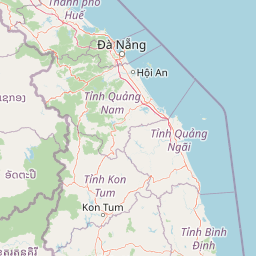
The standout features of Bach Ma National Park include its exceptional biodiversity at a biogeographical crossroads, its well-documented populations of rare Vietnamese endemic birds, and its dramatic mountain scenery within the Annamite range. The park offers visitors the experience of traversing multiple forest types while ascending from lowland evergreen to montane environments. The colonial ruins provide a unique historical element rarely found in Vietnamese national parks, adding cultural depth to the natural landscape. The area's status as one of Vietnam's wettest locations contributes to its lush appearance and supports waterfalls and year-round stream flow. The combination of natural and historical elements, along with accessibility from both Huế and Danang, makes Bach Ma a distinctive destination within Vietnam's protected area system.
Best time to visit Bach Ma National Park
The best time to visit Bach Ma National Park is during the cooler, drier months typically from November to March when temperatures are more comfortable for hiking and the risk of heavy rainfall is reduced. The park's high elevation provides a cooler climate than the lowlands year-round, making it a popular summer retreat for Vietnamese visitors seeking escape from the heat. However, the wet season from September to December brings substantial rainfall to the region, which while creating lush scenery, can make trail conditions difficult and visibility reduced. Visitors should be aware that the park experiences heavy rainfall throughout the year given its status as one of the wettest places in Vietnam, and appropriate footwear and rain protection are recommended for any visit.