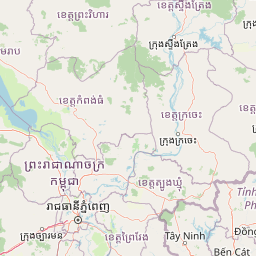
Why Phnom Kulen National Park stands out
Phnom Kulen is best known as the sacred birthplace of the Khmer Empire, where King Jayavarman II performed his coronation ceremony in 802 CE, an event considered to mark the beginning of the empire's 600-year reign. The mountain plateau contains the ruins of numerous ninth and tenth century temples and religious structures, including the famous river of a thousand lingas, where ancient carvings adorn the bed of the Srang river. The park's twin waterfalls, particularly the larger second cascade, represent one of the most visited natural features in the area, offering a rare example of significant elevation change and running water in an otherwise flat regional landscape. Recent archaeological work using Lidar technology has revealed the extensive urban footprint of the ancient city of Mahendraparvata, with over 30 previously unknown temple structures identified beneath the forest canopy.
Phnom Kulen National Park history and protected-area timeline
The history of Phnom Kulen is inseparable from the emergence of the Khmer Empire itself. In 802 CE, King Jayavarman II established his capital on the mountain, declaring himself Chakravartin and performing rituals that declared independence from earlier overlords and unified the various Khmer principalities under single rule. The mountain was known during this period as Mahendraparvata, the mountain of Great Indra, reflecting the Hindu cosmological significance attributed to the site. For several decades, the mountain served as the spiritual and political center of the nascent empire before the capital shifted to the lower, more accessible areas that would eventually become Angkor. Archaeological exploration of the area began with early French scholars, with significant advances made by Philippe Stern in 1936 and later through the comprehensive work of Jean Boulbet and Bruno Dagens in 1973 and 1979, who created detailed inventories and mappings of the archaeological features. Modern archaeological work accelerated significantly with the 2013 Lidar survey that revealed the extent of the ancient city beneath the forest.
Phnom Kulen National Park landscape and geographic character
The physical landscape of Phnom Kulen National Park is defined by its elevated sandstone plateau and the steep valleys that dissect it. The mountain rises from elevations of approximately 100 meters above sea level to peaks reaching over 400 meters, creating a dramatic contrast with the surrounding flat terrain of the Tonle Sap basin. The park's terrain includes rocky outcrops, evergreen forest covered slopes, and the distinctive red-colored sandstone formations that the ancient Khmer builders favored for their temples. Two seasonal waterfalls represent the most prominent hydrological features, their flow dependent on monsoonal rainfall patterns. The larger waterfall drops approximately 15 to 20 meters during peak flow, while the smaller cascade reaches 4 to 5 meters. The river valleys cutting through the plateau have exposed ancient carvings along their beds, most notably the river of a thousand lingas where religious symbols were carved directly into the sandstone river bottom.
Phnom Kulen National Park ecosystems, habitats, and plant life
The ecological character of Phnom Kulen reflects its position as a semi-evergreen forest ecosystem on an isolated mountain formation. The park's forest cover, while degraded in some areas, remains significantly more intact than much of the surrounding lowland landscape, providing habitat for species adapted to more elevated and humid conditions. The area supports populations of large mammals including several species of primate, various deer species, and smaller mammals adapted to forest environments. Birdlife includes both resident species and seasonal migrants that use the mountain as a stopover or breeding area. The combination of forested slopes, rocky outcrops, and the waterfall areas creates a diversity of microhabitats that supports the park's ecological value despite its relatively limited geographic extent.
Phnom Kulen National Park wildlife and species highlights
The wildlife community of Phnom Kulen includes several mammal species typical of Cambodian forest environments. Primates present in the area include species of langur and macaque that inhabit the forest canopy and rocky outcrops. Various deer species, including the muntjac and larger species like the sambar deer, maintain populations in the more vegetated areas. Smaller mammals include numerous rodent species, civets, and other forest-dwelling animals. The bird fauna includes both forest-dwelling species and those associated with more open habitats around the park edges. The waterfalls and streams provide habitat for fish species adapted to flowing waters, though the seasonal nature of much of the park's water systems influences the distribution and abundance of aquatic life.
Phnom Kulen National Park conservation status and protection priorities
Phnom Kulen National Park represents an important conservation priority for Cambodia, protecting both significant ecological systems and irreplaceable cultural heritage. The park's designation as a Category II protected area reflects its dual value as a national park intended to protect natural landscapes while also preserving the archaeological sites within its boundaries. The ongoing archaeological research conducted through projects like the Phnom Kulen Program demonstrates how conservation and research can be integrated with sustainable development goals for local communities. Challenges facing the park include pressures from tourism development, illegal resource extraction, and the need to balance access for visitors with the protection of sensitive archaeological and ecological features.
Phnom Kulen National Park cultural meaning and human context
Phnom Kulen holds profound cultural significance for the Khmer people that extends far beyond its archaeological monuments. As the location where the Khmer Empire was founded, the mountain retains spiritual importance that connects contemporary Cambodian identity to the civilization's glorious past. The mountain's name itself, literally meaning mountain of the linga in Khmer, reflects the deep religious symbolism it has held for centuries. Local communities have maintained connections to the landscape through traditional practices and ongoing stewardship of the area's religious sites. The relationship between the mountain's spiritual significance and the practical management of the protected area continues to require careful consideration as development pressures increase.
Top sights and standout views in Phnom Kulen National Park
The principal highlights of Phnom Kulen National Park include its role as the birthplace of the Khmer Empire and the extensive archaeological landscape that testifies to its importance in early Khmer civilization. The twin waterfalls, particularly the impressive second cascade, offer one of the few significant natural water features in the Angkor region. The river of a thousand lingas carvings along the riverbed represent a unique form of religious art found nowhere else in the Angkor region. The recent discoveries through Lidar technology, revealing over 30 previously unknown temple structures, demonstrate that significant archaeological discoveries continue to emerge from this landscape, making it an area of active scholarly interest.
Best time to visit Phnom Kulen National Park
The best time to visit Phnom Kulen National Park is during the dry season, typically from November through April, when trail conditions are more favorable and the risk of muddy or impassable paths is reduced. The waterfall flows are most impressive during and immediately after the monsoon season, from approximately July through October, though the park remains accessible during this period and the lush green landscape offers a different visual experience. The period from February to April tends to be hottest, while the shoulder months of November and March offer comfortable temperatures for exploring the mountain trails. Visitors seeking to combine waterfall viewing with comfortable hiking conditions may find the optimal window falls in the transition between wet and dry seasons when water flow remains reasonable but weather conditions allow for easier movement through the park.