Why Southern Cardamom National Park stands out
Southern Cardamom National Park is most notably known for being the focal area of Cambodia's tiger reintroduction program, representing a bold attempt to restore an apex predator that was lost from the country in 2007. The park is also recognized as a critical refuge for some of Southeast Asia's most endangered species, including the Malayan sun bear, Sunda pangolin, Irrawaddy dolphin, and critically endangered Siamese crocodile. In July 2024, the park recorded the largest wild breeding event of Siamese crocodiles this century, with sixty hatchlings from five distinct nests documented, demonstrating the park's growing conservation success. The Cardamom Mountains themselves are one of the largest and least disturbed forest complexes remaining in mainland Southeast Asia, and Southern Cardamom National Park serves as the crucial southern anchor of this mountain protected ecosystem.
Southern Cardamom National Park history and protected-area timeline
Southern Cardamom National Park was officially established on May 9, 2016, representing the culmination of years of conservation planning focused on consolidating protection for the Cardamom Mountains region. The creation of the park was driven by recognition that the Cardamom range, despite containing several protected areas, needed a unified management framework to effectively conserve its biodiversity and wildlife corridors. Prior to the park's designation, the individual protected areas within the Cardamom region operated somewhat independently, and conservationists identified the need for connected habitat to support populations of large mammals including elephants, tigers, and other species requiring extensive ranges. The park's establishment coincided with Cambodia's commitment to tiger recovery, as the country had lost its wild tiger population entirely by 2007. Southern Cardamom was selected as the primary site for eventual tiger reintroduction due to its large, relatively intact forest habitat and connectivity with other protected areas. The management of the park involves collaboration between government agencies and international conservation organizations, with the Forestry Administration working alongside Global Conservation and Wildlife Alliance to implement protection and monitoring programs.
Southern Cardamom National Park landscape and geographic character
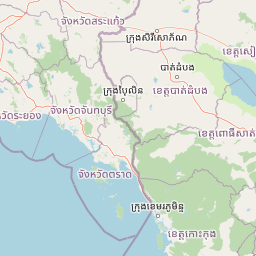
The landscape of Southern Cardamom National Park is defined by its position within the Cardamom Mountains, a major mountain range that forms the southwestern boundary of Cambodia's central lowland region. The terrain is characterized by steep, forested slopes, remote valleys, and numerous streams and rivers that drain toward the Gulf of Thailand. The elevation range and varied topography create diverse microhabitats within the park, from lower elevation semi-evergreen and evergreen forests to higher elevation forest zones. Waterfalls and rapids are characteristic features of the park's river systems, with Stung Proat being one of the notable waterways flowing through the area. The park's forested landscape remains largely intact compared to many other Southeast Asian forests, though it faces ongoing pressures from encroachment and logging. The mountainous terrain creates natural barriers that have historically limited human settlement in many parts of the park, helping to preserve its wilderness character.
Southern Cardamom National Park ecosystems, habitats, and plant life
The Cardamom Mountains support exceptional biodiversity, and Southern Cardamom National Park protects some of the most significant remaining habitat in the region. The park contains diverse forest types including semi-evergreen, evergreen, and montane forest communities. Vegetation within the park includes at least seventeen species of endangered trees, several of which are endemic to Cambodia, highlighting the irreplaceable nature of this ecosystem. The forest communities provide habitat for a remarkable array of threatened species, with over sixty globally endangered animals recorded within the park's boundaries. These include mammals such as the Malayan sun bear, which is the smallest bear species in the world and faces severe pressure from habitat loss and hunting, and the Sunda pangolin, one of the most trafficked mammals globally. The park's rivers and wetlands support populations of Irrawaddy dolphin and Siamese crocodile, both critically endangered species whose survival depends on protected freshwater habitat.
Southern Cardamom National Park wildlife and species highlights
Southern Cardamom National Park provides crucial habitat for more than sixty globally threatened animal species, making it one of Southeast Asia's most important conservation areas. The mammal community includes significant populations of the Malayan sun bear and Sunda pangolin, both classified as vulnerable and critically endangered respectively, as well as larger species including Asian elephants and various carnivores. The park's rivers support populations of Irrawaddy dolphin, a freshwater dolphin species found only in limited river systems across Southeast Asia, and the critically endangered Siamese crocodile, one of the rarest crocodiles in the world. The July 2024 hatching of sixty Siamese crocodiles from five nests represents a milestone for the species, being the largest wild breeding event recorded this century. The park also serves as potential habitat for the Indochinese tiger, with reintroduction efforts planned for the future. Birdlife and other vertebrate groups also contribute to the park's biodiversity significance, though detailed species inventories would require additional source documentation.
Southern Cardamom National Park conservation status and protection priorities
Southern Cardamom National Park represents a cornerstone of Cambodia's conservation strategy and contributes to regional efforts to protect Southeast Asia's remaining wilderness areas. The park's creation was specifically designed to create safe wildlife habitat for reintroducing tigers to Cambodia, marking an ambitious attempt to restore an apex predator that was lost from the country in 2007. The protected area forms part of a connected network with other reserves that together encompass over 18,000 square kilometers of continuous habitat, providing wildlife corridors essential for species requiring large territories. Management involves collaboration between Cambodia's Forestry Administration, the Ministry of Environment, and international partners including Global Conservation and Wildlife Alliance. The park also participates in the Southern Cardamom REDD+ Project, which aims to generate carbon credits through forest conservation. However, conservation efforts have faced criticism, with Human Rights Watch documenting concerns about displacement of indigenous Chong people from their traditional lands in connection with the REDD+ project, prompting investigation by carbon credit verifier Verra. These challenges highlight the complex balance between conservation goals and human rights considerations in large-scale protected area management.
Southern Cardamom National Park cultural meaning and human context
The Southern Cardamom region is home to indigenous communities, including the Chong people, who have traditionally lived in the forest areas now encompassed by the protected park. The Chong are an ethnic minority with distinct cultural practices and deep historical connections to the Cardamom Mountains landscape. Conservation activities within the park have intersecting implications for these communities, particularly in relation to land rights and traditional resource use. Human Rights Watch has raised concerns about members of the Chong ethnic group being displaced from their ancestral lands in connection with the Southern Cardamom REDD+ Project, a carbon conservation initiative operating within the park boundaries. This has created tension between conservation objectives and indigenous land rights, with external scrutiny from international organizations and carbon credit verification bodies. The cultural dimension of the park involves navigating the intersection of modern conservation frameworks and the historic presence of indigenous peoples in the landscape.
Top sights and standout views in Southern Cardamom National Park
Southern Cardamom National Park protects one of Southeast Asia's largest remaining wilderness areas within the Cardamom Mountains, a region of exceptional biodiversity significance. The park serves as the anchor for Cambodia's tiger reintroduction program, aiming to restore an apex predator species that became locally extinct in 2007. It contains habitat for over sixty globally threatened species including the Malayan sun bear, Sunda pangolin, Irrawaddy dolphin, and critically endangered Siamese crocodile. The July 2024 successful breeding of sixty Siamese crocodiles marked the largest wild breeding event for this species in the 21st century. The park connects with multiple other protected areas to form a contiguous conservation landscape of over 18,000 square kilometers, providing essential wildlife corridors across the Cardamom region.
Best time to visit Southern Cardamom National Park
The optimal time to visit Southern Cardamom National Park aligns with Cambodia's dry season, typically running from November through April, when rainfall is minimal and trail conditions are more favorable for exploration. The wet season from May through October brings heavy rainfall that can make many trails impassable and create challenging travel conditions, though the landscape is at its greenest during this period. Wildlife viewing opportunities may vary seasonally, with dry months sometimes offering better chances to observe animals at water sources. However, the park's remote location and limited visitor infrastructure mean that access and logistics require careful planning regardless of season. The mountainous terrain can create distinct microclimates, and visitors should be prepared for variable weather conditions even within the same season.